Do these 3 things before closing this tab:
1Clear out junk files and repair common Windows errors2Fix the driver behind crashes, sound loss and screen glitches3Repair Windows errors before they cause bigger problemsThere is no single best energy-management platform: the right choice depends on whether you need utility-bill accounting, building monitoring and controls, industrial energy visibility, or enterprise carbon and ESG reporting. Based on the product scope and public information available in August 2026, EnergyCAP is a strong starting point for utility and energy-data management; IBM Envizi for enterprise ESG and carbon reporting; Schneider Electric Resource Advisor for global energy programs; EcoStruxure Energy Hub for building monitoring; Siemens Energy Manager for plant- and machine-level analysis; and Spacewell Energy as an analytics-oriented alternative.
These are use-case recommendations, not results of comparative product testing. Prices, plans and product features can change; the published prices below are identified by source and unit where available.
Quick comparison
| Product | Best fit | Pricing signal | Evaluation route | Main limitation to check |
|---|---|---|---|---|
| EnergyCAP | Utility bills, energy costs, budgets and portfolio data | Official pricing is meter-based, but no universal dollar price is published. G2 lists Express from $4,000 and Enterprise from $13,000; these are third-party starting-price signals, not guaranteed quotes. | Request pricing or a demo | Not a substitute for a full building automation or equipment-control system |
| IBM Envizi ESG Suite | Enterprise energy, emissions and sustainability reporting | Based on data volume and account bundles; no simple public list price | Pricing calculator and sales scoping | Can be excessive for a small team that only needs bill tracking |
| Schneider Electric EcoStruxure Resource Advisor | Global energy procurement, sustainability data and enterprise programs | No public list price found; enterprise quote | Request a demo | May function as an enterprise data and program layer rather than direct equipment control |
| Schneider Electric EcoStruxure Energy Hub | Building energy monitoring, alarms and selected controls | Subscription depends on plan, device credits and term; no dollar price shown in the inspected product information | Demo; online purchase may be available | Hardware and compatible infrastructure affect cost and capability |
| Siemens Energy Manager | Industrial energy visibility by plant, line or machine | Siemens Digital Exchange displayed $444 per subscription per year after a three-month trial, observed August 18, 2026 | Product-specific trial | Does not by itself establish a fit for corporate ESG or utility-accounting needs |
| Spacewell Energy | Commercial and industrial monitoring and analytics | No verified public price found | Verify current vendor offer | Confirm current modules, support and reporting capabilities with the vendor |
Pricing sources: EnergyCAP, G2 EnergyCAP pricing, IBM Envizi, Resource Advisor, Energy Hub, and Siemens Energy Manager.
What energy-management software actually covers
The label spans several different kinds of systems. Some collect bills and meter data for finance and facilities teams; others analyze interval readings, monitor building systems, or manage energy and carbon data for corporate reporting. Still others connect more closely to equipment and operational controls. A platform that analyzes consumption is not automatically able to change HVAC schedules, control machinery, or manage demand response.
#1 Best Overall
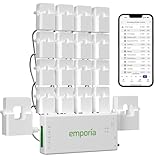
- SAFETY YOU CAN TRUST WITH UL CERTIFICATION: With Emporia Energy, your home energy monitoring is safe, reliable, and certified. The Emporia Vue is UL Listed, meaning it has met rigorous safety standards for electrical products in the U.S. and Canada. This certification ensures that every component has been thoroughly tested to prevent hazards, such as overheating, short-circuiting, or fire, offering you peace of mind as you manage your home’s energy consumption.
- INSTALLS IN CIRCUIT PANEL of most homes with clamp-on sensors. Supports Single phase, Single-split phase, and 2-wire systems. 3-wire systems; 3-phase, 4-wire Wye systems with earthed (TN or TT) neutral (no-Delta) are supported with an additional 200A sensor (sold separately).
- 24/7 ENERGY MANAGEMENT AND MONITORING: Automate, manage and control your home's real power anywhere, anytime to prevent costly repairs, conserve energy, and save costs. Monitor solar / net metering. PROTECTED BY A 1-YEAR WARRANTY.
- LOWER YOUR ELECTRIC BILL: Configure settings in the Emporia Energy App to automate energy management for time of use, peak demand, excess solar, and rewards programs. You can even see live reporting and invaluable savings opportunities instantly. Gauge real-time spending and get actionable notifications and automated energy management to help you reduce costs.
- REAL-TIME ENERGY DATA: REQUIRES 2.4 GHz WIFI WITH AN INTERNET CONNECTION to monitor energy use with iPhone / Android / Web app. Vue sensors collect energy data and are accurate from ±2%. The Vue is UL and CE Listed for your safety. 1 second data is only available in the app (when actively open) and retained 3 hours. Minute and hour data are retained in the cloud. 1 minute data is retained 7 days, 1 hour data is retained indefinitely. Export cloud data whenever you want in the app.
G2’s category definition includes monitoring energy from multiple sources, analytics, reporting and interaction with energy-consuming systems. Its listings span products with substantially different scopes, so category placement alone does not mean two products are direct substitutes: G2 energy management category.
- Utility management: bill capture, account and meter records, cost allocation, budgets and billing checks.
- Building energy management: monitoring and analysis of buildings, meters and related equipment; some offerings also provide alarms, schedules or selected controls.
- Industrial energy monitoring: energy visibility by plant, production line, process or machine.
- Enterprise sustainability software: energy and other environmental data feeding emissions accounting, sustainability programs and reporting.
- Procurement and risk management: energy contracts, purchasing activity and commodity exposure, often part of a broader enterprise program.
Before comparing features, decide whether the software must merely surface information, route work to a person, integrate with controls, or directly control equipment. Those are different requirements and often different systems.
Best energy-management software by use case
EnergyCAP: best for utility bills and energy data
EnergyCAP is oriented around utility management: consolidating utility and energy data for energy managers, finance teams, facilities staff and operations leaders. Its platform can extend into carbon accounting, interval data, bill capture, bill payment and analytics. That modular approach makes it a candidate for multi-site organizations whose core problem is managing bills, meters, costs and portfolio reporting rather than controlling building equipment. Product information is at EnergyCAP.
EnergyCAP says pricing is based on meters tracked per year, but its official pricing page does not give a universal list price. G2 lists Express starting at $4,000 and Enterprise starting at $13,000; the listing also gives examples of $40 per meter per year for 100 meters on Express and $52 per meter per year for 250 meters on Enterprise. These are third-party listing figures, not a current guaranteed quote. G2 says implementation, training, professional services, selected features and meter count affect final pricing. Check the official pricing page and G2 listing with the vendor.
Free tools Windows power users keep installed
One-click scans. No signup required.
G2 shows EnergyCAP UtilityManagement at 4.8 out of 5 from seven reviews in the cited listing. Reviewers mention navigation, customer service, centralizing utility data, emissions tracking and modularity; one reviewer says raw-data uploads are not always straightforward. Seven reviews are a small sample, not a representative measure of product performance. See G2 reviews.
Ask whether the quote counts physical meters, utility accounts or both; what Bill CAPture costs separately; whether migration and training are required; and which functions are included in each edition. If direct HVAC or machine control is essential, ask the vendor to show precisely what EnergyCAP controls itself versus what it analyzes or connects to elsewhere.
Rank #2

- 【Insightful Energy Tracking】Track your plug's energy use with clear and easy-to-understand statistics and intuitive charts, helping you optimize power usage.
- 【Estimate Your Energy Bill】 Enhance energy management by integrating with billing systems for clear cost visualization (both single and periodic readings). Additionally, programmable scheduling allows automatic operation of high-consumption devices during off-peak hours with lower electricity rates, resulting in cost savings.
- 【Smart Charging for Devices】Automatically cuts power once your device reaches the low-battery limit you set, preventing overcharging.
- 【Auto-Shutoff】Prevents electrical overload by automatically shutting off devices that use too much power.
- 【Voice & Remote Control】 With built-in support for both Alexa and Google Assistant, issue simple voice commands to adjust settings, turn devices on or off, or even access specific functions without lifting a finger. Manage Tapo P115 and its connected devices from anywhere with the user-friendly Tapo app.
IBM Envizi: best for enterprise ESG and carbon reporting
Envizi is a better fit when energy data is one part of a larger corporate sustainability and emissions program. IBM describes utility-bill consolidation, automated conversions and calculations, weather and KPI normalization, variance analysis, regression modeling and savings verification in Utility Bill Analytics. Its broader materials also describe decarbonization planning, alerts, interval-meter analytics and sustainability-program tracking: Envizi decarbonization.
IBM bases pricing on data volume rather than a simple per-user or per-site list price. The pricing page describes Essentials for up to 1,000 accounts, Standard for 1,001–5,000 accounts, and Premium for 5,001–15,000-plus accounts. IBM uses “Accounts” broadly: they can represent activity data, supplier data, performance KPIs and other tracked data. Use the pricing calculator and pricing information to estimate scope, then confirm what counts and what is included with sales.
This breadth can suit geographically distributed organizations that need energy, emissions and reporting data governed together. It can be overbuilt if the actual need is a small facilities team’s bill dashboard. During a demo, ask whether interval-meter analytics or other functions require separate modules, which reporting frameworks and emissions factors are available, and whether users can export source data and transformation history.
Schneider Electric Resource Advisor: best for global energy programs
Resource Advisor is aimed at large organizations combining energy and sustainability data with procurement, portfolio diagnostics and project tracking. Schneider describes aggregation from more than 400 data streams, energy-cost analysis, interval data, benchmarking, alarms, efficiency-project management, emissions reporting, procurement activity and commodity-risk management. Schneider also positions it as a complement to existing energy-management systems and infrastructure, not necessarily a replacement for them. See Schneider’s Resource Advisor product information.
No public list price was shown in the inspected Schneider material; buyers should expect to scope the offering with the vendor. The separate product site reports more than 2,000 companies relying on the platform, along with 8.7 million invoices tracked, 128.3 million metric tons of CO₂ managed and 70,000 megawatts managed globally. These are vendor-reported scale figures, not independently audited performance measures: Resource Advisor product site.
Ask what the software license covers versus Schneider data-collection or consulting services; which utilities, countries, tariffs and emissions factors are supported; whether managed data collection is required; and what integrations are standard. This is unlikely to be proportionate for a single building or a small organization without procurement and enterprise sustainability needs.
What’s actually slowing this PC down?
Pick the symptom - the matching free tool is one click away.
Rank #3

- ⚡ EASY INSTALLATION: Installs in circuit panel of most homes with clamp-on sensors. Supports single-phase up to 240VAC line-neutral; single, split-phase 120/240VAC; and three-phase up to 415Y/240VAC (no Delta). The branch lines can automatically match different phases and have no restrictions in terms of quantity and voltage.Panels with access only to busbars will need flexible sensors available from SEM-Meter.
- ⚡ ENERGY MONITORING ANYTIME, ANYWHERE: Monitor your home's real power anywhere, anytime to prevent costly repairs, conserve energy, and save costs. Monitor solar / net metering. Light commercial 3 phase option available as a separate bundle. Protected by a 1-year warranty.
- ⚡ VARIOUS ELECTRICAL APPLIANCE MONITORING: Comes with 16 50A sensors to accurately monitor your air conditioner, furnace, water heater, washer, dryer, range, etc.
- ⚡ LOWER YOUR ELECTRIC BILL: SEM-Meter measures real-time spending and gets actionable notifications to understand where savings can be made, both to lower your electric bill and to conserve energy and protect the planet’s resources. Be an environmentalist.
- ⚡ REAL-TIME ENERGY DATA: Connect SEM-Meter device via 2.4GHz WiFi to monitor energy usage, with an accuracy range of 1%. View usage in real time through Android/Apple software. Statistics of power usage in now/day/week/month/year format: the validity period of hourly exported data is 90 days, and the exported data of day/month/year data is permanent, available at any time Export from application.
EcoStruxure Energy Hub: best for building monitoring
Energy Hub is a subscription-based building energy-management product for one or multiple buildings. Schneider lists monitoring for electricity, water and gas, site ranking, energy breakdowns, estimated costs, notifications, carbon tracking, refrigeration monitoring, time-of-use analysis, tenant billing reports, load control and scheduling, power-quality monitoring and electrical alarms. The capabilities available in practice depend on installed measurement and control infrastructure. See EcoStruxure Energy Hub.
Schneider says subscription pricing depends on the selected Essential, Advanced or + Advanced plan, the number of device credits and the subscription term; one- and three-year terms are available. A device credit represents a physical measurement device such as a meter, intelligent circuit breaker or temperature sensor. Gateways used for communications conversion or cloud connectivity do not consume a device credit. The inspected page showed no dollar price. Ask which hardware and functions are included, and distinguish monitoring and scheduling from closed-loop autonomous control.
Siemens Energy Manager: best for industrial energy visibility
Siemens describes Energy Manager as a way to visualize consumption, energy costs and CO₂ emissions at plant, production-line and machine level. That operational framing makes it more relevant to manufacturers than a bill-management or general ESG platform, provided the needed industrial data sources and connectivity are available. Product information and purchasing are on the Siemens Digital Exchange page.
That page displayed an annual subscription price of $444 per subscription per year after a three-month free trial, plus quantity discounts of 5% for 25–49 subscriptions and 10% for 50 or more. This is a product-specific public price observed August 18, 2026, not a historical 2025 price or a price for Siemens’ broader building or enterprise offerings; taxes may apply. Confirm what a subscription covers and whether it is analytics-only or can control equipment.
Recommended Free Tools
Spacewell Energy: an alternative for commercial and industrial analytics
Spacewell Energy is a candidate for organizations looking for energy monitoring, analytics, dashboards, alerts and optimization without adopting a major enterprise ESG suite. G2 lists it at 4.4 out of 5 from 49 reviews in its energy-management category. Review feedback cited ease of use, features, customization, integrations and reporting as strengths, while concerns included limited customization, support, performance, a complex interface and expense. Ratings and counts are marketplace data that can change; reviews describe user experience, not verified energy savings. The category listing is at G2.
No reliable public price or direct official product page was established in the cited materials. Verify the current product name, modules, integrations, support terms and quote directly with Spacewell before comparing it with other bids. Buyers needing assurance-ready carbon accounting or complex global reporting should confirm those capabilities specifically.
Rank #4

- EM16P MODEL & LOCAL CONTROL & DATA PRIVACY: Access your home energy monitor data locally via Built-in Web UI, Open API, and MQTT without relying on cloud services. Unlike cloud-dependent monitors, Refoss ensures your data stays within your home network. Direct local access protects your privacy while giving you 100% full control of your home energy system.
- NATIVE HOME ASSISTANT & OPENCLAW AI: Experience seamless Native Home Assistant integration right out of the box—no firmware flashing or complex coding required. Featuring ✨NEW✨ OpenClaw Support, it enables AI-driven automation for smarter, real-time energy management and seamless smart home control.
- MAXIMIZE SOLAR & ZERO FEED-IN AUTOMATION: Designed for solar homes, the power monitor works with the Refoss app and Home Assistant to automatically use surplus solar power. Appliances like EV chargers, washing machines, and water heaters are powered during midday peaks, maximizing solar self-consumption and reducing low-value electricity feed-in to the grid. Optimizes usage and reduces bills.
- REAL-TIME MONITORING & ±1% ACCURACY: Monitor voltage, current, active power, and power factor of major appliances. Provides ±1% accuracy (200A: 2–200A; 60A: 1–60A) and ±2% at low current. Daily data stored up to 5 years and exportable. With no subscriptions or hidden fees, you get deep historical insights to help you identify every energy-saving opportunity and save 10–20% on monthly bills.
- SMART ALERTS & CIRCUIT-LEVEL CONTROL: Set usage targets for each individual circuit and receive instant alerts when appliances exceed normal consumption. Refoss app supports automation and peak management to optimize schedules, reduce peaks, and improve efficiency. Real-time electricity usage monitor for circuit-level insights.
How to compare pricing fairly
A “starting price” is not a useful comparison unless the unit and included services are clear. EnergyCAP’s pricing is meter-based, Envizi uses data-volume account bundles, Energy Hub uses plan and device credits, and Siemens’ displayed price is per subscription. Resource Advisor and Spacewell did not have verified public prices in the cited material. Capterra’s March 3, 2025 category overview reported entry-level prices from $2.84 to $96.34-plus per month across energy-management software, but that is a broad category range, not a like-for-like benchmark: Capterra category overview.
Request quotes against the same site, account, meter, device and data-volume assumptions. Ask vendors to itemize the following rather than combining them into one annual subscription:
Quick wins for a faster PC:
Repair Windows errors before they cause bigger problemsFix Now →Fix the driver behind crashes, sound loss and screen glitchesFind Drivers →- Software subscription, pricing unit, minimum commitment and included modules.
- Utility-data collection, bill digitization and historical-data import.
- Hardware, gateways, meters, sensors and installation.
- Integration, data cleansing, implementation and training.
- Custom reports, premium analytics, storage and support.
- Renewal increases, contract length, termination conditions and data-export charges.
A low per-meter or per-subscription figure may omit substantial implementation or data-service costs. Conversely, a broader enterprise quote may include services that are separate elsewhere. Compare the complete first-year and recurring cost for your own scope.
Independent reader supportYour contribution helps us test, update, and keep practical guides available for everyone.Choose by the problem you need to solve
When a spreadsheet may still be enough
A small organization with a handful of utility accounts may be able to manage bills in a structured spreadsheet or lightweight dashboard. Dedicated software becomes more compelling when manual consolidation is consuming staff time, the portfolio needs repeatable multi-site benchmarking, interval data matters, or the organization needs auditability and controlled reporting workflows.
When utility-management software is the right category
Choose this route when bills arrive in multiple formats, finance needs reliable accruals or allocations, the organization has many accounts, and the priority is utility spend, budgets or billing errors. EnergyCAP is the clearest candidate in this group from the products covered here.
When building energy management is the priority
Choose a building-focused system when operators need meter or sensor visibility, timely dashboards, alarms and potentially schedules or load control. Check compatible hardware, connection to the existing BAS, and whether the software can issue commands or only surface information. Energy Hub is the building-oriented option in this comparison.
PC Slower Than It Used to Be?
A free scan shows the junk files, broken settings and background clutter dragging Windows down - then fixes them in one click.Free scan · Windows 10 & 11Outdated Drivers Are Slowing You Down
One free scan finds every outdated or missing driver and matches the right update for your exact hardware.Free scan · exact hardware matchBest Value
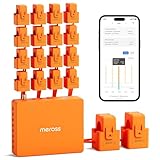
- SAFE & RELIABLE: Meross smart energy consumption monitor is ETL‑certified and compliant with the UL 61010 testing standard, ensuring safe and reliable home energy monitoring. Works with most US homes: single-phase 2-wire systems, single-split phase 3-wire systems, and 3-phase 4-wire Wye systems with earthed (TN or TT) neutral (no Delta). Easy clamp‑on design installs in minutes. Invert CT readings in the app—no physical flipping. PROTECTED BY 2-YEAR WARRANTY for worry-free use.
- TRACK ENERGY & CUT BILLS: Track power, voltage, current, and power factor within ±1% accuracy. Clear power usage and cost charts by minute/hour/day/month/year help you easily understand your energy use. Store up to 5 years of data and export hourly reports for deep analysis. Most users save 10–20% on energy costs by spotting energy hogs and getting accurate insights to cut their bills.
- 24/7 ENERGY MONITORING + SMART ALERTS: Real-time home energy monitoring from anywhere. Set custom alerts for unusual usage spikes and threshold breaches for total peace of mind. Catch issues early with no subscriptions, no cloud lock‑in, and no hidden fees — all built-in. Supports 2 main circuits (200A) + 16 branch circuits (60A), making it perfect for precise, circuit-level energy monitoring.
- MAXIMIZE YOUR SOLAR SAVINGS (HOME ASSISTANT): This solar energy monitor integrates with Home Assistant to detect solar surplus and automatically power EV chargers, water heaters, and other high‑use appliances. Stop wasting solar energy—use it yourself and cut your electricity bill faster. The perfect home energy monitor for solar homes.
- LOCAL DATA, FULL PRIVACY, NO SUBSCRIPTIONS: Connect seamlessly with Home Assistant for advanced energy automation. All energy data stays local—no cloud, no delays, no privacy concerns. Take full control of your home energy, reduce waste, and protect your privacy. Supports Open API and Web Control.
When enterprise sustainability reporting is central
Choose a sustainability platform when energy must sit alongside emissions, supplier or other environmental data, with reporting governance across locations. Envizi is the stronger candidate where ESG and carbon reporting are central; Resource Advisor is aimed more specifically at global energy programs that also involve procurement and sustainability activity.
When production-level energy matters
Choose industrial monitoring when the useful unit of analysis is a process, production line or machine, not only a building or utility account. Confirm that the product can ingest the plant’s data and show energy intensity in the operational context the team needs.
What a credible demo should prove
Bring a representative bill, a sample interval-data file and a list of actual systems to connect. Ask the vendor to work through the following tasks in the product, not just show a prepared dashboard:
- Import a utility bill and show how the system handles missing, late, duplicate and estimated bills.
- Connect or load interval-meter data, identify gaps and explain unit conversions.
- Normalize consumption for weather or production where relevant, and show the assumptions.
- Compare sites, identify an outlier and trace a cost spike to a bill, meter, tariff or facility.
- Create an alert and demonstrate who receives it and how it becomes an assigned action.
- Track an efficiency measure and calculate savings against a documented baseline.
- Generate an executive report and export both raw data and transformed results.
- Show API and integration documentation for your utility, BAS, IoT, ERP or data platform.
- Assign permissions to different roles and demonstrate how a correction preserves the audit trail.
- Walk through implementation, data migration, support and escalation workflows.
Ask the vendor to label savings as measured results, modeled potential, avoided cost, procurement savings, customer-reported outcomes or vendor estimates. These are not interchangeable. A vendor or customer case study may illustrate a specific implementation, but it does not establish average savings across customers.
Data quality, implementation and common failure modes
Dashboards are only as useful as the underlying records and the organization’s ability to act on them. Before signing, check how the product handles:
- Missing, late, estimated and duplicate bills.
- Inconsistent units, currencies, account identifiers and meter names.
- A single utility account covering multiple meters or commodities.
- Meter replacements and preservation of historical data lineage.
- Unavailable interval data or a separate cost for obtaining it.
- Different naming conventions across utility, BAS, IoT, ERP and maintenance systems.
- Versioning of emissions factors, source-document retention and a correction audit trail.
Common operational problems are not solved by software alone. An alert without an owner can be ignored; a platform can reveal waste without authority to change procurement or equipment settings; and poorly configured thresholds can make alerts unhelpful. Assign a data owner and an operational owner, and establish who is allowed to approve corrections and act on findings.
For carbon and regulatory reporting, verify the methodology, factor versioning, evidence retention, approval workflow and audit trail. “ESG reporting” does not by itself mean that a system ensures compliance or provides assurance-ready results. Scope 3 coverage and regional support vary, so validate the specific framework, geography, language, currency and data-residency requirements relevant to your organization.
Which product should you shortlist?
For utility accounting and multi-site energy data, start with EnergyCAP. For energy connected to enterprise emissions and ESG reporting, evaluate IBM Envizi. For a global program combining energy, procurement and sustainability, consider Schneider Electric Resource Advisor. For building-level monitoring with device-based subscription terms, look at EcoStruxure Energy Hub. For plant, line and machine analysis with a published trial and price signal, assess Siemens Energy Manager. For commercial or industrial analytics, Spacewell Energy is worth checking, but confirm current details directly.
Shortlist no more than two or three products that match the same job. Send them the same data sample, site scope, integration list and reporting requirements; then compare their demonstrated data handling and itemized total cost, not just feature counts or marketplace ratings.
Quick Recap
Product prices and availability are accurate as of the date/time indicated and are subject to change. Any price and availability information displayed on Amazon at the time of purchase will apply.




