Free tools Windows power users keep installed
One-click scans. No signup required.
Remote work remains a substantial part of working life, but it is no longer simply an emergency arrangement. In 2026, many organizations are building deliberate hybrid and distributed-work systems. The technology that makes them effective is not a longer list of apps: it is a secure, manageable foundation for access, communication, shared knowledge, task ownership and support—backed by clear work practices.
For U.S. context, a June 2025 U.S. Census Bureau working paper found that nearly one-third of businesses had employees working from home, with employees averaging about one work-from-home day a week. Gallup’s May 2026 figures for remote-capable employees show a different but complementary view: 52% were hybrid, 26% exclusively remote and 22% fully onsite. These figures describe different populations and measures; they are not a universal estimate for every country, industry or job. U.S. Census Bureau; Gallup
What remote work means in 2026
Remote work covers several operating models, and the distinction matters when choosing systems and policies:
- Fully remote: Employees work away from a central office on a permanent or near-permanent basis.
- Hybrid: Employees divide work between home, an office, coworking spaces or other locations.
- Distributed: The organization is designed around geographically separated teams, rather than treating remote employees as exceptions to an office-based model.
- Work from anywhere: Employees may work from different jurisdictions, which can raise tax, payroll, employment-law, insurance and data-transfer questions as well as IT issues.
A small, fully remote software company and a regulated enterprise with hybrid offices do not need identical technology or rules. Role requirements, customer commitments, data sensitivity, employee location and administrative capacity all shape a workable model.
#1 Best Overall

- CRISP CLARITY: This 22 inch class (21.5″ viewable) Philips V line monitor delivers crisp Full HD 1920x1080 visuals. Enjoy movies, shows and videos with remarkable detail
- 100HZ FAST REFRESH RATE: 100Hz brings your favorite movies and video games to life. Stream, binge, and play effortlessly
- SMOOTH ACTION WITH ADAPTIVE-SYNC: Adaptive-Sync technology ensures fluid action sequences and rapid response time. Every frame will be rendered smoothly with crystal clarity and without stutter
- INCREDIBLE CONTRAST: The VA panel produces brighter whites and deeper blacks. You get true-to-life images and more gradients with 16.7 million colors
- THE PERFECT VIEW: The 178/178 degree extra wide viewing angle prevents the shifting of colors when viewed from an offset angle, so you always get consistent colors
Remote and hybrid arrangements persist for practical reasons: they can widen access to talent, reduce commuting, offer flexibility for people with disabilities or caregiving responsibilities, support customers across locations and help organizations continue operating through disruptions. They may also reduce some office expenses, but those savings can be offset by equipment, software, cybersecurity, support, compliance and coordination costs.
Does remote work improve productivity?
There is no universal productivity effect. The U.S. Bureau of Labor Statistics summarizes evidence that includes small positive effects in some workplace experiments, alongside research pointing to costs in coordination and collaboration. Results depend on the job, task, study design and definition of productivity; individual focus is not the same thing as team delivery or organizational performance. U.S. Bureau of Labor Statistics
It helps to assess outcomes at three levels:
- Individual: Task completion, quality, error rates and protected focus time.
- Team: Handoffs, decision speed, duplicate work and management of dependencies.
- Organization: Customer outcomes, revenue or service performance, retention, innovation and cost efficiency.
Output-based work can be easier to manage remotely than work requiring physical equipment, in-person care or frequent face-to-face coordination. At the same time, new employees may need more deliberate mentoring and access to informal knowledge. A 2026 qualitative study reported challenges involving social relationships, peer learning, communication effectiveness and virtual meetings; qualitative findings identify concerns, but do not establish that every remote team experiences them. Academy of Management article
Rank #2

- CRISP CLARITY: This 23.8″ Philips V line monitor delivers crisp Full HD 1920x1080 visuals. Enjoy movies, shows and videos with remarkable detail
- INCREDIBLE CONTRAST: The VA panel produces brighter whites and deeper blacks. You get true-to-life images and more gradients with 16.7 million colors
- THE PERFECT VIEW: The 178/178 degree extra wide viewing angle prevents the shifting of colors when viewed from an offset angle, so you always get consistent colors
- WORK SEAMLESSLY: This sleek monitor is virtually bezel-free on three sides, so the screen looks even bigger for the viewer. This minimalistic design also allows for seamless multi-monitor setups that enhance your workflow and boost productivity
- A BETTER READING EXPERIENCE: For busy office workers, EasyRead mode provides a more paper-like experience for when viewing lengthy documents
The Census working paper says productivity is businesses’ leading concern about working from home, but also reports that 75% of surveyed firms did not monitor employees while they worked from home. That is a reason to define outcomes and expectations—not to infer that monitoring is either absent everywhere or a useful measure of performance. U.S. Census Bureau
Recommended Free Tools
The IT foundation for effective remote work
Identity and access
Remote access should be tied to verified users, devices and permissions, rather than trust in a physical office network. A practical identity foundation includes single sign-on (SSO), multi-factor authentication (MFA), role-based access, conditional access policies, centralized audit logs and automated account changes when employees join, change roles or leave. Limit privileged access and review it regularly.
Microsoft’s Zero Trust guidance treats users, devices, applications, data and networks as distinct security concerns. Zero Trust is a security architecture, not a guarantee; it helps structure decisions about access and verification. Microsoft Learn: secure remote and hybrid work
Rank #3

- CURVED FOR ENHANCED ENGAGEMENT: An immersive viewing experience with a curved monitor that wraps more closely around your field of vision; It creates a wider view, enhancing depth perception and minimizing peripheral distraction
- SMOOTH PERFORMANCE FOR SEAMLESS CONTENT: Stay in the action when playing games, watching videos, or working on creative projects; The 100Hz refresh rate reduces lag and motion blur so you don't miss a thing in fast-paced moments¹
- MORE GAMING POWER: Gain the edge with optimizable game settings; Color and image contrast can be adjusted to see scenes more vividly and spot enemies hiding in the dark; Game Mode adjusts any game to fill the screen so you can view every detail²
- KEEP IT EASY ON THE EYES: Care for your eyes and stay comfortable, even during long sessions; Advanced eye comfort technology certified by TÜV reduces eye strain by minimizing blue light and reducing irritating screen flicker²
- INCREASED VERSATILITY: Connect to more; Plug devices straight into your monitor for increased flexibility, making your computing environment even more convenient
Managed devices and remote support
For employees handling company information, standard devices managed by IT are generally easier to secure and support than a collection of unmanaged personal computers. The endpoint plan should cover device inventory, patching, disk encryption, endpoint detection and response, remote configuration, secure wipe and replacement procedures. Mobile-device management may also be needed for phones and tablets.
Make routine support accessible: provide a help desk, self-service password recovery and clear procedures for lost devices or outages. A VPN can protect a connection to certain network resources, but it does not by itself verify identity, device health, application permissions or appropriate data access.
Quick wins for a faster PC:
Repair Windows errors before they cause bigger problemsFix Now →Scan for outdated or missing drivers - takes under a minuteDriver Scan →Clear out junk files and repair common Windows errorsFree Scan →Cloud productivity and shared knowledge
A cloud productivity suite can bring together email, calendars, file storage, shared documents, meetings and administrative controls. The goal is not to maximize features; it is to make approved information easy to find, protect and maintain. Decide which repositories hold formal documents and confidential data, who can share them externally, and how long records should be kept.
Rank #4

- Clear visuals. Fluid motion: A 144Hz refresh rate and 1ms MPRT deliver smooth, tear‑free motion across work, gaming, and streaming for clearer, more fluid viewing.
- Eye comfort: TÜV Rheinland 3‑star* certification reduces harmful blue light while preserving stunning color quality without compromise. *TÜV Rheinland 3-star eye comfort certification.
- Wide viewing angle: Get consistent views across a wide 178° /178° viewing angle.
- In-Plane Switching (IPS): See excellent color accuracy and consistency across wide viewing angles with In-plane Switching (IPS) technology.
- Ultra-thin bezels: Maximize your viewing experience with thin bezels.
Use a searchable knowledge base or project record for durable decisions, procedures and handoffs. Chat is useful for conversation, but it is a poor sole record of commitments: important decisions and ownership can disappear in a busy channel.
Meetings and asynchronous collaboration
Video platforms should support the work people actually do: screen sharing, accessible captions, calendar integration, dial-in or mobile access, and, where needed, recording, transcripts, breakout rooms or webinars. Video alone does not create collaboration. Meetings without a purpose can add fatigue and reduce participation, especially for people joining remotely from a hybrid room.
Asynchronous work lets teams make progress without requiring everyone to be online together. It depends on written updates, recorded explanations, searchable documentation, clear tasks and time-zone-aware handoffs. For urgent issues, establish a channel and response expectation; for routine work, do not make instant replies the default.
Best Value
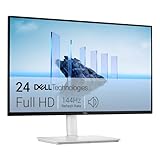
- Elevated entertainment: The FHD resolution and 1500:1 contrast ratio bring clarity, while a 144Hz refresh rate, and 1ms Moving Picture Response Time (MPRT) deliver a smooth, tear-free viewing experience.
- Hear the audio difference: Immerse yourself in sound with integrated dual 3W speakers delivering a wider range of frequencies.
- Eye comfort: Prioritize visual comfort with this 4-star TÜV-certified display. Reduce harmful blue light emissions while maintaining stunning image quality without compromising colors.
- Designed for comfort: Adjust your monitor to suit your preference throughout the day.
- Dell Display and Peripheral Manager: Experience Dell’s singular, innovative application to optimize the performance of your entire Dell PC workspace*. *Based on Dell internal analysis, December 2024.
Task management and connectivity
For each meaningful commitment, make the owner, deadline, status, dependencies, priority, definition of done and blockers visible. A dedicated project-management system is useful when work has enough dependencies or cross-functional handoffs that email and chat no longer provide reliable tracking. It becomes overhead if every small activity is forced into a ticket without an agreed workflow.
Plan for the conditions employees actually face: adequate broadband, backup connectivity for critical roles, reliable headsets and webcams, ergonomic equipment, power interruptions and privacy in shared spaces. Offer suitable support or alternatives when a home workspace cannot meet the job’s needs.
How to build a remote-work technology stack
- Set the operating model first. Define eligible roles, remote or hybrid expectations, collaboration hours, time-zone practices, in-person meeting purposes, equipment ownership, support hours and data-handling limits. Set geographic work rules with legal and tax advice where needed.
- Standardize identity and devices. Choose a central identity provider, require MFA, use SSO for major applications, manage devices that access sensitive data, enable patching and encryption, and formalize onboarding, role changes and offboarding.
- Select a core productivity suite. Start with the organization’s existing workflows, identity environment, device fleet, compliance needs and administrative capacity. Avoid migrating simply to collect features that employees will not use.
- Assign each tool a clear job. Establish where urgent coordination, durable decisions, formal documents, work commitments, meetings, confidential data and IT requests belong.
- Add specialist tools only for a documented need. Introduce separate chat, video, project or security products when they solve a real workflow gap and can be administered, secured and supported.
- Train and review. Teach employees and managers the approved systems, communication norms, privacy and security practices. Review tool use, access, support issues and employee experience, then remove tools that no longer justify their complexity.
One useful system-of-record map is:
| Information or activity | Suitable system |
|---|---|
| Urgent coordination | Chat or a designated incident channel |
| Durable decisions | Knowledge base or project record |
| Formal documents | Controlled cloud storage |
| Work commitments | Project-management system |
| Meetings | Calendar and video platform |
| Confidential information | Approved repositories with access controls |
| IT problems | Help-desk or service-management system |
Choosing between integrated suites and specialist tools
An integrated suite can reduce vendor count and simplify identity, administration and support. A modular stack can offer stronger specialist workflows, but brings more integrations, logins, billing, training and governance. Neither approach is automatically cheaper or more productive; include migration, administration, security and coordination effort in the decision.
| Option | Consider it when | Watch for |
|---|---|---|
| Microsoft 365 with Teams | The organization relies on Office applications, Outlook, Windows, SharePoint, OneDrive or Microsoft identity and device management. | Licensing and administration can be complex; the breadth of the suite may exceed what a small team needs. |
| Google Workspace with Meet | Browser-first work and real-time collaboration in Gmail, Drive, Docs and Sheets are central. | Deep desktop Office compatibility or an extensive Microsoft identity and compliance environment may make adoption less suitable. |
| Slack | Persistent channels, integrations and conversational workflows fill a clear communication need. | It may duplicate Teams or create notification overload if decisions and tasks have no durable home. |
| Zoom | External meetings, webinars, dedicated video or meeting-room experiences are priorities. | A separate platform may be redundant when the existing suite already meets meeting needs. |
| Project-management platform | Dependencies, recurring workflows, ownership or cross-functional handoffs need more visibility. | Without an agreed process, the platform can become another layer of administrative work. |
| Specialized security or endpoint tools | The current identity, device, detection, data-protection or support capabilities leave a defined gap. | No single vendor supplies complete Zero Trust protection; fit depends on the existing architecture and obligations. |
Before adopting another platform, compare workflow fit, integrations, security controls, administrative effort, user friction, scalability, data export and migration options, pricing structure, compliance needs and the difficulty of switching later. Vendor-sponsored collaboration studies, such as Zoom’s report on tool use and app overload, can offer useful perspective but should be read as vendor-sponsored evidence rather than independent proof. Zoom collaboration report
Do these 3 things before closing this tab:
1Fix the driver behind crashes, sound loss and screen glitches2Repair Windows errors before they cause bigger problems3Scan for outdated or missing drivers - takes under a minuteCollaboration practices technology cannot replace
- Document decisions and ownership. Keep decisions, action owners and due dates in the durable system where the work is tracked.
- Make meetings purposeful. Share an agenda and pre-reading, identify the decision or collaboration needed, and send a written record when it matters. Use brief recorded updates for one-way information.
- Design hybrid meetings for equal participation. Use a remote-first format, shared materials and a facilitator; prevent office-side conversations from becoming the real meeting.
- Respect time zones. Set response windows by urgency, rotate meeting times for global groups, and use asynchronous handoffs for routine work.
- Onboard deliberately. Give new hires a checklist, a buddy or mentor, recorded system walkthroughs, a documentation hub and early one-to-one conversations.
- Train managers. Remote leadership requires clear goals, useful feedback, workload visibility, coaching and attention to isolation or burnout—not simply more status checks.
Gallup reports that managers account for 70% of the variance in team-level engagement and that teams with formal hybrid collaboration plans report higher engagement and lower burnout. These are Gallup findings, not a universal causal guarantee. Gallup also reports that team-designed hybrid schedules are perceived as fairer than leadership-imposed ones, which supports involving teams in practical norms. Gallup
Security, privacy and operational risks
- Account compromise and phishing: Require MFA, limit privileges, train staff to report suspicious messages, and have a response process for compromised accounts.
- Personal devices and home networks: Define what data may be accessed from personal devices, set minimum protections, and provide managed equipment when risk or support needs warrant it.
- Oversharing and shadow IT: Set secure sharing defaults, use access controls and data-loss prevention where appropriate, and offer convenient approved alternatives to personal email or consumer file services.
- Lost equipment or outages: Know how to revoke sessions, locate or wipe managed devices, replace hardware and continue critical work if connectivity or power fails.
- Excessive monitoring: Keystroke logging, screenshots and presence indicators can produce false signals, undermine trust and create legal or labor concerns depending on jurisdiction. Measure agreed results and explain transparently what data is collected.
- Cross-border work: Working from another country may trigger payroll, tax, employment-law, permanent-establishment, insurance, data-transfer or export-control obligations. It is not merely an IT permission; seek legal and tax review before approving arrangements.
How to measure whether the system is working
Use a balanced scorecard that measures delivery, quality, collaboration, employee experience and security. Pick a small set of measures connected to the organization’s goals, establish a baseline and review trends with teams; no single metric captures productivity.
| Area | Useful measures |
|---|---|
| Delivery and quality | Cycle time, work completed against commitments, defect or rework rates, customer response time, service outcomes and project predictability. |
| Collaboration | Decision time, handoff failures, duplicate work, time needed to find documents, participation across locations and projects with documented owners and decisions. |
| Employee experience | Tool reliability, help-desk resolution time, meeting load, focus time, onboarding speed, engagement, burnout indicators and voluntary turnover. |
| Security and resilience | MFA coverage, patch compliance, phishing-reporting rates, detection and response time, orphaned accounts, data-sharing incidents and backup-recovery test results. |
A high number of online hours is not proof of valuable output. Set transparent expectations for deliverables, quality and collaboration, and use monitoring only where there is a defined, proportionate purpose.
Quick Recap
Common failure modes and practical fixes
- Tool sprawl: Duplicate files, conflicting versions and missed messages signal that employees lack a source of truth. Limit approved apps, assign each a purpose, centralize provisioning and review usage regularly.
- Meeting overload: Add focus blocks, replace routine status calls with written updates, require agendas and cancel meetings that need neither a decision nor collaboration.
- Unequal hybrid participation: Make remote attendees visible and audible, use shared digital materials, appoint a facilitator and record decisions in a shared document.
- Weak onboarding: Pair documentation and recorded walkthroughs with a named buddy, early meetings and explicit explanation of team norms.
- Security that invites workarounds: Test controls with real users, provide SSO and self-service recovery where possible, and make approved tools easier to use than unsafe alternatives.
- Poor home-work conditions: Consider company equipment or stipends, coworking alternatives, flexible hours, ergonomic guidance and backup connectivity for roles that need it.
Product prices and availability are accurate as of the date/time indicated and are subject to change. Any price and availability information displayed on Amazon at the time of purchase will apply.




