Recommended Free Tools
President Donald Trump threatened the European Union with a “substantial” tariff and announced a U.S. trade investigation after the EU fined Google €890 million on July 23, 2026. The tariff is a threat, not an enacted measure: the reporting available on July 24 did not specify a rate, which goods might be covered, or an effective date. The EU decision was formally a pair of Digital Markets Act enforcement actions, not simply a conventional antitrust fine.
What Trump threatened—and what has not happened
On July 24, Trump said the United States would investigate the EU under Section 301 of the Trade Act of 1974 and threatened a “substantial” tariff, accusing the bloc of unfairly targeting U.S. technology companies. The immediate trigger was the Commission’s €890 million decision against Google, although Trump’s complaint was broader than Google alone. Reporting on Trump’s announcement describes an investigation and threatened future action, not a tariff already in force.

No specific tariff rate, product list, customs procedure, or start date for a Google-related measure was established in that reporting. An investigation is not itself a tariff, and a political threat does not change the amount charged on imported goods. Any later tariff would require further action and could affect EU goods entering the United States rather than Google’s digital services directly.
Why the European Commission fined Google
On July 23, 2026, the Commission announced two separate DMA non-compliance decisions totaling €890 million. It said Google failed to meet obligations intended to keep digital markets fair and contestable. The Commission’s stated concerns involved how Google presents competing services in Search and how app developers can direct customers to offers outside Google Play. The Commission’s decision summary gives the two penalties and its account of the alleged conduct.
Free tools Windows power users keep installed
One-click scans. No signup required.
#1 Best Overall

- Attention-grabbing design meets the latest evolution of the Google Pixel Camera on the new Google Pixel 11 Pro XL; Gemini Intelligence helps manage details so you can live in the moment[1]; and the phone is available in two sizes
- Unlocked Android phone gives you the flexibility to change carriers and choose your own data plan: Works with Google Fi, Verizon, T-Mobile, AT&T, and other major carriers[2]
- Stay informed without looking at your screen: When your phone is face down, Pixel HiLight gently alerts you with subtle glowing lights when your favorite contacts are calling or you’re talking with Gemini; exclusive to Google Pixel 11 Pro phones
- Magic Capture catches the moment as you live it: With just one tap, Pixel 11 Pro captures video and photos, and automatically edits, crops, and unblurs a curated collection, ready to share – and you get the memory of how it felt to be in the moment
- Two new cameras for more brilliant photos: A larger telephoto sensor captures 30% more light for clear, beautiful photos and videos, even in the dark[3]; Pixel’s longest zoom ever helps you capture details from impressive distances[4]
| Decision | Commission’s allegation | Penalty |
|---|---|---|
| Google Search | Google gave its own shopping, hotel, transport, and sports services more prominent treatment than comparable third-party services. | €460 million |
| Google Play | Google restricted developers’ ability to communicate alternative offers, promote them, and conclude transactions outside Google Play; the Commission also objected to the fees and charging period. | €430 million |
| Total | Two DMA enforcement decisions announced together | €890 million |
The figures are euro amounts announced by the Commission; a dollar equivalent varies with the exchange rate and date, so there is no fixed U.S.-dollar total. Calling the action an “antitrust fine” is common shorthand, but the formal basis of these decisions was the Digital Markets Act. The DMA operates alongside traditional EU competition law rather than replacing it. The Commission’s DMA overview explains that framework.
What the decisions could mean for users and app developers
Search results
The Search decision concerns the relative treatment of services in results, not a finding that every Google result is unlawful. The Commission says Google must treat third-party services appearing in Search fairly and without discrimination compared with its own services. In practical terms, the dispute is about whether a platform that controls an important route to customers gives its own offerings an advantage over comparable rivals.
Rank #2

- Google Pixel 10a is a durable, everyday phone with more[1]; snap brilliant photography on a simple, powerful camera, get 30+ hours out of a full charge[2], and do more with helpful AI like Gemini[3]
- Unlocked Android phone gives you the flexibility to change carriers and choose your own data plan; it works with Google Fi, Verizon, T-Mobile, AT&T, and other major carriers
- Pixel 10a is sleek and durable, with a super smooth finish, scratch-resistant Corning Gorilla Glass 7i display, and IP68 water and dust protection[4]
- The Actua display with 3,000-nit peak brightness shows up clear as day, even in direct sunlight[5]
- Plan, create, and get more done with help from Gemini, your built-in AI assistant[3]; have it screen spam calls while you focus[6]; chat with Gemini to brainstorm your meal plan[7], or bring your ideas to life with Nano Banana[8]
Offers outside Google Play
The Play decision concerns “steering”: whether developers can tell users about other ways to buy, promote those offers, and complete a transaction outside the app store. Greater freedom to point users to an alternative purchase channel could give users access to offers that are not routed through Google Play. The decision does not establish that every developer will offer a cheaper option or that every user will see one.
What Google must do next
The Commission said Google has 60 days to comply with the decisions. It requires fair, non-discriminatory treatment for third-party services in Search and says developers must be able to communicate, promote, and conclude contracts with users outside Google Play, both technically and contractually. If Google fails to comply, the Commission says it may impose periodic penalty payments of up to 5% of worldwide turnover. That is a possible compliance mechanism, not an automatic additional fine. The Commission Representation’s account describes the deadline and potential penalties.
PC Slower Than It Used to Be?
A free scan shows the junk files, broken settings and background clutter dragging Windows down - then fixes them in one click.Free scan · Windows 10 & 11Outdated Drivers Are Slowing You Down
One free scan finds every outdated or missing driver and matches the right update for your exact hardware.Free scan · exact hardware matchRank #3

- Google Pixel 10 Pro is the ultimate Pixel experience, featuring advanced AI with Gemini, unbelievable camera quality, impeccable design in two sizes, and the next-gen Google Tensor G5 chip[1]
- Unlocked Android phone gives you the flexibility to change carriers and choose your own data plan[2]; it works - Google Fi, Verizon, T-Mobile, AT&T, and other major carriers
- Get a head start on syncing your data before it even arrives: After you purchase your new Pixel, look for an email that explains how to transfer your photos, videos, passwords, and more in just a few quick steps[11]
- Pixel’s pro camera system makes everything look amazing, even in low light; capture more of the scene with advanced Google AI models, and bring out incredible details with 100x Pro Res Zoom, stunning 50 MP images, and super steady videos in 8K[10]
- Pixel 10 Pro is built with durable aluminum and Corning Gorilla Glass Victus 2 for scratch and drop resistance; the 6.3-inch Super Actua display with 3,300-nit peak brightness is easy on the eyes, even in direct sunlight[3,13,18]
Google may appeal the decisions. An appeal, if pursued, would be a separate EU legal process from the compliance obligations and from any U.S. trade investigation; the available account does not establish whether Google has filed one. Google has said it has worked to comply with European rules and criticized the Commission’s implementation decisions, arguing that they can harm ordinary products and services. Those are Google’s claims, not independently established effects of the decisions. Coverage of Google’s response reports its position.
How a Section 301 investigation can lead to trade action
Section 301 is a U.S. mechanism for investigating foreign government practices that the United States considers unreasonable, discriminatory, or burdensome to U.S. commerce. The investigation can examine the EU’s conduct and may lead to findings, negotiations, or proposed trade action. It does not automatically impose a tariff when announced.
For the threat to become a specific tariff, the process would need to move beyond the announcement: the United States would have to identify the action it plans to take and the goods and terms covered. The reporting on July 24 did not establish a completed legal finding or a tariff order tied to this Google decision. A later measure, if adopted, could affect importers and buyers of covered goods; the costs would not necessarily fall on Google alone.
Independent reader supportYour contribution helps us test, update, and keep practical guides available for everyone.Why this is bigger than one Google penalty
Trump’s criticism framed the Google decision as part of a wider pattern of EU enforcement against U.S. technology companies, including Apple, Meta, and Amazon. Those characterizations and any figures he cited should be understood as his political claims, not as conclusions established by this Google decision. Reporting on the broader dispute describes the wider company list invoked in the criticism.
Do these 3 things before closing this tab:
1Clear out junk files and repair common Windows errors2Scan for outdated or missing drivers - takes under a minute3Repair Windows errors before they cause bigger problemsBest Value
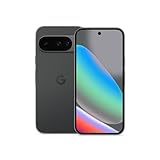
- Google Pixel 10 is the everyday phone unlike anything else; it has Google Tensor G5, Pixel’s most powerful chip, an incredible camera, and advanced AI - Gemini built in[1]
- Unlocked Android phone gives you the flexibility to change carriers and choose your own data plan[2]; it works with Google Fi, Verizon, T-Mobile, AT&T, and other major carriers
- Unlocked Android phone gives you the flexibility to change carriers and choose your own data plan[2]; it works - Google Fi, Verizon, T-Mobile, AT&T, and other major carriers
- The upgraded triple rear camera system has a new 5x telephoto lens - up to 20x Super Res Zoom for stunning detail from far away; Night Sight takes crisp, clear photos in low-light settings; and Camera Coach helps you snap your best pics[3]
- Pixel 10 is designed - scratch-resistant Corning Gorilla Glass Victus 2 and has an IP68 rating for water and dust protection[21]; plus, the Actua display - 3,000-nit peak brightness is easy on the eyes, even in direct sunlight[4]
The underlying conflict is over the EU’s rules for large digital platforms and the U.S. objection that such enforcement unfairly targets American firms. Linking digital regulation to tariffs turns a competition-policy dispute into a trade-policy one. It could complicate transatlantic negotiations, while leaving the EU’s DMA enforcement and any U.S. trade action on separate legal tracks.
Quick Recap
What to watch next
- Google’s compliance: whether it changes Search treatment and Play policies within the Commission’s 60-day period.
- Any appeal: whether Google challenges either DMA decision in court.
- The U.S. investigation: whether Section 301 proceedings produce findings, negotiations, or a proposed response.
- Specific tariff terms: whether a later announcement names a rate, covered products, and effective date.
Product prices and availability are accurate as of the date/time indicated and are subject to change. Any price and availability information displayed on Amazon at the time of purchase will apply.




