Akamai announced on March 3, 2026, that it would acquire thousands of NVIDIA Blackwell GPUs for its distributed cloud infrastructure. The plan targets AI inference and other workloads; it does not mean GPUs are being installed at each of Akamai’s more than 4,400 edge-network locations. Two days later, Akamai disclosed a separate four-year, $200 million customer agreement for a multi-thousand-GPU cluster. The customer was not named.
What Akamai announced
The March 3 announcement describes a broad infrastructure expansion, not a count of completed deployments. Akamai said it would acquire thousands of NVIDIA RTX PRO 6000 Blackwell Server Edition GPUs and pair them with BlueField-3 DPUs as part of a platform for AI research and development, fine-tuning, post-training optimization, and inference workload routing. The company said its network had more than 4,400 locations, but that figure describes the network footprint—not the number of GPU-equipped sites. Akamai’s March 3 announcement does not say that every edge location will receive GPUs.
How the March 5 customer deal differs
On March 5, Akamai disclosed a distinct customer arrangement: a four-year, $200 million service agreement with an unnamed major U.S. technology company. The agreement covers use of a multi-thousand-Blackwell-GPU cluster at a data center designed for high-density power capacity, alongside other Akamai cloud services. Akamai called it one of the world’s largest RTX PRO 6000 Blackwell Server Edition clusters at scale; that size characterization is the company’s claim. The release does not identify the customer. Akamai’s March 5 technical details describe an AI-optimized Ethernet platform for non-blocking, lossless connectivity and parallel storage using NVMe-over-Fabric, without naming the networking or storage vendors.
Why Akamai is building for inference
Inference is the stage at which a trained model responds to a prompt or processes new data. Akamai’s stated rationale for distributed infrastructure is to place suitable computing closer to users and data, aiming to reduce latency and data-egress friction associated with centralized data centers. The March 3 release also positions the platform for model development and adaptation, not inference alone.
Recommended Free Tools
#1 Best Overall

- PLEASE NOTE: Exporting an NVIDIA RTX Pro 6000 GPU outside the US requires strict adherence to the U.S. Export Administration Regulations (EAR) and issuance of an export license from the Bureau of Industry and Security (BIS). Compliance and Know Your Customer (KYC) screening may be required as a condition of order acceptance. [NVIDIA Blackwell Streaming Multiprocessor] The new SM features increased processing throughput, and new neural shaders that integrate neural networks inside of programmable shaders | DLSS 4: Multi Frame Generation ensures ultra-smooth frame pacing for lifelike simulations.
- [Double-Flow-Through Design] The RTX PRO 6000 Blackwell features a double-flow-through cooling design, optimizing efficiency and airflow to sustain peak performance under 600W power loads. | [5th Gen Tensor Cores] Deliver up to 3X the performance of the previous generation and support for FP4 precision for faster AI model processing times with reduced memory usage, enabling local fine-tuning of LLMs and generative AI | [4th Gen Ray Tracing Cores] Double the ray-triangle intersection rate of the previous generation to create photoreal, physically accurate scenes and immersive 3D designs with RTX Mega Geometry, which enables up to 100X more ray-traced triangles.
- [PCIe Gen 5] Support for PCIe Gen 5 provides double the bandwidth of PCIe Gen 4, improving data-transfer speeds from CPU memory and unlocking faster performance for data-intensive tasks like AI, data science, and 3D modeling. | [GDDR7 Memory] With 96 GB of GPU memory and 1.8 TB ps bandwidth, it can tackle massive 3D and AI projects, fine-tune AI models locally, explore large-scale VR environments, and drive larger multi-app workflows.
- [DisplayPort 2.1] Achieve unparalleled visual clarity and performance, driving high resolution displays at up to 8K at 240 Hz and 16K at 60 Hz. Increased bandwidth enables seamless multi-monitor setups while HDR and higher color depth support ensures superior color accuracy for precision work, such as video editing, 3D design, and live broadcasting.
- [Universal MIG] Divide a single RTX PRO 6000 Blackwell into multiple isolated instances, each with dedicated resources, allowing for concurrent execution of multiple workloads, optimized GPU utilization, and secure isolation of different applications or users. [WARRANTY] 3 YR Manufacturer's Warranty. Bulk OEM Packaging. Retail Packaging is NOT included.
Those are design goals and company descriptions, not independently verified results for this deployment. The announcements provide no benchmark establishing how much latency or egress cost the specific infrastructure will reduce, nor do they establish that all announced capacity is already deployed.
Where Inference Cloud and AI Grid fit
Akamai’s GPU plans build on a product direction it had described earlier. In October 2025, the company introduced Akamai Inference Cloud, presenting it as a way to run distributed inference closer to users and devices using NVIDIA Blackwell infrastructure. In its AI: Edge Is All You Need blog and Inference Cloud announcement, Akamai said customers could rent one GPU or build a cluster of up to eight RTX PRO 6000 Blackwell Server Edition GPUs. The described offering also included BlueField networking, storage, managed vector databases, and virtual private cloud networking. These are details from Akamai’s October 2025 materials and may have changed since publication.
Rank #2
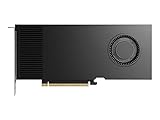
- Professional GPU with Blackwell Architecture
- Blackwell Architecture
- 24GB GDDR7 with PCIe 5.0 & Ray Tracing
- AI Workstation
On March 16, 2026, Akamai announced AI Grid orchestration across its edge, regional, and core infrastructure, describing it as an implementation of NVIDIA’s AI Grid reference design. This points to a strategy of placing workloads across infrastructure tiers—not duplicating identical GPU clusters at every edge point of presence. Akamai Investor Relations’ AI Grid announcement adds later context, but does not independently verify performance for the GPU acquisition or customer cluster.
Independent reader supportYour contribution helps us test, update, and keep practical guides available for everyone.What the announcements establish—and what they do not
- GPU model: Akamai named NVIDIA RTX PRO 6000 Blackwell Server Edition GPUs and BlueField-3 DPUs for the March 3 platform expansion.
- Scale: “Thousands” describes the announced GPU acquisition; the release does not provide a precise total, deployment schedule, or site-by-site allocation.
- Network footprint: More than 4,400 locations was Akamai’s stated edge-network count at the time of the March 3 release, not a GPU-site count.
- Customer contract: The $200 million value and four-year term belong to the separately disclosed March 5 service agreement; its customer remains unnamed.
- Performance: Akamai describes lower latency and less data-egress friction as goals. The cited announcements do not publish independent deployment benchmarks or measured savings.
Akamai’s March 3 release also cited a 56 percent figure, attributing it to MIT Technology Review as the share of organizations citing latency as the primary barrier to deploying AI at scale. The release is a secondary attribution; the original report’s publication year is not established here, so the figure should not be treated as a newly verified measurement.
Quick Recap
Rank #3
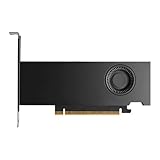
- Form Factor: Plug-in Card
- Cooler Type: Active Cooler
- Maximum Power Consumption: 70W
- Length: 6.6
- Height: 2.7
Product prices and availability are accurate as of the date/time indicated and are subject to change. Any price and availability information displayed on Amazon at the time of purchase will apply.




