Software containers can make manufacturing applications easier to package, update, and operate across factories—but they are not a drop-in replacement for PLCs, safety systems, or deterministic control. The practical approach is to containerize the software around the control layer: connectivity, data processing, local analytics, dashboards, and plant services. Keep hard real-time and safety functions in certified control systems unless the entire alternative platform is explicitly designed and validated for them.
What containerization changes in a factory
A container image packages an application with its software dependencies so it can run through a compatible container runtime on an edge computer, on-premises server, or cloud host. A registry stores and distributes images; a service is a running application; an orchestrator manages deployment and operation across one or more hosts. Persistent volumes hold data that must outlive a container restart. The application package is portable only where processor architecture, operating system, device access, drivers, storage, networking, and vendor support are compatible.
That packaging can reduce differences between engineering, test, and production environments; make rollbacks more repeatable; and let teams update one service without reinstalling an entire gateway. It can also help replicate a tested deployment at multiple sites. It does not by itself fix weak asset models, legacy protocol access, unsafe network design, inadequate hardware, or unclear IT/OT ownership.
In a brownfield plant, this is a deployment and operations strategy layered onto existing equipment—not a reason to replace working control systems wholesale. Microsoft describes industrial architectures that connect enterprise and control systems using standards such as OPC UA and ISA-95; ISA-95 is an organizing model for integration, not a mandate to put every function in a container (Microsoft industrial IoT architecture).
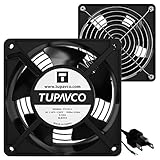
#1 Best Overall

- [Wide Application] This exhaust fan is perfect for various cooling or ventilation projects, making it an excellent choice as a replacement fan or for new installations; 1 heavy-duty aluminum fan with power plug cord, 2 metal grilles and mounting screw set included; ready to use right out of the box; ideal for refrigerator, compressor, air hockey table, AV cabinet, fireplace
- [Durable & Heavy Duty] Our ventilation fan features a robust die-cast aluminum shell, providing durability and the ability to withstand harsh environments; the thermoplastic impeller blades used in the fan have high flame retardancy, ensuring safe and reliable operation; designed to handle a maximum load of 120VAC, with a power consumption of 18W and a frequency of 60Hz
- [Long Lifespan & Excellent Heat Dissipation] UL approved and dual ball bearings, ensuring a service life of up to 50,000 hours of 7-day operation; large air volume of 90CFM, allowing the cooling fan to effectively drive air circulation and achieve excellent heat dissipation, keeping your equipment cool and protected; it can be placed flat or upright
- [Advanced Waterproof] Our advanced technology ensures the high quality; the internal parts and blades are coated with waterproof paint, making them resistant to water damage; the body of the 120mm fan is designed to be both anti-rust and waterproof, allowing it to operate flawlessly in high humidity environments; bring you a safe use experience
- [Space Saving] Only 120*120*38mm in compact size, fit seamlessly into your desired location without detracting from the overall beauty of the space; UL listed ensures quality and safety, if you have any problems, please feel free to contact us at anytime
Where containers fit in the manufacturing architecture
A modern manufacturing system is a set of cooperating layers rather than one application. Keep boundaries explicit so that loss of cloud connectivity, an application restart, or a bad update cannot silently become a control-system failure.
Physical and control layer
Sensors, actuators, PLCs and PACs, CNCs, robots, drives, motion systems, safety PLCs, SCADA, HMIs, historians, and machine databases remain the sources of physical control and production data. Emergency stops and safety instrumented functions belong in appropriately engineered and certified systems.
Connectivity and edge application layers
Connect through approved interfaces such as OPC UA, MQTT, Modbus, EtherNet/IP, PROFINET, or vendor APIs and gateways. OPC UA can expose data from PLCs, SCADA, historians, and I/O servers, but implementations still need sound naming, units, timestamps, quality codes, permissions, and asset context. AWS’s industrial digital-twin architecture describes collecting data from OPC UA endpoints and modeling assets and properties (AWS industrial digital twin architecture).
Strong container candidates include protocol adapters, data normalization, MQTT bridges, local buffering, event processing, OEE calculations, predictive-maintenance or quality inference, local APIs and dashboards, and interfaces to scheduling or electronic records. These services can filter and process data near equipment, avoiding a design in which every useful function depends on a continuously available cloud connection.
Plant platform and enterprise layers
The plant platform supplies the runtime, image cache or registry access, identity and certificates, secrets handling, monitoring, logging, backup, network policy, and deployment controls. Above it, MES, ERP, quality systems, enterprise historians, data lakes, model training, fleet management, and reporting can exchange selected data with plant services. The edge data plane should continue its approved local work when the WAN is unavailable; cloud management and analytics should not be confused with the local control path.
Rank #2
- Pair of axial fans made to keep air flow and your equipment at low temperature
- Fits all standard 19” network cabinets; AC 110V Fan; 95/110CFM Airflow; 2600-2800rpm; 45dBA, Silent; AC cable 6.2ft and Ground wire 9" attached
- Network Cabinet Fan Applications - fan cooler panels, trays or server, media cabinets, computer case, DIY mount; overheat protection
- Steel Frame; Metal Finger Guard; Quick Mount Silicone Rubber Screws - Rivets; Self-tapping screws;
- Standard accessories exhaust replacement size: outer dimensions: 4.75”x4.75" - 4 inch between holes
What to containerize—and what to keep out
| Workload | Default approach | Reason or condition |
|---|---|---|
| Telemetry collection, protocol conversion, normalization | Good candidate | Useful as independently deployed edge services; use approved interfaces and least-privilege access. |
| Store-and-forward, local event rules, OEE, dashboards, APIs | Good candidate | Can keep data services available locally and make application updates independent. |
| Predictive maintenance and quality inference | Good candidate with validation | Check compute capacity, model versioning, data quality, and safe behavior when the model or input is unavailable. |
| Supervisory optimization or commands to equipment | Conditional | Define authorization, response-time limits, failure behavior, and operator approval; keep the hard real-time loop in control hardware. |
| Emergency stops, safety instrumented functions, deterministic interlocks, high-speed closed-loop motion | Do not containerize by default | Use certified control systems unless the complete runtime, hardware, safety case, and validation explicitly support the function. |
| Applications requiring proprietary kernel modules or direct hardware access | Conditional or retain as appliance/VM | Check host compatibility and vendor support; container packaging does not remove kernel or device dependencies. |
Research has explored approaches for containerized industrial control that aim to preserve timing constraints, but that is not evidence that a generic Docker or Kubernetes deployment is suitable for a safety function or hard real-time loop (research on containerized industrial control). For candidate control workloads, evaluate worst-case latency and jitter, packet loss, restart and failover behavior, time synchronization, CPU isolation, interrupt handling, certification, and vendor support under production-like load.
A practical edge-to-cloud data flow
- Read from equipment through approved interfaces. Start with a documented endpoint and permissions model; prefer read-only credentials for telemetry collection.
- Normalize at the edge. Standardize names, units, timestamps, and quality codes, and attach asset, line, product, batch, and work-order context where available.
- Separate data types. Treat raw telemetry, normalized measurements, production events, alarms, quality results, derived KPIs, model predictions, and machine commands as distinct flows with distinct retention and access rules.
- Persist what must survive an outage. Buffer selected measurements and events locally, track source timestamps, handle duplicates, and set explicit retention limits.
- Publish only what is needed upstream. Filter or aggregate data where appropriate, preserve traceability from derived values to their sources, and apply back-pressure when reconnection releases a backlog.
- Restrict command paths more than telemetry paths. Treat write access as a separate, more sensitive capability; require authorization and defined failure behavior before a service can issue commands.
AWS recommends hybrid edge-cloud designs that preserve local processing through connectivity disruptions and use edge filtering and aggregation to limit unnecessary transfer (AWS reliability guidance; AWS edge cost guidance). Lower cloud transfer may reduce some costs, but local hardware, integration, operations, security, and lifecycle support also have costs.
Choose a runtime that matches the operating model
Kubernetes is optional. A plant with one gateway and a few services may be better served by a basic container runtime or Compose than by a cluster whose operation the plant cannot staff. Move to orchestration when there is a specific need for multi-node management, repeatable site configuration, centralized rollout, workload placement, or availability management.
| Environment | Reasonable starting point | Watch for |
|---|---|---|
| One gateway and a few services | Docker or an equivalent runtime | Manual upgrades and configuration drift if the deployment grows without controls. |
| Several services on one industrial PC | Docker Compose or a lightweight service manager | Compose does not provide multi-node scheduling or fleet governance by itself. |
| Several edge nodes or repeatable deployments at multiple sites | Lightweight Kubernetes or a managed edge platform | Storage, networking, upgrade planning, security, and operational skills become material. |
| Large fleet with central governance | Kubernetes plus fleet-management tooling | Central policy must coexist with plant maintenance windows and local recovery needs. |
| Safety-critical or highly deterministic control | Certified control platform | Use containers only for supporting services approved by the platform and safety case. |
Kubernetes can restart or reschedule workloads and standardize deployment, but it cannot repair a failed PLC, corrupt application state, a bad configuration, or an unavailable industrial endpoint. It also introduces networking, storage, cluster-upgrade, and security-surface requirements.
As one product-specific example, Microsoft’s Azure IoT Operations documentation lists K3s, Tanzu Kubernetes Grid, and RKE2 in supported deployment contexts and specifies validated versions and hardware requirements. The page’s version and sizing values are boundaries for that product and scenario, not general recommendations for all factory edge systems (Azure IoT Operations deployment documentation).
Rank #3

- Adjustable temperature control helps ensure optimal performance for rackmount such as network, server, music, and AV cabinets
- Noise controlled fans makes the cooling system useful for a quiet office or business space
- Compact design mounts to any 19" inch cabinet and takes up only 1 unit of space
- Simple and easy to use LCD display allows user to control temperature
- Air pumped through to the top exhaust system of the fan
Build and deploy a first edge service
Start with a read-only, non-control workload such as telemetry normalization or local buffering. Treat the following Dockerfile as an illustration, not a certified plant deployment; pin production base images to an approved version or digest and review dependencies before release.
FROM python:3.12-slim

WORKDIR /app

COPY requirements.txt .
RUN pip install --no-cache-dir -r requirements.txt

COPY src/ ./src/

USER 10001

HEALTHCHECK --interval=30s --timeout=5s --retries=3
  CMD python -m src.healthcheck

ENTRYPOINT ["python", "-m", "src.main"]
Run locally with explicit configuration and persistent storage. This Compose example omits production certificate provisioning, segmentation, monitoring, backup, and recovery controls, which must be designed for the actual site.
Do these 3 things before closing this tab:
1Scan for outdated or missing drivers - takes under a minute2Repair Windows errors before they cause bigger problems3Fix the driver behind crashes, sound loss and screen glitchesservices:
normalizer:
image: registry.example.com/factory/normalizer:1.0.0
restart: unless-stopped
read_only: true
environment:
OPCUA_ENDPOINT: "opc.tcp://gateway.example.local:4840"
MQTT_BROKER: "mqtt://broker:1883"
volumes:
- buffer-data:/var/lib/normalizer
healthcheck:
test: ["CMD", "python", "-m", "src.healthcheck"]
interval: 30s
timeout: 5s
retries: 3
volumes:
buffer-data:- Pin dependencies, run as a non-root user, and remove build tooling from the final image where practical.
- Keep credentials outside images and source control; restrict host mounts, Linux capabilities, device access, and network reach.
- Generate a software bill of materials, scan dependencies and images, and sign and verify images where the platform supports it.
- Define health and readiness behavior, structured logs with timestamps and asset identifiers, and resource limits appropriate to the host.
- Test persistent storage across process restart, host reboot, edge-node replacement, and disk pressure; container writable layers are not a durable data strategy.
For a Kubernetes deployment, production configuration must also specify persistent storage, node placement, resource requests and limits, network policy, upgrade sequencing, and recovery. A readiness probe should reflect whether the service can safely receive work; a liveness probe should reflect whether the process needs restarting. A service can be alive while receiving stale data, so track data freshness, dependency health, buffer utilization, and clock synchronization separately.
Make offline operation and recovery real
Offline behavior is an application design requirement, not an automatic consequence of using containers or an edge runtime. A store-and-forward service should continue approved local collection without cloud access, persist data, preserve source timestamps, detect duplicates, resume transmission after reconnection, enforce retention, report buffer use, and throttle backlog delivery.
Test disk exhaustion, clock drift, corrupt records, duplicate delivery, long outages, and reconnection under load. Decide what happens to nonessential cloud-dependent work during an outage, how operators are alerted locally, and which data takes priority when storage is constrained. A queue that has never been tested through a multi-hour outage is not a demonstrated recovery mechanism.
Rank #4
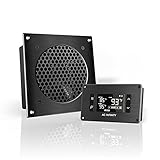
- An ultra quiet UL-certified fan system designed for cooling cabinets that requires minimal noise.
- Features an on board processor that provides a digital read-out of the cabinets temperatures.
- Programming includes thermostat control, fan speed control, and SMART energy saving mode.
- Dimensions: 6.3 x 6.3 x 1.3 in. | Airflow: 52 CFM | Noise: 18 dBA | Bearings: Dual Ball
Operationally, use immutable versioned images, staged rollouts, a canary at one line or plant, maintenance-window coordination, health-based rollback, local image caching, signed release manifests, and a documented recovery image. Check database and schema compatibility before deployment. Backups need restoration tests, not only successful backup logs.
What’s actually slowing this PC down?
Pick the symptom - the matching free tool is one click away.
Secure the plant boundary
Segment enterprise IT, plant operations, cell or area networks, safety networks, edge management, and cloud egress according to the site’s architecture. An edge node should not become an unrestricted bridge between corporate and control networks. Use unique identities for edge nodes, applications where practical, protocol endpoints, deployment controllers, and operator roles. Protect certificates and secrets through a managed mechanism appropriate to the environment.
Container isolation is not a substitute for network or host security. A container with host networking, privileged mode, broad VLAN access, raw-device access, a mounted Docker socket, or broad OPC UA write permissions can create serious exposure. Avoid those settings unless there is a documented need and compensating control. Maintain an offline patching process and a tested rollback path for sites with limited connectivity.
Azure IoT Edge uses container modules managed through an edge runtime and cloud interface; Microsoft describes its runtime as open source and free, while associated cloud services may incur charges (Azure IoT Edge overview; Azure IoT Edge pricing). AWS Greengrass supports local processing and deployment of Docker containers; its pricing and related AWS services should be assessed separately (AWS IoT Greengrass FAQs; AWS IoT Greengrass pricing).
Independent reader supportYour contribution helps us test, update, and keep practical guides available for everyone.Compare platform options by fit, not by label
| Option | Best fit | Trade-off |
|---|---|---|
| Standalone containers or Compose | Proofs of concept, a small number of services or gateways, and teams willing to own the stack | Low orchestration overhead, but fleet rollout, governance, monitoring, and recovery are your responsibility. |
| Lightweight Kubernetes | Multi-service edge nodes, repeatable site deployments, and teams with Kubernetes capability | Offers a common orchestration model but adds cluster, storage, network, and upgrade operations. |
| Azure IoT Edge | Organizations using Azure IoT Hub that want container modules and device management | The runtime is free and open source; IoT Hub and other services may be billed separately. It is not the same as a Kubernetes-native multi-node platform. |
| Azure IoT Operations | Azure- and Arc-oriented organizations needing Kubernetes-based industrial edge data capture and management | Billing is based on Kubernetes nodes for Azure IoT Operations and assets or devices for Azure Device Registry; infrastructure and connected services also matter. Microsoft’s pricing page states a 30-day trial period for Azure IoT Operations (pricing details). |
| AWS IoT Greengrass | AWS-oriented manufacturers seeking local messaging, data processing, software deployment, or inference at edge nodes | Core device charges and related AWS services apply; local execution does not mean zero total cost. AWS states billing is based on active Core devices that authenticate during the month (pricing details). |
| Virtual machines or industrial appliances | Legacy applications, vendor-certified software, full-OS requirements, or tightly controlled support boundaries | May be less agile or dense than containers, but can match the vendor’s validated operating model and isolation needs. |
Compare candidates on industrial connectivity, certificate and write-access controls, offline persistence, hardware and operating-system coverage, remote deployment, rollback, fleet policy, auditability, support lifecycle, integration with MES and historians, and the skills available at plants. Include engineering and validation, hardware, connectivity, training, support, maintenance, and downtime risk in the cost model—not only cloud metering.
Best Value

- Save valuable floor space: 6U wall mount server cabinet Dimensions: 13.78" H x21.65" W x17.72" D.Maximum mounting depth is 14.2"
- Keep critical network equipment secure: glass door and side panels are lockable to prevent unauthorized access. Front door can be installed on either side of the front of the cabinet to satisfy your door swing orientation preference
- Easy equipment configuration: Fully adjustable mounting rails and numbered U positions, with square holes for easy equipment mounting with top and bottom punch-out panels for easy cable access
- Durability: Made of high quality cold rolled steel holds up to 110lb (50kg) (Easy Assembly Required)
- PCI & HIPPA and EIA/ECA-310-E compliant
Implement in controlled stages
- Set boundaries and acceptance criteria. Inventory safety-related and real-time systems, read-only interfaces, permitted machine commands, vendor support constraints, network zones, maintenance windows, maximum data loss, offline duration, and recovery objectives. Define measurable targets such as deployment and rollback time, data freshness, buffer capacity, and edge-failure detection.
- Pilot a non-control service. Choose a bounded use case such as energy monitoring, telemetry normalization, or local buffering. Record baseline behavior and test failure scenarios before expanding the scope.
- Run in shadow mode. Compare the service’s output with existing plant records without allowing it to affect production decisions. Resolve tag, unit, timestamp, asset, and batch-context discrepancies.
- Move to limited production. Introduce operator-visible functions or approved supervisory workflows at one line or site, with a canary, monitoring, rollback, and a named support owner.
- Standardize before fleet rollout. Version deployment configuration as code, with per-plant overlays for asset mappings, endpoints, certificates, topics, retention, hardware, models, feature flags, and maintenance windows. Store secrets outside the repository.
Adopt Kubernetes or a managed fleet platform only when the operational benefit—such as multi-node management, centralized policy, or standardized updates across sites—justifies its added ownership. Do not make orchestration the first proof that a plant can operate the workload safely.
Plan for common failures
Container will not start
Check runtime logs, image architecture, configuration, certificate validity, volume permissions, port conflicts, disk and memory pressure, and image availability. Avoid exposing secrets while validating configuration. Roll back to the last known-good image if recovery is not immediate, and preserve logs for diagnosis.
OPC UA connection fails
Test reachability from the actual edge node; verify endpoint URL, certificate trust in both directions, security policy, system time, session limits, and read/write permissions. Check for firewall, VLAN, gateway, or PLC maintenance changes. Use a test namespace or read-only account where appropriate, and buffer locally rather than repeatedly overwhelming the endpoint.
Cloud connection fails or storage fills
Keep approved local functions running, expose the outage through local monitoring, and queue selected data with deduplication and back-pressure. Alert before storage is critical, apply retention, and preserve high-priority events. Define what to pause before disk pressure threatens essential records.
PC Slower Than It Used to Be?
A free scan shows the junk files, broken settings and background clutter dragging Windows down - then fixes them in one click.Free scan · Windows 10 & 11Crashes, No Sound, or Screen Glitches?
Random freezes, missing sound and display glitches usually trace back to one bad driver. Find and replace yours safely.Free scan · under a minuteA bad release reaches production
Use signed, immutable artifacts; staged deployment; automated health checks; versioned configuration; backward-compatible schema changes; and a documented rollback procedure. Notify operators, restore the known-good image, then diagnose from preserved logs rather than making untracked changes on the production node.
Quick Recap
Decision checklist
- Is the workload clearly outside the safety and hard real-time control boundary?
- Are its equipment interfaces approved, and are telemetry and command permissions separated?
- Can it keep required local functions operating during a WAN outage, with tested persistence and recovery?
- Does the site have an owner for image security, credentials, updates, monitoring, backups, and rollback?
- Does the runtime match the number of nodes and services, available skills, and fleet-management needs?
- Have storage, hardware compatibility, vendor support, maintenance windows, and lifecycle costs been validated at a representative site?
Product prices and availability are accurate as of the date/time indicated and are subject to change. Any price and availability information displayed on Amazon at the time of purchase will apply.




