Do these 3 things before closing this tab:
1Fix the driver behind crashes, sound loss and screen glitches2Repair Windows errors before they cause bigger problems3Scan for outdated or missing drivers - takes under a minuteSamsung Electronics did not buy Rainbow Robotics outright. It exercised a call option to purchase an additional 20.29% for approximately KRW 267 billion—about $181 million at the exchange rate used in contemporaneous coverage—raising its holding from roughly 14.7% to 35%. That made Samsung Rainbow Robotics’ largest shareholder and placed the robotics company in Samsung’s consolidated subsidiary structure, while leaving other shareholders in place.
What happened, and when
| Date | Event |
|---|---|
| 2023 | Samsung invested KRW 86.8 billion for approximately 14.7% of Rainbow Robotics. |
| December 31, 2024 | Samsung announced that it would exercise a call option to buy another 20.29%. |
| March 5, 2025 | South Korea’s Fair Trade Commission approved the corporate combination. |
| March 12, 2025 | A major-shareholding filing recorded Samsung with a 35% holding and KRW 267,462,550,960 in acquisition funding. |
Samsung’s announcement is available at Samsung Newsroom. Rainbow Robotics’ transaction notice and shareholding filing provide the detailed ownership and funding figures (transaction notice; filing).
Was this a full acquisition?
No. Samsung’s disclosed stake is 35%, not 100%. “Largest shareholder,” “subsidiary” and “full owner” are different descriptions. Samsung said Rainbow Robotics would be incorporated as a subsidiary in its consolidated financial statements, an accounting and control treatment that does not mean Samsung purchased every share.
A 35% position can be strategically decisive when one shareholder is the largest and has management participation, even though it is below a conventional 50%-plus majority. The filing lists the purpose of the acquisition as management participation. The available filings do not establish that Samsung later bought the remaining shares or increased its stake beyond 35%.
Recommended Free Tools
#1 Best Overall

- 【2-in-1 Mopping and Vacuuming】 The ROPVACNIC Robot S1 integrates advanced electronically controlled mopping technology, significantly enhancing both cleaning efficiency and effectiveness, which makes your floors remain free from footprints, dirt, and dust throughout the day. It features an upgraded high-capacity water tank with a four-stage personalized water adjustment system, enabling it to address various stains across different settings according to user requirements.
- 【Comprehensive Intelligent Control】 Multiple Cleaning Modes, combined with personalized settings, allow you to easily accomplish various household cleaning tasks with zero effort from your smartphone. Moreover, by voice commands, you can start your cleaning while kicking back and relaxing (compatible with Alexa or Google Assistant). Enjoy an utterly hands-free cleaning experience.
- 【5200Pa Powerful Suction】A 3-point cleaning system coupled with strong suction ensures your floors are free from all dirt, dust, and crumbs for a thorough, superior clean. The highly passable compact design combined with 3-level suction facilitates cleaning in hard-to-reach areas where you can't, making it suitable for a wide range of surfaces from wood, and hard floors to low pile carpets.
- 【Smarter High Automation & Self-Recharge】 The robot aspiradora is equipped with an advanced high-coverage sensing system and multiple algorithmic data points, enabling autonomous completion of cleaning tasks—from scheduled starting, detecting obstacles, adjusting direction, and switching modes, to automatically returning to recharge. This hassle-free operation ensures a clean home when you return.
- 【Engineered for Pet Owner】 The exclusive no-entanglement design negates the need for your dirty hands to clean up tangled dog or cat hair, unlike traditional roller brushes. Its dual rotating electric side brushes sweep and collect hidden pet hair more efficiently throughout the house, saving you the hassle.
What did the $181 million buy?
The $181 million headline refers to the later purchase of the additional 20.29% stake. It is an approximate conversion of KRW 267 billion, not a separately disclosed dollar payment. Samsung’s earlier KRW 86.8 billion investment was a different transaction, so the figure should not be presented as Samsung’s total investment in Rainbow Robotics.
Some contemporaneous search snippets incorrectly described KRW 267 billion as $181 billion. The defensible conversion is approximately $181 million.
Why Samsung wants Rainbow Robotics
Samsung said it wants to combine its artificial-intelligence, software, electronics and manufacturing capabilities with Rainbow Robotics’ robotics engineering. Its stated goals include accelerating intelligent humanoid development and applying robots to manufacturing and logistics.
Near-term industrial uses
- Collaborative robots working alongside people on factory tasks.
- Mobile manipulators and autonomous mobile robots for material movement and logistics.
- Robotic platforms that Samsung could potentially use in its own production and distribution operations.
Longer-term robotics ambitions
Samsung also established a Future Robotics Office reporting directly to its chief executive. Rainbow Robotics founder Jun-Ho Oh was named to advise Samsung and lead the future-robotics organization. Samsung’s announcement describes a development strategy; it does not establish a commercial humanoid launch, a production schedule, forecast revenue or validated autonomous-performance results.
Rank #2

- 5000Pa Strong Suction: Robot Vacuum With 5000Pa suction power, it effortlessly removes pet hair, dust, and debris from all types of floors. It can also easily clean on short-pile & medium-pile carpets
- Vacuum & Mop in One Go: G8000 Max robot vacuum is equipped with 450 ml dustbin and 300 ml water tank combo, it supports simultaneous vacuuming and mopping in one go. The innovative design reduces cleaning time by 50%, enhancing household efficiency
- Long Battery Life, Always Ready: Up to 150 minutes in quiet mode, meeting daily cleaning needs and automatically recharging when the battery is low, always ready for the next cleaning task
- 4 Control Ways & 4 Cleaning Modes: Supports 4 control methods: App, Remote, Voice, and Button, making it ideal for wives, seniors, and parents. Choose from 4 cleaning modes(Spot, Edge, Zig-zag, and Manual cleaning) to meet your daily cleaning needs. The Zig-zag mode ensures maximum coverage and cleaning efficiency
- Ultra-Slim Design, Smart Sensors: The robot cleaner is 2.99 inches in height, it easily reaches under beds, sofas, and cabinets for thorough cleaning. With anti-collision and anti-fall sensor technology, it intelligently navigates around obstacles, walls, and stairs
Samsung’s global sales and manufacturing network could help Rainbow Robotics expand internationally. That is a strategic rationale, not evidence that the combination has already produced higher revenue or customer orders.
What Rainbow Robotics makes
Rainbow Robotics was founded in 2011 by researchers associated with the Korea Advanced Institute of Science and Technology’s Humanoid Robot Research Center. Its origins include work on Hubo, described by Samsung and Yonhap as South Korea’s first two-legged walking robot. The company is broader than a humanoid start-up.
Collaborative robots
Rainbow Robotics’ RB series is designed for industrial collaborative applications. In a 2026 company announcement, Rainbow said it had supplied more than 5,000 collaborative robots domestically and displayed models ranging from the RB3-730 to the RB30-1400. That delivery figure is a company claim, not an independently audited market total. See the company’s Automate 2026 announcement.
Mobile, quadruped and specialized systems
The portfolio also includes dual-arm mobile manipulators, autonomous mobile robots, quadrupeds, bipedal systems, humanoid research platforms and telescope mounts. Rainbow has reported work on a counterterrorism quadruped prototype supplied to the South Korean Army in cooperation with Hyundai Rotem, with planned upgrades and a related national project running through 2027. Those statements describe development plans, not proof of large-scale deployment (Rainbow Robotics announcement).
Rank #3
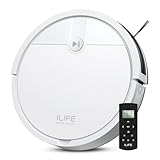
- Fits Pet Owners and Hard Floors: With a tangle-free suction port, V2 robot vacuum focuses on picking up hair without tangle; It also tackles dirt, crumbs and debris effectively on hardwood, tile, laminate, stone and low pile carpet
- Ultra-Slim Design: The 2.99-inch low profile allows the V2 robot vacuum cleaner to easily clean under beds, sofas, and other furniture
- Friendly Remote Control: The V2 vacuum robot equipped a physical remote control, no Wi-Fi connection is required for operation. Start cleaning easily via the remote or one-touch button, simple to operate for all family members
- Multiple Cleaning Modes: The V2 robot vacuum cleaner features multiple cleaning modes including auto clean, spot clean, and edge clean for thorough coverage
- Schedule Cleaning & Automatic Charging: V2 vacuum robot can run routine cleaning automatically based on preset schedule, it cleans up to 120 minutes on a single charge and automatically returns to the charging dock when the battery is low
The RB-Y1 shows the opportunity—and the limits
Rainbow introduced the RB-Y1 dual-arm mobile manipulator in March 2025. The company describes two arms with seven degrees of freedom each, a six-degree-of-freedom single-leg mechanism and a wheeled, high-speed mobile platform.
The demonstration described on Rainbow’s site used real-time teleoperation. That makes the RB-Y1 a useful example of a humanoid-shaped research and industrial platform, but not evidence of a fully autonomous, general-purpose human-replacement robot. The product details are in Rainbow Robotics’ RB-Y1 announcement.
The business case: factory robots first, humanoids later
What Samsung contributes
- AI and software resources.
- Large-scale electronics and manufacturing expertise.
- Global sales, service and distribution infrastructure.
- Potential internal sites where robotics can be tested in real production and logistics workflows.
What Rainbow contributes
- Specialized robot-control and mechanical engineering.
- Existing collaborative, mobile and quadruped platforms.
- Humanoid and bipedal research experience linked to Hubo.
- A robotics team and product base Samsung would otherwise have to build or acquire separately.
The practical opportunity is industrial automation that can be sold or deployed before highly capable humanoids become commercially viable. Humanoids remain the longer-term thesis, with uncertain engineering timelines, costs, safety requirements and customer demand.
Risks and unanswered questions
- Autonomy: A teleoperated demonstration does not show that a robot can reliably perform varied tasks without a human operator.
- Commercial scale: The announcements do not provide a commercial humanoid launch date, production model, humanoid revenue forecast or confirmed Samsung-branded customer orders.
- Integration: Samsung must combine a large electronics organization with a specialized robotics company without slowing product development or weakening Rainbow’s existing business.
- Governance: Samsung is the largest shareholder with a 35% holding, not the sole owner. How independent operations, management rights and future capital decisions evolve remains important.
- Market adoption: Factory and logistics customers must still prove that Rainbow’s systems deliver enough reliability and return on investment to justify deployment.
- Ownership changes: The cited materials do not establish a later purchase taking Samsung above 35%.
Regulatory status
The Fair Trade Commission approved the combination on March 5, 2025, after reviewing Samsung’s planned purchase of the additional 20.29%. The regulator concluded that the transaction posed little risk of restricting competition, according to Rainbow Robotics’ reproduction of the announcement: FTC approval notice. Approval came after Samsung’s December announcement, so the proposed subsidiary treatment and the later regulatory clearance should not be treated as the same event.
Bottom line
Samsung’s Rainbow Robotics move is best understood as a strategic control investment in an established robotics platform. Samsung paid approximately KRW 267 billion, or about $181 million, for an additional 20.29% and reached a 35% stake. It gained largest-shareholder status and a path to consolidate Rainbow Robotics as a subsidiary, but it did not buy the entire company or launch an autonomous humanoid product. The immediate business case is industrial and logistics automation; intelligent humanoids are the longer-term, still-unproven ambition.
Quick Recap
Product prices and availability are accurate as of the date/time indicated and are subject to change. Any price and availability information displayed on Amazon at the time of purchase will apply.




