On October 2, 2024, Nvidia CEO Jensen Huang told CNBC’s Closing Bell Overtime that the company’s Blackwell platform was “in full production” and that demand was “insane.” He said customers wanted the largest possible allocations and wanted to be first in line. Nvidia shares rose sharply the next day, as investors interpreted the remarks as reassurance that Blackwell’s production concerns were manageable and that buyers still greatly outnumbered available supply.
Huang’s wording was significant, but it was not a sales forecast. It did not disclose order values, unit volumes, delivery dates, or how much reported interest would become Nvidia revenue.
What Jensen Huang said
Huang’s most precise reported statement was: “Blackwell is in full production, Blackwell is as planned, and demand for Blackwell is insane.” He added: “Everyone wants to have the most, and everyone wants to be first.” The comments came during the October 2, 2024 CNBC interview, reported by Investing.com.
That combination mattered because investors were weighing two separate questions: could Nvidia deliver the new platform on schedule, and would customers pay for it at scale?
Do these 3 things before closing this tab:
1Repair Windows errors before they cause bigger problems2Scan for outdated or missing drivers - takes under a minute3Clear out junk files and repair common Windows errors#1 Best Overall

- PLEASE NOTE: Exporting an NVIDIA RTX Pro 6000 GPU outside the US requires strict adherence to the U.S. Export Administration Regulations (EAR) and issuance of an export license from the Bureau of Industry and Security (BIS). Compliance and Know Your Customer (KYC) screening may be required as a condition of order acceptance. [NVIDIA Blackwell Streaming Multiprocessor] The new SM features increased processing throughput, and new neural shaders that integrate neural networks inside of programmable shaders | DLSS 4: Multi Frame Generation ensures ultra-smooth frame pacing for lifelike simulations.
- [Double-Flow-Through Design] The RTX PRO 6000 Blackwell features a double-flow-through cooling design, optimizing efficiency and airflow to sustain peak performance under 600W power loads. | [5th Gen Tensor Cores] Deliver up to 3X the performance of the previous generation and support for FP4 precision for faster AI model processing times with reduced memory usage, enabling local fine-tuning of LLMs and generative AI | [4th Gen Ray Tracing Cores] Double the ray-triangle intersection rate of the previous generation to create photoreal, physically accurate scenes and immersive 3D designs with RTX Mega Geometry, which enables up to 100X more ray-traced triangles.
- [PCIe Gen 5] Support for PCIe Gen 5 provides double the bandwidth of PCIe Gen 4, improving data-transfer speeds from CPU memory and unlocking faster performance for data-intensive tasks like AI, data science, and 3D modeling. | [GDDR7 Memory] With 96 GB of GPU memory and 1.8 TB ps bandwidth, it can tackle massive 3D and AI projects, fine-tune AI models locally, explore large-scale VR environments, and drive larger multi-app workflows.
- [DisplayPort 2.1] Achieve unparalleled visual clarity and performance, driving high resolution displays at up to 8K at 240 Hz and 16K at 60 Hz. Increased bandwidth enables seamless multi-monitor setups while HDR and higher color depth support ensures superior color accuracy for precision work, such as video editing, 3D design, and live broadcasting.
- [Universal MIG] Divide a single RTX PRO 6000 Blackwell into multiple isolated instances, each with dedicated resources, allowing for concurrent execution of multiple workloads, optimized GPU utilization, and secure isolation of different applications or users. [WARRANTY] 3 YR Manufacturer's Warranty. Bulk OEM Packaging. Retail Packaging is NOT included.
Why the comment mattered to investors
It addressed production anxiety
Reports before the interview had described engineering snags and rollout concerns. The uncertainty was whether design changes or manufacturing problems would delay shipments, limit the initial ramp, or push sales into later fiscal quarters. The available evidence supports a story about production and rollout concerns—not a cancellation, recall, or confirmed fundamental design failure.
It reinforced demand
Huang presented the constraint as scarce availability relative to customer requests. That is different from saying every interested company had signed a binding order. Demand can include customers seeking allocations, evaluating systems, or negotiating delivery slots.
It supported the platform transition
Blackwell was intended to become Nvidia’s next major data-center growth platform after Hopper, the generation that included the H100 and H200. A smooth transition was important because Nvidia’s valuation already depended on continued expansion of AI infrastructure spending.
What Nvidia Blackwell actually is
Blackwell is a data-center AI computing platform, not simply a retail graphics card. Nvidia’s offering includes Blackwell GPUs, Grace Blackwell combinations that pair Nvidia’s Grace CPU with Blackwell GPUs, high-speed networking, software, and complete server or rack-scale systems.
Nvidia’s June 2024 announcement described air- and liquid-cooled systems for cloud, on-premises, embedded, and edge deployments. It named manufacturers including ASRock Rack, ASUS, GIGABYTE, Inventec, Pegatron, QCT, Supermicro, Wistron, and Wiwynn. The company’s overview is available from Nvidia.
Customers therefore buy integrated infrastructure containing many accelerators, CPUs, memory, networking equipment, storage, cooling, and software. Calling Blackwell merely “a chip” understates the scale and complexity of the purchase.
Why buyers were competing for access
Blackwell systems were designed for training larger models and serving inference workloads—the production use of AI models by applications and users. They also support cloud-provider clusters, enterprise deployments, and sovereign-AI projects.
- Hyperscalers need additional capacity for model training and commercial AI services.
- Model developers want faster access to leading-edge compute.
- Enterprises are moving generative-AI workloads from experiments into production.
- Early access can help a provider launch services before rivals.
The economic value extends beyond the processor. Each deployment can require new servers, networking, power, cooling, data-center space, installation, and software integration.
Rank #2
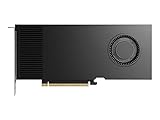
- Professional GPU with Blackwell Architecture
- Blackwell Architecture
- 24GB GDDR7 with PCIe 5.0 & Ray Tracing
- AI Workstation
Which companies were associated with Blackwell demand?
Contemporary coverage linked demand discussions with Microsoft, OpenAI, Meta, and other major AI infrastructure users. Forbes cited those companies in reporting on Huang’s remarks.
Those references should be read carefully:
- A company can be publicly associated with Nvidia’s platform without disclosing a specific purchase.
- Evaluation, deployment, allocation requests, and firm orders are different stages.
- Public reporting did not establish each customer’s order size, delivery schedule, or final revenue contribution.
Production is not the same as immediate availability
“Full production” generally means a product has entered volume manufacturing rather than remaining at a prototype or sampling stage. It does not mean unlimited supply or instant delivery to every buyer.
Contemporaneous coverage said Nvidia had shipped Blackwell samples during its fiscal second quarter and expected production to ramp in the fourth calendar quarter of 2024, corresponding to Nvidia’s fiscal 2026 period. Quartz reported that timing.
Supply can remain constrained at several points:
- GPU fabrication and yields
- Advanced semiconductor packaging
- High-bandwidth memory availability
- Server and rack integration
- Networking components
- Liquid-cooling equipment
- Data-center power, construction, and installation
Nvidia had already told investors that demand for its high-end AI products was ahead of supply in its fiscal 2025 first-quarter presentation. That statement is in the company’s investor materials.
What’s actually slowing this PC down?
Pick the symptom - the matching free tool is one click away.
How the market reacted
Nvidia shares rose sharply on October 3, 2024, after the interview. Reports described gains ranging from roughly 3% to as much as 5%, depending on the point during the trading session. Yahoo Finance and Forbes both connected the move with Huang’s comments and the easing of production concerns.
The move shows how investors interpreted the remarks; it does not prove that the interview alone caused the entire price change. Stock prices also reflect positioning, expectations, market conditions, and other news.
What “demand exceeds supply” can—and cannot—tell you
Strong demand may indicate that customers are competing for early allocations. It does not, by itself, reveal how much revenue Nvidia will recognize or when.
| Evidence | What it indicates | What it does not establish |
|---|---|---|
| Huang’s interview | Management’s view that production was active and customer interest was exceptionally high | Backlog dollars, unit totals, or binding commitments |
| Reported customer associations | Major AI companies were linked with Blackwell deployments or interest | Specific order volumes or delivery dates |
| Analyst commentary | Some analysts believed orders extended well into the future | Nvidia guidance or guaranteed revenue |
A later Fortune report citing Morgan Stanley analysts said orders were booked for roughly 12 months. That was analyst commentary, not a formal Nvidia order-book disclosure.
The Tool Desk
Outbyte Driver Updater FREEScan for outdated or missing drivers - takes under a minuteDriver Scan →Outbyte PC Repair FREERepair Windows errors before they cause bigger problemsFix Now →Rank #3
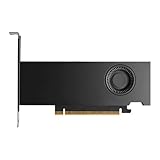
- Form Factor: Plug-in Card
- Cooler Type: Active Cooler
- Maximum Power Consumption: 70W
- Length: 6.6
- Height: 2.7
Risks behind the bullish interpretation
Execution and infrastructure
A product can be in production while system assembly, packaging, cooling, power, or customer data-center construction slows shipments. A delay across fiscal quarters can affect reported revenue even when long-term interest remains strong.
Customer concentration
Hyperscalers and major model developers can generate enormous demand, but relying on a small number of buyers also creates negotiating and capital-spending risk. Those companies are developing their own accelerators and may operate mixed fleets.
Competition
Alternatives include AMD Instinct accelerators, Google TPU systems, Amazon Trainium and Inferentia, and Microsoft’s Maia processors. They are not automatic drop-in replacements: software compatibility, memory, networking, availability, support, and total cost of ownership affect the decision.
Demand durability
AI spending could change as workloads shift from training to inference, as customers improve utilization, or as custom silicon becomes more capable. A strong launch cycle does not guarantee the same growth rate indefinitely.
Policy and supply-chain exposure
Blackwell deployments depend on advanced packaging, high-bandwidth memory, manufacturing partners, server capacity, power, and cooling. Export controls—particularly those affecting China—can also limit addressable markets or alter product configurations.
How companies can access Blackwell-class compute
For most organizations, the practical choice is not buying a single accelerator. Large buyers may procure complete Nvidia systems through enterprise channels, while smaller teams can rent GPU capacity from cloud providers such as AWS, Microsoft Azure, Google Cloud, or CoreWeave. Cloud access avoids building power and cooling infrastructure but introduces regional availability, quotas, pricing, egress, and contract considerations.
Organizations willing to adapt software can also evaluate AMD Instinct, Google TPU, or AWS Trainium and Inferentia. Current Blackwell-specific prices were not established here and should be checked directly with vendors before any purchase decision.
What Huang’s statement did not prove
- Nvidia’s Blackwell revenue or profit margin
- The number of units ordered or shipped
- The size of Nvidia’s backlog
- That every named company had placed a firm order
- That all customer demand would convert into revenue in one quarter
- That demand would remain at the same level after the initial launch cycle
- That Nvidia could satisfy requests without packaging, system, power, or cooling bottlenecks
The Bottom Line
Huang’s “insane” remark was meaningful because it addressed both sides of Nvidia’s immediate Blackwell story: the platform had entered production, and customers were competing for limited early supply. It was a qualitative executive statement—not a disclosed order book, unit forecast, or guarantee of future revenue.
Quick Recap
Product prices and availability are accurate as of the date/time indicated and are subject to change. Any price and availability information displayed on Amazon at the time of purchase will apply.




