Do these 3 things before closing this tab:
1Fix the driver behind crashes, sound loss and screen glitches2Clear out junk files and repair common Windows errors3Scan for outdated or missing drivers - takes under a minuteArthur Mensch, co-founder and CEO of Mistral AI, said in a CNBC interview published February 18, 2026, that more than half of the software enterprises use could eventually be replaced or supplanted by AI. That is a strategic prediction, not a measured forecast. It refers to software products and workflows companies buy—not to half of software companies, software engineers, or the entire technology industry disappearing.
The most plausible outcome is selective replacement: AI agents absorb narrow applications, connect existing systems, and generate custom tools, while trusted systems of record remain in place.
What Arthur Mensch actually claimed
Mensch’s statement was reported in coverage of a CNBC interview from February 18, 2026. Reports describe him as referring to more than 50% of current enterprise software, or software purchased by companies, eventually switching to or being replaced by AI. CNBC’s interview page should be consulted for the complete wording and context; secondary reports characterize the remark differently enough that the exact denominator matters.
There is no published Mistral dataset or forecast model establishing the percentage. “More than half” could mean applications, software spending, seats, functionality, or another measure, and Mensch did not attach a public timeframe. It should therefore be treated as an attributed opinion about market direction.
Recommended Free Tools
#1 Best Overall

- Built for Local AI Development: AMD Ryzen AI Halo is designed for local AI development and inference, featuring 128GB unified memory and support for up to 200B parameter models to build and run intensive AI workloads locally.
- 128GB Unified Memory: Features 128GB LPDDR5x unified memory at 8000 MT/s with 256 GB/s memory bandwidth, providing a shared memory pool across the CPU, GPU, and NPU to support larger AI models.
- AMD Ryzen AI Max+ 395 Processor: Features 16 cores, 32 threads, and Zen 5 architecture, paired with AMD Radeon 8060S integrated graphics featuring 40 RDNA 3.5 compute units and an AMD XDNA 2 NPU with up to 50 TOPS.
- Linux AI Developer Platform: Purpose-built for Linux-based AI development with full AMD ROCm software support and preloaded tools, models, and workflows optimized for local AI development.
- Compact, Connected Design: Includes a 2TB M.2 SSD, 10GbE LAN, Wi-Fi 7, Bluetooth 5.4, USB-C connectivity, and HDMI 2.1b.
What “replacement” could look like
AI does not need to delete an application to replace part of its value. An agent can become the interface that reads data, calls APIs, writes code, and completes a workflow across several products.
Natural-language operation
Employees can describe a task rather than open several applications and manually transfer information. An agent might find a contract, extract terms, update a record, request approval, and notify a customer.
Custom software on demand
Coding agents can create an internal form, dashboard, integration, or approval tool for one department. If building that tool becomes inexpensive enough, a company may stop buying a separate point solution.
Workflow consolidation
One agent can potentially handle functions now divided among ticketing, reporting, document-processing, and automation products. The underlying databases may remain, but the separate user interfaces and manual handoffs become less important.
Mistral’s product direction illustrates this thesis. Its Vibe product combines work and coding modes, connectors to more than 100 tools, MCP compatibility, web, command-line and IDE access, and enterprise deployment options. Those are Mistral’s capabilities and positioning, not independent proof that the broader market will follow the predicted path.
Which software is most exposed?
| Exposure | Examples | Why |
|---|---|---|
| Higher | Internal CRUD apps, basic forms, approval routing, document processing, simple dashboards, repetitive scripts, lightweight departmental portals and integrations | These functions often use accessible data, predictable rules and standardized outputs that an agent can reproduce or orchestrate. |
| Medium | CRM interfaces, customer-support tools, business intelligence, marketing automation, HR applications, project-management and low-code platforms | AI can automate substantial work, but vendors still provide permissions, data models, distribution, audit trails and support. |
| Lower | Finance and tax systems, payroll, identity and access management, manufacturing control, medical systems, high-volume transaction platforms and regulated records | Reliability, certification, security, specialized integrations and legal accountability are harder to reproduce than visible features. |
This is not a permanent ranking. A simple workflow inside a regulated system can be harder to replace than a sophisticated but isolated internal application.
Why packaged enterprise software will remain valuable
Recreating a screen or feature is not the same as replacing a production service. Buyers also pay for the less visible work around the code:
Rank #2

- EVOLUTION AMD RYZEN AI MAX+ 395 MINI PC - GMKtec EVO-X2 is the next evolution in AI mini PC Ryzen Strix Halo series. Thanks to AMD Simultaneous Multithreading (SMT) the core-count is effectively doubled, to 32 threads. Ryzen AI Max+ 395 has 64 MB of L3 cache and can boost up to 5.1 GHz, depending on the workload. The Ryzen AI Max+ 395 is currently rated as the "most powerful x86 APU" on the market for AI computing.
- AI NPU with XDNA 2 ARCHITECTURE - Powered by 16 “Zen 5” CPU cores, 50+ peak AI TOPS XDNA 2 NPU and a truly massive integrated GPU driven by 40 AMD RDNA 3.5 CUs, the Ryzen AI MAX+ 395 is a transformative upgrade and delivers a significant performance boost over the competition. The Ryzen AI Max+ 395 excels in consumer AI workloads like the llama.cpp-powered application: LM Studio. Shaping up to be the must-have app for client LLM workloads, LM Studio allows users to locally run the latest language model without any technical knowledge required and unleash their creativity and productivity.
- AMD RADEON 8090S iGPU GAMING PC - The AMD Radeon RX 8060S offers all 40 CUs with up to 2.9 GHz graphics clock and uses the new RDNA 3.5 architecture. The powerful iGPU is positioned between an RTX 4060 and 4070 laptop GPU and therefore enables gaming in FHD at maximum details in most demanding games. The 8060S can also utilize the full 64GB pool, which is perfect for running LLMs such as Deepseek 32B, which runs comfortably on this machine.
- EIGHT CHANNEL LPDDR5X - LPDDR5X is a new ground breaking memory small form factor installed on-board. With blazing speeds up to to 8000MT/s, it runs 1.5x faster than the DDR5 SODIMMs; 90% better performance over DDR5 SODIMMs in video conferencing and photo editing; 30% better performance in productivity apps; 4% better performance in digital content workloads.
- QUAD SCREEN 8K DISPLAY SUPPORT - EVO-X2 AI Mini PC support 4-screen 4K/8K output via HDMI 2.1 (8K@60Hz), DisplayPort 1.4 (4K@60Hz), and dual USB 4 40Gbps Transfer speed (supporting PD3.0/DP1.4/DATA). Ideal for gaming, video editing, and multitasking, it provides expansive and crisp multi-display support.
- Identity, permissions and least-privilege access
- Security testing, monitoring, backups and disaster recovery
- Regulatory evidence, audit logs and documented controls
- Edge-case handling, uptime engineering and performance at scale
- Integrations, migration tools, training and customer support
- Clear responsibility when an automated decision causes loss
An AI-built tool can have low initial development cost but high integration, review, maintenance and operating costs. A packaged application may still be cheaper over its lifetime, especially where failure is expensive or certification is mandatory.
The business-model effect
If agents reduce the need for per-seat access to narrow tools, software vendors could face pressure on seat-based subscriptions. Likely responses include embedding agents in existing products, bundling several functions, and charging for usage, transactions, outcomes, infrastructure or premium governance.
That does not make software demand disappear. Lower creation costs can increase demand for custom applications, connectors, data infrastructure, observability, security and model hosting. The economic shift may be from buying many interfaces to operating fewer platforms with more automation.
What Mistral is offering now
Vibe subscriptions
Mistral says Le Chat became Vibe on June 5, 2026, with chat retained as Vibe Chat and expanded into Vibe Work and Vibe Code. Mistral’s pricing page listed a Free tier, Pro at $14.99 per month, Team at $24.99 per user per month and custom Enterprise pricing on August 18, 2026. Education was listed at $5.99 subject to eligibility and limitations. Prices and usage allowances can change; see Mistral’s pricing page.
Vibe Code and the CLI
Mistral’s terminal-oriented coding agent can inspect a repository, make changes, run tests and prepare reviewable work. The official installation announcement documents:
Quick wins for a faster PC:
Fix the driver behind crashes, sound loss and screen glitchesFind Drivers →Repair Windows errors before they cause bigger problemsFix Now →curl -LsSf https://mistral.ai/vibe/install.sh | bash
uv tool install mistral-vibeAfter installation, the documented flow is to sign up, run vibe and configure a hosted model or another provider. API keys and provider profiles are covered in Mistral’s CLI documentation. Installing an agent is not equivalent to safely replacing an enterprise software estate; repository permissions, review and rollback still belong to the organization.
API economics
On August 18, 2026, Mistral’s API page listed Devstral 2 at $0.40 per million input tokens and $2 per million output tokens, and Devstral Small 2 at $0.10 per million input tokens and $0.30 per million output tokens. It also advertised batch discounts and cached-input discounts on eligible workloads. These are model-price signals, not a total project budget: storage, inference infrastructure, integration, observability, security and human review can dominate token charges. See the API pricing page.
Rank #3
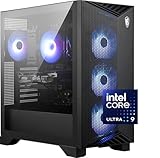
- Intel Core Ultra 9 285 Processor: Newly developed cores deliver ultra-smooth and responsive gameplay. AI accelerators prepare users for the next era of gaming on an AI PC.
- Simplistic Design: Enjoy the latest generation of Windows 11 Home for your everyday needs. *MSI recommends Windows 11 Pro for business use.
- NVIDIA GeForce RTX 5070 Ti GPU
- Cool While Gaming: In conjunction with an RGB CPU Air Cooler, the Aegis RS features four system cooling fans; three in the front and one in the rear to pull in cool air and push heat out of the PC.
- Turn on the Bright Lights: With the built-in RGB lighting, take your gaming experience to the next level by pressing the MSI LED button to cycle through lighting options. Customize lighting even further with MSI Center software.
Mistral says enterprise customers can deploy Vibe on-premises, in a private cloud or on Mistral Cloud, with options such as data residency and enterprise controls. Public enterprise pricing was not listed. API subscriptions are separate from Vibe subscriptions, as explained in Mistral’s billing documentation.
Independent reader supportYour contribution helps us test, update, and keep practical guides available for everyone.A practical test before replacing a tool
- Define the unit of replacement. Is the proposal replacing a screen, a workflow, an application, a database or an entire system of record?
- Check technical fit. Confirm accessible APIs, structured inputs, automatic tests, least-privilege permissions, acceptable latency and a rollback path.
- Calculate total cost. Include subscriptions avoided, model and hosting charges, migration, integration, maintenance, review, compliance and downtime risk.
- Assess failure consequences. Log prompts, tool calls and outputs; determine whether errors can leak data or trigger unauthorized actions; assign a human owner.
- Plan for continuity. Decide what happens during model outages, vendor changes, policy updates or a failed generated deployment.
- Keep an exit route. Preserve source code, data exports, documentation and portable interfaces so the replacement does not create a new lock-in.
Implications for different readers
CIOs and IT leaders
Inventory overlapping tools and identify low-risk workflows for controlled pilots. Keep finance, identity, payroll, manufacturing and regulated records behind established controls unless a replacement meets the same reliability and audit requirements.
Software vendors
Defensible value increasingly lies in trusted data, permissions, integrations, compliance, support and distribution—not only in a feature list. Agent access and automation may become expected product capabilities.
Developers
Coding agents can increase output, but architecture, security review, testing, dependency management and operational ownership remain engineering responsibilities. Generated code should be treated like code from any other contributor.
Investors
The relevant question is not whether half of software companies vanish. Examine whether a vendor’s product is a thin interface that an agent can reproduce, or whether it owns irreplaceable data, workflows, controls, ecosystem effects or contractual trust.
Small businesses
AI-built tools may make a custom workflow affordable, but buying a mature service can still win when the business lacks engineering time, security expertise or a recovery plan.
What’s actually slowing this PC down?
Pick the symptom - the matching free tool is one click away.
Why the prediction could be wrong
- Feature parity is mistaken for product replacement: a working demo may lack support, compliance and reliability.
- Build cost is mistaken for operating cost: monitoring, testing and maintenance continue after generation.
- Clean data is mistaken for production conditions: permissions, adversarial inputs and scale expose failures.
- Model capability is mistaken for organizational capability: requirements, architecture, ownership and data access still have to exist.
- Incumbents are assumed to stand still: established vendors can add agents while retaining distribution and records.
- Coordination costs are ignored: cross-system agents create identity, observability and recovery problems.
- AI infrastructure is treated as free: tokens are only one component of the bill.
Bottom line
Arthur Mensch’s “more than half” figure is best read as a warning about how software is delivered, not as a verified statistic. AI is most likely to replace portions of applications and repetitive workflows first. Systems that provide trusted records, permissions, compliance, specialized operations and accountability are harder to displace. Companies should test the economics and risks of each workflow rather than assume that an agent can replace an entire software category.
Quick Recap
Product prices and availability are accurate as of the date/time indicated and are subject to change. Any price and availability information displayed on Amazon at the time of purchase will apply.




