What’s actually slowing this PC down?
Pick the symptom - the matching free tool is one click away.
Data-center decommissioning is a controlled business, security, facilities, and asset-recovery project—not a simple equipment-removal job. A defensible program prevents outages, protects data, accounts for every serialized asset, recovers practical resale value, and leaves an audit-ready environmental and contractual record.
First decide what “decommissioning” means
Set the boundary before scheduling labor or disposal. A project may involve an entire facility, a room, cage, pod, or customer environment. Decide whether it includes racks, power-distribution units, UPS systems, batteries, generators, cooling, fire suppression, raised flooring, cabling, access control, monitoring, spares, packaging, and documentation.
| Project type | Primary risk |
|---|---|
| Migration | Unplanned outage, dependency failure, or incomplete cutover |
| Relocation | Transport damage, custody gaps, and configuration drift |
| Consolidation | Duplicate or obsolete assets, licensing, and contract issues |
| Partial decommission | Accidentally removing shared infrastructure |
| Full closure | Data exposure, environmental liabilities, and lease disputes |
Also identify the end state: migration to another facility, consolidation, sale, landlord return, conversion to another use, or permanent closure. Physical shutdown does not by itself dispose of information in backups, cloud systems, replicas, or archives.
Put one person in charge
Appoint a single accountable program owner. Give that person authority to coordinate infrastructure, cybersecurity and privacy, data owners, facilities and environmental health and safety, procurement, finance, legal and compliance, records management, business continuity, the IT asset disposition (ITAD) provider, and the landlord or colocation operator.
The Tool Desk
Outbyte PC Repair FREERepair Windows errors before they cause bigger problemsFix Now →Outbyte Driver Updater FREEScan for outdated or missing drivers - takes under a minuteDriver Scan →#1 Best Overall

- Save valuable floor space: 6U wall mount server cabinet Dimensions: 13.78" H x21.65" W x17.72" D.Maximum mounting depth is 14.2"
- Keep critical network equipment secure: glass door and side panels are lockable to prevent unauthorized access. Front door can be installed on either side of the front of the cabinet to satisfy your door swing orientation preference
- Easy equipment configuration: Fully adjustable mounting rails and numbered U positions, with square holes for easy equipment mounting with top and bottom punch-out panels for easy cable access
- Durability: Made of high quality cold rolled steel holds up to 110lb (50kg) (Easy Assembly Required)
- PCI & HIPPA and EIA/ECA-310-E compliant
A facilities contractor may be qualified to remove racks but not to approve data-sanitization decisions. Establish acceptance criteria, escalation paths, legal holds, retention requirements, and a rule that no equipment moves until inventory and dependency approvals are complete.
Build an authoritative, serialized inventory
Start with the CMDB, procurement files, lease schedules, support records, rack diagrams, and maintenance logs, then verify them physically. The CMDB alone is rarely current enough. Freeze unauthorized movement and scan equipment before unplugging it.
For each asset, capture:
- Manufacturer, model, serial number, asset tag, device type, and exact room, row, rack, cage, or cabinet location
- Ownership or lease status, business or customer owner, production status, warranty and support status
- Contract, licensing, and service dependencies
- Installed media, data classification, encryption state, and intended disposition
- Approved sanitization method, final disposition, custody transfers, certificates, and resale value or credit
Include easily missed items: individual SSDs and hard drives, flash cards, backup cartridges, tape libraries, SAN/NAS shelves, blade chassis, embedded appliance drives, out-of-band modules, KVM systems, spare and failed drives, lab equipment, cryptographic devices, key-management hardware, and media in drawers or storage rooms. Reconcile the physical scan with owner attestations and investigate every unrecognized or missing serial number.
Map dependencies before powering anything down
Require an explicit answer to: What continues to run after this device is powered down, and what stops? Map:
Recommended Free Tools
- Applications, virtual machines, hypervisors, clusters, quorum, and storage-to-host relationships
- Replication, backups, snapshots, deduplication stores, and recovery copies
- DNS, DHCP, identity, certificates, firewalls, load balancers, routing, and external connectivity
- Monitoring, alerting, remote management, colocation cross-connects, cloud and SaaS integrations
- Power, cooling, environmental monitoring, physical-access systems, and third-party managed services
Use change tickets, named approvers, maintenance windows, rollback criteria, communications, validation tests, post-shutdown monitoring, and emergency contacts. Validate service termination or migration before removal. Closing a physical site must also address cloud snapshots, object versions, archives, exported images, credentials, certificates, SaaS tenants, and encryption keys.
Rank #2

- Universal 19” Rack Mount Compatibility – Perfect for pro audio, video, IT, and network gear. Compatible with mixers, routers, patch panels, servers, power amps, and more.
- Heavy-Duty Load Capacity – Built to support up to 550 lbs. Ideal for studio gear, DJ setups, server equipment, and AV components that demand serious stability.
- Robust Steel Frame & Design – Made with 1.5mm thick steel and weighs 36 lbs for maximum durability, reduced vibration, and long-term reliability in any setting.
- Mobile & Secure – Preinstalled with 3” industrial-grade caster wheels (lockable), making it easy to move and position your rack exactly where you need it.
- All-In-One Setup Kit Included – Comes with 34 rack screws (5mm & 6mm), a 1U blank spacer, and an assembly tool—ready for fast installation out of the box.
Create a media-sanitization decision matrix
Every data-bearing medium needs a documented decision based on sensitivity, retention and legal requirements, ownership, reuse destination, media type, encryption architecture, validated capability, and risk tolerance.
The current U.S. technical reference is NIST SP 800-88 Rev. 2, finalized September 26, 2025, which superseded Rev. 1. Rev. 2 emphasizes an enterprise sanitization program, validation, trusted implementations, and cryptographic erase, while directing organizations to applicable IEEE 2883, NSA specifications, or an approved organizational standard for many technique details. The full publication is available at NIST’s PDF; its revision announcement is at NIST’s announcement.
Use the least destructive method that provides an acceptable, validated level of confidentiality for the specific medium and data risk:
| Method | Benefits | Limitations | Typical fit |
|---|---|---|---|
| Validated logical sanitization | Preserves reuse and resale | Requires compatible media, trusted tools, and evidence | Functional drives with known capabilities |
| Cryptographic erase | Fast for properly encrypted media | Depends on encryption, key control, and validation | Managed self-encrypting or encrypted systems |
| Physical destruction | Strong finality for inaccessible media | Eliminates reuse value and creates waste | Failed, locked, highly sensitive, or unverifiable media |
| On-site destruction | Reduces transport exposure | Often costs more and prevents resale | High-sensitivity or difficult-to-transport media |
Hard drives
Use an approved overwrite or device-supported purge method appropriate to the drive and interface, or destroy the drive when validation is impossible. A generic overwrite command may not address remapped sectors, hidden areas, RAID configurations, or failed devices.
SSDs and flash
Wear-leveling, overprovisioning, remapped blocks, spare areas, controller behavior, and locked or failed devices make conventional overwrite assumptions unsafe. Require a method approved for the specific media and tool chain. If effective sanitization cannot be validated, destroy the device.
Rank #3

- ADJUSTABLE DEPTH: 4- Post 22U 19" server rack enclosure with 4 vertical rails and adjustable mounting depth 5.7" to 33.0" (14,4cm to 83,8cm); IT rack is compatible with various servers / switches / data / video / AV and other IT networking equipment
- EASY SHIPPING AND ASSEMBLY: Enclosed 22U data rack cabinet ships compact flat-packed to avoid damage and facilitate installation; Include wheels & levelling feet to offer more stability; Home server rack cabinet is only 46.6in (118,3cm) in height
- DESIGN AND VENTILATION: Half height server rack cabinet has lockable and removable door and side panels with vented top allowing airflow; 4 Post 19" rack with 1764lb (800kg) weight capacity (stationary); Computer cabinet rack is EIA/ECA-310-E Compliant
- HARDWARE INCLUDED: Rolling home network rack includes rack mounting and equipment mounting hardware, such as 20 M6 cage nuts / screws, PVC cup washers; Front/rear doors and side panels Keys, 2x allen keys; Rack assembly hardware; Casters and leveling feet
- THE IT PRO'S CHOICE: Designed and built for IT Professionals, this 22U IT Server Cabinet is backed for life, including free lifetime 24/5 multi-lingual technical assistance
Self-encrypting drives
Cryptographic erase is appropriate only when encryption was actually enabled, the architecture and all relevant keys are understood, key destruction or zeroization is validated, copies do not remain elsewhere, and the approved procedure accepts the residual risk. “Encrypted” alone is not proof of sanitization.
RAID, arrays, tapes, and removable media
Plan at component level for controller metadata, cache, hot spares, snapshots, replicas, failed members, replacement drives, management appliances, and backup copies. Deleting a logical volume or breaking a RAID set is not sanitization. Track tape cartridges individually where required, including retention schedules, vault copies, encryption keys, damaged media, and destruction evidence.
Outdated Drivers Are Slowing You Down
One free scan finds every outdated or missing driver and matches the right update for your exact hardware.Free scan · exact hardware matchWindows Errors? Fix Them Before They Spread
Repair common Windows errors and clear accumulated junk for a smoother, more stable PC - no reinstall needed.Free scan · no reinstallCloud and virtual environments
Include provider deletion procedures, snapshots, backups, replicas, object versions, archives, logs, images, credentials, certificates, SaaS tenant closure, and key destruction. A server shutdown does not remove those copies.
Execute shutdown and removal under change control
- Approve the scope, dependency map, retention holds, and media matrix.
- Pilot scanning, custody, packaging, and reporting with a small asset group.
- Run staged shutdowns during approved windows with rollback criteria and named approvers.
- Validate migrated or terminated services and preserve required configurations and records.
- Isolate power and follow lifting, battery, fire-suppression, and environmental safety procedures.
- Scan each item at removal, packing, loading, transport handoff, receiving, and processing.
- Quarantine missing, damaged, unreadable, unexpected, or failed assets rather than moving them through ordinary recycling.
UPS batteries, lithium-ion batteries, generators, cooling equipment, and other power or facility components may need separate packaging, transport, and jurisdiction-specific handling. Coordinate lease returns, landlord inspections, utility disconnection, access badges, monitoring, and fire-system closeout.
Recover value before recycling
Use this hierarchy:
- Redeploy internally
- Return leased equipment
- Transfer through an approved reuse program
- Resell through a qualified ITAD provider
- Refurbish or harvest parts
- Recycle
- Destroy or dispose of residuals that cannot safely be reused or recycled
Asset recovery seeks resale, redeployment, or parts value; recycling recovers material value; destruction removes data-bearing risk but generally eliminates resale value. Older servers, memory, CPUs, storage shelves, switches, and networking optics may still have a market. Require itemized valuation, condition grades, firmware and licensing checks, resale deductions, revenue shares, and treatment of no-value assets. Do not let a provider’s compensation depend only on resale proceeds, which can encourage rushed inventories or rejection of low-value equipment.
Rank #4
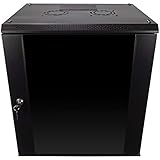
- DURABLE BUILD: Constructed from high-quality Cold Rolled Steel, the NavePoint Consumer Series 12U network cabinet boasts a sturdy, welded frame. Fitting EIA standard 19” networking equipment, this server cabinet confidently supports up to 110 lbs, providing a resilient base for your vital IT gear and equipment
- CONVENIENT DESIGN: This 12U cabinet features a reinforced, heat-treated, tempered glass front door with a security lock. Perfect for applications requiring both security and accessibility, its compact design of 17.72"L x 21.65"W x 24.42"H offers a practical solution for space-constrained settings.
- EASY & CUSTOMIZABLE EQUIPMENT SET UP - The 12U IT cabinet, with removable side panels and security locks, offers customization at its finest. Whether it's for an efficient device or cable management, this data cabinet ensures secure, adaptable configurations that suit your networking server requirements
- ENHANCED VENTILATION & SECURITY - Built-in fans and flow-through ventilation work to prevent overheating, ensuring optimal operation of your equipment. The reinforced, lockable tempered glass front door not only boosts security but also facilitates easy monitoring of installed equipment.
- SAFETY & COMPLIANCE - All NavePoint products are built to industry standards.
Select and contract the ITAD provider
EPA identifies R2 and e-Stewards as the two accredited U.S. certification standards for electronics recyclers. Certification is a screening criterion, not proof that every facility, service line, subcontractor, or downstream processor fits your project. Verify the exact facility, current status, scope, and downstream controls. The e-Stewards standard is available at its V4.1 standard.
Due-diligence questions
- Which facility receives and processes the equipment, and what does its certification cover?
- Who owns downstream processing? Are subcontractors and export destinations disclosed?
- How are assets scanned and custody recorded at pickup, loading, transport, receipt, processing, and final disposition?
- Which tools and standards are used for HDDs, SSDs, flash, failed media, tapes, and encrypted devices?
- Can the provider perform witnessed or on-site destruction and issue serial-level or batch certificates?
- How are exceptions, missing assets, valuation, revenue sharing, insurance, incidents, and audit requests handled?
- Can it provide references for comparable data-center projects?
A contract or statement of work should specify asset populations, locations, work windows, access and background-check requirements, inventory format, custody milestones, transport controls, media procedures, failed-device handling, certificates, downstream disclosure, export restrictions, environmental duties, valuation, revenue share, insurance, breach notification, audit rights, retention periods, and final acceptance criteria. Assign one party responsibility for the master inventory when multiple specialists are used.
Keep security, financial, and environmental evidence separate
A recycling certificate does not prove data sanitization, and a certificate of destruction does not prove every original asset was accounted for. Your closeout package should contain:
- Approved scope, dependency sign-off, change records, shutdown and removal logs
- Original serialized inventory and final reconciliation
- Chain-of-custody and transport records
- Sanitization methods, tool logs, validation results, destruction certificates, and failed-media exceptions
- Resale, credit, cost, revenue-share, recycling, materials-recovery, and downstream reports
- Battery and hazardous-material records, weight tickets where used, and export documentation
- Data-owner approvals, lease-return or landlord sign-off, closed contracts, licenses, circuits, badges, utilities, and monitoring
- Open-issue register, incident records, and lessons learned
A useful certificate identifies serial numbers or batch scope, method, date, facility, responsible party, and exceptions. Keep records for the period required by your contracts, policies, industry rules, and applicable law.
Printable phase-by-phase checklist
- Plan: appoint the owner; define the boundary, end state, legal holds, risks, budget, and acceptance criteria.
- Inventory: freeze movement; reconcile CMDB, procurement, leases, diagrams, and physical scans.
- Dependencies: validate applications, storage, network, power, cooling, facilities, cloud, backups, and third parties.
- Data disposition: classify media; approve methods; document encryption and key handling; quarantine failed devices.
- Provider: verify facility certification, downstream chain, insurance, tools, reporting, and contract terms.
- Shutdown: execute staged changes, rollback plans, communications, and validation tests.
- Removal: scan custody events; package, label, transport, and separately handle batteries and hazardous components.
- Processing: receive, reconcile, sanitize, destroy, refurbish, resell, or recycle according to the approved matrix.
- Value recovery: reconcile lease returns, redeployment, resale proceeds, deductions, parts, and no-value assets.
- Closeout: investigate every exception; obtain certificates and downstream reports; close contracts, utilities, access, and environmental records.
Common mistakes to prevent
- Unplugging before inventory: causes outages, missing assets, and weak data evidence.
- Relying on the CMDB: misses spares, failed drives, and stale records.
- Wiping RAID as one disk: leaves data in members, cache, spares, replicas, or backups.
- Destroying everything: sacrifices value and increases waste when validated sanitization is possible.
- Accepting “encrypted” without key evidence: leaves the erase claim unproven.
- Treating failed media as ordinary recycling: failed devices often require physical destruction and serial-level evidence.
- Assuming certification covers downstream parties: require disclosure, flow-down controls, audit rights, and final evidence.
- Ignoring leased equipment and remote data: creates return disputes and leaves snapshots, backups, credentials, or SaaS data active.
- Confusing recycling records with security records: retain separate evidence for confidentiality, finance, compliance, and environmental reporting.
Choosing the operating model
| Priority | Usually suitable |
|---|---|
| Maximum accountability | Full-service ITAD provider |
| Maximum resale recovery | Provider with strong secondary-market channels |
| Highest control over sensitive media | Internal sanitization plus witnessed destruction for exceptions |
| Minimal transport exposure | On-site destruction |
| Small local project | Reputable local certified recycler or ITAD firm |
| Multi-country program | Provider with demonstrated cross-border compliance and disclosed downstream network |
Local providers can offer shorter transport and easier site visits but may lack capacity or resale channels. National providers offer broader logistics and standardized reporting but may add subcontractors and reduce direct visibility. One provider simplifies accountability; multiple specialists can be better for proprietary equipment, high-security destruction, hazardous materials, or unusual resale markets. If you split the work, designate one master-inventory owner.
Free tools Windows power users keep installed
One-click scans. No signup required.
Enterprise pricing is normally quote-based. Request a line-item quote separating project management, scanning, shutdown labor, rigging, packaging, transport, storage, sanitization, destruction, recycling, resale deductions, revenue share, certificates, reporting, travel, and emergency charges. There is no defensible universal per-server price because volume, location, access, media condition, urgency, hazardous materials, and residual value vary.
Quick Recap
Product prices and availability are accurate as of the date/time indicated and are subject to change. Any price and availability information displayed on Amazon at the time of purchase will apply.




