Do these 3 things before closing this tab:
1Clear out junk files and repair common Windows errors2Scan for outdated or missing drivers - takes under a minute3Repair Windows errors before they cause bigger problemsSprint and Nextel completed their combination on August 12, 2005, creating Sprint Nextel Corporation. The transaction produced a national wireless carrier with more than 44 million subscribers, but it did not instantly merge the companies’ underlying networks: Sprint continued operating CDMA while Nextel continued operating iDEN. Sprint was the legal and accounting acquiring company, even though the deal was promoted as a “merger of equals.”
What happened on August 12, 2005?
The closing date was the completion of a transaction announced on December 15, 2004—not the date the deal was first made public. Nextel merged into a Sprint subsidiary, Sprint changed its corporate name to Sprint Nextel Corporation, and Nextel became a wholly owned subsidiary. The company’s shares began trading on the New York Stock Exchange under the symbol S on August 15, 2005.
The closing announcement described a company with more than 44 million wireless subscribers, coverage reaching approximately 268 million people through its networks, about 80,000 employees and pro forma 2004 revenue of $40.8 billion. Its executive headquarters were in Reston, Virginia, while its operational headquarters were in Overland Park, Kansas. These were contemporaneous closing figures, not later subscriber or coverage totals. Sprint Nextel closing announcement
Timeline of the transaction
- December 15, 2004: Sprint and Nextel announce their proposed combination.
- August 12, 2005: The merger closes after shareholder and regulatory processes.
- August 15, 2005: Sprint Nextel stock begins trading on the NYSE as “S.”
The FCC’s transaction report also distinguishes the announcement from the later closing. FCC transaction report
#1 Best Overall

- 【High-definition large screen, visually stunning】Featuring a 6.6-inch In-Cell HD display with a resolution of 576×1280 pixels, the screen delivers vivid and bright colors for an exceptional visual experience. Whether watching videos, browsing the web, or playing games, everything appears clearer and smoother.
- 【Powerful Performance, Smooth Operation】Equipped with a MediaTek MTK6739 quad-core processor, combined with 4GB RAM and 32GB storage, the system runs stable and efficient. Supports microSD card expansion up to 256GB, easily storing more photos, videos, and apps.
- 【Capture clarity, record brilliance】Equipped with an 13-megapixel front camera and a 16-megapixel rear dual-camera system, it meets all your selfie and everyday photography needs. Capture every beautiful moment in life with clear and natural images.
- 【Long-lasting battery life, fast charging】Features a built-in 5000mAh high-capacity battery with a Type-C charging port for faster, safer charging. Delivers powerful endurance for daily use, eliminating the need for frequent recharging on the go.
- 【Smart System, Seamless Experience】Powered by Android 12.0, featuring a clean and intuitive interface. Supports facial recognition unlocking and a triple-card slot design (dual SIM + memory card), offering flexible and convenient communication and expansion options.
“Merger of equals,” but Sprint was the acquirer
Sprint and Nextel described the transaction publicly as a merger of equals because the intended ownership split gave the two shareholder groups broadly comparable stakes and combined two large wireless businesses. That description referred to the commercial and governance rationale, not to the legal form used at closing.
Legally and for accounting purposes, Sprint was the acquiring entity. Existing Sprint shareholders were expected to retain at least 50.1% of the voting power, helping Sprint remain the accounting acquirer and supporting the planned separation of its local telephone operations. Nextel shareholders received shares and cash, and Nextel became Sprint’s wholly owned subsidiary. The original transaction materials explain the ownership design and approval requirements. Original Sprint–Nextel transaction summary Sprint Nextel Form 10-K
What Nextel shareholders received
The announced exchange terms were set for each outstanding Nextel share as approximately 1.26750218 shares of Sprint Nextel stock plus $0.84629198 in cash. The exact value of that package changed with Sprint’s share price, so the per-share formula is more precise than a single fixed dollar amount.
| Transaction item | Reported amount or term | How to read it |
|---|---|---|
| Stock for each Nextel share | 1.26750218 Sprint Nextel shares | Exchange ratio in the announced consideration |
| Cash for each Nextel share | $0.84629198 | Cash component per outstanding Nextel share |
| Cash consideration reported later by Sprint | $969 million | Aggregate cash in Sprint’s accounting measure |
| Shares issued | 1.452 billion Sprint Nextel shares | Aggregate stock issued in the transaction |
| Converted awards and other costs | Approximately $1.1 billion | Stock-based awards and related transaction amounts |
| Aggregate consideration in Sprint’s later filing | Approximately $37.8 billion | Accounting measure that includes cash, stock and other components |
The exchange terms appear in an SEC filing, while the cash, share issuance and aggregate consideration figures come from Sprint’s later filings. SEC filing with exchange terms Sprint filing on transaction consideration Sprint Nextel Form 10-K
Recommended Free Tools
Rank #2

- Touch screen
- Bluetooth Wireless
- 3.2 MP Camera
- 3g Internet with E-mail
- For use on Sprint network only in the USA. Clean ESN.
Why headlines used $35 billion, $36 billion or $37.8 billion
Contemporary coverage commonly described the deal as a roughly $35 billion or $36 billion stock transaction. Sprint later reported approximately $37.8 billion in aggregate consideration for accounting purposes. Those figures use different definitions and dates: a headline deal value generally emphasizes the negotiated equity transaction, while the later accounting amount includes cash, issued stock, converted awards and other transaction-related amounts. They should not be treated as contradictory claims that one side paid two unrelated prices. Contemporary deal-value discussion
Why Sprint and Nextel combined
Sprint’s assets
- A nationwide CDMA wireless network.
- Consumer, enterprise and long-distance communications businesses.
- A substantial fiber and Internet backbone.
- Local wireline operations that Sprint planned to separate later.
Nextel’s assets
- A strong business and government customer base.
- Direct Connect push-to-talk service.
- The iDEN network and related spectrum.
- Boost Mobile and a distinct prepaid and value-oriented customer segment.
The strategic thesis was scale. A larger carrier could compete more effectively with Cingular Wireless, Verizon Wireless and T-Mobile, sell products across the two customer bases and strengthen its enterprise position. Nextel’s push-to-talk service was especially important to business, government, field-service and public-safety users. Contemporary coverage described Sprint Nextel as the third-largest national U.S. wireless operator at closing. Network World closing-day report FCC report on the transaction
What customers were told immediately
The closing did not require customers to replace their phones or change service that day. Sprint customers continued using CDMA phones and services; Nextel customers continued using iDEN phones and services. Existing plans, features and service arrangements were initially expected to continue, and Sprint stores were expected to carry Nextel products.
The company planned to maintain and expand the iDEN network through at least 2007 while evaluating migration options and other uses for the technology. That meant the new corporate name did not represent an instant single product line. Nextel products, including push-to-talk, remained part of the customer proposition during the transition. Closing announcement and customer-transition plan
Rank #3
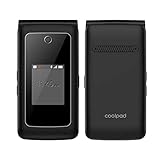
- Item Package Dimension: 7.9899999918502L X 3.699999996226W X 2.199999997756H Inches
- Item Package Weight - 0.57099725858 Pounds
- Item Package Quantity - 1
- Product Type - Cellular Phone
Why the network integration was difficult
Sprint’s CDMA and Nextel’s iDEN systems were different wireless technologies and were not immediately interoperable. A single owner therefore did not create one unified network or a universal handset.
- Customers generally needed different handset families to access the two networks.
- Network planning and spectrum use had to account for both platforms.
- Handset development, billing, retail operations and customer migration required separate work.
- The company had to preserve Nextel’s push-to-talk advantage while building a common corporate identity.
The technically accurate description of August 12, 2005 is that the companies merged while their CDMA and iDEN networks continued operating separately. The closing announcement did not claim that the networks had already been integrated. Network World report on CDMA, iDEN and customer continuity
What happened to Sprint’s wireline business?
The wireless merger was accompanied by preparation to spin off Sprint’s local telecommunications operations. Transaction materials described a planned independent company with approximately 7.5 million local access lines in 18 states, based in the Kansas City area and intended for a separate public listing. The proposed company was named Embarq.
That separation was distinct from the Sprint–Nextel wireless closing, but it made the overall transaction more complex. Sprint Nextel had to combine the wireless businesses while also reorganizing and preparing the local telephone business for independence. Embarq separation materials Contemporary coverage of the planned wireline spin-off
What the closing accomplished—and what it left unresolved
Immediate advantages
- Greater national subscriber scale and population coverage.
- A broader mix of consumer, enterprise, government and prepaid offerings.
- Nextel’s specialized push-to-talk business inside a larger carrier.
- More resources to compete with the other major national operators.
Execution problems still ahead
- Deciding how and when to migrate customers from iDEN and CDMA products.
- Developing compatible handsets and a coherent product roadmap.
- Managing two network platforms, brands and retail experiences.
- Separating the wireline business while integrating wireless operations.
The FCC later reported different subscriber totals and noted acquisitions that occurred after the closing, including Nextel Partners. Those later figures should not be substituted for the more-than-44-million figure announced on August 12, 2005. Later FCC report
Quick Recap
Product prices and availability are accurate as of the date/time indicated and are subject to change. Any price and availability information displayed on Amazon at the time of purchase will apply.




