Free tools Windows power users keep installed
One-click scans. No signup required.
Intel did raise prices on selected consumer processors, but there is no evidence of a flat 10% increase across every Intel CPU. March 2026 reports described a planned increase of roughly 10% across much of the consumer lineup. By July, Intel had confirmed selected consumer and server increases, including documented suggested-price changes of about 15% to 17% for two Core Ultra 200S Plus desktop chips.
What actually happened
The original story began with industry reports on March 19–20, 2026, saying Intel had notified major customers of an approximately 10% consumer-CPU increase expected near the end of March. Those reports were not an Intel-wide public price list.
Subsequent reporting supplied firmer evidence. On July 3, Intel confirmed to Tom’s Hardware that it had raised prices on selected consumer and server processors. The public examples show that actual changes varied by model and could exceed the originally reported 10% figure.
Which consumer CPUs have documented increases?
Intel announced the Core Ultra 200S Plus desktop family on March 11, 2026. Retail availability began March 26 with launch suggested prices of $299 for the Core Ultra 7 270K Plus and $199 for the Core Ultra 5 250K Plus. Intel’s announcement also describes the processors as compatible with the 800-series desktop platform.
What’s actually slowing this PC down?
Pick the symptom - the matching free tool is one click away.
#1 Best Overall

- Get ultra-efficient with Intel Core Ultra desktop processors that improve both performance and efficiency so your PC can run cooler, quieter, and quicker.
- Core and Threads 24 cores (8 P-cores plus 16 E-cores) and 24 threads. Integrated Intel Graphics included
- Performance Hybrid Architecture Integrates two core microarchitectures, prioritizing and distributing workloads to optimize performance
- Performance Unlocked Up to 5.7 GHz unlocked. 40MB Cache
- Compatibility Compatible with Intel 800 series chipset-based motherboards
| Processor | Launch suggested price | Later reported suggested price | Dollar change | Approximate change |
|---|---|---|---|---|
| Core Ultra 7 270K Plus | $299 | $349 | $50 | 16.7% |
| Core Ultra 5 250K Plus | $199 | $229 | $30 | 15.1% |
The later figures come from Tom’s Hardware’s reporting on Intel’s updated recommended prices: $349 and $229. The percentages are arithmetic based on the launch and later suggested prices, not additional Intel guidance. A 10% increase would have produced $328.90 on a $299 processor and $218.90 on a $199 processor.
What those prices do—and do not—mean
- Suggested price: Intel’s reference price, not a mandatory checkout price.
- Distributor or OEM price: A business-to-business price that may differ from Intel’s recommendation.
- Street price: What a retailer actually charges after inventory, promotions, taxes, currency and local competition.
- System price: The final cost of a desktop or laptop, which also includes the motherboard, memory, storage, graphics, cooling and the manufacturer’s margin.
Retailers can still sell old inventory below the revised recommendation, and a promotion can temporarily erase the difference. Regional prices also vary with taxes, tariffs, exchange rates and distribution.
Why Intel is raising prices
Intel has cited current market dynamics, higher supply-chain costs and strong demand for Core Ultra 200S Plus processors in explaining the selected increases, according to Tom’s Hardware.
Intel’s first-quarter 2026 earnings-call materials warned that rising prices for memory, wafers and substrates could affect product costs and demand. The company also expected full-year PC unit total addressable market to decline by a low-double-digit percentage. Read the earnings-call document.
Rank #2

- Game without compromise. Play harder and work smarter with Intel Core 14th Gen processors
- 24 cores (8 P-cores plus 16 E-cores) and 32 threads. Integrated Intel UHD Graphics 770 included
- Leading max clock speed of up to 6.0 GHz gives you smoother game play, higher frame rates, and rapid responsiveness
- Compatible with Intel 600-series (with potential BIOS update) or 700-series chipset-based motherboards
- DDR4 and DDR5 platform support cuts your load times and gives you the space to run the most demanding games
Industry reporting adds a capacity explanation: demand for CPUs used in AI infrastructure, including inference workloads, is competing with client-PC supply. Tom’s Hardware reported that allocation decisions may favor higher-margin data-center products. AI demand is therefore an important contributing factor, not the sole cause established by Intel’s public statement.
TrendForce reported indications of 5%–10% consumer-CPU price increases since March and 10%–20% server-CPU increases, while warning that further changes were possible: TrendForce. Those figures describe industry and channel observations, not a universal Intel consumer price schedule.
What it means for the price of a PC
DIY desktop builders
A $199 processor moving to $229 adds about $30 before tax; a $299 processor moving to $349 adds about $50. The complete platform can change by more than that if DDR5 memory, motherboards, SSDs, graphics cards or coolers are also more expensive.
Compare the complete build:
- CPU and actual in-stock retail price
- Compatible 800-series motherboard cost
- DDR5 capacity and availability
- Cooler, power and case requirements
- Gaming performance at the intended resolution
- Productivity performance and upgrade path
- Warranty and return policy
Intel lists the 270K Plus with 24 cores (8 performance and 16 efficiency cores) and the 250K Plus with 18 cores (6 performance and 12 efficiency cores) in its launch materials: Intel’s product PDF.
Do these 3 things before closing this tab:
1Clear out junk files and repair common Windows errors2Scan for outdated or missing drivers - takes under a minute3Repair Windows errors before they cause bigger problemsRank #3
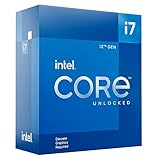
- Intel Core i7 3.60 GHz processor offers more cache space and the hyper-threading architecture delivers high performance for demanding applications with better onboard graphics and faster turbo boost
- The Socket LGA-1700 socket allows processor to be placed on the PCB without soldering
- 11 MB L2 and 25 MB L3 cache offers supreme performance for computation intensive apps
- Intel 7 Architecture enables improved performance per watt and micro architecture makes it power-efficient
Prebuilt desktops
System manufacturers can absorb part of a CPU increase, reduce discounts, change the component mix or pass through a larger increase. OEM communications about supply and pricing were reported by CRN. An Intel CPU increase therefore does not translate mechanically into the same percentage increase for a prebuilt PC.
Laptops
Laptop processors are generally sold to OEMs as part of a complete design. Buyers may see higher laptop prices, fewer promotions, less memory or storage at a given price, delayed refreshes or use of an older tier rather than an immediate 10% increase on every Intel notebook.
Businesses
For corporate fleets, labor, deployment, support, warranty and energy costs can outweigh a $30–$50 processor change. Procurement teams should evaluate replacement schedules, long-term OEM support, image validation and service contracts instead of reacting to a headline percentage.
How much wider PC inflation could be
Omdia estimated that U.S. PC shipments fell 7% year over year in the first quarter of 2026, with consumer shipments down 9.5%, and projected consumer and government PC average selling prices to rise 10% during 2026. Those are Omdia estimates, not a guarantee for an individual retailer. Higher memory, storage and other component costs can make the total bill rise more than the CPU percentage.
Quick wins for a faster PC:
Clear out junk files and repair common Windows errorsFree Scan →Fix the driver behind crashes, sound loss and screen glitchesFind Drivers →Rank #4

- Next‑Gen Platform Support: Compatible with Intel 800 Series Chipset‑based motherboards with LGA1851 Socket enabling PCIe 5.0/4.0 and high‑speed DDR5 memory (up to 7200 MT/s).
- High‑Performance Core Configuration: Features up to 24 cores (8 P‑cores + 16 E‑cores) for demanding gaming and creator
- Ultra‑Fast Boost Clocks: Reaches up to 5.5 GHz max turbo frequency for top‑tier responsiveness and performance
- Built for Enthusiasts: Unlocked for performance tuning when paired with Intel Z‑series chipsets, making it ideal for overclockers and power users.
- Robust Power & Thermal Design: Engineered with 125W base power and 250W max turbo power to sustain high‑intensity
Intel versus AMD
AMD is the main competitive check on Intel’s pricing power. If AMD offers an available platform at a lower total cost, Intel may have difficulty passing through the full increase. If both vendors face component and capacity pressure, the entire x86 market could become more expensive.
Do not treat reports of roughly 16%–17% increases on some AMD server products as proof of a matching AMD consumer increase. TrendForce’s report concerns server lines.
For a fair comparison, price the whole platform: CPU, motherboard, memory, cooler, power supply, expected performance, upgrade path, availability and return policy. Intel’s own performance claims—such as up to 15% faster gaming than a prior comparable processor and up to 103% higher multithread performance than a competing CPU in selected tests—are vendor results tied to specific hardware, software, settings and methodology. Intel publishes the test conditions.
Should you buy now?
Buy sooner when
- You need a working PC in the next few weeks.
- The exact processor is in stock at an attractive street price.
- Work, school or a project makes delay costly.
- You are targeting a model with a documented suggested-price increase.
Wait when
- You have no immediate need.
- An AMD platform currently offers better complete-system value.
- Retail inventory remains below Intel’s revised suggested price.
- You are waiting for a launch, clearance sale or clearer supply conditions.
Do not panic-buy solely because of the original 10% headline. A suggested-price change does not prove that retail prices will rise further, and today’s discount may not be better than a future competing platform.
Recommended Free Tools
What remains uncertain
- The complete list of affected Intel consumer SKUs is not public in the available reporting.
- It is not established whether additional increases will occur later in 2026.
- OEM pass-through will vary by contract, inventory and product tier.
- Retail promotions and regional conditions may offset revised suggested prices.
- Supply constraints may ease, persist or shift between client and data-center products.
- Older CPUs could hold value during shortages, but they could also fall when retailers clear inventory; a late-2025 report about possible 13th-generation increases was supply-chain reporting, not a confirmed company-wide policy: Windows Central.
Bottom line for PC buyers
Intel’s price story is real, but “all consumer CPUs rose 10%” is too broad. The strongest documented evidence is a move from $299 to $349 for the Core Ultra 7 270K Plus and from $199 to $229 for the Core Ultra 5 250K Plus—roughly 16.7% and 15.1% at the suggested-price level. Shop the actual street price, compare the full Intel and AMD platforms, and buy a discounted in-stock system when you need it; otherwise, waiting remains reasonable.
Quick Recap
Product prices and availability are accurate as of the date/time indicated and are subject to change. Any price and availability information displayed on Amazon at the time of purchase will apply.




