Intel and Amazon Web Services announced on September 16, 2024, a multi-year, multibillion-dollar framework to co-invest in custom chip designs and Intel-manufactured wafers. The named programs were an AWS AI fabric chip on Intel 18A and a custom Xeon 6 chip on Intel 3. It was a significant customer-validation signal for Intel Foundry, but the announcement did not disclose a contract value, wafer volumes, production schedule, margins or guaranteed financial outcome.
What Intel and AWS actually announced
The agreement expanded a relationship that Intel and AWS said dates to 2006, when AWS launched its first Amazon EC2 instance featuring Intel chips. AWS is Amazon’s cloud-computing business and the relevant customer in this announcement.
| Program | Manufacturing node | What was disclosed |
|---|---|---|
| Custom AWS AI fabric chip | Intel 18A | AWS and Intel described a custom design to be manufactured on Intel 18A. |
| Custom AWS Xeon 6 chip | Intel 3 | A custom Xeon 6 design for AWS, extending the companies’ existing server-chip relationship. |
| Potential future designs | Intel 18AP and Intel 14A | Intel identified these as possible areas for further engagement, not confirmed production programs. |
Intel and AWS called the arrangement a “multi-year, multibillion-dollar framework” covering products and wafers. That description comes from the companies; it is not a disclosed booking or annual revenue figure. The official announcement also warned that the framework might not be completed on time or at all and that expected financial benefits might not materialize. Intel and AWS announcement
What “AI fabric chip” means—and what it does not mean
The announcement did not publish a complete specification or identify the AI fabric chip as Trainium, Inferentia or another named AWS accelerator. The safest description is an AWS custom-silicon component associated with AI infrastructure. Calling it an order for all of AWS’s AI chips, or naming a specific accelerator without confirmation, goes beyond the disclosure.
What’s actually slowing this PC down?
Pick the symptom - the matching free tool is one click away.
#1 Best Overall

- Intel Xeon E5-2699 V4 Docosa-core (22 Core) 2.20 Ghz Processor - Socket Lga 2011-v3 - 5.50 Mb - 55 Mb Cache - 64-bit Processing - 14 Nm - 145 W
AWS designs custom processors and accelerators for its own cloud workloads while also offering systems based on Intel, AMD and Nvidia. The Intel framework therefore indicates supplier and technology cooperation, not that AWS is abandoning other chip providers.
Why AWS mattered to Intel Foundry
Intel was trying to turn its manufacturing arm into a viable external foundry while also restoring confidence in its process roadmap. A large cloud operator can matter in several ways:
- Reference customer: AWS is a prominent, technically demanding buyer whose design win could help Intel approach other fabless companies.
- Advanced-node demand: An AWS design on 18A could provide an early external workload for a new process.
- Design-to-manufacturing experience: Custom cloud silicon tests process technology, design enablement, packaging and production coordination.
- Potential capacity utilization: Committed work could help use expensive fabrication capacity, although no public wafer volume was supplied.
These are strategic possibilities, not reported financial results. Neither company disclosed how many wafers AWS might buy, how much of the headline value represented purchases versus co-investment, or whether the arrangement was take-or-pay.
Why Intel 18A was central
Intel presented 18A as its most advanced process technology at the time. Its technology claims included RibbonFET gate-all-around transistors and PowerVia backside power delivery, along with a planned return to process leadership and product launches targeted for 2025. Intel’s announcement
Rank #2
![Intel Xeon Silver [3rd Gen] 4310 Dodeca-core [12 Core] 2.10 GHz Processor - OEM Pack](https://m.media-amazon.com/images/I/31KUwTUW75L._SL160_.jpg)
Winning a customer before or around a new-node launch can validate that the process is attracting serious designs. It does not, by itself, demonstrate competitive yields, performance per watt, reliability, cost or profit at high volume. A foundry customer needs production economics, not merely a process that can make functioning test chips.
What Intel 3 added
The custom Xeon 6 program was less of a first-of-its-kind AI-foundry breakthrough than the 18A work. It extended Intel’s existing server relationship with AWS and potentially preserved CPU business while Intel built a broader foundry model. Its importance was continuity and additional customer engagement, rather than proof that Intel had captured AWS’s entire AI silicon roadmap.
How the deal fit Intel’s wider turnaround plan
The AWS announcement arrived alongside a restructuring agenda intended to improve execution and capital efficiency. Intel said it would:
- Make Intel Foundry an independent subsidiary structure within the company.
- Pursue a targeted $10 billion cost-savings plan.
- Streamline its product portfolio and refocus on its x86 franchise while continuing an AI strategy.
- Adjust the timing and scope of some manufacturing-expansion projects.
The logic was interconnected: win external customers, separate foundry accountability more clearly, reduce spending and concentrate resources on process execution. Intel’s description of the plan is available in its foundry strategy update.
Rank #3
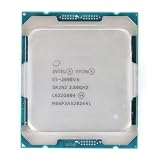
- Total Cores 14
- Total Threads 28
- Processor Base Frequency 2.60 GHz
- Max Turbo Frequency 3.50 GHz
- Sockets Supported LGA2011-3
Separate development: up to $3 billion in U.S. funding
On the same day, Intel announced up to $3 billion in direct CHIPS Act funding for the U.S. government’s Secure Enclave program. The program was intended to expand trusted leading-edge semiconductor manufacturing for the U.S. government. Intel’s Secure Enclave announcement
That award and the AWS framework supported Intel’s domestic-manufacturing narrative, but they were separate developments. CHIPS Act funding is not AWS revenue, and government support does not substitute for repeatable commercial foundry demand.
Ohio context: related, but not the deal’s value
Intel and AWS linked the collaboration to U.S.-based manufacturing and Intel’s Ohio operations. AWS separately said it planned to invest $7.8 billion to expand data-center operations in central Ohio, in addition to its previously stated Ohio investment. That data-center spending is regional infrastructure investment, not the value of Intel’s chip-manufacturing framework. Intel and AWS announcement
Five tests for whether the deal changed Intel’s outlook
1. Customer quality
AWS is a strategically important cloud customer, so this announcement carried more weight than a small, unpublicized design win. It gave Intel a credible external reference.
Do these 3 things before closing this tab:
1Fix the driver behind crashes, sound loss and screen glitches2Repair Windows errors before they cause bigger problems3Scan for outdated or missing drivers - takes under a minuteRank #4

- Manufacturer: Intel CPU Frequency: 2.20 GHz CPU Max Turbo Frequency: 3.60 GHz Number of Cores: 22 Threads: 44 Cache: 55 MB Intel Smart Cache Number of UPI Links: 0 Lithography: 14 nm Thermal Design Power: 145 W Memory Types: DDR4 1600/1866/2133/2400 Max Memory Size: 1.5 TB Max # Memory Channels: 4 Sockets Supported: FCLGA2011-3 E5-2699v4
2. Process validation
The 18A program could test Intel’s ability to support a demanding external design. The decisive evidence would be delivered performance, power, yield, reliability and cost at production scale.
3. Volume
No public wafer commitment was disclosed. “Multibillion-dollar” could cover several years and multiple programs; it cannot be converted into annual revenue without contract terms.
4. Economics
Profitability would depend on process development, tooling, capacity, packaging, design enablement, customer-specific engineering, yield losses, depreciation and support costs. The announcement supplied no margin or earnings forecast.
5. Repeatability
The strongest turnaround evidence would be additional external customers. One AWS framework could become an anchor, but it could also remain a concentrated relationship vulnerable to design changes, delays or AWS roadmap decisions.
Free tools Windows power users keep installed
One-click scans. No signup required.
Best Value

- Part Number Identification: CD8069504194501 for easy reference and compatibility verification
- CPU Series Specification: 2nd Generation Intel Xeon Scalable processor from the Gold 6000 series
- Processor Frequency: 3.10GHz base clock speed with 18 cores for high-performance computing tasks
- Package Type: OEM tray processor without retail packaging
- Cooling Device Notice: Processor only, cooling device not included and must be purchased separately
What later filings show
Intel’s fiscal-2025 filing said Intel 18A had entered high-volume production. That is meaningful manufacturing progress. The same filing, however, said Intel had few external foundry customers to date and still viewed building a successful external foundry as a long-term objective. Intel’s fiscal-2025 Form 10-K
That follow-up supports a balanced reading: 18A reached an important production milestone, while the customer-acquisition and profitability challenge remained unresolved. The filing does not establish that every element of the 2024 AWS framework had been completed or quantify its financial contribution.
Risks investors and technology buyers should watch
- Execution: Intel’s own risk language left open whether the framework would be completed and whether its benefits would appear.
- Yield and cost: A chip can be technically successful yet uneconomic if defect rates or manufacturing costs are too high.
- Capacity: Building fabs ahead of firm demand can increase capital needs; winning a customer can also require dedicated capacity and packaging investment.
- Concentration: Dependence on one or two external customers would leave the foundry exposed to cancellations, delays and roadmap changes.
- Competition: Intel must compete for foundry designs against established manufacturing alternatives while AWS also develops its own silicon and buys from other suppliers.
- Timing: The announcement was a 2024 event. Later production and customer data, rather than the headline alone, determine whether it became a commercial inflection point.
Bottom line
The AWS framework was a meaningful vote of confidence in Intel’s manufacturing roadmap and a potentially valuable reference customer for Intel Foundry. It was not proof of a completed, profitable, high-volume turnaround. The evidence supports calling it an important validation signal—especially for 18A—while the undisclosed volumes, economics, execution status and limited external-customer base leave the central turnaround question open.
Quick Recap
Product prices and availability are accurate as of the date/time indicated and are subject to change. Any price and availability information displayed on Amazon at the time of purchase will apply.




