Do these 3 things before closing this tab:
1Repair Windows errors before they cause bigger problems2Scan for outdated or missing drivers - takes under a minute3Clear out junk files and repair common Windows errorsAMD completed its acquisition of ZT Systems on March 31, 2025, moving beyond a chip-focused strategy toward complete, deployable AI infrastructure. The deal was announced at a headline value of $4.9 billion, but AMD’s lasting strategic asset was not a permanently owned server factory. It was ZT’s rack-scale design and customer-enablement expertise, which AMD retained after selling the manufacturing business to Sanmina.
The short version
- AMD acquired ZT Systems to add systems engineering, cluster validation and customer-deployment capabilities to its CPU, GPU, networking and ROCm portfolio.
- ZT was expected to add more than 1,000 design engineers, with its design teams joining AMD’s Data Center Solutions organization.
- AMD later sold ZT’s U.S.-headquartered data-center infrastructure manufacturing business to Sanmina, while retaining rack-scale AI design and customer-enablement teams.
- The transaction improves AMD’s ability to offer coordinated AI infrastructure, but it does not by itself match Nvidia’s software ecosystem, installed base or deployment scale.
AMD described the transaction in its completion announcement as a way to combine CPUs, GPUs, networking silicon, ROCm software and rack-scale systems expertise. AMD’s March 31, 2025 announcement also said the combined organization would focus on training and inference systems tailored to individual customer environments.
What AMD actually paid
The $4.9 billion figure was AMD’s announced headline value on August 19, 2024, including contingent consideration. It should not be treated as identical to the cash and stock delivered at closing or to the amount later recorded in purchase accounting.
| Transaction measure | Amount | What it means |
|---|---|---|
| Announced value | $4.9 billion | AMD’s August 2024 headline value, including up to $400 million in contingent consideration. Source |
| Cash paid at closing | Approximately $3.375 billion | Cash consideration, subject to adjustments, described in AMD’s closing filing. SEC filing |
| Shares issued at closing | 8,335,849 AMD shares | Stock consideration issued when the acquisition closed. SEC filing |
| Additional possible consideration | Up to $300 million and 740,961 shares | Contingent payments tied to specified conditions. AMD filing |
| Later reported purchase consideration | Approximately $4.4 billion | AMD’s accounting disclosure, including estimated contingent consideration. SEC acquisition accounting |
Those figures describe different stages and accounting views. They should not be subtracted from one another to claim that AMD acquired ZT for a particular net price.
#1 Best Overall

- For AMD EPYC 9754 128 Core Bergamo 2.25GHz (100-000001234) EPYC 9004 Series Socket SP5 ZEN4 256MB L3 Bulk / Tray Pack (Unlocked) Server Processor
What “rack-level expertise” means
An AI accelerator is only one component of a functioning cluster. A rack-level design coordinates the accelerator and host CPU with networking, memory, storage, power delivery, cooling, cabling, firmware, system management and monitoring. Engineers must then validate interoperability across racks and integrate the result with a customer’s software and data-center standards.
That work affects more than benchmark speed. Poor integration can delay deployment, reduce utilization, create thermal or power constraints and increase operating costs. ZT Systems’ experience turning components into validated, high-volume systems for hyperscale customers was therefore intended to address the engineering gap between selling a GPU board and delivering usable AI capacity.
What AMD acquired and kept
ZT Systems was an AI and general-purpose compute infrastructure provider with systems-design and customer-enablement capabilities. AMD said the acquisition would add more than 1,000 design engineers, a figure also reported in contemporary coverage. Former ZT Systems President Doug Huang moved into AMD’s data-center platform engineering organization. Founder and CEO Frank Zhang became involved with the ZT manufacturing organization and its subsequent transition.
Rank #2

- Dual Processor Support: Supports and includes 2 AMD EPYC processors installed for enhanced computing performance
- Processor Configuration: Features 2 installed AMD EPYC processors for powerful server operations
- AMD Processor Technology: Equipped with AMD processor manufacturer components for reliable performance
- EPYC Processor Type: Utilizes AMD EPYC processor type designed for enterprise-level server applications
- 5th Generation Processing: Powered by 5th Gen AMD EPYC 9115 processors running at 2.60 GHz with hexadeca-core architecture
Customer relationships should be described carefully: ZT’s prior work with large cloud and hyperscale customers did not automatically transfer every contract, purchasing commitment or deployment to AMD.
AMD retained the rack-scale AI design and customer-enablement capability. It did not retain the entire manufacturing operation. On October 27, 2025, AMD completed the sale of ZT’s U.S.-headquartered data-center infrastructure manufacturing business to Sanmina. AMD said Sanmina would become a preferred new-product-introduction manufacturing partner for AMD cloud rack and cluster-scale AI systems.
AMD’s intended AI infrastructure stack
| Layer | AMD’s role or component |
|---|---|
| Accelerators | Instinct data-center GPUs |
| Host compute | EPYC server CPUs |
| Networking | AMD networking silicon and industry-standard networking technologies |
| Software | ROCm open-source AI software platform |
| System design | ZT-derived rack- and cluster-level engineering |
| Manufacturing | Sanmina partnership after the divestiture |
| Deployment | Design validation, customer enablement and integration support |
This is better described as a coordinated “silicon to software to rack and cluster” offering than as AMD manufacturing every part of an end-to-end system. AMD’s open-ecosystem positioning also does not mean effortless compatibility; buyers still need to validate drivers, libraries, frameworks, interconnects and management software.
Rank #3

- High Performance Server: Features an AMD EPYC 7313 processor with a speed of 1.44 GHz and 32 GB of DDR4 memory for fast performance.
- Expandable Storage: Includes an P408i-a storage controller and 8 SFF drive bays for flexible storage options.
- Modern Design: Has a sleek, modern style with a black finish and ergonomic keyboard for comfortable use.
- Easy Setup: Comes with an 800W power supply and pre-installed operating system for quick installation.
- Reliable Connectivity: Offers multiple USB and Ethernet ports for seamless connectivity to other devices.
Why the capability matters against Nvidia
Hyperscalers increasingly buy or commission complete infrastructure deployments rather than isolated accelerator cards. AMD historically had major strengths in server CPUs and accelerators, but customers also need a validated cluster, networking topology, power and cooling design, software stack and deployment plan.
ZT helps AMD present a broader alternative that combines EPYC, Instinct, networking, ROCm and system engineering. That could shorten the path from product availability to customer deployment and make customer-specific designs easier to deliver. AMD characterized faster deployment and customer optimization as strategic benefits; those were company expectations, not independently proven results in the acquisition announcement.
The Tool Desk
Outbyte Driver Updater FREEFix the driver behind crashes, sound loss and screen glitchesFind Drivers →Outbyte PC Repair FREERepair Windows errors before they cause bigger problemsFix Now →The comparison with Nvidia remains incomplete. Nvidia’s advantage includes CUDA and its surrounding developer ecosystem, networking and integrated systems, installed base, supply relationships and customer adoption. ZT’s engineering expertise does not by itself solve ROCm compatibility, framework optimization, migration costs or long-term software support.
Rank #4

- HPE ProLiant DL145 Gen11 – P87460-005 – SMART CHOICE MODEL – COMPACT EDGE SOLUTION: Preconfigured and factory-tested for fast deployment and cost efficiency. Includes AMD EPYC 8024P (8 cores, 2.40 GHz), 16GB DDR5 ECC SmartMemory, 2 SFF chassis, 480GB SATA 6G Read Intensive SSD, Broadcom 1GbE OCP NIC, and single 700W Platinum PSU—ideal for IoT gateways, retail POS, and light virtualization.
- PERFORMANCE AND MEMORY – EFFICIENT FOR LIGHT WORKLOADS: The AMD EPYC 8024P delivers 8 cores at 2.40 GHz for edge compute tasks. Includes 16GB DDR5 RDIMM ECC (1x16GB) and supports up to 768GB across six DIMM slots—ideal for small-scale virtualization and real-time analytics.
- STORAGE – READY FOR OS AND DATA Includes one HPE 480GB SATA 6G Read Intensive SSD for quick deployment. Supports additional SFF drives for storage flexibility—perfect for edge workloads and local data storage.
- ENTERPRISE DESIGN – POWER AND CONNECTIVITY: Single 700W Platinum hot-plug power supply ensures reliable power delivery. Broadcom BCM5719 OCP NIC offers four 1GbE ports for edge networking and connectivity.
- SECURITY AND MANAGEMENT – BUILT-IN PROTECTION: HPE iLO6 with Intelligent Provisioning, TPM 2.0, Silicon Root of Trust, and secure boot protect against threats. Compatible with HPE OneView and Compute Ops Management for simplified lifecycle management.
Why AMD sold the manufacturing business
AMD announced in May 2025 that it would divest ZT’s data-center infrastructure manufacturing business and completed the transaction with Sanmina on October 27. The announced sale consideration was $3 billion in cash and stock, including a contingent payment of up to $450 million, subject to customary adjustments. See AMD’s transaction announcement.
AMD’s stated structure was to retain design and customer-enablement expertise while using Sanmina as a preferred manufacturing partner. A specialized contract manufacturer can provide scale and flexibility without requiring AMD to operate a large manufacturing organization. It also creates a multi-party model: AMD supplies silicon and platform engineering, ZT-derived teams handle design and enablement, Sanmina manufactures qualifying products, and customers may involve additional OEM, ODM and integration partners.
That structure is not evidence of financial distress or manufacturing failure. The public rationale centers on strategic focus and ecosystem relationships.
Free tools Windows power users keep installed
One-click scans. No signup required.
Best Value
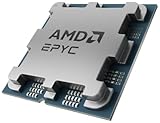
- The processor features Socket AM5 socket for installation on the PCB
- EPYC product line processor for better usability and increased efficiency
- Dodeca-core (12 Core) processor core allows multitasking with great reliability and fast processing speed
- 64 MB of L3 cache memory provides excellent hit rate in short access time enabling improved system performance
- Processor with 3.40 GHz clock speed for reliable and fast execution of instructions to ensure maximum convenience and feasibility
What enterprise buyers should evaluate
A rack-scale proposal should be judged on the complete deployment, not the GPU specification alone. Buyers should request:
- A complete rack and cluster bill of materials, including networking and management components.
- ROCm version, framework compatibility and evidence from the buyer’s actual models.
- Training and inference results under realistic power, cooling and utilization conditions.
- Networking topology, supported fabrics and interconnect performance.
- Power, cooling, floor-space and site-readiness requirements.
- Firmware, driver and software-support lifecycle commitments.
- Deployment schedule, qualification responsibilities and on-site service coverage.
- Expansion, replacement and total-cost-of-ownership assumptions, including electricity and cooling.
Public list pricing for a complete AMD ZT-derived rack or cluster is not established in the cited materials. These systems are normally quote-based and configuration-dependent.
What the deal proves—and what it does not
The acquisition gives AMD a stronger systems-integration and customer-deployment story. It helps connect AMD’s CPUs, GPUs, networking and ROCm software to the practical work of building and validating AI clusters. The later Sanmina transaction confirms that AMD viewed design and enablement as the strategic asset, not ownership of a vertically integrated server-manufacturing business.
It does not prove parity with Nvidia, guarantee faster deployment, establish lower total cost or show that AMD has won particular hyperscale contracts. AMD said the acquisition was expected to become accretive on a non-GAAP basis by the end of 2025, but that was a forward-looking company forecast.
Crashes, No Sound, or Screen Glitches?
Random freezes, missing sound and display glitches usually trace back to one bad driver. Find and replace yours safely.Free scan · under a minutePC Slower Than It Used to Be?
A free scan shows the junk files, broken settings and background clutter dragging Windows down - then fixes them in one click.Free scan · Windows 10 & 11The Bottom Line
AMD’s ZT Systems deal closes part of its rack- and cluster-integration gap. The durable benefit is retained engineering and customer-enablement expertise, paired with partner manufacturing—not a standalone server business. Whether that translates into meaningful share against Nvidia will depend on ROCm adoption, validated customer workloads, supply, support and the economics of complete deployments.
Quick Recap
Product prices and availability are accurate as of the date/time indicated and are subject to change. Any price and availability information displayed on Amazon at the time of purchase will apply.




