Do these 3 things before closing this tab:
1Scan for outdated or missing drivers - takes under a minute2Repair Windows errors before they cause bigger problems3Fix the driver behind crashes, sound loss and screen glitchesMining is the process of extracting valuable minerals, ores, rocks, coal, uranium, and other geological materials from the Earth and preparing them for use. It is the extraction stage of a larger supply chain that can include exploration, mine development, crushing and concentration, transport, smelting or refining, manufacturing, recycling, and closure. Mining supplies materials for construction, electricity, transport, electronics, agriculture, defense, and everyday products.
This article uses “mining” in the geological sense. Cryptocurrency mining and data mining are separate subjects.
What is mining?
Mining begins when an organization removes a naturally occurring material from the ground or seabed for its mineral, chemical, physical, or fuel value. The material may be metallic, industrial, construction-related, or used for energy.
Mining is not the same as processing or refining. A mine may extract ore and send it to another facility for concentration, smelting, or purification.
#1 Best Overall
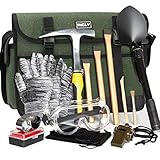
- Complete and Organized Set: Our INCLY 15 piece kit includes a sturdy 32oz rock pick hammer, 3 rock chisels, a shovel set, gloves, a high - quality musette bag, safety glasses, a whistle, a thermometer, and a compass. The tools are neatly organized in a durable musette bag with multiple pockets. This bag keeps your equipment protected during storage and transport, ensuring everything is in pristine condition when you're ready to use them. It's a comprehensive solution for all your geology, rock hounding, and prospecting needs.
- Precision - Made Rock Chisels: The chisels in our kit come in 7.8 - inch, 9.8 - inch, and 11.8 - inch sizes. Crafted from high - grade chrome - vanadium steel with a hardness of 54 - 58HRC, they are expertly forged for optimal strength and durability. Whether you're chipping away at brickwork, concrete, metal, or stone, these chisels are up to the task, making them perfect companions for your rock - hunting and prospecting adventures.
- Heavy - Duty Stainless Steel Hammer: Our hammer features a drop - forged, one - piece all - steel head with a fully polished finish and an added rust - preventive clear coating. Engineered for maximum strength, it can withstand rigorous use during tough tasks. Its robust construction ensures long - lasting durability, providing you with reliable performance for countless geology expeditions.
- Large - Capacity and Durable Musette Bag: Our musette bag offers generous space to hold all your tools, as well as any rocks, minerals, gems, gold, or fossils you discover. Made from high - quality, tear - resistant materials, it's designed to endure the rigors of outdoor use. The bag's smart design makes it easy to transport and organize your equipment during your adventures.
- Trusted by Enthusiasts and Professionals: Whether you're an experienced rock collector, a passionate gem hunter, or a geology hobbyist, our INCLY Geology Tools kit is designed to exceed your expectations. We stand firmly behind the quality of our kit. If you're not completely satisfied, we offer a hassle - free refund or replacement policy. Order with confidence and embark on your geology adventures with top - notch tools.
Key terms
- Mineral: A naturally occurring inorganic substance with a characteristic chemical composition and crystal structure.
- Ore: Rock containing a valuable mineral in sufficient concentration to be extracted profitably under particular economic and technological conditions.
- Waste rock: Rock removed to reach or expose ore but not processed as the main economic material.
- Overburden: Soil and rock covering a deposit, especially in surface mining.
- Tailings: Fine-grained waste left after valuable minerals have been separated from crushed ore.
- Beneficiation or mineral processing: Physical or chemical treatment that concentrates valuable minerals.
- Smelting and refining: Later processes that produce a more commercially usable or purer material.
Excavation, crushing, grinding, concentration, and refining can all generate waste. The USGS discusses waste rock, tailings, slag, and other mine wastes at its mine-waste overview.
What materials are mined?
Metallic minerals
Metal mines produce iron ore, copper, gold, silver, zinc, lead, nickel, cobalt, lithium, manganese, bauxite (the principal aluminum ore), and rare-earth elements. Some metals are primary products; others are recovered as coproducts or byproducts of a different mine.
Nonmetallic and construction minerals
Quarries and other operations produce limestone, sand and gravel, clay, gypsum, salt, potash, phosphate rock, dimension stone, silica sand, and aggregate. These materials go into concrete, roads, cement, glass, fertilizers, wallboard, chemicals, and soil treatment.
Fuel minerals
Coal and uranium are mined for energy. Oil shale is also extracted in some contexts. Petroleum and natural gas are generally described as extraction industries rather than conventional hard-rock mining, although they are resources taken from the Earth.
What’s actually slowing this PC down?
Pick the symptom - the matching free tool is one click away.
Minerals support infrastructure, manufacturing, technology, and energy systems, as described by the USGS at its Minerals science page.
How does mining work?
A mine is a project with a lifecycle, not simply a hole in the ground. The sequence varies by commodity and jurisdiction, but the following stages are typical.
Rank #2

- An essential tool for contractor, camper, hunter, prospector, geologist, archaeologist, paleontologist, and is perfect for breaking and chipping brick / concrete / stone / rock in masonry construction, prospecting, mining and geologizing
- Specially engineered 22-oz. head weight and 11-in. overall length with perfect balance and power-to-weight ratio increase swing speed and multiply striking power
- Drop forged one-piece all steel head-handle construction with fully polished finish and additional rust-preventative clear coating for maximum strength and durability
- Precisely machined square striking face on one side and a sharp pointed tip on the other side for versatile applications
- Ergonomically designed anti-shock and anti-slip soft rubber grip for more comfort and control during use
- Exploration: Geologists use mapping, historical records, remote sensing, geophysical surveys, geochemical sampling, and drilling to locate a mineral occurrence and estimate its size, quality, continuity, and position.
- Resource definition and evaluation: Drilling and sampling establish grade, tonnage, deposit geometry, depth, rock strength, groundwater conditions, likely recovery, and potential waste volumes. A discovery does not automatically become a mine; technical, legal, environmental, and economic tests must support development.
- Feasibility and mine planning: Engineers select an extraction method and production rate, specify equipment and infrastructure, model costs and revenues, design processing and waste facilities, and plan safety and closure. A deposit can become viable when prices rise or technology improves, and an operating mine can become uneconomic when prices fall or costs increase.
- Permitting, land access, and consultation: Requirements differ by country and project. They can cover land rights, environmental review, water and air quality, worker safety, waste, reclamation, community consultation, and Indigenous rights.
- Mine development: Construction may include roads, rail links, power and water systems, processing plants, drainage, ventilation, shafts, tunnels, site preparation, overburden removal, and waste-rock or tailings facilities.
- Extraction: Drilling, blasting where needed, loading, hauling or conveying, ground support, ventilation, dewatering, grade control, stockpiling, and blending remove ore and separate it from waste.
- Processing and concentration: Plants may crush, grind, screen, wash, or concentrate material using gravity, magnetic, dense-media, or froth-flotation separation. Some ores use heap leaching, solvent extraction, ion exchange, or other chemical processes. The exact route depends on the mineral and host rock.
- Transport and refining: Ore, concentrates, or bulk materials may travel to smelters, refineries, cement plants, chemical processors, or battery-material facilities. These are distinct steps in the supply chain.
- Closure and reclamation: Operators remove equipment, stabilize pits, shafts, waste piles, and tailings, manage water, replace soil, restore vegetation and drainage, and monitor land and water. Closure planning should start during development, not after production ends.
The USGS illustrates a surface-coal sequence and reclamation at The Mining Process. A broader mineral-deposit lifecycle is described at USGS Circular 1286.
What are the main types of mining?
Surface mining
Surface mining removes soil and rock above or around a deposit. It is often economical for large, shallow deposits because equipment can work directly from the surface, although the method can create substantial pits, overburden, and waste rock.
Recommended Free Tools
- Open-pit mining: A large stepped excavation, commonly used for disseminated metal ores.
- Strip mining: Overburden is removed in strips, often for coal and some sedimentary deposits.
- Mountaintop removal: A specific and controversial form of surface coal mining.
- Quarrying: Extraction of stone, limestone, aggregate, sand, or similar materials.
- Dredging: Removal of mineral-bearing sediment from water or loose deposits.
How open-pit mining works
- Remove vegetation, soil, and topsoil where permitted.
- Remove or relocate overburden.
- Drill and blast hard rock if necessary.
- Load broken rock into trucks or conveyors.
- Separate ore from waste and send ore to processing.
- Backfill, stabilize, or reclaim mined areas progressively where feasible.
USGS and EPA explain surface and other extraction categories at this USGS FAQ and this EPA document.
Underground mining
Underground mines reach deposits through shafts, declines, adits, tunnels, and stopes. This approach is often considered for deep, narrow, or steeply dipping deposits, but depth alone never determines the method. Common methods include room-and-pillar, longwall, cut-and-fill, sublevel stoping, block caving, and shrinkage stoping.
Underground operations require ground support, ventilation, access and escape routes, ore conveyance, water removal, gas and dust monitoring, and emergency response. A commonly cited rule of thumb is that deposits more than about 1,000 feet (300 meters) deep may be considered for underground methods; it is not a universal cutoff. See the USGS guide at this publication.
Placer mining
Placer mining recovers dense minerals from loose sediment in river channels, floodplains, beaches, ancient streams, or glacial and alluvial deposits. Panning, sluicing, trommels, dredging, and other gravity methods wash or classify sediment so heavier particles concentrate. The method is outlined in the USGS FAQ linked above.
Rank #3

- ▶【Value Practical Package】Come with a 28 oz. rock pick hammer,1 pcs of rock chisels,a multi-functional military shovel, jewelers loupe, UV Flashlight, Compass, Multifunctional Knife, Tweezers, Cleaning Brushes, Rubber Dust Blower, glasses, smaller containers, organizer plastic bag, organizer box, They are very practical equipment. All in Rock hounding Tools Backpack.
- ▶【Stainless Steel Rock Pick Hammer】Drop forged one-piece all steel head-handle construction with fully polished finish and additional rust-preventative clear coating for maximum strength and durability.
- ▶【Safe Chisel】Shock-absorb handle with hand guard,provide you great protections from overstrikes and missed hits,ideal for cutting/splitting/carving/demolishing brickwork, concrete, metal, and stone.
- ▶【Multi-functional shovel】Shovel folding shovel is a perfect multifunctional outdoor gear for camping, hiking, expedition, outdoor survival, hunting, fishing, gardening etc.
- ▶【Convenient and Practical Accessories】goggles can protect your eyes, compass can let you identify directions, magnifying lens is great for kid‘s close observation for those items like insects, coins, rocks and gem collection(5X ), UV Flashlight(Batteries not Included).Wow! this geological tool kit is really great.
In-situ or solution mining
In-situ mining leaves most surrounding rock in place. Wells inject a solution into a permeable ore body and pump the mineral-bearing solution back for processing. It is used in selected uranium deposits and some copper operations.
The method requires a suitable ore body, controlled injection and recovery wells, groundwater protection, solution monitoring, and management of spent solutions. EPA describes the process at its in-situ mining resource and discusses uranium recovery at its uranium-mining page.
What is mining used for?
- Construction and infrastructure: Aggregate, sand, gravel, limestone, cement inputs, gypsum, stone, iron, and steel.
- Manufacturing: Metals and industrial minerals for machinery, tools, glass, ceramics, chemicals, packaging, appliances, and aluminum products.
- Energy and electricity: Coal and uranium, plus copper, aluminum, lithium, nickel, cobalt, manganese, graphite, and other materials used in electrical networks, batteries, and energy technologies.
- Electronics and communications: Copper, gold, silver, tin, tantalum, lithium, nickel, rare-earth elements, and high-purity silica.
- Agriculture: Potash, phosphate rock, sulfur, limestone, and minerals used in fertilizers and agricultural chemicals.
- Defense and national security: Materials needed for specialized manufacturing and vulnerable supply chains.
Clean-energy technologies change the mix and quantity of materials required; they do not eliminate the need for mineral extraction.
What are critical minerals?
“Critical mineral” is a policy designation, not a synonym for rare, expensive, or geologically scarce. Under the US Energy Act of 2020, a critical mineral must be essential to US economic or national security, serve an essential manufacturing function, and have a supply chain vulnerable to disruption. The USGS 2025 US list contains 60 minerals; the list is jurisdiction- and date-specific and can change. See the USGS definition and list.
How do companies choose a mining method?
Method selection combines geology, engineering, economics, infrastructure, regulation, and social considerations.
| Criterion | Typical effect |
|---|---|
| Depth | Shallow deposits often favor surface methods; deep deposits may favor underground or in-situ methods. |
| Deposit shape | Broad bodies may suit open pits; narrow or steep bodies may suit underground workings. |
| Grade | Large, lower-grade deposits may need high-volume surface mining; high-grade veins can justify underground extraction. |
| Rock strength | Weak or unstable rock increases support, access, and safety requirements. |
| Overburden | Thick overburden raises the cost of surface mining. |
| Commodity price | Higher prices can make lower-grade or deeper deposits viable; lower prices can halt production. |
| Recovery | Poor recovery can make a technically available mineral uneconomic. |
| Water and climate | Flooding, water supply, permafrost, heat, and precipitation affect design and operating cost. |
| Infrastructure | Roads, rail, ports, electricity, and processing capacity can determine feasibility. |
| Regulation and social factors | Protected land, permits, community opposition, and Indigenous rights can alter or prevent a project. |
| Waste and closure | Large waste volumes and long-term water treatment can materially affect project economics. |
USGS identifies deposit location and shape, rock strength, grade, mining cost, and market price as method-selection factors at its extraction FAQ.
Rank #4

- The tool kit includes a large canvas backpack, 32-ounce hammer, pointed chisel, flat chisel, multi-functional shovel, safety goggles, goggles case, jeweler's loupe, three-in-one whistle, two pairs of gloves, an 8-grid small box, waterproof bag, brush, and tweezers. It has all the equipment you need!
- Safe and Convenient Backpack: The YTYLSJ geological tool kit comes with a backpack that has thick padding to protect the wearer from sharp tools. Elastic straps inside the bag keep the tools in place, while the roomy design allows you to carry a packed lunch, gold panning equipment, and all the rocks, minerals, gems, gold and fossils you find.
- Complete Starter Set: This tool kit set is perfect for budding rock lovers, geology students, and beginners in paleontology or archaeology. It brings together all the tools you need to start exploring the world of rocks and fossils.
- Durable and High-Quality Tools: The YTYLSJ geological tool kit includes a pointed chisel, flat chisel, and a steel cordless drill made of chrome vanadium steel.The steel cordless drill has a one-piece all-steel shank construction with a fully polished finish and an additional rust-resistant clear coat for maximum strength and durability.The rock drilling hammer adopts a one-piece forged all-steel head handle structure, and the non-slip rubber handle is ergonomically designed for comfortable use.
- Lightweight Goggles: The goggle frame in the geological tools set is made of PVC, which is light and not easy to slip off. The adjustable elastic band design is convenient for fixing the head circumference, making these goggles ideal for extended use.
What are mining’s environmental impacts?
Potential impacts
- Land disturbance, habitat loss, erosion, altered drainage, and biodiversity effects.
- Water consumption, sediment releases, contaminated runoff, and acid mine drainage.
- Dust, noise, blasting, traffic, and equipment emissions.
- Tailings or waste-facility failures.
- Greenhouse-gas emissions from fuel, electricity, and processing.
- Subsidence, community displacement, or impacts on cultural resources.
Sulfide minerals exposed to oxygen and water can contribute to acid mine drainage; exposed waste piles can generate contaminated runoff. EPA identifies surface disturbance, fugitive dust, and contaminated drainage as potential impacts at this resource. USGS discusses waste, water, and emissions challenges as deposits become larger and lower grade at Professional Paper 1802-B.
Mitigation and reclamation
- Avoid sensitive areas where possible.
- Salvage and replace topsoil and reclaim progressively.
- Characterize waste rock and isolate acid-generating material.
- Recycle process water and treat contaminated water.
- Control dust and monitor air quality.
- Design and monitor tailings facilities.
- Improve energy efficiency and electrify equipment where practical.
- Restore habitat and provide financial assurance for closure.
These controls can reduce risk but cannot guarantee zero impact.
The Tool Desk
Outbyte PC Repair FREEClear out junk files and repair common Windows errorsFree Scan →Outbyte Driver Updater FREEFix the driver behind crashes, sound loss and screen glitchesFind Drivers →Is mining dangerous?
Hazards vary substantially between an open-pit aggregate quarry, a deep underground metal mine, a coal operation, a placer site, and an in-situ uranium project. Risks can include ground falls and rockbursts, mobile-equipment collisions, explosives, fires, respirable silica and coal dust, methane or toxic gases, heat, noise, vibration, water inundation, chemical exposure, and failures of tailings or other waste facilities. Engineering controls, training, monitoring, emergency planning, regulation, and a strong safety culture are all necessary; no single safety claim applies to every mine.
Mining, recycling, and future mineral supply
Recycling can reduce demand for newly mined material, but it is a complement rather than an instant replacement. Products may remain in use for decades, some materials are difficult or uneconomic to recover, and demand can grow faster than recycled supply.
Waste rock, tailings, slag, and abandoned mine sites may contain minerals that were previously uneconomic or technically difficult to recover. Reprocessing can add supply, but it still requires testing, processing capacity, economics, and environmental controls. Some minerals are byproducts of another commodity, so higher demand does not automatically create a standalone mine.
Artisanal and small-scale mining supplies livelihoods in many regions, particularly for gold, gemstones, cobalt, and other commodities. Informal operations can also involve unsafe work, child-labor risks in some jurisdictions, mercury, and weak environmental controls; conditions must be assessed by location and commodity rather than generalized.
Free tools Windows power users keep installed
One-click scans. No signup required.
Best Value

- 1.Value Package: Come with a 33.8 oz rock pick hammer,4 PCS of metal rock chisels & 1pcs wood chisel,Multi-function shovel & Gloves, musette bag and safety glasses,3-in-1 whistle (whistle & thermometer & compass), jewelers loupe, flashlight, 3pcs cleaning brushes and 1pcs small detail brush,1pc Utility knife, 1pc Dust Blower,1pc Tweezers,1pc marker and a plastic storage case with compartments and 100pc clear plastic storage bags. Come with all the equipment that will you need.
- 2.Different Size of Rock Chisels,7.8-inch flat chisel, 9.8-inch flat chisel and point tip chisel& 11.8-inch flat chisel,used for chipping brickwork, concrete, metal, and stone, build from high strength forged steel,this set also including a small wood chisel,to dig clay
- 3.Stainless Steel Rock Pick Hammer: 33.8oz drop forged one-piece all steel head-handle construction with fully polished finish and additional rust-preventative clear coating for maximum strength and durability
- 4.Large Musette Bag:Made of heavy duty nylon,very durable and tear proof. Carry all your tools as well as the rocks, minerals, gems, gold & fossils that you find.There is mark and clear bag to storage your rock hunting gain,you can label them with mark pen,storage them in Plastic Organizer Box (24 Compartments )
- 5.Great for the experienced rock collector, gem hunter, hobbyist,from digging, exploring, cleaning, sorting, collecting,INCLY offer necessary tool for our customers.If you are not satisfied with INCLY Geological Tools , we’re very happy to either provide a no-questions-asked Refund or Replacement. Order today risk free!
Coastal dredging and placer operations are established activities. Proposed deep-seabed mining is a separate, emerging, and contested category and should not be treated as routine land mining.
Frequently Asked Questions
What is the difference between mining and quarrying?
Quarrying is generally surface extraction of stone, limestone, sand, gravel, or other construction and industrial materials. It is a form of mining, but the term usually describes these near-surface bulk-material operations.
Is mining a renewable activity?
Mineral deposits form over geological timescales, so the deposits extracted by mining are treated as nonrenewable on a human timescale. Recycling can extend material supply but does not recreate an exhausted deposit.
What happens when a mine closes?
The operator must implement an approved closure plan, remove or secure infrastructure, stabilize workings and waste facilities, manage water, reclaim land, and monitor the site. Water treatment and other obligations can continue for years or longer.
Does every mine use explosives?
No. Hard-rock operations may drill and blast, while some quarries, placer operations, soft-material mines, and in-situ projects can use other extraction methods.
Can mine waste be sold?
Sometimes. Waste rock, tailings, slag, and legacy waste may contain recoverable minerals or usable construction material, but recovery depends on testing, technology, economics, and environmental requirements.
Quick Recap
Product prices and availability are accurate as of the date/time indicated and are subject to change. Any price and availability information displayed on Amazon at the time of purchase will apply.




