Rebellions and SK Telecom-backed SAPEON Korea announced a merger on June 12, 2024, signed a definitive agreement on August 18, and completed the transaction on December 2, 2024. The combined company retained the Rebellions name. The deal gave South Korea a larger fabless AI-chip contender, combining products, capital and strategic relationships, but it did not by itself establish Nvidia-level performance, software compatibility or commercial scale.
What happened to Rebellions and SAPEON?
The timeline matters because the original “to merge” framing is now historical. The companies announced their intention to combine on June 12, 2024, as demand for AI accelerators was expanding and Nvidia dominated the market. They signed a definitive merger agreement on August 18, 2024, and completed the merger on December 2, 2024.
The merged business operates as Rebellions. The company described the result as South Korea’s first AI-chip unicorn and said it would target global data-center markets with neural-processing units (NPUs) for inference and large-language-model workloads. Those descriptions are company claims, not proof of parity with established accelerator suppliers. See the merger-completion announcement.
Why the companies combined
The stated rationale
In their announcements, the companies said combining engineering and product-development resources would strengthen their position in the NPU market and speed global commercialization. They characterized the period as a two- to three-year “golden hour” for Korean AI-chip companies. SK Telecom said the larger business could compete more effectively with global accelerator suppliers. The rationale is outlined in SK Telecom’s announcement and Yonhap’s coverage.
Quick wins for a faster PC:
Clear out junk files and repair common Windows errorsFree Scan →Scan for outdated or missing drivers - takes under a minuteDriver Scan →Repair Windows errors before they cause bigger problemsFix Now →#1 Best Overall

- ✅Powered by 26 Tera-Operations Per Second (TOPS) Hailo-8 AI Processor. 2.5W typical power consumption
- ✅Scalable, enabling simultaneous processing of multi-streams & multi-models
- ✅Enabling real-time, low latency and high-efficiency AI inferencing on the edge devices
- ✅Supports TensorFlow, TensorFlow Lite, ONNX, Keras, Pytorch frameworks
- ✅Supports Linux and Windows. Supports the temperature range of -40°C to 85°C
The industry problem the deal addressed
Fabless chip startups must finance architecture, software, verification, tape-out, packaging, customer qualification and successive product generations before revenue becomes predictable. They also compete for a small pool of chip-design and compiler engineers. A larger company can spread those costs, present a more credible supplier to data-center buyers and negotiate from a stronger position with foundries, memory vendors and system partners.
The merger also reduced fragmentation in Korea’s domestic AI-chip effort. That is strategically useful, but consolidation does not remove the technical work: customers still need reliable silicon, production supply, software tools and support for real workloads.
What each company brought
| Rebellions | SAPEON Korea | |
|---|---|---|
| Origins | Founded in 2020 as a South Korean fabless AI-chip startup. | AI-semiconductor company established by SK Telecom. |
| Core products | ATOM for data-center inference; REBEL announced for large-language-model workloads. | X330, unveiled in November 2023 for data-center AI workloads. |
| Strategic relationships | Backed by KT and other investors; manufacturing and advanced-memory collaboration with Samsung Electronics. | Supported by SK Telecom, with links to SK hynix and telecom and data-center customers. |
| Commercial position before the merger | ATOM was announced as commercially deployed and entered mass production in 2024, according to company statements. | Provided an established corporate-backed AI-infrastructure program and customer relationships. |
Rebellions’ disclosed funding exceeded $225 million at the time of the definitive agreement. TechCrunch separately reported a $124 million Series B in January 2024, involving investors including KT, Wa’ed Ventures and Temasek’s Pavilion Capital. The company had approximately 130 employees, while SAPEON had more than 100 in South Korea and the United States, according to contemporary reporting. See Rebellions’ definitive-agreement release and TechCrunch’s funding report.
Rank #2
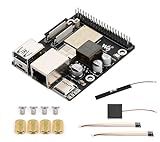
- High-Performance Dual-Core with Ample Memory--- Equipped with a 360MHz dual-core RISC-V processor, 32MB of onboard PSRAM, and 32MB of Flash memory, providing powerful processing capabilities and ample runtime for complex multimedia applications and edge computing.
- Powerful Multimedia Processing Center--- Integrated with a dedicated image processor (ISP), H.264 video encoder, and JPEG codec, perfectly supporting camera input and video processing, making it an ideal choice for developing smart displays, video surveillance, and other projects.
- Hardware-Level Security Protection--- Built-in digital signature, encryption accelerator, and key management unit, providing a one-stop hardware-level security solution from secure boot and data encryption to access control management, ensuring the security of your products and data.
- Full Connectivity Coverage: Wi-Fi 6, Bluetooth, PoE Power Supply--- Onboard with an ESP32-C6 chip, supporting the latest Wi-Fi 6 and Bluetooth 5.0; it also integrates an Ethernet port with PoE functionality, providing high-speed, flexible, and stable network connectivity, and can be powered directly via Ethernet cable, simplifying deployment.
- Rich interfaces and strong expandability--- It provides a MIPI camera/display interface, high-speed USB, SD card slot, microphone/speaker interface and a large number of programmable GPIOs, which greatly facilitates the expansion of external devices and meets the needs of various human-computer interaction and Internet of Things applications. Supports AI Speech Interaction: Allows access to online large model platforms such as ChatGPT, DeepSeek, Doubao, etc.
Deal mechanics and ownership context
The reported corporate-value ratio was SAPEON Korea: Rebellions = 1:2.4. Rebellions was to manage the integrated company, while SK Telecom remained a strategic investor and supported international expansion. The ratio describes relative deal values and assets; it is not the same as a market valuation.
The investor map remained more complicated than a single corporate group:
- SK Telecom remained SAPEON’s parent and a strategic backer.
- SK hynix brought a strategic semiconductor and memory connection.
- KT was an investor and strategic supporter of Rebellions.
- Samsung Electronics continued its manufacturing and collaboration relationship with Rebellions.
These companies stayed separate, with potentially competing commercial interests. Strategic investment or a supply relationship should not be read as a guaranteed purchase commitment.
Rank #3

- Powered by 26 Tera-Operations Per Second (TOPS) Hailo-8 AI Processor.
- 2.5W typical power consumption
- Enabling real-time low latency and high-efficiency AI inferencing on the edge devices
- Supports TensorFlow TensorFlow Lite, ONNX, Keras, Pytorch frameworks
- Supports Linux and Windows.
Products, road maps and the overlap question
Rebellions ATOM
ATOM launched in 2023 as a data-center AI chip. The companies described it as the first South Korean NPU used commercially in a data-center setting to accelerate a large language model, and said it entered mass production in 2024. Those statements establish the announced commercial status, not independent performance against Nvidia systems.
SAPEON X330
SAPEON unveiled X330 in November 2023 for data-center and inference workloads. After the merger, buyers had a practical question: would ATOM and X330 be maintained as separate products, assigned to different segments, or consolidated into one road map? A clear product transition is important because duplicate silicon and software stacks can consume the very resources a merger is intended to create.
Free tools Windows power users keep installed
One-click scans. No signup required.
REBEL
Rebellions announced REBEL as a next-generation processor for large-language-model workloads, using Samsung’s 4-nanometer process and HBM3E memory technology. Later company material described a scalable chiplet architecture and 144GB of HBM3E. These are Rebellions’ stated specifications; they are not independently verified benchmark results. The initial announcement was covered by TechCrunch.
Rank #4

- High-Performance AI Processing: The MX3 is designed to handle the most demanding AI computer vision workloads, delivering exceptional performance and efficiency.
- Flexible Integration: The MX3 can be easily integrated into your existing systems via its M.2 M-key form factor and support for Linux operating systems.
- Energy Efficient: The MX3 is designed to provide high performance while minimizing power consumption.
- Comprehensive Software Development Kit (SDK): The MX3 is supported by a comprehensive SDK that simplifies development and deployment.
- Hardware compatability: The MX3 is compatible with the PCI-SIG M.2 M-key 2280 Specification. It can be used with the Raspberry Pi 5 with a M-key 2280 HAT.
Why timing mattered in the AI-accelerator market
Nvidia’s advantage extends beyond accelerator silicon. Its CUDA programming model, libraries, developer familiarity, cloud availability, networking, systems integration and enterprise support create a difficult ecosystem moat. Contemporary coverage often cited Nvidia at more than 97% of the AI-chip market; that figure depends on how the market is defined and should not be treated as a timeless, universally measured statistic. See TechCrunch’s market context.
Hyperscalers including Google, Amazon, Microsoft, Apple and Meta were also developing or deploying internal silicon. AMD and other accelerator suppliers competed for the same data-center budgets. The opportunity for a smaller NPU is therefore more specific: inference workloads where latency, energy efficiency or cost can outweigh the flexibility and ecosystem breadth of a general-purpose GPU.
Training and inference are different markets. Nvidia’s position spans both, while the merged Rebellions is more plausibly judged first on specialized inference deployments and regional or strategic projects. Peak theoretical throughput is not a fair comparison unless precision, batch size, model, memory, software, networking and power conditions match.
Recommended Free Tools
What the merger could—and could not—accomplish
Potential gains
- More engineering capacity and capital for successive chip generations.
- A larger supplier profile for data-center and government buyers.
- Better access to telecom, memory, manufacturing and infrastructure relationships.
- Greater negotiating leverage for foundry, HBM and advanced-packaging capacity.
- A more credible platform for international expansion.
Claims the transaction did not prove
- Nvidia-level performance or software compatibility.
- Large-scale paid deployment beyond pilots and demonstrations.
- Lower total cost of ownership for customers.
- Hyperscale supply reliability or a successful public listing.
- A durable lead over Korean competitors such as FuriosaAI.
How to judge whether it became a successful challenger
- Commercial deployments: verify production data-center use, workload volume and paying customers rather than demonstrations.
- Performance per dollar: compare inference throughput, latency, energy and complete system cost, including servers, networking, software and support.
- Software: check PyTorch, TensorFlow, ONNX and common runtime support, compiler maturity, quantization, dynamic shapes and the effort required to port CUDA-based applications.
- Supply: assess foundry yield, HBM availability, packaging, boards, servers and delivery at volume.
- Customer diversity: look beyond SK Telecom, KT or government-linked projects to independent cloud and enterprise adoption.
- Road-map clarity: determine how ATOM, X330, REBEL and successors fit together without delaying releases.
- Capital and governance: evaluate whether strategic investors provide distribution and infrastructure while allowing commercially disciplined decisions.
Bottom line for technology and investors
The Rebellions-SAPEON transaction was a rational consolidation strategy during an unusually favorable window for AI-infrastructure investment. It combined two Korean product efforts and connected them to telecom, memory, manufacturing and investor networks. Its significance is scale and ecosystem building—not instant technological parity with Nvidia. The decisive evidence is whether the merged Rebellions can turn announced chips into independently measured, software-supported, repeatable international deployments.
Quick Recap
Product prices and availability are accurate as of the date/time indicated and are subject to change. Any price and availability information displayed on Amazon at the time of purchase will apply.




