Short answer: The Trump administration did not freely reopen Nvidia’s Chinese market. President Donald Trump announced on December 8, 2025 that approved customers could receive Nvidia H200 products and that 25% would be paid to the United States. The legally operative step came on January 13, 2026, when the Commerce Department moved relevant exports from a presumption of denial to case-by-case license review. U.S. licenses have since been issued for limited quantities to selected China-based customers, but Chinese customs and procurement controls have constrained actual deliveries. Blackwell and Rubin products were not included in the arrangement.
What changed—and what did not
Trump’s announcement created a possible route for some H200 exports; it did not grant Nvidia a blanket authorization to ship to every Chinese buyer. The Bureau of Industry and Security (BIS) subsequently established the operating framework through a final rule effective January 15, 2026.

The distinction matters for investors, cloud operators and policy readers. A presidential announcement, a BIS license, Chinese import clearance and physical delivery are separate events. As of August 18, 2026, the available evidence shows selected U.S. approvals and very limited shipments rather than a broad reopening of the Chinese market.
The H200 export timeline
| Date | Development | What it established |
|---|---|---|
| December 8, 2025 | Trump announced that Nvidia could ship H200 products to approved customers in China and other countries. | A political policy announcement; operating details were not complete. Techmeme summary |
| January 13–15, 2026 | BIS changed the relevant review standard and published its final rule. | Eligible applications could receive case-by-case review, subject to conditions. BIS · Federal Register |
| January 14, 2026 | Reuters reported that Chinese customs officials told agents not to admit H200 shipments. | U.S. authorization did not guarantee Chinese entry. Reuters report |
| February 2026 | Nvidia disclosed a U.S. license for small amounts of H200 products to specific China-based customers. | At least some licenses became commercially operative, without creating unrestricted access. Nvidia SEC filing |
| May–July 2026 | Reports indicated additional Chinese firms received U.S. approval, while deliveries remained limited. | Approvals expanded selectively; they did not demonstrate a fully open market. Reported customer approvals |
How the U.S. licensing route works
The final rule covers certain advanced-computing commodities for end users in China or Macau. Examples include Nvidia’s H200 and AMD’s MI325X. Products must fall below both 21,000 total processing performance (TPP) and 6,500 GB/s of total DRAM bandwidth, as specified in the rule. Meeting those thresholds makes an application reviewable; it does not make approval automatic.
Outdated Drivers Are Slowing You Down
One free scan finds every outdated or missing driver and matches the right update for your exact hardware.Free scan · exact hardware matchWindows Errors? Fix Them Before They Spread
Repair common Windows errors and clear accumulated junk for a smoother, more stable PC - no reinstall needed.Free scan · no reinstall#1 Best Overall

- Standard Memory: 40 GB
- Host Interface: PCI Express 4.0
- Cooler Type: Passive Cooler
- Product Type: Graphics Card
Conditions attached to approval
- The product must have been commercially available in the United States when the rule was published.
- The exporter must certify that U.S. supply is sufficient.
- Production for China cannot divert foundry capacity from similar or more advanced products intended for U.S. users.
- The Chinese recipient must demonstrate adequate security procedures.
- An independent third party in the United States must test the item’s performance specifications.
- The chips cannot be used for military purposes.
- China-bound quantities are limited relative to sales to American customers. Reuters described a 50% ceiling, but the exact product, customer-group and time-period baseline must be read from the final rule rather than treated as a universal quota.
That is why “eligible for case-by-case review” is more accurate than “approved for export.” A company can be interested in H200s, named in a report or have an application pending without holding a license or receiving hardware.
What the 25% figure means
Trump said that 25% would be paid to the United States. Public reporting has described this variously as a fee, government cut or revenue-sharing arrangement. The announcement did not specify whether the amount is calculated on revenue, profit, shipment value or another base, nor did it clearly identify which party would remit it.
Rank #2

- GPU processor: NVIDIA RTX A5500
- CUDA cores: 10240
- 24GB GDDR6 ECC Graphics Memory
- System Interface: PCI-Express 4.0 x16
- 1 x DisplayPort to HDMI adapter
For that reason, calling it a conventional Chinese import tariff overstates what is established. The BIS rule sets export-license conditions; it does not, by itself, define the 25% payment as a customs tariff. Earlier reporting referred to a 15% revenue-sharing arrangement involving Nvidia and AMD, making the change politically significant but legally opaque. Seoul Economic Daily and Axios reported the figures, but neither resolves the accounting mechanism.
Why H200 matters
H200 is a Hopper-generation data-center accelerator. It sits below Nvidia’s Blackwell generation but above the H20 product developed to meet earlier China export thresholds. H200 combines high-bandwidth HBM memory, strong training and inference capability, and compatibility with Nvidia’s CUDA software, libraries, networking and deployment tools.
Tom’s Hardware cited comparisons describing H200 as roughly six times more powerful than H20 on a specified AI-computing measure. That is not a universal “six times faster” result across every workload. H200’s commercial value also comes from software compatibility and the installed base of Nvidia systems used by cloud and AI companies. Tom’s Hardware
Why Chinese approval still matters
Beijing can independently limit the deal. The January customs reports did not establish whether China had imposed a formal, permanent ban, but they showed that U.S. licensing alone was insufficient. Later reporting indicated limited Chinese approvals under some circumstances, while U.S. approvals expanded to additional companies. These developments describe an evolving two-sided process, not completed market access. Later reporting
Rank #4
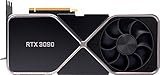
- Chipset: NVIDIA GeForce RTX 3090
- Video Memory: 24GB GDDR6X
- Memory Interface: 384-bit
- Output: DisplayPort x 3 (v1.4a) / HDMI 2.1 x 1
- Nvidia India 3 Year *
Chinese companies may also favor domestic accelerators for some inference workloads or under procurement rules. They may continue to prefer Nvidia for certain large-model training workloads, but interest, U.S. approval, Chinese clearance and physical receipt are different categories.
The five gates that determine whether an H200 shipment is real
- U.S. eligibility: The specific product and configuration must fit the BIS category.
- U.S. license: BIS must approve the exporter’s or customer’s application.
- Testing and certification: Required performance, security and supply checks must be completed.
- Chinese import approval: Customs and relevant Chinese authorities must permit entry and use.
- Physical delivery: The customer must actually receive and deploy the chips.
A purchase order does not prove customs clearance, and a license does not prove delivery. Nvidia’s SEC disclosure supports the existence of limited U.S. licenses; a July report reproduced from Reuters quoted a U.S. official saying “very few” H200 chips had reached China or Hong Kong. Because that account is a secondary reproduction, it should not be read as a precise shipment total. Secondary reproduction
Best Value

- Graphics Card Interface: Pci E
Which Nvidia products remain outside the arrangement?
| Product | Status in this policy |
|---|---|
| H200 | Potentially eligible for case-by-case licensing if technical and end-use conditions are met. |
| H20 | A lower-performance China-compliant product with a separate regulatory history. |
| Blackwell | Not included in Trump’s announced H200 arrangement. |
| Rubin | Also excluded from the announced arrangement. |
“Excluded from this arrangement” is more precise than saying every newer Nvidia product is permanently banned. Blackwell and Rubin remain subject to separate advanced-chip controls and any later policy changes.
Who could gain—and who faces risk?
Nvidia
- Potential upside: Access to Chinese AI demand, additional H200 volume and continued presence in a market where software compatibility matters.
- Risks: The 25% payment could reduce margins; approvals and Chinese customs decisions can delay revenue; Nvidia may need to restart production for a product below its flagship generation; and U.S. policy could reverse again.
AMD and Intel
The initial announcement referred to AMD, Intel and other U.S. companies, and the BIS rule explicitly mentions AMD’s MI325X. That does not automatically authorize every product from either company. Each chip’s classification, application and customer approval must be assessed separately.
Chinese AI companies and chipmakers
Alibaba, Tencent, ByteDance, telecom operators, research groups and infrastructure providers could benefit if they receive both U.S. and Chinese clearance. Domestic accelerator vendors could lose near-term demand if reliable H200 supply returns, but unpredictable U.S. controls may also encourage continued investment in Huawei and other local alternatives.
National-security arguments on both sides
Case for allowing conditional sales
- Keeps Chinese developers connected to a controlled U.S. hardware and software ecosystem.
- Creates revenue for Nvidia and potentially other American semiconductor companies.
- Provides a regulated channel that may be easier to monitor than illicit smuggling.
- Allows sales of a previous-generation accelerator while retaining controls on frontier systems.
- Could generate government revenue and support U.S. semiconductor production.
Case against allowing them
- H200 remains powerful enough to support Chinese AI training and inference.
- Advanced accelerators have military, surveillance and cyber applications.
- Once hardware enters China, enforcement of end-use restrictions becomes difficult.
- A legal sales channel could weaken the deterrent effect of earlier controls.
- Chinese firms could use access to improve domestic software and models.
These are policy arguments, not proven outcomes. Claims that exports will strengthen China’s military or, conversely, improve U.S. security should be attributed to their advocates rather than presented as settled facts.
Recommended Free Tools
What to watch next
- The number and identity of additional BIS licenses.
- Verified shipment and deployment disclosures rather than customer interest alone.
- Chinese customs, procurement and end-use decisions.
- Whether Nvidia expands H200 production despite strong U.S. demand.
- Any formal explanation of the 25% payment’s legal and accounting basis.
- Changes to the treatment of Blackwell, Rubin or comparable accelerators.
The Bottom Line
The H200 policy is a conditional opening, not a free-market restart. Selected customers can seek U.S. licenses, but testing, supply limits, Chinese approval and physical delivery still stand between a political announcement and meaningful sales. The 25% payment remains insufficiently defined to call a standard tariff, while Blackwell and Rubin were left outside the arrangement.
Quick Recap
Product prices and availability are accurate as of the date/time indicated and are subject to change. Any price and availability information displayed on Amazon at the time of purchase will apply.




