The $45 billion figure is historical, not Waymo’s current valuation. Waymo raised an oversubscribed $5.6 billion Series C round in October 2024, led by parent company Alphabet. Contemporary reporting put the post-money valuation at approximately $45 billion. On February 2, 2026, Waymo announced a newer $16 billion financing at a $126 billion post-money valuation, making the 2024 figure an important milestone rather than the latest price investors assigned to the company.
What happened in the 2024 financing?
Waymo said in October 2024 that it had completed an oversubscribed $5.6 billion financing round to expand its commercial ride-hailing service, Waymo One, and continue developing the Waymo Driver. Alphabet led the round. Named participants included Andreessen Horowitz, Fidelity, Perry Creek, Silver Lake, Tiger Global and T. Rowe Price.


Waymo’s announcement confirmed the amount, investors and intended use of the proceeds. It did not initially publish a valuation. A November 2024 report from TechCrunch said the financing valued Waymo at approximately $45 billion post-money: TechCrunch’s valuation report. The company’s announcement is available at Waymo’s October 2024 financing post.
“$5.6 billion raised” and “$45 billion valuation” describe different things. The first is the capital invested in the round; the second is the implied value of the company immediately after that investment.
Why did investors assign such a high value?
It was a commercial service, not only a research project
By the financing, Waymo One was providing paid, fully autonomous rides without a human driver behind the wheel in its approved service areas. Waymo said it was serving riders in San Francisco, Phoenix and Los Angeles, while expanding partnerships and preparations involving Austin and Atlanta. That operating model requires more than an automated-driving system: mapping, fleet procurement, charging, maintenance, insurance, remote assistance, customer support and regulatory work all have to function together.
Investors were pricing future scale
A private valuation reflects expectations about future cash flows, not just current sales. The case for Waymo included:
- More paid rides and repeat use as service areas expand.
- Operational know-how and driving data accumulated across multiple cities.
- The possibility that a common driver stack could be deployed on more vehicle platforms and in more markets.
- Potential licensing or other automaker relationships in addition to fleets operated for ride-hailing.
- Longer-term applications in personally owned vehicles, logistics or delivery.
Those are potential sources of value, not guaranteed revenue streams. In April 2025, Waymo and Toyota said they were exploring a strategic partnership involving personally owned vehicles; the announcement did not describe an immediate mass-market product. See Waymo and Toyota’s partnership announcement.
Alphabet could fund a capital-intensive buildout
Alphabet’s ownership gives Waymo access to a parent with substantial capital, engineering resources and a willingness to finance a long development cycle. Alphabet has described autonomous transportation as the primary source of Other Bets revenue, although that segment includes more than Waymo and does not provide a complete standalone Waymo income statement.
Recommended Free Tools
What the $45 billion valuation did—and did not—mean
A private financing price is not a public-market quote
Waymo is an Alphabet subsidiary, not a separately listed company with a continuously traded stock. The reported $45 billion was an investor-agreed post-money valuation in a private transaction. It was not a market capitalization visible on an exchange, and it did not mean Waymo had $45 billion in revenue, profit or cash.
Alphabet’s public filings combine Waymo-related results within Other Bets rather than publishing a full Waymo profit-and-loss statement. The company therefore has not provided public evidence that the 2024 valuation represented profitability. Alphabet’s investor FAQ explains the segment treatment at Alphabet’s investor information page.
Alphabet’s accounting also reflects the repricing
On its fourth-quarter 2025 earnings call, Alphabet said the increase in Waymo’s valuation associated with the 2026 financing generated a $2.1 billion stock-based compensation charge. Alphabet also funded a significant portion of that round. The accounting charge is not Waymo revenue or operating profit; it is an effect of the valuation and compensation arrangements described by Alphabet at the earnings-call materials.
What operating evidence supported the later repricing?
Waymo’s February 2026 announcement said the company more than tripled annual ride volume in 2025 to 15 million rides, surpassed 20 million lifetime rides and was providing more than 400,000 rides per week across six major U.S. metropolitan areas at the time of the announcement. Waymo also reported 127 million miles of fully autonomous operation.
Outdated Drivers Are Slowing You Down
One free scan finds every outdated or missing driver and matches the right update for your exact hardware.Free scan · exact hardware matchWindows Errors? Fix Them Before They Spread
Repair common Windows errors and clear accumulated junk for a smoother, more stable PC - no reinstall needed.Free scan · no reinstallWaymo reported a 90% reduction in serious-injury crashes relative to its human-driver comparison baseline. That is a company-reported comparison, not a universal finding that Waymo is 90% safer in every road, weather or traffic condition. The result depends on the baseline, geography, exposure measurement and definition of a serious-injury crash. The underlying announcement is at Waymo’s February 2026 investment-round post.
These measures show growing operations and usage. They do not by themselves disclose contribution margins, fleet-level profitability or the amount of capital required to add each city.
Rank #3
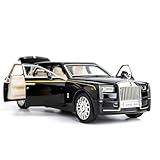
- Product size: 6.69*2.36*1.97 inches Weight: 0.7 pounds Outer packaging: exquisite color translucent packaging box
- Material: Die-cast car model, made of zinc alloy, with plastic parts, rubber tires, detailed interior and exterior decoration.
- Function: Press the two wheels of the front car to trigger the sound of the engine and the lights, with upright car logos,the angel logo is stored in the hood. The details of the body interior are realistic. Place the car on a flat ground, press the body and pull it back, the car will drive forward. (With pull back function)
- This Rolls-Royce Phantom 1/32 car model pull back car is very suitable for children to play with. The paint is exquisite and feels good, and it is heavy to hold. It is also very suitable for car model enthusiasts as a decoration.
- Accessories and collections: This product is very suitable for static accessories and can be used as an accessory next to a computer. For those who are passionate about collecting model car models, this is a great art collection.
How the valuation changed
| Date | Financing | Amount raised | Post-money valuation |
|---|---|---|---|
| October 2024 | Series C | $5.6 billion | Approximately $45 billion, as reported by TechCrunch |
| February 2, 2026 | Latest announced investment round | $16 billion | $126 billion, stated by Waymo |
The 2026 round retained Alphabet as the majority investor. Waymo said outside participation included Dragoneer Investment Group, DST Global, Sequoia Capital, Andreessen Horowitz, Mubadala Capital, Bessemer Venture Partners, Silver Lake, Tiger Global, T. Rowe Price, Fidelity, CapitalG, GV, Kleiner Perkins and Temasek, among others. Waymo said the proceeds would accelerate expansion, including planned operations in more than 20 additional cities during 2026, such as Tokyo and London.
“Planned” does not mean publicly available service. Launches can move through testing, employee access and regulatory approval before general riders can book trips. For example, a July 2026 update described preparations for fully autonomous operations in Denver, Las Vegas, San Diego and Tampa, initially for employees, with public rides expected later: Waymo’s city-expansion update.
Quick wins for a faster PC:
Scan for outdated or missing drivers - takes under a minuteDriver Scan →Clear out junk files and repair common Windows errorsFree Scan →What could support a $126 billion valuation?
More rides and denser networks
Adding vehicles and service areas can increase ride availability and make fleet operations more efficient. The economics depend on utilization, fares, vehicle costs, maintenance, charging, insurance, remote operations and local support. A larger network does not automatically produce higher margins if each market remains expensive to launch and operate.
Technology licensing and partnerships
Waymo could eventually earn money by licensing its driver or supplying technology through automaker partnerships rather than relying only on fares from fleets it helps operate. The Toyota work illustrates that strategic option, but it is not evidence of a mature, recurring licensing business.
Alphabet’s strategic patience
Alphabet can continue investing while Waymo builds regulatory, operational and technical capabilities. That backing may reduce near-term financing risk, although it does not remove the need for Waymo to demonstrate sustainable economics.
What could undermine the valuation?
- Cost structure: Sensors, vehicles, maintenance, charging, insurance and human remote operations may constrain margins.
- Regulation and approvals: Each city can require separate permits, mapping, safety reviews and operating arrangements.
- Safety or trust setbacks: A serious incident could slow approvals, reduce usage or increase oversight.
- Competition: Rival autonomous systems or conventional ride-hailing companies could offer lower prices, broader coverage or faster deployment.
- Execution risk: Announced city targets are plans, not completed launches.
- Private-market uncertainty: The $126 billion figure comes from a financing transaction, not continuous public trading, so there is no daily market price to confirm it.
- Control and liquidity: Alphabet’s majority position can limit outside investors’ control, and private holdings generally lack immediate public-market liquidity.
How readers can interpret the headline
“Waymo’s latest funding round boosts it to a $45 billion valuation” was a fair description of the October 2024 story, provided the valuation was identified as reported rather than directly stated in Waymo’s initial announcement. It is misleading if presented as Waymo’s latest valuation in 2026.
The Tool Desk
Outbyte PC Repair FREERepair Windows errors before they cause bigger problemsFix Now →Outbyte Driver Updater FREEFix the driver behind crashes, sound loss and screen glitchesFind Drivers →The useful distinction is between a historical financing milestone and the company’s current private-market pricing. The 2024 round signaled that investors viewed autonomous ride-hailing as a scalable commercial business. The 2026 financing at $126 billion reflected subsequent growth in rides and autonomous operations, together with expectations of much broader geographic and product opportunities. Neither valuation proves that Waymo is profitable or that autonomous transportation will succeed in every market.
Can you use Waymo as a rider or business?
Waymo One is available only in selected service areas, and availability changes as cities move from testing or employee access to public service. Check the official Waymo One page or the Waymo app for eligibility. Fares vary by route, time and market; there is no universal price or subscription rate established here.
Alphabet has also described Waymo for Business as an enterprise travel option. That offering is aimed at corporate travel and employee transportation rather than evaluating the investment case; the reference appears in Alphabet’s third-quarter 2025 earnings-call materials.
Quick Recap
Product prices and availability are accurate as of the date/time indicated and are subject to change. Any price and availability information displayed on Amazon at the time of purchase will apply.




