Yes, but selectively. Intel can be a credible alternative to Nvidia for some inference, fine-tuning and cost-sensitive deployments—especially with Gaudi 3. It is not yet a broad replacement for Nvidia’s integrated platform in frontier-model training, CUDA-dependent software, large-scale deployment or rack-level systems.
The answer depends on what “Intel’s new chips” means, because Gaudi 3, Xeon 6, Crescent Island and Jaguar Shores target different markets and have different availability.
What is actually being compared?
| Intel product | Primary role | Closest Nvidia comparison | Status |
|---|---|---|---|
| Gaudi 3 | Dedicated AI accelerator for training and inference | H100/H200 and selected Blackwell systems | Current product, offered in PCIe and accelerator-system configurations |
| Xeon 6 | General-purpose server CPU with AI-oriented features | Nvidia’s host-CPU role, not its data-center GPU accelerators | Current server CPU family |
| Crescent Island | Inference-focused data-center GPU | Inference-oriented Nvidia platforms | Announced; shipping specifications and independent results remain to be confirmed |
| Jaguar Shores | Future rack-scale AI/HPC platform | Blackwell and Rubin rack-scale systems | Roadmap product, not an established alternative today |
| Core Ultra and Arc | AI PCs and local or edge inference | GeForce RTX and workstation products | Different market from Nvidia’s largest data-center systems |
Gaudi 3 is the relevant present-day accelerator comparison. Xeon 6 can handle preprocessing, retrieval, orchestration and some CPU-based inference, and can serve as the host CPU in an Nvidia system. It should not be scored as a substitute for an Nvidia data-center GPU.
Intel’s Gaudi product information is available at Intel’s Gaudi page.
#1 Best Overall

- Next‑Gen Platform Support: Compatible with Intel 800 Series Chipset‑based motherboards with LGA1851 Socket enabling PCIe 5.0/4.0 and high‑speed DDR5 memory (up to 7200 MT/s).
- High‑Performance Core Configuration: Features up to 24 cores (8 P‑cores + 16 E‑cores) for demanding gaming and creator
- Ultra‑Fast Boost Clocks: Reaches up to 5.5 GHz max turbo frequency for top‑tier responsiveness and performance
- Built for Enthusiasts: Unlocked for performance tuning when paired with Intel Z‑series chipsets, making it ideal for overclockers and power users.
- Robust Power & Thermal Design: Engineered with 125W base power and 250W max turbo power to sustain high‑intensity
Where Gaudi 3 can compete
Memory and networking
Intel says Gaudi 3 includes 128 GB of HBM2e and approximately 3.7 TB/s of memory bandwidth. Intel also describes up to four times the BF16 compute, 1.5 times the memory bandwidth and twice the networking bandwidth of Gaudi 2. Those are product specifications and company comparisons, not proof that every workload is faster than Nvidia’s.
Large memory can be commercially important. A model that fits on fewer accelerators may avoid sharding overhead, extra servers and additional networking. Gaudi’s design also emphasizes Ethernet-based scale-out, which may appeal to operators that prefer industry-standard networking or want less dependence on Nvidia’s proprietary interconnect ecosystem. Intel’s launch details are at Intel’s Gaudi 3 announcement.
Intel’s published performance claims
Intel reports up to 20% higher throughput and twice the price/performance of an Nvidia H100 in a specified Llama 2 70B inference test. These are Intel-selected results, not universal benchmarks. The outcome depends on the model, sequence length, precision, batch size, software release, accelerator count, host and network configuration, Nvidia tuning and the prices used in the calculation. Intel’s supporting materials are the Xeon 6 and Gaudi 3 announcement, the Gaudi 3 infographic and its performance and economic analysis.
Rank #2

- Get ultra-efficient with Intel Core Ultra desktop processors that improve both performance and efficiency so your PC can run cooler, quieter, and quicker.
- Core and Threads 24 cores (8 P-cores plus 16 E-cores) and 24 threads. Integrated Intel Graphics included
- Performance Hybrid Architecture Integrates two core microarchitectures, prioritizing and distributing workloads to optimize performance
- Performance Unlocked Up to 5.7 GHz unlocked. 40MB Cache
- Compatibility Compatible with Intel 800 series chipset-based motherboards
“Twice the price/performance” therefore cannot be translated into “every model is twice as cheap.” A fair comparison keeps the model, precision, quality target, latency, batch size, hardware count, software and total operating assumptions constant.
Windows Errors? Fix Them Before They Spread
Repair common Windows errors and clear accumulated junk for a smoother, more stable PC - no reinstall needed.Free scan · no reinstallCrashes, No Sound, or Screen Glitches?
Random freezes, missing sound and display glitches usually trace back to one bad driver. Find and replace yours safely.Free scan · under a minuteWhy inference is Intel’s strongest opening
Inference is a more realistic battleground than frontier-model training. Enterprises often run standardized open models, care about cost per token and power, and can tolerate a platform that is not identical to CUDA if the production path is stable. High memory capacity can matter more than peak theoretical compute when serving large models or long contexts.
Intel’s announced Crescent Island GPU is explicitly aimed at inference and high memory capacity. Intel has announced the product at its AI accelerator portfolio announcement. Reporting has described up to 480 GB of LPDDR5X memory, but final shipping specifications, pricing, availability and independent benchmarks must be confirmed. Crescent Island should not be assumed to be a Gaudi 4 or to have identical software compatibility.
Rank #3

- 20 cores (8 P-cores + 12 E-cores) and 20 threads. Integrated Intel Graphics included
- Performance hybrid architecture integrates two core microarchitectures, prioritizing and distributing workloads to optimize performance
- Up to 5.3 GHz. 36 MB Cache
- Compatible with Intel 800 series chipset-based motherboards
- Turbo Boost Max Technology 3.0, and PCIe 5.0 & 4.0 support. Intel Optane Memory support. No thermal solution included
Small or lightly loaded applications may not need either vendor’s accelerator. Xeon 6 or another CPU can be more economical for low-volume inference, retrieval, data preparation and orchestration when an accelerator would sit mostly idle. Intel describes Xeon 6 and Gaudi 3 together at this product announcement.
Where Nvidia still has the decisive advantage
Training and distributed scaling
Nvidia remains the safer default for frontier-model training, large distributed jobs and research code that depends on mature CUDA kernels. Training economics include communication, checkpointing, failure recovery, scaling efficiency and developer time—not just accelerator throughput. Intel has reported Gaudi systems training models in the 70-billion-to-175-billion-parameter range, but those are Intel-reported demonstrations rather than independent evidence of broad market parity; see Intel’s oneAPI updates.
The Tool Desk
Outbyte PC Repair FREERepair Windows errors before they cause bigger problemsFix Now →Outbyte Driver Updater FREEScan for outdated or missing drivers - takes under a minuteDriver Scan →The software platform
Nvidia’s advantage is a complete software and hardware stack: CUDA, CUDA-X libraries, TensorRT, NCCL, framework integrations, deployment tools, networking, validated systems and a large pool of experienced engineers. Nvidia describes that platform in its 2026 annual-report materials.
Rank #4
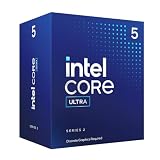
- 10 cores (6 P-cores + 4 E-cores) and 14 threads.
- Performance hybrid architecture integrates two core microarchitectures, prioritizing and distributing workloads to optimize performance
- Up to 4.9 GHz. 22 MB Cache
- Compatible with Intel 800 series chipset-based motherboards
- PCIe 5.0 & 4.0 support. Intel Optane Memory support. No thermal solution included. Discrete graphics required
Intel’s alternative includes Gaudi software, PyTorch integration, oneAPI, Intel Extension for PyTorch, Habana libraries, open-model support and the Intel Tiber Developer Cloud. Intel highlights support for models including Falcon and Llama-related workloads at its Falcon 3 technical article. “Supports PyTorch” does not guarantee that every CUDA-dependent operator, custom kernel, quantization path, distributed-training workflow or monitoring tool will run unchanged.
An academic study found Gaudi competitive with Nvidia in selected end-to-end workloads while concluding that Intel still needed further software-ecosystem improvement: arXiv study 2501.00210. A buyer should measure engineering days for porting, optimization, validation, monitoring and maintenance. A cheaper card can lose its advantage through missing kernels, lower utilization or support costs.
Complete systems and availability
The comparison is increasingly between complete AI factories, not isolated chips. Nvidia combines accelerators with NVLink, InfiniBand and Ethernet networking, BlueField DPUs, SuperNICs, storage, validated systems and software. Its Rubin announcement describes GPUs, Vera CPUs, NVLink, networking, DPUs and rack-scale deployment in one platform: Nvidia’s Rubin announcement. Rubin performance and cost claims are Nvidia’s own platform-specific projections and should receive the same qualification as Intel’s claims.
Do these 3 things before closing this tab:
1Fix the driver behind crashes, sound loss and screen glitches2Repair Windows errors before they cause bigger problems3Scan for outdated or missing drivers - takes under a minuteBest Value

- 10 cores (6 P-cores + 4 E-cores) and 14 threads. Integrated Intel Graphics included
- Performance hybrid architecture integrates two core microarchitectures, prioritizing and distributing workloads to optimize performance
- Up to 4.9 GHz. 22 MB Cache
- Compatible with Intel 800 series chipset-based motherboards
- PCIe 5.0 & 4.0 support. Intel Optane Memory support. No thermal solution included.
Availability can outweigh a paper advantage. Check whether the required accelerator is offered as a PCIe card, OEM server, cloud instance and desired region; whether software releases are stable; and whether the supplier, integrator and support organization can meet production requirements. Intel’s current Gaudi page lists PCIe and accelerator-system options: Gaudi product information.
Nvidia’s commercial scale is also materially larger. Nvidia reported fiscal 2026 revenue of $215.9 billion and 59% year-over-year growth in data-center computing revenue, driven by Blackwell. Those figures show commercial scale, not a precise AI-chip market-share percentage; see the Nvidia filing and results release.
Independent reader supportYour contribution helps us test, update, and keep practical guides available for everyone.How to make a sound buying decision
- Define the workload. Separate training, fine-tuning, batch inference, real-time inference, retrieval and edge use.
- Fix the test case. Use the exact model, precision, context length, quality target, batch size and latency percentile.
- Benchmark both platforms. Record tokens per second, time to train, scaling efficiency, power per useful output and model-fit requirements.
- Price the whole system. Include servers, networking, power, cooling, cloud rates, software and engineering labor—not only accelerator purchase price.
- Test production operations. Validate multi-node scaling, failure recovery, monitoring, upgrades and support response.
- Verify supply. Confirm shipping status, region, lead time, OEM configuration and service terms.
- Assign strategic value. Decide whether a second supplier, negotiation leverage or lower dependence on one ecosystem justifies porting work.
Gaudi 3 is a sensible candidate when
- The model is supported and relatively standardized.
- Inference, fine-tuning or selected training dominates the workload.
- Memory capacity, Ethernet scale-out or acquisition cost is important.
- The organization has engineers who can port and tune software.
- Exact-model benchmarking is possible before commitment.
Nvidia is usually the safer choice when
- Existing applications rely heavily on CUDA, TensorRT, NCCL or custom Nvidia kernels.
- The project is frontier-scale training or requires rapid research-to-production deployment.
- Broad cloud, OEM and systems-integrator availability is essential.
- Time to deployment and mature support matter more than avoiding vendor dependence.
Evaluate a hybrid fleet when
- Training stays on Nvidia while predictable inference moves to Intel.
- Nvidia capacity, power or capital costs constrain expansion.
- The organization can amortize porting effort across a large inference volume.
Intel’s roadmap and its relationship with Nvidia
Jaguar Shores is Intel’s future rack-scale AI/HPC direction. Intel’s filing describes it as under development, so it should not be scored against Rubin as a shipping product or given projected performance as though it were a benchmark: Intel’s filing.
The relationship is also not purely adversarial. Nvidia and Intel announced work on custom data-center and PC products, including Nvidia-custom x86 CPUs for Nvidia infrastructure: the collaboration announcement. Intel can therefore compete in accelerators while supplying CPUs used in Nvidia systems.
Free tools Windows power users keep installed
One-click scans. No signup required.
Verdict
Intel has a credible path to meaningful AI business without replacing Nvidia everywhere. Gaudi 3 can make sense for supported inference and fine-tuning workloads where memory, Ethernet networking, price/performance or supplier diversity matter. Xeon 6 is complementary host and CPU-inference infrastructure, not a GPU substitute. Crescent Island and Jaguar Shores may expand Intel’s position, but their commercial success depends on shipping availability, independent benchmarks and software maturity.
Nvidia remains the default for broad CUDA compatibility, frontier training, mature multi-node deployment and integrated rack-scale infrastructure. The practical question is not whether Intel has “beaten” Nvidia; it is whether Intel can deliver a lower total cost per useful output for your exact model while keeping software and operational risk acceptable.
Quick Recap
Product prices and availability are accurate as of the date/time indicated and are subject to change. Any price and availability information displayed on Amazon at the time of purchase will apply.




