IBM now owns HashiCorp, the infrastructure-automation and security software company behind Terraform and Vault. IBM announced the all-cash deal on April 24, 2024, at $35 per share and approximately $6.4 billion in enterprise value. The transaction closed on February 27, 2025. The strategic bet is on the management layer that provisions, secures and governs workloads across public clouds, private datacenters and SaaS—not on becoming another hyperscale cloud provider.
The deal in brief
| Date | What happened |
|---|---|
| April 24, 2024 | IBM and HashiCorp announced a definitive agreement at $35 per share in cash, valuing the transaction at approximately $6.4 billion on an enterprise-value basis. |
| July 15, 2024 | HashiCorp shareholders approved the merger. |
| February 27, 2025 | IBM completed the acquisition and brought HashiCorp into its automation-software portfolio. |
The $6.4 billion figure is not interchangeable with the equity value. IBM later described the transaction as approximately $7.2 billion in total equity value. The original announcement is available from IBM, while the closing was confirmed by IBM and HashiCorp.
What IBM actually bought
HashiCorp is primarily an infrastructure-automation and security-software company. Its portfolio is broader than Terraform, although Terraform and Vault are the clearest strategic anchors in IBM’s public statements.
| Product | Core function | Why it matters to IBM |
|---|---|---|
| Terraform | Infrastructure as code and lifecycle management | Provisioning across multiple clouds, private infrastructure and SaaS |
| Vault | Secrets, credentials, encryption keys and tokens | A security layer that can connect with IBM and Red Hat offerings |
| Consul | Service networking and discovery | Connectivity for distributed applications |
| Nomad | Workload orchestration | An option for workloads that do not use Kubernetes |
| Boundary | Secure infrastructure access | Controlled administrative access without broadly exposing networks |
| Packer | Machine-image creation | Consistent images across environments |
| Waypoint | Application delivery and developer workflows | Platform-engineering and self-service use cases |
IBM’s closing announcement says the products became available through its automation-software portfolio. Branding and packaging can continue to evolve, so buyers should check current documentation and contracts rather than assume that every product has been technically unified.
#1 Best Overall
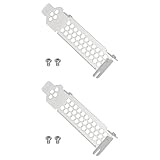
- Compatible with Dell PERC H330 H730p H740p Boss 7HYY4, Compatible with MegaRAID 9361-4i, Compatible with LSI 9361-8i RAID 12G, 9361 SAS 12G RAID, Compatible with MegaRAID SAS9340-8i 12G RAID.
- Also compatible with Lenovo IBM M1215 SAS Controller 46C9114 46c9115, Compatible with IBM M1215 46C9115 46C9112 46C9114, M5210 00AE852 46C9111 12GB SSD/SATA.
- Made of steel, sturdy, durable, and resistant to deformation.
- Used for replacing the low-profile bracket when installing a RAID controller card in a chassis. Provides a secure hold, ensuring the controller card is firmly attached to the PCIe slot.
Why the acquisition fits IBM’s hybrid-cloud strategy
In this context, hybrid cloud means applications and data spread across public cloud, private cloud, traditional datacenters and sometimes edge locations. Teams need repeatable provisioning, common policy, auditable changes and credentials that work across those environments.
IBM already has Red Hat OpenShift as a hybrid application platform, Ansible for automation, Guardium and other security products, IBM Cloud, consulting services and a global enterprise sales channel. HashiCorp adds tools that operate close to infrastructure and security workflows. IBM’s stated thesis is that combining those pieces can create a more complete hybrid-cloud platform; that is a strategic claim, not proof that every component is already one integrated product.
IBM cited Flexera’s 2024 State of the Cloud Report in describing hybrid-cloud adoption at nearly 75% of enterprises. That statistic is attributable to Flexera, not an IBM measurement; the cited filing is available at SEC.gov.
Rank #2

- High Storage Capacity of 18TB and up to 45 TB compressed capacity
- Supports transfer speeds of 400 MB/s (native), 1,000 MB/s (2.5:1) with Generation
- Barium Ferrite (BaFe) technology
- Support for tape drive hardware encryption
- Compatible with Linear Tape File System (LTFS)
Terraform is valuable because it sits above any one cloud
Terraform lets engineers describe desired infrastructure declaratively and use providers to manage resources in IBM Cloud, AWS, Microsoft Azure, Google Cloud, private datacenters, Kubernetes environments and SaaS platforms. State, modules, policy and remote execution can turn those configurations into a governed operating process rather than a collection of ad-hoc scripts.
That cross-platform position explains both the asset’s value and the central customer concern. IBM now owns a tool many companies use to manage infrastructure outside IBM Cloud. IBM’s hybrid-cloud strategy therefore depends on preserving Terraform’s credibility as a broad automation interface, rather than making it appear to be an IBM-only sales funnel.
IBM has described Terraform as widely adopted; readers should treat that as company messaging rather than an independently verified market-share claim. Terraform’s providers, permissions and feature coverage also vary by platform, so “multicloud” does not mean every resource behaves identically everywhere.
Rank #3

- 1U Profile: 1U Universal Rack Mount Rails occupy one rack unit of vertical space; supports 1U servers and fixed-mount network hardware in standard four-post cabinets
- Adjustable Depth: Our server rack rails telescoping rail pair extends from 16 to 30 inches; adapts to shallow wall cabinets and deeper floor-standing server racks
- Four-Post Fit: This rack mount rails engineered for square-hole and round-hole 4-post frames; pairs with common 19-inch EIA-310-D rack layouts
- Broad Model Use: These server rails work with APC, HP, IBM, Dell, and Compaq cabinet configurations as a generic support rail; not a manufacturer-branded original part
- Tool-Free Length Lock: Thumb screws secure depth setting without extra tools; numbered scale on inner rail eliminates guesswork during cabinet fit-up
Vault gives IBM a security and compliance layer
Vault manages secrets, dynamic credentials, certificates, tokens, encryption keys and access policies. It is not a general replacement for identity and access management. Nor is it automatically superior to a cloud provider’s native secret service.
HashiCorp highlighted possible or announced connections with Red Hat OpenShift, Ansible and IBM Guardium. Those statements describe integration direction and opportunities; buyers should verify current general availability, supported versions and responsibility boundaries before designing around them.
What’s actually slowing this PC down?
Pick the symptom - the matching free tool is one click away.
Vault may be particularly relevant where credentials must be rotated, workloads span several clouds, audit evidence is required, or teams need self-managed deployment. A smaller organization with adequate native secret storage may gain little from operating a broader Vault estate.
Rank #4

- Used Book in Good Condition
What changes for IBM, customers and investors
IBM gains a management business across rival clouds
The acquisition can help IBM sell software, consulting and governance services even when a customer’s workloads remain on AWS, Azure or Google Cloud. That strengthens IBM in management and services rather than in raw compute capacity. It does not make IBM a hyperscaler or give it control of competitors’ infrastructure.
Customers do not automatically have to migrate
Ownership, branding, commercial packaging and technical migration are separate questions. Existing Terraform or Vault workflows do not, by themselves, establish a requirement to move to IBM. Renewal terms, support arrangements, product editions and licensing should be checked in the customer’s specific agreements.
Investors should separate strategy from proven financial results
IBM’s filings present HashiCorp as a complement to its hybrid-cloud and automation portfolio. IBM’s 2025 Form 10-K reports software growth, including hybrid cloud, automation and data, but does not isolate HashiCorp’s contribution or prove that the acquisition caused that growth. The filing is available at SEC.gov.
Free tools Windows power users keep installed
One-click scans. No signup required.
Best Value

- 1U Profile: 1U Universal Rack Mount Rails occupy one rack unit of vertical space; supports 1U servers and fixed-mount network hardware in standard four-post cabinets
- Adjustable Depth: Our server rack rails telescoping rail pair extends from 16 to 30 inches; adapts to shallow wall cabinets and deeper floor-standing server racks
- Four-Post Fit: This rack mount rails engineered for square-hole and round-hole 4-post frames; pairs with common 19-inch EIA-310-D rack layouts
- Broad Model Use: These server rails work with APC, HP, IBM, Dell, and Compaq cabinet configurations as a generic support rail; not a manufacturer-branded original part
- Tool-Free Length Lock: Thumb screws secure depth setting without extra tools; numbered scale on inner rail eliminates guesswork during cabinet fit-up
Practical buying questions after the acquisition
Choose a deployment model
- Hosted service: HCP-style offerings reduce platform operations but place more responsibility on the vendor and may raise data-residency or procurement questions.
- Self-managed enterprise: Terraform Enterprise or self-managed Vault can suit regulated environments, but the customer must patch, secure, back up and upgrade the platform.
- Local tooling: A small team using only the Terraform CLI may not need a paid hosted control plane.
Evaluate governance and security
- Policy as code, role-based access and separation of duties
- Approval workflows, drift detection and audit trails
- Secrets rotation, dynamic credentials and encryption-key handling
- Identity-provider integration and private connectivity
- State, workspace and CI/CD migration requirements
Model the real operating cost
IBM’s pricing page, viewed August 16, 2026, listed indicative HCP Terraform rates of $0.00013 per resource under management per hour for Essentials (about $0.10 per resource per month), $0.00064 for Standard (about $0.47), and $0.00135 for Premium (about $0.99). Terraform Enterprise pricing was custom. Prices can vary by country, availability, taxes and duties.
The same page listed indicative Vault Dedicated pricing of about $72.92 per month for a product client; development and production cluster rates varied by size and edition. Vault Radar Essentials was listed at about $7 per active user per month, while Boundary Essentials and Standard were listed at about $23.95832 and $47.91666 per authorized user per month. These are dated pricing signals, not universal quotes. See IBM’s current pricing page before buying.
HCP Terraform bills according to resources under management in managed state files, not simply the number of configuration files or workspaces. Its cost guidance explains that partial hours can count as full hours: HashiCorp’s cost methodology.
Risks and alternatives
Key risks to test
- Vendor-neutrality concerns if IBM’s ownership changes product priorities or commercial terms
- More complicated packaging and procurement across IBM and HashiCorp offerings
- Integration work that adds value but also increases platform dependence
- Uncertainty over open-source governance, licensing and the economics of hosted Terraform
- Competition from cloud-native tools and Kubernetes-oriented control planes
Pulumi
Pulumi offers infrastructure as code with general-purpose programming languages, a hosted platform, governance and enterprise controls. Its pricing page, viewed August 16, 2026, listed Individual as free, Team at $40 per month with 500 resources, Enterprise at $400 per month with 2,000 resources, and Business Critical at custom pricing: Pulumi pricing. Teams standardized on Terraform HCL, providers, modules or Enterprise workflows may face retraining and migration costs.
OpenTofu and cloud-native choices
OpenTofu is a Terraform-compatible open-source fork for organizations prioritizing community governance. AWS CloudFormation or CDK, Azure Bicep, and Google Cloud’s native deployment tools can be sensible for deliberately single-cloud estates. Red Hat Ansible Automation Platform complements provisioning with configuration and operational automation; it is not a one-for-one replacement for every Terraform workflow. Crossplane is a Kubernetes-oriented infrastructure control plane.
How to decide
- Inventory clouds, datacenters, SaaS services, providers, modules and managed-resource counts.
- Separate infrastructure provisioning from configuration management, secrets, privileged access and application delivery.
- Set requirements for residency, self-management, audit, policy, identity integration and recovery.
- Compare IBM/HashiCorp hosted and self-managed options with the native tools already included in your cloud contracts.
- Run a migration and renewal review that covers state, policies, authentication methods, support boundaries and licensing—not just feature checklists.
The bottom line for IBM’s bet
IBM bought a control and automation layer, not another cloud provider. Terraform can give IBM a neutral interface across heterogeneous infrastructure, while Vault connects the strategy to secrets, credentials and compliance. The acquisition is most compelling for enterprises that need multicloud governance, security integration, self-managed options and IBM or Red Hat services. Its success will depend on preserving cross-cloud trust, proving useful integrations and demonstrating financial contribution beyond management’s end-to-end platform narrative.
Quick Recap
Product prices and availability are accurate as of the date/time indicated and are subject to change. Any price and availability information displayed on Amazon at the time of purchase will apply.




