AMD is no longer planning to buy ZT Systems. It completed the acquisition on March 31, 2025, after announcing the cash-and-stock transaction at approximately $4.9 billion on August 19, 2024. AMD retained ZT’s rack-scale design and customer-enablement teams, then completed the sale of ZT’s data-center infrastructure manufacturing operation to Sanmina on October 27, 2025. The retained expertise could make AMD’s CPUs, Instinct accelerators, networking products and ROCm software easier to deploy in large AI clusters—putting pressure on Nvidia at the systems level, even though Nvidia’s software and interconnect advantages remain formidable.
What AMD actually bought—and what it did not
AMD’s original announcement described a transaction valued at approximately $4.9 billion in cash and stock: AMD announcement, August 19, 2024. The acquisition closed on March 31, 2025: AMD completion release.
AMD did not keep the entire server-manufacturing business. It agreed to sell ZT’s data-center infrastructure manufacturing operation to Sanmina for up to $3 billion, including contingent consideration of up to $450 million: divestiture announcement. The sale closed October 27, 2025: AMD completion release.
AMD’s later filing records approximately $4.4 billion of accounting purchase consideration, a figure that reflects accounting treatment rather than a restatement of the originally announced transaction value: AMD annual-report disclosure.
Recommended Free Tools
#1 Best Overall

- For AMD EPYC 9754 128 Core Bergamo 2.25GHz (100-000001234) EPYC 9004 Series Socket SP5 ZEN4 256MB L3 Bulk / Tray Pack (Unlocked) Server Processor
| Capability | AMD retained | Transferred to Sanmina |
|---|---|---|
| Rack-scale AI and general-purpose system design | Yes | No |
| Customer enablement and deployment expertise | Yes | No |
| Data-center infrastructure manufacturing operation | No | Yes |
The structure indicates that AMD wanted the engineering and customer knowledge needed to sell complete AI platforms, without becoming a conventional server manufacturer competing directly with its own hardware partners.
Why rack-scale design is now a competitive weapon
An AI deployment is not a collection of interchangeable graphics cards. A production cluster must coordinate accelerator modules, CPUs, memory, storage, networking, firmware, power delivery, cooling, validation, monitoring and support. A design that performs well in a single-GPU benchmark can still disappoint when network topology, thermal limits, software overhead and serviceability are included.
AMD said ZT’s expertise would accelerate optimized rack-scale AI solutions. It later described full-rack and system capabilities as important to scaling Instinct: AMD earnings materials. ZT therefore addresses the gap between an AMD chip announcement and a validated cluster that a cloud provider can install and operate.
Five ways the deal could put pressure on Nvidia
1. AMD gained systems expertise it was missing
Nvidia’s proposition increasingly extends beyond a GPU. Its DGX and rack-scale products combine compute, networking, interconnects, software and infrastructure management: DGX platform and DGX SuperPOD.
Quick wins for a faster PC:
Clear out junk files and repair common Windows errorsFree Scan →Scan for outdated or missing drivers - takes under a minuteDriver Scan →Rank #2

- Dual Processor Support: Supports and includes 2 AMD EPYC processors installed for enhanced computing performance
- Processor Configuration: Features 2 installed AMD EPYC processors for powerful server operations
- AMD Processor Technology: Equipped with AMD processor manufacturer components for reliable performance
- EPYC Processor Type: Utilizes AMD EPYC processor type designed for enterprise-level server applications
- 5th Generation Processing: Powered by 5th Gen AMD EPYC 9115 processors running at 2.60 GHz with hexadeca-core architecture
ZT gives AMD a faster route to comparable systems engineering. That can help AMD design racks around EPYC CPUs, Instinct accelerators, networking and customer requirements instead of asking every buyer to integrate components independently. It does not provide CUDA, NVLink, NVSwitch or Nvidia’s accelerator architecture; its contribution is integration and deployment expertise.
2. Better validation could turn more AMD silicon into production clusters
Large buyers often choose the system they can qualify and install with the least risk, not the chip with the best isolated specification. ZT’s retained teams can help move customers through a sequence that is commercially decisive:
- AMD announces an accelerator.
- A reference platform is adapted to a customer’s power, cooling and networking constraints.
- The rack is validated at cluster scale.
- Firmware, monitoring and service procedures are documented.
- The design enters production inside a cloud or enterprise data center.
AMD said the acquisition should improve quality and time-to-deployment. That is an intended benefit, not independent proof that AMD systems deploy faster than Nvidia systems in every environment. If qualification cycles shorten, however, hyperscalers may be more willing to deploy AMD alongside Nvidia instead of treating it as an experimental alternative.
3. AMD can present a fuller platform
The combined offer spans EPYC CPUs, Instinct accelerators, networking products, ROCm software and ZT’s system enablement: AMD acquisition-completion release. Buyers can evaluate the cluster on performance per dollar, cost per token, power and cooling, network utilization, software-porting effort, serviceability and vendor flexibility—not merely GPU throughput.
Rank #3

- High Performance Server: Features an AMD EPYC 7313 processor with a speed of 1.44 GHz and 32 GB of DDR4 memory for fast performance.
- Expandable Storage: Includes an P408i-a storage controller and 8 SFF drive bays for flexible storage options.
- Modern Design: Has a sleek, modern style with a black finish and ergonomic keyboard for comfortable use.
- Easy Setup: Comes with an 800W power supply and pre-installed operating system for quick installation.
- Reliable Connectivity: Offers multiple USB and Ethernet ports for seamless connectivity to other devices.
That makes AMD’s sales pitch more credible: deploy an AMD-based platform designed for a particular workload, rather than source an accelerator and solve the rest later. ROCm progress does not automatically equal CUDA compatibility. Framework support, kernel optimization, developer familiarity and production tooling remain workload-specific questions.
4. ZT’s hyperscale experience could support diversification
AMD described ZT as a provider of AI and general-purpose infrastructure for the world’s largest hyperscale providers: AMD announcement. That experience can help with custom rack configurations, thermal and power constraints, supply-chain coordination, production qualification and cloud-provider standards.
Hyperscalers have a financial reason to develop a credible second source for accelerators. A validated AMD rack could improve their negotiating leverage and reduce dependence on one supplier. ZT relationships are not guaranteed AMD GPU design wins, though: existing customers may have bought systems containing mixed components, and some may be less comfortable sharing proprietary plans after ZT became part of a chip vendor.
5. AMD’s open-ecosystem argument becomes more practical
AMD has emphasized ROCm, industry-standard networking and customer-specific systems. ZT could turn that openness into a tested physical platform instead of leaving customers to integrate parts themselves.
Rank #4

- HPE ProLiant DL145 Gen11 – P87460-005 – SMART CHOICE MODEL – COMPACT EDGE SOLUTION: Preconfigured and factory-tested for fast deployment and cost efficiency. Includes AMD EPYC 8024P (8 cores, 2.40 GHz), 16GB DDR5 ECC SmartMemory, 2 SFF chassis, 480GB SATA 6G Read Intensive SSD, Broadcom 1GbE OCP NIC, and single 700W Platinum PSU—ideal for IoT gateways, retail POS, and light virtualization.
- PERFORMANCE AND MEMORY – EFFICIENT FOR LIGHT WORKLOADS: The AMD EPYC 8024P delivers 8 cores at 2.40 GHz for edge compute tasks. Includes 16GB DDR5 RDIMM ECC (1x16GB) and supports up to 768GB across six DIMM slots—ideal for small-scale virtualization and real-time analytics.
- STORAGE – READY FOR OS AND DATA Includes one HPE 480GB SATA 6G Read Intensive SSD for quick deployment. Supports additional SFF drives for storage flexibility—perfect for edge workloads and local data storage.
- ENTERPRISE DESIGN – POWER AND CONNECTIVITY: Single 700W Platinum hot-plug power supply ensures reliable power delivery. Broadcom BCM5719 OCP NIC offers four 1GbE ports for edge networking and connectivity.
- SECURITY AND MANAGEMENT – BUILT-IN PROTECTION: HPE iLO6 with Intelligent Provisioning, TPM 2.0, Silicon Root of Trust, and secure boot protect against threats. Compatible with HPE OneView and Compute Ops Management for simplified lifecycle management.
Nvidia’s alternative is tightly integrated. Its DGX GB documentation describes 72-GPU NVLink rack domains, dedicated switching, networking and software components including CUDA, NCCL, Fabric Manager and Mission Control-related controls: DGX GB user guide, networking and software. An open AMD design may let customers mix suppliers and avoid lock-in; a proprietary Nvidia stack may reduce integration work and provide one accountable support channel. Openness has value only if it lowers total cost or improves flexibility without returning the engineering burden to the customer.
Why Nvidia remains difficult to displace
ZT does not give AMD Nvidia-equivalent accelerator architecture, CUDA’s developer base, NVLink/NVSwitch, Nvidia’s networking stack, or the same support history. Nvidia’s current data-center portfolio integrates GPUs, CPUs, networking, rack systems, management software and enterprise support: Nvidia data-center products.
- Software dependence: Customers must measure actual ROCm porting effort and library coverage for their workloads rather than assume parity with CUDA.
- Scale-up fabric: NVLink and NVSwitch provide a tightly engineered path for communication inside large Nvidia domains.
- Operational maturity: DGX reference architectures, firmware and management tools can simplify procurement and troubleshooting.
- Installed knowledge: Existing teams, code and support contracts reduce the perceived risk of staying with Nvidia.
AMD’s acquisition is therefore an accelerator for its strategy, not a shortcut around Nvidia’s platform moat.
Independent reader supportYour contribution helps us test, update, and keep practical guides available for everyone.The Sanmina transaction changes the investment case
AMD’s manufacturing divestiture means it does not own the entire physical AI-server supply chain. Sanmina can preserve manufacturing capacity and continuity, while AMD concentrates on high-value silicon, system design and customer enablement. The trade-off is greater reliance on an external manufacturing relationship and more complicated responsibility when a rack fails.
Outdated Drivers Are Slowing You Down
One free scan finds every outdated or missing driver and matches the right update for your exact hardware.Free scan · exact hardware matchWindows Errors? Fix Them Before They Spread
Repair common Windows errors and clear accumulated junk for a smoother, more stable PC - no reinstall needed.Free scan · no reinstallBest Value
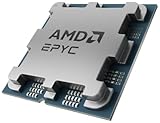
- The processor features Socket AM5 socket for installation on the PCB
- EPYC product line processor for better usability and increased efficiency
- Dodeca-core (12 Core) processor core allows multitasking with great reliability and fast processing speed
- 64 MB of L3 cache memory provides excellent hit rate in short access time enabling improved system performance
- Processor with 3.40 GHz clock speed for reliable and fast execution of instructions to ensure maximum convenience and feasibility
Investors should not treat the $3 billion divestiture as a simple recovery of the approximately $4.9 billion announced price. The assets sold, accounting treatments, contingent consideration and strategic value of the retained teams differ. The acquisition’s financial logic depends primarily on whether ZT helps AMD sell more CPUs, accelerators and related silicon—not on manufacturing revenue alone.
What would show that the deal is working?
- Rack-scale design wins: Named AMD-based deployments at hyperscalers or large enterprises.
- Deployment speed: Evidence that qualification-to-production timelines improve for repeatable rack designs.
- Cluster economics: Performance, power, networking and cooling results at system scale, not just single-accelerator benchmarks.
- ROCm migration: Documented porting effort, framework coverage and production reliability for important workloads.
- Customer neutrality: Continued willingness of former ZT customers to use AMD in mixed-vendor environments.
- Financial impact: Data-center AI revenue, gross-margin trends and integration costs that show whether higher-value silicon sales outweigh added complexity.
- Support accountability: Clear responsibility among AMD, Sanmina, OEMs, cloud providers and integrators when systems require service.
Bottom line for investors and infrastructure buyers
ZT Systems gives AMD a more credible systems-level route into AI infrastructure. Its retained design and customer-enablement expertise can make AMD silicon easier to validate, deploy and operate, giving hyperscalers a stronger alternative to Nvidia and potentially improving price and supply competition.
But the deal does not replicate CUDA, NVLink, Nvidia’s networking and management software, or its installed support ecosystem. The decisive evidence will be production rack deployments, workload-level ROCm results, cluster economics, customer retention and AMD’s ability to convert systems expertise into profitable accelerator adoption.
Quick Recap
Product prices and availability are accurate as of the date/time indicated and are subject to change. Any price and availability information displayed on Amazon at the time of purchase will apply.
The Tool Desk
Outbyte PC Repair FREERepair Windows errors before they cause bigger problemsFix Now →Outbyte Driver Updater FREEFix the driver behind crashes, sound loss and screen glitchesFind Drivers →



