Quick wins for a faster PC:
Repair Windows errors before they cause bigger problemsFix Now →Fix the driver behind crashes, sound loss and screen glitchesFind Drivers →Clear out junk files and repair common Windows errorsFree Scan →Florida nuclear startup Ampera is seeking to open licensing discussions with the U.S. Nuclear Regulatory Commission for a proposed factory-built microreactor. The company has said it intends to use the NRC’s optional 10 CFR Part 53 framework, which took effect on April 29, 2026. Available reporting describes a pre-application letter—not a completed license application, an NRC approval, or an issued reactor license.
What Ampera is proposing
Ampera is a Florida-based nuclear startup developing what it describes as a factory-built, containerized microreactor for off-grid or distributed power applications. Available reporting identifies Brian Matthews as the company’s founder and chief executive.
The reported target output is 15–30 megawatts electric (MWe). That figure comes from company descriptions reported by Interesting Engineering and should be treated as a proposed design specification, not the output of an operating plant.
Ampera says its concept is:
- thorium-enabled;
- based on TRISO fuel;
- intended to operate continuously for decades without conventional refueling;
- designed to use a supercritical carbon-dioxide turbine cycle; and
- designed for water-free operation.
Those are company claims. No NRC finding in the available sources validates the design’s safety, fuel cycle, operating life, cooling performance, or commercial readiness.
The Tool Desk
Outbyte PC Repair FREEClear out junk files and repair common Windows errorsFree Scan →Outbyte Driver Updater FREEFix the driver behind crashes, sound loss and screen glitchesFind Drivers →#1 Best Overall
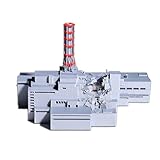
- ATMOSPHERE-BOOSTING HUMIDIFIER MORE THAN JUST MIST: Bring your space to life with a soft green glow and fine ultrasonic mist. This USB-powered humidifier doesn't just add moisture - it creates a calm, immersive atmosphere for bedrooms, desks, or late-night work sessions
- USB POWERED FOR EASY USE ANYWHERE: No bulky setup needed. Simply plug into your laptop, power bank, or adapter and enjoy instant mist anytime. Suitable for office desks, gaming setups, travel, or small personal spaces
- COMPACT SIZE FOR DESKTOP SPACES: Designed to fit seamlessly into your workspace without taking up room. Whether placed beside your monitor, bedside, or shelf, it adds both function and visual appeal without clutter
- SOFT GREEN LIGHT FOR RELAXING AMBIENCE: The built-in green LED light enhances the overall mood, making it suitable for stress relief, relaxation, or creating a unique aesthetic setup. Works well for night use without being too harsh on the eyes
- HUMIDIFIER AND DECOR IN ONE UNIQUE PIECE: Not just a humidifier - a conversation-starting decor piece. Combines practical air moisture benefits with a visually striking design, making it a thoughtful gift or personal setup upgrade
What “thorium-enabled” does—and does not—establish
Thorium is generally a fertile material rather than a directly usable substitute for all fissile reactor fuel. Ampera’s description does not, by itself, establish whether thorium would be part of the initial fuel, used with enriched uranium or another fissile material, or incorporated into a later fuel-cycle strategy. Fuel composition, enrichment, fabrication and qualification remain central licensing questions.
What TRISO means
TRISO fuel consists of small fuel particles surrounded by multiple ceramic coating layers. The term describes a fuel form; it does not eliminate requirements for fuel qualification, manufacturing quality assurance, transport, safeguards, spent-fuel management or radioactive-waste controls.
Water-free and potentially subcritical operation
“Water-free” does not mean that a plant has no cooling or heat-rejection systems. A commercial unit would still need to manage heat, shielding, emergency functions, security and nuclear-material controls.
If Ampera uses “subcritical” to describe the design, the NRC would need to understand whether an external neutron source or accelerator is required, how shutdown works, what happens if that source fails, and how the architecture changes accident analysis. A subcritical system should not be assumed to be an ordinary self-sustaining reactor.
Rank #2
- Funny nuclear engineering apparel for atomic energy enthusiast and every nuclear engineer.
- You work in a Nuclear Power Plant or nuclear reactor, than makes this funny sayings for nuclear engineers a perfect fit for you.
- Lightweight, Classic fit, Double-needle sleeve and bottom hem
What Ampera actually submitted
The strongest available description is that Ampera sent a formal letter expressing its desire to begin the NRC’s pre-application process. The reported goal was to meet NRC officials and agree on the structure and scope of future engagement. The report said the company had not yet received a response from the relevant NRC offices at that time.
That step is materially different from filing for, or receiving, a license:
- Pre-application engagement: technical meetings and correspondence before a substantive application.
- Acceptance or docketing: an NRC determination that a submission is sufficiently complete to enter a formal review process.
- Formal license application: the filing that seeks a permit or license and contains the required technical, environmental, security and operational evidence.
- NRC review: safety, environmental, safeguards, security, emergency-planning and other evaluations.
- License issuance: an approval that may include conditions and limitations.
On the available record, Ampera is at the first stage. A pre-application letter is not a license application and is not evidence that the NRC has approved the reactor.
What 10 CFR Part 53 changes
Part 53 is an optional framework for licensing and regulating commercial nuclear plants. It was published in the Federal Register on March 30, 2026, and became effective April 29, 2026, according to the final rule. The current regulatory text is in 10 CFR Part 53.
Do these 3 things before closing this tab:
1Clear out junk files and repair common Windows errors2Scan for outdated or missing drivers - takes under a minute3Repair Windows errors before they cause bigger problemsThe framework is:
- Risk-informed: it uses probabilistic risk assessments and other systematic evaluations to focus regulatory attention on safety-significant risks.
- Performance-based: it emphasizes required safety outcomes and performance objectives while allowing flexibility in how an applicant demonstrates compliance.
- Technology-inclusive: it is intended to cover a broad range of reactor technologies, sizes and applications, including non-light-water designs.
- Lifecycle-oriented: it addresses licensing and regulation through construction, operation and decommissioning.
The rule also makes related changes involving fitness for duty, emergency preparedness, physical security, cybersecurity and access authorization. Part 53 includes provisions for manufactured reactors and manufacturing licenses, which could be relevant to a factory-built design.
Part 53 is an alternative to existing Parts 50 and 52, not an automatic replacement. An applicant must choose and substantiate its licensing strategy.
Why Part 53 could fit Ampera
Traditional NRC requirements were developed largely around the conventional light-water reactor fleet. Ampera’s reported concept differs in several respects:
- microreactor scale;
- factory manufacture and containerized deployment;
- alternative-fuel claims involving thorium and TRISO;
- possible subcritical operation;
- non-light-water cooling or power-conversion features; and
- potential use at remote or off-grid sites.
Part 53 may allow Ampera to demonstrate safety using passive features, probabilistic analysis and performance objectives rather than seeking repeated exemptions from rules written for a different technology. That flexibility could reduce mismatches between the design and prescriptive requirements, but it does not guarantee a shorter review or a successful application.
Rank #4

- Tall smokestack
- Detailed metal siding
- Rooftop vents
- Molded in three colors and clear plastic
- Realistic design in a size that fits most Layouts
What Part 53 does not do
- It does not guarantee an accelerated license.
- It does not waive safety, environmental, security, safeguards, quality-assurance or emergency-planning obligations.
- It does not certify Ampera’s design or establish that it is safe.
- It does not resolve fuel availability, fuel qualification, waste management or decommissioning.
- It does not guarantee site approval, grid interconnection, financing, construction or insurance.
- It does not require Ampera to use Part 53 rather than Parts 50 or 52.
The Federal Register describes the intended safety level as equivalent to existing frameworks, not as a lower standard.
Independent reader supportYour contribution helps us test, update, and keep practical guides available for everyone.Regulatory questions that remain open
How would the NRC classify the facility?
The legal category could depend on whether the proposal is treated as a commercial nuclear plant, a utilization facility, a test or demonstration reactor, or another type of installation. “Microreactor” is a commercial and policy term, not a complete licensing classification. Part 53’s small-modular-reactor definition covers a power reactor up to 1,000 megawatts thermal per module, so the label alone does not determine the pathway.
What fuel would be used?
The NRC and other authorities would need the exact fuel composition, enrichment, fabrication location, qualification evidence, transport arrangements, safeguards and material-accountancy plans. A thorium-enabled description does not answer those questions.
How would subcritical operation work?
If the design needs an external neutron source, that source could create additional licensing, security and reliability questions. The application would need to define shutdown, source failure behavior and the resulting accident scenarios.
Best Value
How would factory manufacturing be regulated?
Factory production shifts attention beyond the eventual site. The NRC could need to evaluate the manufacturing license, quality-assurance program, supplier qualifications, inspection, configuration control, transport and the interfaces between the factory and operating site.
Where could units be located?
Remote or industrial sites raise questions about emergency-planning zones, local response capability, staffing, maintenance, transportation and communications. Part 53 may provide flexibility, but the site-specific safety case still has to support the proposed arrangements.
What security and cyber controls apply?
Small size does not automatically exempt a reactor from physical-security or cybersecurity obligations. Part 53 includes technology-inclusive requirements for protection against radiological sabotage and for digital computer and communication systems.
Ampera status check
| Item | Current position |
|---|---|
| Company | Ampera, a Florida-based nuclear startup, according to available secondary reporting. |
| Proposed output | 15–30 MWe, as reported from company descriptions; not an operating-plant measurement. |
| NRC action reported | Letter seeking to begin pre-application engagement. |
| Formal Part 53 application | Not established by the available sources. |
| NRC license issued | Not established by the available sources. |
| Part 53 publication | March 30, 2026. |
| Part 53 effective date | April 29, 2026. |
| Next verifiable milestone | An NRC response, public pre-application meeting, docketing notice or formal application. |
What would have to happen before commercial deployment?
- Ampera would need to define the reactor, fuel, source terms, control and shutdown systems, cooling and power-conversion systems.
- The company would need a defensible safety case, including uncertainty treatment and accident analysis.
- Fuel and materials would require qualification, manufacturing controls and an accountable supply chain.
- The NRC would need to address siting, emergency planning, security, cybersecurity, safeguards, quality assurance, transportation and waste responsibilities.
- The company would need to secure a site, customers, financing, construction capability and any non-NRC approvals required by federal, state or local authorities.
Part 53 can provide a regulatory route for an unconventional design, but it cannot substitute for engineering evidence, qualified fuel, manufacturing discipline or commercial execution. For now, Ampera’s significance is that it is positioning a proposed microreactor for the new framework—not that it has crossed the line into NRC licensing.
Crashes, No Sound, or Screen Glitches?
Random freezes, missing sound and display glitches usually trace back to one bad driver. Find and replace yours safely.Free scan · under a minutePC Slower Than It Used to Be?
A free scan shows the junk files, broken settings and background clutter dragging Windows down - then fixes them in one click.Free scan · Windows 10 & 11Quick Recap
Product prices and availability are accurate as of the date/time indicated and are subject to change. Any price and availability information displayed on Amazon at the time of purchase will apply.




