Free tools Windows power users keep installed
One-click scans. No signup required.
Yes—AI has made PC building more expensive, but not because data centers are buying every desktop DIMM. AI infrastructure is consuming high-bandwidth memory (HBM), server DDR5 and enterprise SSDs. Those products use the same constrained DRAM and NAND manufacturing ecosystem as consumer parts, so Samsung, SK hynix and Micron are prioritizing higher-margin server products and allocating less capacity to desktop memory. The result is a real, uneven shortage affecting DDR4, DDR5 and SSDs differently.
The short version
- AI accelerators require HBM, while AI servers also use large amounts of conventional server DRAM and enterprise SSD storage.
- Suppliers can earn more from these products and cloud providers are securing capacity through long-term agreements.
- Consumer DRAM receives less incremental supply, while older DDR4 production is reduced even though many existing PCs still need it.
- Contract-price forecasts and retail prices are different: one scarce consumer kit can rise far more than the industry average.
- For buyers in August 2026, the sensible response is workload-based purchasing—not panic buying.
What is actually in short supply?
Desktop and laptop memory
Desktop DDR4 and DDR5 UDIMMs, laptop SODIMMs and soldered LPDDR are consumer products with separate supply and compatibility requirements. DDR5 is the current mainstream desktop standard, while DDR4 remains essential for installed systems and budget upgrades. Reduced production of an older standard can make DDR4 unexpectedly expensive when demand persists.
Server memory
AI and general-purpose data centers use DDR5 RDIMMs, including high-capacity modules. RDIMMs are registered server memory and are not interchangeable with ordinary desktop UDIMMs. TrendForce says AI-inference deployments are increasing demand for both accelerators and high-capacity server memory (TrendForce).
HBM
HBM is stacked memory placed next to an AI accelerator. It provides much higher bandwidth than desktop DDR5 and cannot be installed in a PC memory slot. Its importance to desktop buyers is indirect: HBM consumes advanced DRAM capacity, packaging resources and engineering attention while attracting stronger margins. Micron reported HBM4 in high-volume shipments for a lead customer in June 2026 and expects HBM4E volume production in 2027 (Micron).
#1 Best Overall

- Boosts System Performance: 32GB DDR5 RAM laptop memory kit (2x16GB) that operates at 5600MHz, 5200MHz, or 4800MHz to improve multitasking and system responsiveness for smoother performance
- Accelerated gaming performance: Every millisecond gained in fast-paced gameplay counts—power through heavy workloads and benefit from versatile downclocking and higher frame rates
- Optimized DDR5 compatibility: Best for 12th Gen Intel Core and AMD Ryzen 7000 Series processors — Intel XMP 3.0 and AMD EXPO also supported on the same RAM module
- Trusted Micron Quality: Backed by 42 years of memory expertise, this DDR5 RAM is rigorously tested at both component and module levels, ensuring top performance and reliability
- ECC Type = Non-ECC, Form Factor = SODIMM, Pin Count = 262-Pin, PC Speed = PC5-44800, Voltage = 1.1V, Rank And Configuration = 1Rx8
NAND and SSDs
SSDs use NAND flash rather than DRAM, so this is a related shortage, not the same product. AI data centers are major enterprise-SSD buyers, tightening NAND availability and raising client-SSD costs. TrendForce projected NAND contract prices up 55–60% in the first quarter of 2026 and 70–75% in the second quarter, with meaningful capacity expansion potentially delayed until late 2027 or 2028 (TrendForce; TrendForce).
How AI demand reaches a desktop builder
- Cloud providers build AI clusters and buy accelerators, HBM, server DRAM and enterprise SSDs.
- Memory manufacturers prioritize products with higher margins and customers willing to sign long-term contracts.
- Wafer input, advanced packaging, cleanroom capacity and engineering resources shift toward those products.
- Consumer DRAM receives fewer incremental bits and lower allocation priority.
- Module makers, distributors and retailers pay more for available chips and pass replacement costs through to buyers.
This is a capacity-allocation problem amplified by AI infrastructure spending—not a literal disappearance of all desktop RAM. Earlier oversupply and weak pricing also influenced manufacturers’ production decisions; fab construction, process migration and qualification take years, while server capacities per system continue to rise.
Rank #2
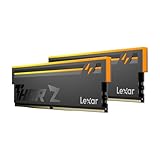
- Unleash Next-Gen Dominance: Experience Lexar DDR5 RAM performance with the Lexar THOR Z Series RGB DDR5 RAM 32GB Kit (2x16GB). Clocking at a blistering 6000MHz with low CL38 latency, this DDR5 desktop memory delivers up to 6000 MT/s for a full-throttle advantage. Whether you're building a high-end gaming rig or a professional workstation, this Lexar 32GB RAM kit ensures your system keeps pace with next-gen titles
- Sleek & Robust Thermal Design: Engineered for both aesthetics and endurance, this Lexar DDR5 RAM 6000MHz features an all-new streamlined design. The solid, sandblasted aluminum heatsink fuses a minimalist, razor-sharp aesthetic with uncompromising thermal control. This Lexar THOR Z Series armor ensures your DDR5 memory stays cool under pressure, delivering sustained peak performance during intense gaming sessions
- Game in Style with Brighter RGB Lighting: Elevate your build's aesthetics with the enhanced customizable RGB lighting on this Lexar RGB DDR5 RAM. Brighter and more vibrant than previous generations, the Lexar THOR Z Series RGB DDR5 RAM allows you to synchronize lighting effects with your components, creating a truly immersive gaming atmosphere that stands out from the crowd
- On-die ECC & PMIC for Rock-Solid Stability: Go beyond speed with reliability. This Lexar DDR5 RAM kit integrates On-die Error Correction Code (ECC) to automatically correct data errors, vastly improving stability and reliability for your critical tasks. The onboard Power Management Integrated Circuit (PMIC) ensures efficient power delivery, boosting the overall power efficiency of your DDR5 desktop memory for a longer-lasting, more stable system
- Seamless Compatibility with Intel & AMD: Worry-free upgrade guaranteed. The Lexar THOR Z Series DDR5 RAM is built for broad compatibility with the latest platforms. It fully supports Intel XMP 3.0 and AMD EXPO one-click overclocking, making it effortless to achieve the rated speeds. Trust Lexar DDR5 RAM to deliver seamless performance with mainstream DDR5 motherboards
What the price data really says
Industry forecasts describe contract prices, while shoppers see retail prices. They should not be averaged into one universal “RAM increase.”
| Period | Reported or forecast movement | What it measures |
|---|---|---|
| Q1 2026 | Conventional DRAM +90–95% quarter over quarter; PC DRAM expected above +100% | TrendForce contract-price forecast (source) |
| Q2 2026 | Conventional DRAM +58–63%; NAND +70–75% | TrendForce contract-price forecasts (source) |
| Q3 2026 | Conventional DRAM +13–18%; NAND +10–15% | TrendForce outlook reported by Tom’s Hardware (source) |
A slower rate of increase is not a price decline. It may reflect consumers and device makers reaching affordability limits while supply remains tight.
What’s actually slowing this PC down?
Pick the symptom - the matching free tool is one click away.
Rank #3

- Requires overclocking/BIOS adjustments. Maximum speed and performance depends on system components, including motherboard and CPU.
- G.SKILL Flare X5 Series DDR5 U-DIMM Memory Kit, Model: F5-6000J3636F16GX2-FX5
- Non-ECC, DDR5 U-DIMM, 288-pin, for Desktop PC & Gaming
- Includes JEDEC default profile, and AMD EXPO & Intel XMP 3.0 memory overclock profile
- Do not mix memory kits. Memory kits are sold in matched kits that are designed to run together as a set. Mixing memory kits will result in stability issues or system failure.
Why individual kits can look absurdly expensive
Retail pricing includes the chip contract price, module inventory, distributor replacement cost, capacity, speed, timings, binning, RGB hardware, retailer stock and whether a model is being discontinued. Tom’s Hardware observed a U.S. Crucial 32GB DDR5-6000 kit at $459 in 2026 versus a $90 July 2025 promotional price, and a G.Skill 32GB DDR5-6000 kit at $599.99. These are dated, retailer-specific observations—not market averages (Tom’s Hardware).
Effect on complete PCs
Gartner forecasts combined DRAM and SSD prices could be 130% higher by the end of 2026 than in 2025, contributing to a 17% increase in overall PC prices. It also estimates memory’s share of PC bill of materials rising from 16% to 23%. Those are market forecasts, not a guaranteed increase for every DIY build (Gartner).
Rank #4

- Elevated performance for gamers & creators: 128GB kit DDR5 for enhanced productivity—accelerate demanding tasks and enjoy higher frame rates with this high-speed RAM
- Enhanced PC performance: Crucial Pro RAM 128GB kit with 2x64GB DDR5 operating at the speed of 5600MHz with 5200MHz or 4800MHz downclock support
- Top-tier RAM capacity: 128GB DDR5 RAM kit (2x64GB) compatible with latest Intel Core Ultra Series 2 & 14th Gen Core CPUs and AMD Ryzen 9000 Series desktop CPUs and above
- Low-profile, matte black heat spreader: Enhance your gaming rig with a sleek, modern look. With our integrated low-profile heat spreader, Crucial DDR5 Pro can even fit in smaller PCs
- Supports Intel XMP 3.0 and AMD EXPO on the same module: Achieve easy performance recovery on CPUs that suppress rated memory speeds with Intel XMP 3.0 or AMD EXPO turned on in the UEFI/BIOS settings. Get the full value of your investment without overpaying for performance
DDR4, DDR5 and SSDs do not face the same problem
| Product | AI connection | Buyer implication |
|---|---|---|
| DDR4 UDIMM | Legacy capacity is reduced while installed-base demand remains | Upgrade only when needed; compare the cost with a new platform |
| DDR5 UDIMM | Competes indirectly for DRAM capacity with server products | Standard choice for new desktops; avoid paying extreme premiums for cosmetic extras |
| DDR5 RDIMM | Directly used in AI and other servers | Not compatible with ordinary desktop boards |
| HBM | Direct accelerator memory demand | Not user-replaceable desktop RAM |
| Client SSD | NAND capacity competes with enterprise SSD demand | Budget for storage separately from RAM |
Micron has also been reported to wind down the Crucial consumer memory and SSD business. That means new shipments, existing retail inventory, warranty and technical support should be treated as separate questions; Crucial stock did not vanish instantly (Tom’s Hardware).
Independent reader supportYour contribution helps us test, update, and keep practical guides available for everyone.How much RAM should you buy?
- 16GB: Usable for basic office work and many games, but restrictive for heavy multitasking, modded games, creative work and local AI.
- 32GB: Practical mainstream target for a new gaming or general-purpose desktop.
- 64GB: Sensible for virtual machines, development, large creative projects and serious multitasking.
- 96GB or 128GB-plus: Buy only when a measured workload benefits from it.
For a new gaming PC, compare 32GB, 48GB and 64GB matched kits. Two modules normally provide dual-channel operation; verify the motherboard’s supported generation and memory-qualified list when compatibility matters. RGB and extreme speeds can add a large premium for modest real-world gains.
Best Value
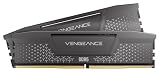
- Disclaimer: Maximum Speed requires overclocking/PC BIOS adjustments. Maximum speed and performance depend on system components, including motherboard and CPU
- AMD EXPO & Intel XMP 3.0 Compatible Only: Dual memory profiles allow you to easily select optimized settings for your platform, whether you’re running an AMD or Intel processor
- Onboard Voltage Regulation: Enables easier, more finely-tuned, and more stable overclocking through CORSAIR iCUE software than previous generation motherboard control
- Maximum Bandwidth and Tight Response Times: Optimized for peak performance on the latest AMD and Intel DDR5 motherboards
- Hand-Sorted, Tightly-Screened Memory Chips: Ensure consistent high-frequency performance with aggressive timing options
Should you build now or wait?
Buy now when
- You need the machine within 90 days.
- Your existing platform requires a particular, compatible kit.
- The price is credible across multiple retailers and the workload requires the capacity.
- Insufficient memory is costing professional time.
Wait or reduce specifications when
- You are speculating rather than solving a capacity problem.
- Your platform may change soon.
- Only one reseller has the part at an extreme price.
- A lower capacity meets your actual workload.
Meaningful new capacity may not arrive until late 2027 or 2028, but no source establishes that prices will fall in a particular year. A slower Q3 increase is not evidence that waiting guarantees a bargain.
Ways to avoid overpaying
- Copy the exact part number and compare several retailers, not just a product title.
- Check seller identity, return terms and warranty; marketplace listings can be stale or inflated.
- Confirm DDR4 versus DDR5, UDIMM versus RDIMM and desktop DIMM versus laptop SODIMM.
- Prefer a matched two-module kit and avoid mixing separately purchased kits, especially at high XMP or EXPO speeds.
- Compare non-RGB mainstream-speed kits with premium versions.
- Check capacity per slot and motherboard support before ordering.
- Use PCPartPicker for an initial comparison, then verify final stock and price at the retailer.
Are prebuilts better value?
Sometimes. A system maker may have bought memory before the latest increase or receive allocations unavailable to individuals. Compare equivalent RAM capacity, module count, CPU, GPU, SSD, power supply, motherboard, cooling and warranty. A low headline price may conceal one module, proprietary parts, a weak power supply or poor upgrade access.
Bottom line for August 2026
The shortage is real, and AI-driven HBM and server demand is a major contributor. It is nevertheless indirect and product-specific: AI is not consuming retail desktop DIMMs one-for-one. Manufacturers’ allocation choices, legacy-product reductions, NAND demand, inventory and retail scarcity all matter. Buy the capacity your workload can justify, verify compatibility and compare the complete platform cost before deciding whether a new build, upgrade, prebuilt or delay is financially sensible.
Quick Recap
Product prices and availability are accurate as of the date/time indicated and are subject to change. Any price and availability information displayed on Amazon at the time of purchase will apply.
Recommended Free Tools




