Hadrian acquired procurement-software and manufacturing-network startup Datum Source in a deal that closed July 8, 2024 and was announced August 14. The purchase price was not disclosed. Strategically, Hadrian bought the “front end” of its manufacturing business: supplier discovery, quoting and prototype procurement for hardware companies that are not yet ready for Hadrian’s highly automated factories.
The transaction is best understood as a customer-lifecycle strategy, not simply a software purchase. Hadrian can now work with a startup while its design is changing, use outside machine shops for small batches, and potentially move the program into Hadrian’s own production system when volumes and specifications stabilize.
What Hadrian acquired
Datum Source combined software, procurement services and a network of manufacturers. Hadrian said the business had more than 100 machine shops in its network and served companies across aerospace, defense, robotics, automotive and other advanced-hardware sectors.
- Procurement-management software: workflows for supplier discovery, requests for quotation, purchase requisitions, quote management, order tracking and supplier-performance monitoring.
- Part-sourcing services: technical help finding a shop able to make a particular part, material or tolerance on a prototype or low-volume schedule.
- Supplier relationships: access to outside machine shops that can absorb work when a design is changing too quickly or volumes are too low for an automated factory.
- Customer relationships: Hadrian identified Apex, Saronic, Muon Space, Impulse Space, Radiant Nuclear, H3X Technologies, Source Energy and Reliable Robotics as Datum users in its announcement. Those names are company-provided customer references, not independent endorsements.
- Team and know-how: co-founders Rob Pakalski, Thomas Cobbs and Ryan Nagle, whom Hadrian described as former SpaceX supply-chain experts, joined the combined business.
Hadrian said it would retain the Datum Source brand and add Hadrian’s design-for-manufacturing and quality-automation capabilities to the platform. The announcement is available from Hadrian’s release.
#1 Best Overall

- QUICK SNAP-FIT ASSEMBLY — No glue, no mess: every precision-engineered piece clicks firmly into place so builders of all skill levels may complete their A-10 Thunderbolt II Warthog in one satisfying session without extra tools or adhesives.
- AUTHENTIC WARBIRD DETAIL — Faithfully recreates the iconic twin-engine, straight-wing attack jet with raised panel lines, movable control surfaces, and characteristic GAU-8 cannon nose for a display-ready replica straight out of the box.
- STEM-FRIENDLY BUILDING EXPERIENCE — The numbered part system and illustrated step-by-step guide introduce basic aerospace engineering concepts, supporting spatial reasoning and fine-motor development for builders ages 8 and up.
- DURABLE ABS CONSTRUCTION — High-impact ABS plastic parts resist warping and breakage, ensuring the finished model withstands shelf display, light handling, and proud show-and-tell moments for years to come.
- GREAT VALUE GIFT UNDER $25 — Thoughtfully packaged and priced at $21.99, this building set makes an ideal birthday, holiday, or any-occasion gift for aviation fans, military history enthusiasts, and hobbyist model builders alike.
Why an automated factory needed a procurement layer
Hadrian’s model is designed for repeatable production. Prototype customers often present the opposite operating problem: one specialized part today, a revised geometry next month and uncertain quantities after that. Reconfiguring a highly automated line for every small design change can be inefficient.
Without a sourcing option, Hadrian might have to reject a promising customer until its design and order volume are stable. That is a costly point to lose the relationship. Datum lets Hadrian support the customer through external suppliers first, while learning the product’s requirements and staying involved until the program is suitable for scaled production.
This is therefore a customer-acquisition and lifecycle-extension strategy. TechCrunch described the same logic in its coverage of the transaction: Hadrian can engage before a design is production-ready.
How the intended prototype-to-production workflow works
- A hardware company defines a part or assembly, including materials, tolerances, drawings and delivery requirements.
- Datum helps identify suitable suppliers and manages requests for quotation and technical communication.
- The customer uses the procurement workflow to compare quotes, issue orders and track delivery and supplier performance.
- Hadrian can apply its design-for-manufacturing and quality-automation tools to improve the path toward repeatable production.
- Outside shops handle low-volume or rapidly changing work while the design is still evolving.
- When specifications stabilize and demand rises, Hadrian can evaluate making the part in its own automated factories.
The economic objective is continuity: win the relationship during development, then remain a manufacturing option if the product reaches a major commercial or Department of Defense program. Hadrian CEO Chris Power described Datum as the “first of many” possible acquisitions to TechCrunch; that is management’s stated intention, not a confirmed pipeline.
Rank #2

- 1/35 scale kit
- Includes driver figure in relaxed sitting pose
- Decals for five vehicles
What Datum did before the deal
Datum began as a procurement-services company and built software around recurring technical-buying work. Its stated capabilities included supplier qualification, technical sourcing, RFQs, requisitions, order tracking and performance management.
Datum also said it moved its tools to GovCloud for ITAR- and security-sensitive work in a company post. That statement does not mean every customer, file or workflow is automatically ITAR-compliant, export-authorized or secure for a defense contract. Customers still need their own access controls, data-handling procedures, supplier reviews and contractual compliance.
The “valley of death” in defense manufacturing
Defense startups frequently prove a technology in a demonstration and then struggle to produce it at the quality, cost, schedule and volume required by a government program. They must qualify suppliers, document processes, manage controlled technical data, fund production and deliver repeatable hardware.
Hadrian framed the acquisition as help across that gap. Datum can reduce sourcing and coordination friction, but it cannot by itself provide:
Rank #3
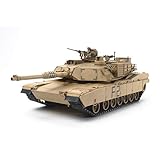
- 1/48 scale plastic model assembly kit. Length: 205mm, width: 77mm.
- Anti-slip surface details molded into the main sections of the model.
- Assembly type tracks feature straight sections for a highly realistic finish.
- Kit includes a weight for creating a heavy feel model.
- 2 marking options are included to recreate U.S. Army 3rd Armored Cavalry Regiment M1A2s from 2003 in the Iraq War.
- a government contract or program funding;
- technical qualification or customer acceptance;
- production capacity at scale;
- security clearances or export-control authorization;
- government-approved quality systems; or
- on-time performance for a complex defense program.
Deal terms and what is—and is not—known
| Item | Reported detail |
|---|---|
| Closing date | July 8, 2024, according to Hadrian |
| Public announcement | August 14, 2024 |
| Purchase price | Not disclosed |
| Datum prior funding | $5.6 million, a PitchBook figure cited by TechCrunch and SiliconANGLE |
| Datum prior valuation | $30 million, reportedly before the acquisition—not the purchase price |
| Datum network | More than 100 machine shops, according to Hadrian |
| Approximate customer count | About 30 companies, as reported by TechCrunch; Hadrian’s release lists named users but does not state that same total |
TechCrunch’s report is at TechCrunch, while SiliconANGLE’s coverage is at SiliconANGLE. None of those figures establishes what Hadrian paid.
Why the deal matters to defense-tech companies
Earlier access to customers
Hadrian can reach companies before they have production-ready designs, expanding its addressable market beyond established programs.
A pipeline of future factory work
Procurement data and early design involvement may reveal which programs are likely to need repeatable, higher-volume manufacturing later.
A broader service proposition
For a startup, one relationship could cover supplier search, quoting, prototype production and a later transition to Hadrian manufacturing, reducing handoffs between vendors.
Recommended Free Tools
Rank #4
![ACA12127 1:35 Academy USMC AH-1Z Cobra 'Shark Mouth' [Model Building KIT]](https://m.media-amazon.com/images/I/51n+69EWuVL._SL160_.jpg)
- This is a plastic model kit. Assembly and painting is required.
- Paint and glue is NOT included.
- Contains parts to build one of each model.
More capability for Datum
Datum gains access to Hadrian’s capital, manufacturing expertise, quality tools and automation resources, while keeping its software identity.
How this fits the wider defense-tech M&A pattern
One acquisition does not prove that an industry-wide “spree” or statistically measured consolidation wave had begun. It is better treated as an early signal of a strategy: venture-backed defense companies are buying capabilities that turn a single product into a broader platform.
| Transaction | Illustrated rationale |
|---|---|
| Hadrian–Datum Source | Vertical integration from procurement and prototyping toward scaled manufacturing |
| Anduril–Area-I | Added the ALTIUS air-launched-effects capability; company announcement |
| Anduril–Blue Force Technologies | Expanded autonomous-aircraft and hardware capabilities |
| Shield AI–Sentient Vision Systems | Combined Sentient sensing technology with Shield AI autonomy; company announcement |
| Anduril–American Infrared Solutions | Added cooled infrared cameras and components; company announcement |
The examples have different purposes—product expansion, sensing, autonomy and vertical integration. They should not be treated as interchangeable deals.
Independent reader supportYour contribution helps us test, update, and keep practical guides available for everyone.Risks and unresolved questions
Supplier neutrality
Datum’s value may depend on customers trusting its recommendations. Once the platform is owned by a manufacturer, customers may ask whether Hadrian’s factories receive preferential treatment. Important practical questions include whether Datum will support customers that manufacture elsewhere, disclose when Hadrian is being recommended, allow data export and remain available to companies that compete with Hadrian. The available announcements do not show that Hadrian has violated neutrality or changed commercial terms.
Do these 3 things before closing this tab:
1Scan for outdated or missing drivers - takes under a minute2Repair Windows errors before they cause bigger problems3Fix the driver behind crashes, sound loss and screen glitchesBest Value

- Experience the legendary F-14 Tomcat through a highly detailed model designed for aviation collectors and hobby enthusiasts. The finished model becomes a striking desktop or showcase centerpiece.
- This 3D puzzle is designed for beginner-level assembly enthusiasts, offering an immersive hands-on building experience that helps cultivate patience, concentration, and mechanical problem-solving skills.
- This product is manufactured using high-quality, environmentally friendly plastic and employs an ultra-fine etching process to ensure durability, structural precision, and realistic aircraft details.
- Encourages understanding of aircraft engineering concepts while improving hand-eye coordination and spatial thinking through engaging mechanical assembly.
- Ideal gift for childs, engineers, collectors, model builders, and puzzle lovers for birthdays, Children’s Day, Christmas, or special hobby occasions.
Prototype speed versus production discipline
Prototype buyers prize flexibility; defense production requires repeatability, traceability, qualification and long-term availability. A workflow that is excellent for one phase does not automatically satisfy the other.
Networked suppliers versus owned capacity
External shops add breadth but also introduce variation in certifications, cyber controls, inspection, logistics and available capacity. A part that works in a small batch may be uneconomical or unreliable at scale.
Software integration and data risk
Customers may need integrations with PLM, ERP, accounting and quality systems. Sensitive drawings can also be exposed if access, export controls or supplier vetting are inadequate.
Integration and concentration risk
Hadrian must combine two engineering cultures and avoid duplicating internal tools. Customers may also hesitate to put all procurement and manufacturing with one vendor, particularly if acquired employees leave or Hadrian prioritizes its own highest-value programs.
What to watch after the acquisition
- Whether Hadrian expands Datum as a commercial software product beyond Hadrian factory customers.
- Whether Datum customers actually transition into Hadrian production programs.
- Published evidence of changes in lead time, cost, procurement labor or quality—not just marketing claims such as “10 times faster” or “half the cost.”
- How Hadrian handles supplier disclosure, data portability and customers that need independent sourcing.
- Additional acquisitions, factory expansion and new production categories. Hadrian’s press page provides later company announcements at hadrian.co/press, but a press release alone does not establish that every announced project is complete or operating.
What this means for buyers
Companies considering an integrated procurement-and-manufacturing relationship should ask:
- Does the network cover the required materials, processes, tolerances and certifications?
- How are ITAR-controlled or otherwise sensitive files handled under the customer’s compliance program?
- Can quote, supplier and order data be exported?
- Who owns inspection, nonconformance, traceability, rework and warranty responsibility?
- Are multiple qualified sources maintained?
- What happens commercially when a prototype becomes a production program?
- Are minimum quantities, setup fees, engineering charges and integration costs disclosed?
There is no public standard pricing or clearly available self-serve signup in the cited material. Datum and Hadrian are therefore best approached as enterprise, quote-based services rather than products with a published rate card.
The Bottom Line
Hadrian’s Datum Source acquisition is strategically important because it extends Hadrian’s reach from prototype procurement to automated production. The purchase price remains private, and the deal does not solve defense contracting, qualification or scale on its own. Its success will depend on whether customers trust an owned procurement platform, whether outside suppliers can meet production standards and whether early sourcing relationships convert into durable manufacturing programs.
Quick Recap
Product prices and availability are accurate as of the date/time indicated and are subject to change. Any price and availability information displayed on Amazon at the time of purchase will apply.
Quick wins for a faster PC:
Clear out junk files and repair common Windows errorsFree Scan →Scan for outdated or missing drivers - takes under a minuteDriver Scan →



