The August 18, 2025 report that Washington might take roughly 10% of Intel was only the beginning. Four days later, Intel announced an agreement giving the U.S. government up to 433.3 million shares in exchange for approximately $8.9 billion in program-linked funding. The transaction closed through subsequent filings, creating a government equity position of about 9.9%—with a conditional warrant for more. At the same time, former Intel CEO Craig Barrett argued that CEO Lip-Bu Tan was being too cautious about funding the company’s next-generation manufacturing technology.
What was proposed in August 2025?
On August 18, 2025, Network World reported that the U.S. government was considering converting part of Intel’s expected CHIPS Act support into an equity stake of approximately 10%. The policy objective was to help preserve domestic leading-edge semiconductor capacity and accelerate Intel’s delayed Ohio fabrication project.
At that point, the structure was uncertain. A direct loan would have created repayment obligations; a CHIPS Act grant would have provided non-dilutive support subject to program requirements; and an equity investment would give the government an ownership interest instead of a conventional creditor claim. Analyst Jack Gold noted that those distinctions would determine the governance, financial and political consequences.
The proposal was therefore reasonably described at the time as a possible federal bailout, but that shorthand concealed an important question: was Washington providing emergency debt, advancing already-authorized industrial-policy funds, or becoming a shareholder?
#1 Best Overall

- Next‑Gen Platform Support: Compatible with Intel 800 Series Chipset‑based motherboards with LGA1851 Socket enabling PCIe 5.0/4.0 and high‑speed DDR5 memory (up to 7200 MT/s).
- High‑Performance Core Configuration: Features up to 24 cores (8 P‑cores + 16 E‑cores) for demanding gaming and creator
- Ultra‑Fast Boost Clocks: Reaches up to 5.5 GHz max turbo frequency for top‑tier responsiveness and performance
- Built for Enthusiasts: Unlocked for performance tuning when paired with Intel Z‑series chipsets, making it ideal for overclockers and power users.
- Robust Power & Thermal Design: Engineered with 125W base power and 250W max turbo power to sustain high‑intensity
What the government actually received
Intel announced on August 22, 2025, that the Department of Commerce would provide approximately $8.9 billion through accelerated CHIPS Act and Secure Enclave funding in exchange for Intel shares. The terms are set out in the company’s SEC Form 8-K exhibit and related Form 8-K.
| Element | Documented term |
|---|---|
| Total announced funding | Approximately $8.9 billion |
| CHIPS Act portion | Approximately $5.7 billion in accelerated remaining funding |
| Secure Enclave portion | Approximately $3.2 billion |
| Shares for Commerce | Up to 433.3 million Intel shares, with shares issued or placed in escrow under different conditions |
| Approximate ownership | About 9.9% of Intel |
| Board representation | None; the announced holding was generally passive |
| Additional warrant | Up to approximately 5% more shares, exercisable at $20 per share if Intel ceases to own at least 51% of its foundry business |
Intel later reported that the transaction closed on August 27, 2025. Its 2025 Form 10-K says approximately 275 million shares were delivered initially, while additional shares were held in escrow against future Secure Enclave disbursements. The annual report also describes the warrant and its 51% foundry-ownership condition. See Intel’s 2025 Form 10-K and the 2026 proxy filing.
The amended arrangement relieved Intel of substantial obligations under its earlier direct-funding agreement, except for Secure Enclave-related requirements. That makes the deal more than a simple cash injection: it changed the form of government support, Intel’s shareholder base and some of its contractual constraints.
Why Ohio and Intel Foundry mattered
Intel’s Ohio project was presented as a major expansion of U.S. semiconductor manufacturing. Delays and changes to the original scaling plan weakened confidence in its timetable, however. Faster progress would matter both to Intel Foundry’s credibility and to Washington’s effort to reduce reliance on overseas leading-edge production.
What’s actually slowing this PC down?
Pick the symptom - the matching free tool is one click away.
Rank #2

- Game Without Compromise. Play harder and work smarter with Intel Core 14th Gen processors
- 20 cores (8 P-cores plus 12 E-cores) and 28 threads. Integrated Intel UHD Graphics 770 included
- Up to 5.6 GHz with Turbo Boost Max Technology 3.0 gives you smooth game play, high frame rates, and rapid responsiveness
- Compatible with Intel 600-series (with potential BIOS update) or 700-series chipset-based motherboards
- DDR4 and DDR5 platform support cuts your load times and gives you the space to run the most demanding games
Government money can fund construction and equipment, but it cannot by itself produce competitive process technology. Intel still has to demonstrate acceptable yields, design-enablement tools, packaging capability, customer qualification and reliable schedules. A strategically important fab can remain commercially weak if those execution milestones are missed.
What Craig Barrett criticized
Craig Barrett, Intel’s CEO from 1998 through 2005, argued in a Fortune guest opinion summarized by Network World that Intel was the only U.S. company positioned to challenge TSMC at the leading edge. In his view, the company lacked sufficient capital even with CHIPS Act support.
Barrett’s customer-financing proposal
Barrett suggested that major customers—including Apple, Google and Nvidia—could each contribute roughly $5 billion in exchange for domestic supply assurances and pricing leverage. He presented that funding as a way to give Intel the resources to remain a technology leader rather than become a follower.
The dispute over 14A
Barrett objected to Tan’s reported reluctance to proceed with Intel’s 14A process node without customer commitments. The disagreement captures a classic semiconductor capital-allocation dilemma:
Rank #3

- Get ultra-efficient with Intel Core Ultra desktop processors that improve both performance and efficiency so your PC can run cooler, quieter, and quicker.
- Core and Threads 24 cores (8 P-cores plus 16 E-cores) and 24 threads. Integrated Intel Graphics included
- Performance Hybrid Architecture Integrates two core microarchitectures, prioritizing and distributing workloads to optimize performance
- Performance Unlocked Up to 5.7 GHz unlocked. 40MB Cache
- Compatibility Compatible with Intel 800 series chipset-based motherboards
- Starting early protects technology leadership but risks spending billions before demand is secured.
- Waiting for contracts limits financial exposure but can leave Intel behind and make customers less willing to switch.
- Customer money could validate demand, but it does not solve yield, tooling, packaging or schedule problems.
Barrett’s recommendation was a proposal, not an Intel plan or an industry consensus.
Why Barrett’s criticism needs context
Barrett’s history makes his intervention relevant but not conclusive. Intel’s prolonged commitment to Itanium despite market resistance and expansion and acquisition decisions later reversed give critics grounds to scrutinize his strategic judgment. That record does not invalidate his concerns about capital and manufacturing leadership; it means his comments belong to an internal strategic debate rather than representing an uncontested expert verdict.
Analyst Anshel Sag, also quoted by Network World, argued that spinning off Intel Foundry prematurely would not make sense. Intel should first demonstrate competitive process technology and attract customers, he said. That view highlights why customer commitments are difficult to obtain before Intel proves its manufacturing proposition.
How the episode increased pressure on Lip-Bu Tan
Tan became Intel CEO effective March 18, 2025, according to Intel’s proxy filing. His tenure was immediately judged against problems that predated him.
Quick wins for a faster PC:
Clear out junk files and repair common Windows errorsFree Scan →Scan for outdated or missing drivers - takes under a minuteDriver Scan →Repair Windows errors before they cause bigger problemsFix Now →Rank #4
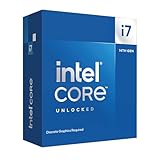
- Game Without Compromise. Play harder and work smarter with Intel Core 14th Gen processors
- 20 cores (8 P-cores plus 12 E-cores) and 28 threads. Discrete graphics required
- Up to 5.6 GHz with Turbo Boost Max Technology 3.0 gives you smooth game play, high frame rates, and rapid responsiveness
- Compatible with Intel 600-series (with potential BIOS update) or 700-series chipset-based motherboards
- DDR4 and DDR5 platform support cuts your load times and gives you the space to run the most demanding games
- On August 7, President Donald Trump publicly called for Tan’s resignation and cited alleged conflicts related to Tan’s China-linked business ties. The Associated Press reported the comments; Intel and Tan rejected the implication that he had violated legal or ethical standards.
- Trump and Tan met at the White House on August 11, according to contemporaneous reporting by Semafor.
- Reports of possible government involvement followed, while Barrett supplied a separate source of pressure: criticism from a former Intel chief about technology and funding strategy.
Those political and strategic disputes should not be merged. Trump’s allegations concerned leadership and potential conflicts; Barrett’s argument concerned whether Intel should finance 14A ahead of firm customer commitments. Neither, by itself, establishes that Tan’s strategy will succeed or fail.
Is the transaction really a bailout?
Calling the deal a bailout is defensible only if the term is explained. Intel received government-backed capital during a severe turnaround and the arrangement was motivated partly by national-security and industrial-policy concerns. The government accepted shares and a potential warrant, and some previous funding obligations were eased.
It was not a conventional emergency loan or a blank check. Much of the money was accelerated or program-linked funding, the government initially described its position as passive, and Intel remained responsible for operating the business. The most precise description is: a government rescue investment structured as an equity-and-funding transaction rather than a traditional emergency loan.
Independent reader supportYour contribution helps us test, update, and keep practical guides available for everyone.Who bears the risk?
Existing shareholders
Share issuance dilutes existing investors. The conditional warrant could create additional dilution if its foundry-ownership trigger is met and the government exercises it.
Outdated Drivers Are Slowing You Down
One free scan finds every outdated or missing driver and matches the right update for your exact hardware.Free scan · exact hardware matchWindows Errors? Fix Them Before They Spread
Repair common Windows errors and clear accumulated junk for a smoother, more stable PC - no reinstall needed.Free scan · no reinstallBest Value

- Game without compromise. Play harder and work smarter with Intel Core 14th Gen processors
- 24 cores (8 P-cores plus 16 E-cores) and 32 threads. Integrated Intel UHD Graphics 770 included
- Leading max clock speed of up to 6.0 GHz gives you smoother game play, higher frame rates, and rapid responsiveness
- Compatible with Intel 600-series (with potential BIOS update) or 700-series chipset-based motherboards
- DDR4 and DDR5 platform support cuts your load times and gives you the space to run the most demanding games
Taxpayers and policymakers
Washington obtains an ownership interest and strategic leverage, but taxpayers remain exposed to Intel’s execution and market risks. National-security value and shareholder returns are not the same objective.
Intel’s customers
Customers may benefit from a stronger domestic supplier, but financing Intel could support a foundry that competes with established suppliers or with customers’ own strategic interests. Large prepayments also cannot substitute for proof of process performance.
Employees and communities
Ohio construction and future factory employment depend on sustained spending and execution, not merely on the signing of a funding agreement.
Foreign partners and buyers
Government ownership and national-security conditions may complicate Intel’s relationships with foreign customers and governments, particularly if future transactions affect foundry ownership.
Free tools Windows power users keep installed
One-click scans. No signup required.
What to watch next
- Whether Intel secures external customers for leading-edge foundry production.
- Execution of the 18A and 14A process road maps, including yields and customer qualification.
- Ohio fab construction schedules, spending and any further scaling changes.
- Government disbursement milestones and the release of escrowed shares.
- Intel’s continuing ownership of at least 51% of its foundry business, which is tied to the warrant condition.
- Evidence that customers will commit capital or production volumes rather than merely express interest.
Timeline
| Date | Event |
|---|---|
| March 2025 | Tan became Intel CEO effective March 18. |
| August 7, 2025 | Trump called for Tan’s resignation. |
| August 11, 2025 | Trump and Tan met at the White House, according to contemporaneous reporting. |
| August 18, 2025 | Network World reported the possible approximately 10% government stake and Barrett’s criticism. |
| August 22, 2025 | Intel announced the approximately $8.9 billion government investment agreement. |
| August 27, 2025 | Intel reported implementation steps and amendments to its direct-funding agreement. |
| January 2026 filing | Intel’s Form 10-K described the completed transaction, shares, warrant and foundry-ownership condition. |
| March 2026 | Intel’s proxy identified the U.S. government as a holder of more than 5% and discussed the warrant separately. |
The Bottom Line
The August 18 story was speculation that became a formal government equity investment days later. The roughly 9.9% stake and conditional warrant gave Intel time and strategic runway, not proof of a successful turnaround. Barrett identified a real funding dilemma, but his customer-financing solution depends on customers trusting Intel’s technology, economics and execution enough to commit billions.
Quick Recap
Product prices and availability are accurate as of the date/time indicated and are subject to change. Any price and availability information displayed on Amazon at the time of purchase will apply.




