eCommerce (electronic commerce) is buying or selling goods or services through a digital ordering system—such as a website, app, marketplace, social storefront, subscription platform, or B2B procurement portal. Payment and delivery do not both have to happen online: an online order paid on delivery still qualifies.
For a business owner, eCommerce is not just a website. It is the connected system for demand generation, product information, checkout, payments, tax, fraud controls, inventory, fulfillment, customer service, compliance, and measurement.

What is eCommerce?
In everyday language, eCommerce means buying and selling online. The full term is electronic commerce; “e-commerce” and “online commerce” mean the same thing.
A useful plain-English definition is: eCommerce is buying or selling goods and services through digital ordering systems, including websites, apps, marketplaces, social platforms, and online procurement portals. It includes physical products, software, courses, tickets, appointments, memberships, subscriptions, and professional services. Transactions can be consumer-to-business, business-to-business, government-related, domestic, or cross-border.
#1 Best Overall

- Windows 11 PROFESSIONAL POS TERMINAL - Equipped with Intel Core i5 High-Performance CPU, 4 GB Memory, and 128 GB Hard Disk. It also offers versatile connectivity options, including two serial ports, four USB ports, an HDMI output, an audio input, a DC 12V power input, and an Ethernet port.
- SLEEK & COMPACT DESIGN - Volcora POS Terminal is designed to take up as little space as possible so you can focus on better utilization of the counter space. Our sleek yet heavy-duty metal base ensures the terminal is well-stabled while taking orders with style. Suitable for any business such as retail stores, quick service restaurants, dine-in restaurants, cafes, bars, and more.
- DUAL WIDE TOUCHSCREEN - Terminal comes with one 15.6" capacitive LCD touchscreen and one 11.6” capacitive LCD touchscreen for customer display, combined with 1366x768 high-resolution, makes it easy to read and touch with minimal effort. Our POS Terminals can also withstand over 15000 hours of screen time with little to no quality sacrifice.
- IN THE BOX - Volcora 15.6" & 11.6” Dual-TouchScreen Windows 11 Professional POS Terminal, Power Adapter, Registration Card, and User Manual.
- LIFETIME WARRANTY & SUPPORT - Simply unbox, and set up your POS terminal like a Windows tablet with ease. We do understand that additional support might be needed for non-tech-savvy users and our US Based Customer Service team is committed to help. Plus, all Volcora products come with a limited lifetime warranty so you can purchase with peace of mind.
The stricter statistical definition used by the OECD focuses on whether an order is placed through a computer network using a method specifically designed to receive or place orders. Its 2025 guidance covers digital intermediaries, subscriptions, AI-assisted transactions, and newer ordering channels (OECD definition and interpretation guidance). A manually typed email, text, or phone call may not qualify under that statistical approach, although national statistics can apply different rules.
Examples that count
- A customer orders a physical product through a web store and pays the driver.
- A company submits a purchase order through an online procurement portal.
- A customer buys a course and receives access digitally.
- A shopper purchases through a marketplace app or social-commerce checkout.
Examples that may not count
- A customer sees an online advertisement but completes the purchase in a shop.
- A buyer sends a general-purpose email or text that is not an ordering system under the OECD statistical definition.
Market-size figures are therefore difficult to compare. “Retail eCommerce,” “digital trade,” “online orders,” “gross merchandise value (GMV),” and business eCommerce revenue can cover different goods, services, countries, taxes, and valuation methods. UNCTAD explains these coverage and current-price differences in its data guidance (UNCTAD eCommerce statistics).
eCommerce vs. online shopping vs. e-business
| Term | Meaning | Example |
|---|---|---|
| eCommerce | The buying or selling transaction and its digital ordering process. | A customer checks out on a website. |
| Online shopping | The consumer-facing activity of browsing, comparing, ordering, and paying online. | A shopper compares shoes in an app. |
| eCommerce business | A company selling through one or more digital channels, possibly alongside stores or sales representatives. | A retailer sells through stores, a website, and a marketplace. |
| e-business | The broader use of digital systems, including eCommerce plus marketing, support, supplier communication, inventory, invoicing, analytics, and internal workflows. | A manufacturer uses an ERP and digital procurement but does not sell directly online. |
A company can be an e-business without selling online. Every eCommerce business, however, relies on surrounding e-business processes.
How does eCommerce work?
A reliable online sale is an end-to-end operational chain, not simply a product page and a payment button.
Free tools Windows power users keep installed
One-click scans. No signup required.
- Discovery: A buyer arrives through search, social content or advertising, a marketplace, email, an affiliate, an influencer, a referral, or a direct visit.
- Evaluation: Product pages, prices, availability, specifications, images, reviews, delivery estimates, warranty terms, and returns information answer the buyer’s questions.
- Cart and order creation: The system records the item, variant, quantity, service level, or subscription and calculates discounts, tax, shipping, and inventory availability.
- Checkout: The customer supplies contact, billing, and delivery details. Rules may check tax, shipping eligibility, fraud risk, and location.
- Payment authorization: A gateway and processor communicate with the payment network. The result is approval, decline, or review. Cards, wallets, bank transfers, buy-now-pay-later products, and local methods may be available.
- Order management: The order is confirmed, inventory is reserved or reduced, and data may flow to an ERP, warehouse system, point-of-sale system, or fulfillment partner.
- Fulfillment: Physical goods are picked, packed, and shipped; digital products are made available; and services or appointments are scheduled.
- Post-purchase: Tracking, support, returns, refunds, exchanges, cancellations, review requests, and subscription changes complete the customer relationship.
The storefront is only one layer. Catalog management, tax, fraud prevention, inventory accuracy, delivery, analytics, security, and customer support determine whether the sale is sustainable.
Types of eCommerce by the parties involved
Business-to-consumer (B2C)
A business sells to individual consumers: a clothing shop, restaurant ordering system, streaming service, or online pharmacy selling permitted products.
Business-to-business (B2B)
One business sells to another. B2B often involves bulk or repeat orders, customer-specific catalogs and pricing, purchase orders, approval limits, credit terms, tax exemptions, multiple buyers, and ERP or procurement integration. It is not simply B2C with a login. The OECD identifies B2B as a major component of eCommerce turnover (OECD overview of eCommerce).
Direct-to-consumer (D2C)
A brand sells directly instead of relying entirely on wholesalers, distributors, or retailers. D2C can improve control over branding, testing, and customer relationships, but the brand must fund traffic, fulfillment, support, returns, and technology and may create conflict with retail partners.
What’s actually slowing this PC down?
Pick the symptom - the matching free tool is one click away.
Consumer-to-consumer (C2C)
An individual sells to another individual, commonly through a resale or marketplace platform for used goods, collectibles, or peer-to-peer transactions.
Rank #2

- COMPLETE RETAIL POINT OF SALE SYSTEM - The perfect turnkey solution for all of your POS Systems business needs. Perfect for retail stores: liquor, grocery, tobacco, clothing, convenience, garden and more!
- PREMIUM HARDWARE SET - Bundle includes: 15" Touchscreen PC with Windows 10 Pro, Thermal Receipt Printer (USB), Barcode Laser Scanner (USB), 16" Cash Drawer, Mini Keyboard (USB), and Integrated Two Line Display (USB).
- FREE TRAINING & REMOTE SETUP - Includes 60 days of FREE Standard Care Support for setup/training, hardware (1-year warranty) and software. Seamlessly track, report and analyze inventory, sales, returns, employees, and more.
- CASH REGISTER EXPRESS (CRE) - Trusted by over 70,000 merchants worldwide for 20+ years, CRE provides fast checkup and lookup items in seconds. CRE software integrates with QuickBooks Desktop for your small business needs.
- 100% CUSTOMER SATISFACTION GUARANTEED - We are the leading provider of retail point of sale systems and POS software because of our commitment to you. Contact our support directly for any of your needs or to learn about our extra turnkey services.
Consumer-to-business (C2B)
An individual provides value to a business, such as freelance work, licensed photography, sponsored content, or user-generated content under an agreement.
Business-to-government (B2G) and government transactions
Companies can sell through government procurement systems and contracts. Government portals may also process applications, permits, registrations, renewals, and fees; these are digital transactions even when they are not described as retail.
Subscriptions
Software, memberships, media, paid communities, and recurring product deliveries use recurring billing. Renewal notices, failed payments, pauses, cancellations, refunds, and consumer-protection requirements must be designed before launch. The OECD’s 2025 guidance specifically addresses subscription measurement.
Do these 3 things before closing this tab:
1Repair Windows errors before they cause bigger problems2Scan for outdated or missing drivers - takes under a minute3Clear out junk files and repair common Windows errorsMain eCommerce channels
Owned online store
The merchant controls the domain, merchandising, checkout, and much of the customer relationship. It offers brand and data control but requires the merchant to attract visitors, maintain security, and earn trust.
Online marketplace
A marketplace combines third-party audience, search, checkout, payments, seller tools, and sometimes fulfillment or dispute handling. It can accelerate launch, but fees, adjacent competition, policy changes, limited customer-data access, and account-suspension risk reduce control.
Social commerce
Products are discovered and sometimes purchased within social platforms. Features, eligibility, checkout availability, and geographic coverage change frequently, so confirm support for your country, product category, and account type.
Mobile commerce
Purchases made through mobile websites or apps are best understood as a device and experience layer, not a separate business model. Speed, accessible forms, wallet support, and reliable error recovery matter.
Omnichannel commerce
Omnichannel connects website, app, store, marketplace, social channel, support, email or SMS, and point of sale. Being present on many channels is not enough: product, price, inventory, customer, and order data must remain consistent.
What can be sold online?
Physical products
Physical goods require inventory, warehousing, packaging, shipping, returns, and applicable product-safety or labeling compliance.
Digital products
Software, ebooks, media, templates, design assets, and courses can be delivered instantly without physical inventory. Piracy, account sharing, refund abuse, tax treatment, and support remain real costs.
Rank #3

- No fixed monthly fees or binding contract. Just a 2.6% + 10 fee per card reader payment.
- Simplify your checkout with the new out-the-box POS . So you have more time to focus on what counts – running your business.
- POS Lite touchscreen tablet with die-cast aluminium stand, free pre-installed POS software and automated updates.
Services, bookings, and tickets
Consulting, design, repairs, coaching, appointments, events, and local services can be purchased online even when delivered offline.
Recommended Free Tools
Subscriptions and memberships
Recurring products and access-based services create predictable billing but require clear renewal terms, payment-retry logic, cancellation and pause controls, and retention management.
Potential benefits—and their limits
- Reach: Sell beyond a store’s physical catchment area and potentially across borders.
- Convenience: Customers can order outside normal opening hours.
- Measurement: Digital journeys can reveal traffic, conversion, repeat purchase, and support patterns.
- Experimentation: Merchants can test pricing, bundles, content, and offers quickly.
- Automation: Ordering, payment, confirmations, and parts of fulfillment can be systemized.
- Niche economics: A specialized product can reach a distributed audience.
These are possibilities, not guarantees. Online selling can add customer-acquisition, payment, platform, advertising, shipping, packaging, returns, fraud, support, compliance, and cybersecurity costs.
Challenges and risks
Customer acquisition
A store does not arrive with an audience. Search optimization, paid advertising, social content, email, partnerships, referrals, affiliates, creators, and marketplaces may all be needed.
Trust and conversion
Customers cannot physically inspect most products. Use accurate photography, dimensions, specifications, reviews, transparent delivery and return policies, secure checkout, accessible support, and clear business information.
Fulfillment and returns
Shipping cost, delivery speed, damaged orders, missed delivery, and reverse logistics can erase margin. Model expected returns before launch, especially for apparel, footwear, furniture, electronics, and compatibility-sensitive goods.
Fraud and disputes
Plan for stolen cards, account takeover, friendly fraud, refund abuse, reshipping scams, coupon abuse, fake returns, and automated attacks. Test legitimate and suspicious orders without creating excessive false declines.
Privacy and security
Customer data creates obligations for access controls, secure vendors, retention, privacy notices, consent where required, backups, and breach response. A hosted platform reduces infrastructure work but does not remove merchant responsibility.
Platform dependence
Search algorithms, marketplaces, social reach, payment processors, apps, hosting, and vendors can change terms, fees, ranking, or availability. Keep exportable data and a recovery plan.
Quick wins for a faster PC:
Clear out junk files and repair common Windows errorsFree Scan →Fix the driver behind crashes, sound loss and screen glitchesFind Drivers →Cross-border selling
International orders add tax, customs, duties, currency conversion, local payment, consumer-rights, product-restriction, language, and returns complexity.
What an eCommerce business needs
Minimum functional components
- Domain and hosting or a hosted commerce platform.
- Storefront, navigation, search, catalog, and product content.
- Cart, checkout, payment methods, and order management.
- Inventory, fulfillment, shipping, and returns processes.
- Customer-service channel and accessible policies.
- Tax calculation, privacy and security controls, analytics, and backups.
Product-page checklist
- What the product is, who it is for, and the problem it solves.
- Price, availability, included items, dimensions, materials, compatibility, and limitations.
- Delivery estimate, return terms, warranty information, and support contact.
Checkout checklist
- Total price, tax, and shipping shown before purchase.
- Guest checkout where appropriate and mobile-friendly forms.
- Payment options that suit the target audience.
- Recovery for errors, declines, duplicate submissions, and abandoned checkout.
- Confirmation message and accessible policies.
How to start an eCommerce business
- Define the customer and problem: Identify buyer, use case, alternatives, urgency, order frequency, geography, price sensitivity, and regulatory constraints.
- Choose the operating model: Decide among owned inventory, made-to-order, dropshipping, wholesale, digital delivery, subscriptions, marketplace resale, services, or appointments. Dropshipping does not remove responsibility for quality, taxes, delivery, returns, or support.
- Validate demand: Use interviews, preorders, a small inventory test, marketplace listings, a landing page, an audience survey, or a controlled paid-traffic test. Likes and impressions are not proof of profitable demand.
- Calculate unit economics:
Contribution margin = selling price − product cost − payment fees − packaging − shipping subsidy − expected returns − marketplace or platform fees − variable support cost. Add customer-acquisition cost, repeat purchase, refund rate, and cash-flow timing. - Select channels: Compare an owned store, marketplace, social commerce, B2B portal, store integration, or a combination.
- Choose a platform: Match the platform to catalog complexity, geography, integrations, customization, ownership, volume, and total cost.
- Configure operations: Set payments, tax, shipping, inventory, returns, fraud rules, support, and policies before accepting orders.
- Test: Run successful and failed payments, refunds, cancellations, discount rules, tax, shipping, inventory deduction, confirmation emails, analytics, mobile checkout, accessibility, and fulfillment handoff.
- Launch narrowly: Start with a manageable catalog, geography, and delivery promise.
- Improve from evidence: Track conversion, add-to-cart, checkout completion, average order value, gross and contribution margin, acquisition cost, repeat purchase, returns, refunds, delivery performance, support contacts, stockouts, and chargebacks.
How much does eCommerce cost?
There is no universal startup figure. Build a budget by category rather than relying on a platform’s headline subscription.
| Cost category | What it can include |
|---|---|
| Technology | Platform or hosting, domain, theme, development, maintenance, apps, plugins, integrations, backups, and security. |
| Payments | Processing percentage, fixed fee, international-card or currency fee, chargeback fee, reserves, and payout costs. |
| Merchandise | Inventory, manufacturing, samples, wholesale purchases, storage, spoilage, and working capital. |
| Fulfillment | Packaging, pick-and-pack, shipping, delivery insurance, customs, returns, exchanges, and refunds. |
| Demand generation | Advertising, content, photography, search optimization, email, affiliates, creators, and marketplace promotion. |
| People and compliance | Customer support, bookkeeping, tax advice, legal work, privacy processes, accessibility, and fraud operations. |
High revenue is not the same as profit. Include returns, failed deliveries, payment disputes, advertising, support time, taxes, and inventory cash-flow timing in the model.
Independent reader supportYour contribution helps us test, update, and keep practical guides available for everyone.How to choose an eCommerce platform
Evaluate the business before comparing brands.
- Business model: B2C, B2B, D2C, marketplace, subscription, services, or mixed.
- Catalog: Product count, variants, bundles, configurators, custom products, and multiple catalogs.
- Scale: Orders, average order value, GMV, and seasonal peaks.
- Geography: Countries, currencies, languages, taxes, and local payment methods.
- Integrations: Accounting, ERP, warehouse, shipping, CRM, POS, and support.
- Control: Theme settings, custom code, APIs, headless options, and checkout control.
- Portability: Exportable product and customer data, URL control, and migration options.
- Total cost and risk: Subscription, processing, apps, development, maintenance, lock-in, outages, and security responsibility.
Hosted platforms
Hosted services reduce server and update work and usually provide a faster launch. In exchange, you accept recurring fees, platform rules, app dependence, and less infrastructure control.
Open-source platforms
Open-source software can provide ownership and deep customization, but hosting, updates, plugin compatibility, security, backups, performance, and recovery become your responsibility or your developer’s.
Current platform signals
| Platform | Observed pricing or positioning | Likely fit | Main caution |
|---|---|---|---|
| Shopify | U.S. page observed August 2026: Basic $29/month annually or $39 monthly; Grow $79 annually; Advanced $299 annually; Plus from $2,300/month annually. A displayed introductory offer was three days free followed by $1/month for three months, subject to eligibility. Advertised online card rates started at 2.9% + 30¢ on Basic. | Beginners, D2C and B2C brands, and merchants wanting hosted web, social, and in-person selling. | Country, billing cycle, taxes, payment method, promotions, apps, and processing terms change the real cost. |
| WooCommerce | Core is free and open source; hosting, themes, extensions, development, security, backups, and maintenance are separate. | WordPress users and teams needing extensive customization. | Requires a dependable maintenance, security, and recovery plan. |
| BigCommerce | Official page showed Core $39/month or $29 annually; Growth $105 or $79 annually; Scale $399 or $299 annually; Performance from $1,499 annually. Plans are tied to trailing-12-month GMV thresholds. | Established, catalog-heavy, multi-channel, or B2B merchants. | Monitor GMV thresholds, plan changes, provider rules, and implementation cost. |
| Wix eCommerce | Plans vary by country and billing cycle; verify the official page for your location. | Small catalogs, creatives, service businesses, bookings, and content-led sites. | Less suitable for complex B2B pricing, large catalogs, or deep ERP workflows. |
Verify current terms at the official pages: Shopify, WooCommerce, BigCommerce, and Wix.
eCommerce considerations for 2026
AI-assisted commerce
AI can help with product content, search, recommendations, support, and workflow automation. It does not replace accurate catalog, price, inventory, privacy, attribution, disclosure, and error-recovery controls. The OECD’s 2025 guidance recognizes AI-assisted transactions as an emerging measurement issue.
First-party data and privacy
Use data deliberately, document retention and access, manage vendors, and avoid assuming that a marketplace or platform gives you unrestricted customer information.
Crashes, No Sound, or Screen Glitches?
Random freezes, missing sound and display glitches usually trace back to one bad driver. Find and replace yours safely.Free scan · under a minutePC Slower Than It Used to Be?
A free scan shows the junk files, broken settings and background clutter dragging Windows down - then fixes them in one click.Free scan · Windows 10 & 11Conversational and social ordering
Chat, livestream, and social channels can shorten discovery-to-order paths, but availability and rules vary by platform, market, and product category.
Best Value
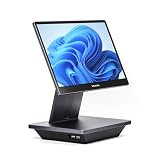
- Windows 11 PROFESSIONAL POS TERMINAL - Equipped with Intel Core i5 High-Performance CPU, 16 GB Memory, and 128 GB Hard Disk. Built-in WIFI, Audio, USB 2.0, USB 3.0, HDMI, and Ethernet ports for all kinds of connectivity. Windows 11 Professional for a wide range of POS applications of your choice.
- SLEEK & COMPACT DESIGN - Volcora POS Terminal is designed to take up as little space as possible so you can focus on better utilization of the counter space. Our sleek yet heavy-duty metal base ensures the terminal is well-stabled while taking orders with style. Suitable for any business such as retail stores, quick service restaurants, dine-in restaurants, cafes, bars, and more.
- WIDE TOUCHSCREEN - The 15.6" capacitive LCD touchscreen, combined with a 1920x1080 high-resolution display, makes it easy to read and touch with minimal effort. Our POS Terminals can also withstand over 15000 hours of screen time with little to no quality sacrifice.
- IN THE BOX - Volcora 15.6" Single Screen Windows 11 Professional POS Terminal, Power Adapter, Registration Card, and User Manual.
- LIFETIME WARRANTY & SUPPORT - Simply unbox, and set up your POS terminal like a Windows tablet with ease. We do understand that additional support might be needed for non-tech-savvy users and our US Based Customer Service team is committed to help. Plus, all Volcora products come with a limited lifetime warranty so you can purchase with peace of mind.
Accessibility, fraud, and resilience
Accessible checkout, strong account security, tested payment failure states, backups, and an outage or fulfillment contingency are operating requirements, not optional enhancements.
Frequently asked questions
Is eCommerce only for physical products?
No. Digital products, services, appointments, tickets, memberships, subscriptions, and software are all commonly sold through eCommerce systems.
Is Amazon an eCommerce business?
Yes. It operates an online retail channel and a marketplace where other businesses and individuals sell to customers.
The Tool Desk
Outbyte PC Repair FREEClear out junk files and repair common Windows errorsFree Scan →Outbyte Driver Updater FREEFix the driver behind crashes, sound loss and screen glitchesFind Drivers →Do I need a website?
No. A marketplace, mobile app, social storefront, B2B procurement portal, or subscription platform can provide the ordering system. An owned website offers more control but also more responsibility.
What is the difference between B2C and D2C?
B2C describes a business selling to consumers. D2C describes a brand selling directly rather than relying entirely on intermediaries; a D2C business is therefore a type of B2C operation.
Is dropshipping eCommerce?
Yes. The customer orders online while a supplier may store and ship the product. The seller still owns the customer promise, pricing, support, tax, returns, and delivery-risk experience.
Can a service business use eCommerce?
Yes. A service business can sell appointments, consultations, tickets, memberships, deposits, or packaged services online.
Do payment and delivery have to happen online?
No. The digital ordering method is the decisive feature in the OECD framework. Payment can be made later and a physical product can be delivered offline.
Is eCommerce still profitable in 2026?
It can be, but profitability depends on contribution margin, acquisition cost, repeat purchase, fulfillment, returns, payment fees, support, taxes, and working capital. eCommerce is a channel, not an automatic profit model.
What is the best platform?
There is no universal winner. Choose by business model, catalog, geography, integrations, customization, portability, total cost, and risk. A simple hosted store, WordPress-based system, catalog-focused platform, or enterprise stack may each be appropriate in different circumstances.
Quick Recap
Product prices and availability are accurate as of the date/time indicated and are subject to change. Any price and availability information displayed on Amazon at the time of purchase will apply.
Do these 3 things before closing this tab:
1Scan for outdated or missing drivers - takes under a minute2Repair Windows errors before they cause bigger problems3Fix the driver behind crashes, sound loss and screen glitches



