Outdated Drivers Are Slowing You Down
One free scan finds every outdated or missing driver and matches the right update for your exact hardware.Free scan · exact hardware matchWindows Errors? Fix Them Before They Spread
Repair common Windows errors and clear accumulated junk for a smoother, more stable PC - no reinstall needed.Free scan · no reinstallJustin Hotard’s move from Intel’s Data Center and AI Group to become Nokia’s president and CEO was both a major promotion and a disruptive loss for Intel. Nokia announced the appointment on February 10, 2025; Hotard started on April 1, while Karin Eibschitz Segal became interim head of Intel’s data-center and AI business. The change arrived as Intel was replacing Pat Gelsinger, reorganizing product leadership and revising its AI-accelerator roadmap.
What happened
Hotard joined Intel as executive vice president and general manager of the Data Center and AI Group (DCAI), effective February 1, 2024. His remit covered Xeon server processors, GPUs and accelerators for enterprise and cloud customers. Before Intel, he led Hewlett Packard Enterprise’s High-Performance Computing, AI and Labs organization, with experience delivering large-scale computing and AI systems.
Nokia recruited him for the company-wide CEO role, not another product-management position. Nokia’s announcement described more than 25 years of technology-industry experience and set April 1, 2025, as his start date. Intel subsequently identified Karin Eibschitz Segal as interim DCAI general manager.
| Date | Event |
|---|---|
| January 3, 2024 | Intel announced Hotard as incoming DCAI leader. |
| February 1, 2024 | His Intel appointment took effect. |
| December 2024 | Pat Gelsinger left the CEO role; David Zinsner and Michelle Johnston Holthaus became interim co-CEOs. |
| December 2024 | Holthaus also became CEO of Intel Products, overseeing DCAI, Client Computing and Network and Edge. |
| February 10, 2025 | Nokia announced Hotard as successor to Pekka Lundmark. |
| April 1, 2025 | Hotard became Nokia president and CEO; Intel publicly identified Segal as interim DCAI leader. |
Intel’s appointment announcement is at Intel’s newsroom. Nokia’s transition announcement is at Nokia’s newsroom.
Free tools Windows power users keep installed
One-click scans. No signup required.
#1 Best Overall

- MODEL P86771-005: Ultra-compact HPE ProLiant MicroServer Gen11 featuring Intel Xeon 6325P 3.5GHz 4-core processor, ideal for SMB workloads and edge deployments
- FLEXIBLE MEMORY & STORAGE: Includes 32GB DDR5 UDIMM memory (expandable to 128GB) and 4 LFF-NHP drive bays. Features new MR408i-p controller support for enhanced storage performance
- READY TO RUN: Includes 1 x HPE 4TB SATA 6G Business Critical HDD, 180W external power adapter, and 1/1/1 year warranty for dependable plug-and-play server operation
- WHISPER-QUIET & SPACE-SAVING: Ultra-compact mini tower design fits easily in small office spaces; supports wall, flat, or vertical placement for deployment flexibility
- REMOTE MANAGEMENT READY: Includes HPE iLO6 with Silicon Root of Trust, TPM 2.0, and dedicated iLO-M.2 port kit for secure and efficient remote server administration
Why the timing mattered
Hotard’s departure was not an isolated personnel change. Intel was already operating through a leadership reset after Gelsinger’s exit, with Holthaus combining interim co-CEO duties and control of the product-design organizations. Under the previous arrangement, Hotard reported directly to Gelsinger. The new structure placed DCAI inside a broader Intel Products organization.
That arrangement could improve coordination among CPUs, accelerators and client products, but it also changed accountability for a business that needed a clear recovery plan. The available Intel and Nokia announcements do not establish that Hotard was pushed out, disagreed with Holthaus or left because of Intel’s AI strategy. The confirmed explanation is that Nokia offered him a CEO position with authority across an entire public company. That is a sufficient and independently attractive career reason.
DCAI was fighting two different battles
Server CPUs
Intel remained a major Xeon supplier, but its traditional franchise faced pressure from AMD and from Arm-based processors designed by or for hyperscalers. AWS Graviton, Microsoft Cobalt and Google Axion let cloud providers optimize cost, power use and workloads around their own roadmaps. Nvidia’s Grace CPU showed that Arm competition was also expanding into AI infrastructure.
CRN reported AMD’s x86 server share at 24.2% in the third quarter of the prior year. That historical figure should not be treated as current 2026 market share. The wider competitive context is described in CRN’s analysis of Arm in data centers.
Rank #2
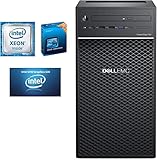
- Windows server license is not included
AI accelerators and systems
Intel positioned Gaudi 3 around price-performance, particularly for inference workloads involving smaller, task-specific and open-source models. Hotard said customer discussions had led Intel to choose that segment as its “swim lane.” The obstacle was not simply silicon speed: Nvidia combined accelerators with mature software, networking, developer tools and a rapid product cadence from H100 to H200 and Blackwell. AMD was also expanding its Instinct business, while Broadcom benefited from custom AI silicon and networking demand.
Intel later acknowledged that earlier Gaudi sales expectations would not be met. Holthaus reportedly said Gaudi did not offer a path to mass adoption. Those comments describe a scale and ecosystem problem, not proof that every Gaudi deployment failed.
The Falcon Shores reset
Intel’s 2025 disclosures changed the level at which it planned to compete. Falcon Shores would not be commercialized as a standalone accelerator product; attention shifted toward a rack-scale successor strategy referred to as Jaguar Shores. Intel did not abandon AI hardware altogether. It moved from selling an individual accelerator toward integrating compute, networking, memory and software into a larger system.
A rack-scale approach can give customers a more complete solution and potentially improve system-level economics. It also requires more capital, integration work and partner coordination, and can delay the point at which meaningful accelerator revenue arrives. That makes leadership continuity especially important.
The Tool Desk
Outbyte Driver Updater FREEFix the driver behind crashes, sound loss and screen glitchesFind Drivers →Outbyte PC Repair FREERepair Windows errors before they cause bigger problemsFix Now →Rank #3

- Intel Xeon E5-2699 V4 Docosa-core (22 Core) 2.20 Ghz Processor - Socket Lga 2011-v3 - 5.50 Mb - 55 Mb Cache - 64-bit Processing - 14 Nm - 145 W
Why Nokia wanted Hotard
Nokia supplies optical, IP and other network infrastructure used to move data between data centers and through cloud networks. Its strategy materials identified AI and cloud demand as growth opportunities, and its 2026 reporting said accelerating AI and cloud demand supported a higher growth assumption for optical and IP networks.
Hotard brought knowledge of enterprise and cloud buyers, data-center economics, AI-system deployment and the practical work of selling complex infrastructure. Nokia was not hiring him to turn the company into a chip maker. His likely value was connecting Nokia’s networking portfolio to the AI-infrastructure cycle and improving execution across a global business. Nokia’s current biography is available at Nokia’s leadership page.
What the departure meant for Intel
Immediate disruption
Intel lost the executive responsible for a broad, strategically sensitive portfolio after roughly one year in the job. Segal’s interim appointment reduced the risk of an operational vacuum, but it did not settle DCAI’s longer-term leadership or product questions.
Customer confidence
Cloud and enterprise buyers evaluate more than a chip’s benchmark. They need dependable delivery dates, software support, total cost of ownership, executive accountability and confidence that a vendor will support a platform for years. Leadership turnover combined with roadmap changes can encourage customers to diversify toward AMD, Arm or internally designed silicon.
What’s actually slowing this PC down?
Pick the symptom - the matching free tool is one click away.
Rank #4
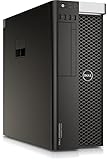
- Dell T7810 Precision Tower Workstation
- 2x Intel Xeon E5-2690 v4 14-Core/28 Threads 3.1GHz (3.5GHz Turbo)
- 128GB Memory DDR4 – Nvidia Quadro K620 2GB
- Add your own Hard Drives/ SSDs
- Add your own Operating System
Execution load
Intel had to execute simultaneously on Xeon launches, Gaudi systems, rack-scale products, developer software, packaging, manufacturing, OEM relationships and cloud partnerships. Hotard’s exit added another transition to that workload. An internal interim leader can preserve institutional knowledge, but an interim role may not carry the mandate required for difficult long-term changes.
Intel’s April 2025 Vision coverage showed Segal presenting Gaudi 3 and Xeon 6 solutions, demonstrating public continuity rather than commercial success. The coverage is available at Intel’s Vision newsroom post.
Independent reader supportYour contribution helps us test, update, and keep practical guides available for everyone.How to judge whether the loss was damaging
- Roadmap continuity: Did Intel keep product commitments and delivery dates stable?
- Leadership depth: Was Segal a short-term caretaker or part of a credible permanent structure?
- Product execution: Did Xeon, Gaudi and rack-scale programs meet stated milestones?
- Customer adoption: Did cloud providers and OEMs expand deployments?
- Software progress: Did Intel make migration and developer support easier?
- Economics: Could Intel deliver enough performance per dollar and per watt to offset Nvidia’s ecosystem advantage?
- Organizational clarity: Did the Intel Products structure improve coordination without blurring accountability?
Where things stand
As of August 18, 2026, Nokia’s leadership materials and financial reports still identify Hotard as president and CEO. Nokia’s 2025 full-year report and first-quarter 2026 report continue to link its opportunity to AI and cloud infrastructure demand. Those sources do not establish Intel’s current permanent DCAI leader or the final delivery status of every product discussed during the 2025 reset.
See Nokia’s 2025 full-year report and Q1 2026 report.
Quick wins for a faster PC:
Fix the driver behind crashes, sound loss and screen glitchesFind Drivers →Repair Windows errors before they cause bigger problemsFix Now →Scan for outdated or missing drivers - takes under a minuteDriver Scan →Bottom line for technology decision-makers
Hotard’s move does not, by itself, prove that Intel’s AI strategy failed or that he lost confidence in the company. It was a major CEO-level opportunity for him and a strategically awkward loss for Intel. The deeper issue was structural: Intel had to defend Xeon against AMD and Arm-based alternatives while rebuilding an AI business against Nvidia’s software-led advantage and rapidly changing its product strategy.
The real test was whether Intel could provide stable roadmaps, competitive economics, usable software and reliable system delivery without depending on one executive. Hotard’s departure made that test more visible, but Intel’s customer execution—not the personnel change alone—would determine whether DCAI recovered.
Quick Recap
Product prices and availability are accurate as of the date/time indicated and are subject to change. Any price and availability information displayed on Amazon at the time of purchase will apply.




