Recommended Free Tools
Nvidia’s March 18, 2024 GTC keynote was not simply a graphics-processor launch. It outlined a full AI infrastructure stack: Blackwell chips, Grace CPUs, rack-scale systems, 800Gb/s networking, inference software, cloud services, digital-twin tools and robotics. The “11 announcements” count below is an editorial grouping of Nvidia and partner announcements, not a claim that Nvidia released exactly 11 equally sized products. Availability statements were projections made in March 2024 and should not be read as confirmation of every product’s status in 2026.
1. Blackwell became Nvidia’s new data-center architecture
Nvidia positioned Blackwell as the successor to Hopper, the architecture used by products such as the H100 and H200. The company said Blackwell was designed for real-time generative AI and models with up to trillion-parameter scale. Nvidia also claimed up to 25 times lower cost and energy consumption than its predecessor for specified workloads. That is a vendor claim, not a universal result: model size, precision, batching, software, networking, cooling and the comparison system all affect the outcome. The announcement is documented in Nvidia’s Blackwell release.
The six technologies Nvidia emphasized
- Second-generation Transformer Engine: intended to improve training and inference for transformer models.
- Fifth-generation NVLink: high-bandwidth communication among accelerators.
- RAS features: reliability, availability and serviceability mechanisms for large installations.
- Secure AI: hardware capabilities intended to protect data and models.
- Decompression engine: acceleration for data movement and processing.
- Custom Tensor Cores: matrix-computation hardware for supported AI precisions.
Blackwell was therefore a platform strategy, not a consumer graphics-card announcement. Its target buyers were cloud providers, AI laboratories, enterprises and high-performance-computing operators.
2. B100, B200 and the GB200 superchip
The announced Blackwell product family included the B100 and B200 Tensor Core GPUs, plus the GB200 Grace Blackwell Superchip. Nvidia described the GB200 as two B200 GPUs paired with one Grace CPU through a 900GB/s NVLink chip-to-chip connection, according to its investor release.
#1 Best Overall

- PLEASE NOTE: Exporting an NVIDIA RTX Pro 6000 GPU outside the US requires strict adherence to the U.S. Export Administration Regulations (EAR) and issuance of an export license from the Bureau of Industry and Security (BIS). Compliance and Know Your Customer (KYC) screening may be required as a condition of order acceptance. [NVIDIA Blackwell Streaming Multiprocessor] The new SM features increased processing throughput, and new neural shaders that integrate neural networks inside of programmable shaders | DLSS 4: Multi Frame Generation ensures ultra-smooth frame pacing for lifelike simulations.
- [Double-Flow-Through Design] The RTX PRO 6000 Blackwell features a double-flow-through cooling design, optimizing efficiency and airflow to sustain peak performance under 600W power loads. | [5th Gen Tensor Cores] Deliver up to 3X the performance of the previous generation and support for FP4 precision for faster AI model processing times with reduced memory usage, enabling local fine-tuning of LLMs and generative AI | [4th Gen Ray Tracing Cores] Double the ray-triangle intersection rate of the previous generation to create photoreal, physically accurate scenes and immersive 3D designs with RTX Mega Geometry, which enables up to 100X more ray-traced triangles.
- [PCIe Gen 5] Support for PCIe Gen 5 provides double the bandwidth of PCIe Gen 4, improving data-transfer speeds from CPU memory and unlocking faster performance for data-intensive tasks like AI, data science, and 3D modeling. | [GDDR7 Memory] With 96 GB of GPU memory and 1.8 TB ps bandwidth, it can tackle massive 3D and AI projects, fine-tune AI models locally, explore large-scale VR environments, and drive larger multi-app workflows.
- [DisplayPort 2.1] Achieve unparalleled visual clarity and performance, driving high resolution displays at up to 8K at 240 Hz and 16K at 60 Hz. Increased bandwidth enables seamless multi-monitor setups while HDR and higher color depth support ensures superior color accuracy for precision work, such as video editing, 3D design, and live broadcasting.
- [Universal MIG] Divide a single RTX PRO 6000 Blackwell into multiple isolated instances, each with dedicated resources, allowing for concurrent execution of multiple workloads, optimized GPU utilization, and secure isolation of different applications or users. [WARRANTY] 3 YR Manufacturer's Warranty. Bulk OEM Packaging. Retail Packaging is NOT included.
- B100 and B200: accelerator products for systems using x86 or other host architectures.
- GB200: a tightly coupled CPU-GPU module for demanding AI workloads.
- DGX systems: Nvidia-integrated computers combining these components with software, networking, storage integration and support.
The distinction matters financially. A GPU purchase is not the same as buying a complete rack, facility upgrade or managed service.
3. GB200 NVL72 brought AI to rack scale
Nvidia presented the GB200 NVL72 as a liquid-cooled rack-scale system. The announced configuration contains 36 GB200 superchips, 72 Blackwell GPUs and 36 Grace CPUs, connected with fifth-generation NVLink and supported by BlueField-3 data-processing units (DPUs). Nvidia’s DGX material states 11.5 exaflops of FP4 AI computing and 240TB of fast memory for the advertised DGX SuperPOD configuration; those are Nvidia’s system-level specifications, not an independent benchmark.
Rack-scale design lets large models distribute work across many GPUs while reducing communication bottlenecks. Liquid cooling supports higher power density, and DPUs can offload infrastructure functions from CPUs and GPUs. The trade-off is substantial capital expenditure, facility power, cooling, networking and specialist operations. For most ordinary enterprises, a public-cloud instance or smaller OEM server is more realistic.
4. DGX B200 and DGX GB200 made the platform deployable
Nvidia announced two DGX directions:
| System | Configuration announced at GTC | Cooling and use |
|---|---|---|
| DGX B200 | Eight B200 GPUs and two x86 CPUs | Air-cooled integrated system |
| DGX GB200 | Grace Blackwell superchip-based | Liquid-cooled system for larger AI clusters |
Nvidia said eight DGX GB200 systems could form a SuperPOD with 576 Blackwell GPUs, 288 Grace CPUs and 240TB of fast memory. DGX includes more than accelerators: system software, networking, storage integration, support and deployment services. Buyers should compare it with OEM-built servers and cloud capacity rather than assuming its integration automatically produces the lowest total cost.
The Tool Desk
Outbyte PC Repair FREEClear out junk files and repair common Windows errorsFree Scan →Outbyte Driver Updater FREEFix the driver behind crashes, sound loss and screen glitchesFind Drivers →5. Quantum-X800 and Spectrum-X800 targeted the network bottleneck
Nvidia announced the Quantum-X800 InfiniBand and Spectrum-X800 Ethernet platforms, describing them as end-to-end networking systems capable of up to 800Gb/s throughput for massive AI infrastructure. The figure is a platform throughput claim, not a promise that every application or GPU receives 800Gb/s.
- Quantum-X800 InfiniBand: specialized, tightly controlled networking for large distributed-training and supercomputing environments.
- Spectrum-X800 Ethernet: an AI-optimized Ethernet approach intended to work with broader data-center networks.
- Supporting components: Quantum 3400 switches, ConnectX-8 SuperNICs, BlueField-3 DPUs and software for collective communication and in-network computing.
InfiniBand can suit tightly coupled training clusters; Ethernet may better match existing operational skills and equipment. The right choice depends on topology, utilization and staff expertise.
6. NIM packaged model inference for production teams
Nvidia introduced NVIDIA Inference Microservices (NIM) as packaged, optimized inference components. The GTC announcement described support for more than two dozen popular models and ecosystems associated with Google, Meta, Hugging Face, Microsoft, Mistral AI and Stability AI. NIM’s value proposition is prebuilt serving containers, Nvidia-optimized runtimes and standardized deployment across cloud, on-premises and workstation environments. See Nvidia’s NIM page and developer resources.
NIM is not itself a universal model-hosting service. Teams must verify supported models, GPU and driver versions, orchestration requirements, licensing, enterprise support and data-handling policies. A managed model API or an open-source serving stack may be simpler for smaller workloads.
Rank #2
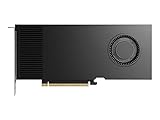
- Professional GPU with Blackwell Architecture
- Blackwell Architecture
- 24GB GDDR7 with PCIe 5.0 & Ray Tracing
- AI Workstation
7. CUDA-X microservices extended the software stack
Nvidia also announced CUDA-X microservices for data preparation, customization, training, speech and translation through Riva, retrieval-augmented generation through NeMo Retriever and other model-development tasks. The strategy was to reduce the amount of low-level optimization each enterprise team must build itself.
That convenience can create ecosystem dependence. Before adopting a service, an organization should check commercial-use rights, supported CUDA and GPU versions, container security, telemetry and whether the performance benefit justifies using Nvidia-specific components.
8. DGX Cloud expanded beyond training
Nvidia said DGX Cloud was expanding from a mainly training-oriented service into an end-to-end platform covering pretraining, fine-tuning, inference, model development and deployment. The GTC-era announcement named AWS, Microsoft Azure, Google Cloud and Oracle Cloud Infrastructure as underlying cloud-provider relationships; the exact service model, region, capacity and pricing can differ by provider. The contemporary roundup is summarized by CRN.
When DGX Cloud fits
- A team needs large Nvidia capacity without purchasing a complete cluster.
- It wants a supported Nvidia software environment and lacks infrastructure staff.
- It accepts less hardware control and potentially higher service costs.
When it may not fit
- Small or intermittent inference workloads.
- An existing standardized cluster or another cloud strategy.
- Strict data-residency rules or unusual hardware and kernel requirements.
9. Omniverse Cloud APIs opened industrial building blocks
Nvidia announced five APIs for Omniverse Cloud and OpenUSD workflows: USD Render, USD Write, USD Query, USD Notify and Omniverse Channel. They were intended to let engineering, manufacturing and simulation applications call rendering, scene-query, editing, change-notification and collaboration functions without rebuilding the whole Omniverse environment. Details appear in Nvidia’s Omniverse materials and keynote summary.
Nvidia cited ecosystem participants including Siemens, Ansys, Cadence, Dassault Systèmes, Hexagon, Rockwell Automation and Trimble. A digital twin is not automatically a physically accurate simulation; accuracy depends on engineering data, sensors, physics models and validation.
Independent reader supportYour contribution helps us test, update, and keep practical guides available for everyone.10. GR00T, Jetson Thor and Isaac targeted robotics
The robotics package combined a model, edge hardware and development tools:
| Announcement | Role |
|---|---|
| Project GR00T | Foundation-model platform intended to help humanoid robots learn from language and demonstrations. |
| Jetson Thor | Humanoid-robot computer using a Thor system-on-chip with a Blackwell-based GPU. |
| Isaac Lab | Training and reinforcement-learning environment. |
| Isaac Manipulator | Robot-arm perception and control capabilities. |
| Isaac Perceptor | Multi-camera perception and 3D understanding. |
| OSMO | Compute and workflow orchestration. |
Nvidia stated an 800-teraflop FP8 figure for Jetson Thor. It described GR00T as able to understand natural language, learn from human demonstrations and acquire movement and manipulation skills. Those are intended capabilities, not evidence of human-level autonomy or a finished general-purpose robot. The Isaac announcement provides Nvidia’s scope.
These tools do not replace safety-certified controllers, industrial PLCs, real-time motion planning, human supervision or physical validation. Lighting changes, occlusion, unexpected contact and sensor failures remain practical edge cases.
Free tools Windows power users keep installed
One-click scans. No signup required.
Rank #3
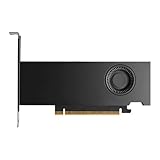
- Form Factor: Plug-in Card
- Cooler Type: Active Cooler
- Maximum Power Consumption: 70W
- Length: 6.6
- Height: 2.7
11. Partners turned Blackwell into an ecosystem
Nvidia’s strategy depended on partners as much as on its own chips. Announced or reported activity included AWS Blackwell-based EC2 instances and SageMaker integration with NIM; Microsoft Azure adoption of Grace Blackwell and Omniverse Cloud APIs; Google Cloud integration of NIM with Google Kubernetes Engine; Oracle Cloud Infrastructure support; server offerings from Dell, HPE, Lenovo, Supermicro and Cisco; and storage validation involving DDN, Dell, NetApp, Pure Storage and WEKA. Industrial software participants included Ansys, Cadence, Dassault Systèmes, Siemens, Trimble, Hexagon and Rockwell Automation. Nvidia’s GTC newsroom index lists the broader announcement set.
Partner support is not the same as general availability or broad customer adoption. It may mean a planned integration, validation, early access program or future product. Procurement teams should verify the specific cloud region, hardware model, support status and contract terms.
Other notable GTC 2024 announcements
- Omniverse digital twins accessible through Apple Vision Pro.
- NVIDIA 6G Research Cloud.
- Quantum-computer simulation microservices.
- BioNeMo drug-discovery models.
- Edify 3D asset generation.
- Maxine improvements for video, audio and conferencing.
- DRIVE Thor automotive computing.
What the announcements meant for infrastructure buyers
Blackwell versus Hopper
Blackwell could improve supported performance and efficiency, but migration, software qualification and facility changes can outweigh the accelerator’s headline benefit. Compare total cost per useful training run or inference request, not theoretical FLOPS.
DGX versus OEM servers
DGX offers tighter integration and Nvidia support. OEM systems may provide more configuration flexibility and different service economics.
Crashes, No Sound, or Screen Glitches?
Random freezes, missing sound and display glitches usually trace back to one bad driver. Find and replace yours safely.Free scan · under a minuteWindows Errors? Fix Them Before They Spread
Repair common Windows errors and clear accumulated junk for a smoother, more stable PC - no reinstall needed.Free scan · no reinstallOn-premises versus cloud
Owned infrastructure can produce better unit economics at high utilization but requires capital, power, cooling and operations. Cloud avoids those commitments but may cost more for persistent workloads.
InfiniBand versus Ethernet
InfiniBand suits tightly coupled distributed training; AI-optimized Ethernet can align with existing data-center skills and networks.
Liquid versus air cooling
Liquid cooling enables higher rack density while adding facility and maintenance complexity.
The practical lesson from GTC 2024 was that Nvidia was selling an integrated path from silicon to software and services. The 25× cost-and-energy claim, 30× inference comparisons reported by CRN, 800Gb/s networking and 800-teraflop Jetson figure all require their original workload, precision and system context. Announcement, sampling, general availability, mature software support and economic attractiveness are separate milestones.
Quick wins for a faster PC:
Repair Windows errors before they cause bigger problemsFix Now →Scan for outdated or missing drivers - takes under a minuteDriver Scan →The Bottom Line
GTC 2024 was mainly a full-stack AI infrastructure strategy, not merely a faster GPU launch. Blackwell supplied the silicon, Grace and NVLink connected it, DGX and networking scaled it, NIM and CUDA-X made it usable, DGX Cloud delivered it, and Omniverse and Isaac extended Nvidia into industrial simulation and robotics. Buyers should treat Nvidia’s performance and availability statements as dated, qualified announcements and evaluate workload fit, utilization, facility requirements, software dependence and total cost before committing.
Quick Recap
Product prices and availability are accurate as of the date/time indicated and are subject to change. Any price and availability information displayed on Amazon at the time of purchase will apply.




