Free tools Windows power users keep installed
One-click scans. No signup required.
Typeface Arc is designed to coordinate more of a marketing campaign than a general-purpose chatbot can handle in a single exchange. It combines persistent brand and business context, specialized AI agents, a shared workspace, workflow controls and integrations. That can reduce the need for marketers to write elaborate prompts for every asset—but it does not eliminate briefs, setup, human review or accountability.
The phrase “forget about prompt engineering” began as a product thesis, not proof that prompts have become irrelevant. The more accurate description is hybrid agentic orchestration: software coordinates content work and defined steps, while people and configured rules remain part of the process. Public product descriptions through August 18, 2026, support a story about campaign-content production and workflow automation, not an autonomous system that independently owns marketing strategy, media budgets or final approval.
What Typeface originally meant by “beyond the prompt”
When Axios reported Typeface Arc on May 7, 2024, the company’s pitch was that marketers should not have to become prompt-engineering specialists to get useful campaign content. Instead of starting with a blank chatbot window, Arc was meant to use a company’s brand and campaign context to help produce marketing work. That was a response to a real distinction: asking a chatbot for one email is different from coordinating a campaign that needs several audiences, channels, reviews and approved assets. Axios’s 2024 report describes the original positioning.
Prompting has not disappeared. Typeface’s Academy materials still provide example prompts and say users should prepare brand kits, layouts, audiences and assets. The shift is from repeatedly crafting detailed instructions for isolated outputs toward providing a useful brief, maintaining business context and configuring workflows. Typeface’s agent guidance describes those prerequisites.
#1 Best Overall

- Half Meeting Half Note: 1.MEETING PLANNING: Date, Location, Topic & Attendees 2.MEETING MINUTES: Agenda, Quick Notes & Other 3.NOTES AREA: Lined Page 4.ACTION ITEMS: Action Steps, Person, Due Date & Check Box 5.NEXT MEETING: Date, Time & Location 6.INDEX PAGE: Date, Title, Page Number, which will help create more effective meetings and good results.
- Premium Quality Notebook for Work: Golden spiral binding is sturdy and flexible, with easy-to-turn pages. Hot-stamped cover is water-resistant and not easy to bend. Bonus Bookmark and Pockets. Perfectly hold up well to frequent transfers in and out of backpacks, briefcases, and cars.
- Fight Ink-bleeding & Great Size: The high-end 100gsm paper could prevent ink bleeding through or feathering, handle double-sided writing and most daily use pens pretty well. The office/business work notebook measures 8.5"x 11"(similar to A4 size), Generous size provides ample space to jot down your meeting notes.
- Each 160 Pages Per Book: Provide ample space for note taking & planning and with the date section at the top for tracking them. With 160 pages for meeting minutes, the manager notebook will cover more than half a year, even in daily use. Also provides index pages for organizing this office planner.
- Better Tool Drives Better Meetings: The hassle of organizing the chaotic meeting notes VS this professional meeting notebook. Definitely a step up! Everything is neatly zoned on each page makes it a breeze to fill them out and ensure all you need are accounted for.
What Arc is now: a set of connected layers
Typeface broadened its positioning in a March 4, 2026 announcement, describing Arc as a Marketing Orchestration Engine spanning strategy, creation, activation and optimization. Its public descriptions organize the product into several layers. The names and agent lineup have evolved over time, so they are best understood as the company’s current product framing rather than a promise that every customer receives an identical menu. Typeface’s March 2026 announcement introduces the broader framing.
Arc Graph: brand and business context
Arc Graph is the knowledge layer: a place for brand rules, product information, approved language, layouts, creative assets, audience information and other organizational context. Typeface describes it as drawing on sources such as digital asset management (DAM) systems, content management systems (CMSs) and knowledge bases, with semantic search intended to find relevant material across documents, images and video. The Brand Hub product page describes this brand-intelligence role.
The practical implication is that output quality depends on the material the company makes available: whether it is accurate, current, permissioned and organized well enough to retrieve. A brand graph populated with outdated product facts or conflicting regional guidance can help distribute the wrong answer consistently.
Arc Agents: specialized marketing tasks
Typeface describes agents for work such as email, web, advertising, images, video and brand governance, along with custom agents. An agent, in practical terms, is a system that can interpret a goal, select or execute a sequence of actions, use tools or data, and return an outcome—not just generate one isolated response. Typeface’s account of Arc places it between adaptive agents that can choose steps and tools and predetermined workflows with fixed steps. The Arc Agents announcement describes the publicly named roles; the company’s July 18, 2026 explanation describes the hybrid approach.
What’s actually slowing this PC down?
Pick the symptom - the matching free tool is one click away.
Rank #2
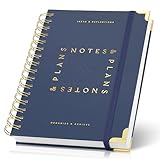
- Easily Stay On Track & Make The Most Of Your Time: ZICOTOs’ daily planner makes it easier than ever for you to stay organized, reduce stress & enjoy more free time! Arrange your schedule, priorities, to do’s and jot down plans & ideas on the daily notes section
- Smartly Plan Ahead & Boost Your Productivity: Absolutely clever & efficient! With the planner notebook you can break down your daily tasks into half-hourly focus blocks and map out priorities & follow-up duties to keep your day on track and enhance productivity
- Plenty Of Space For Efficient Planning: Stay focused & manage your time wisely! The 8.4x6.1” work planner & organizer notebook offers ample space for 105 days of life-changing planning with each day being spread across 2 pages - set yourself up for purposeful days
- Now Is The Best Time To Start: The daily planner is undated so you can start to add structure to your schedule and cultivate new planning habits right away! Beat procrastination, boost happiness & make each day count with the hourly planner
- Adds Beauty To Daily Planning: A gorgeous dark blue art paper cover, chic golden letters, a gold ring wire and a clean, easy-to-use layout, elastic band - enjoy the lovely and modern design of the undated daily planner!
Arc Spaces: shared campaign work
Arc Spaces is the marketer-facing workspace for briefs, creation, collaboration, review and approvals. Typeface presents it as a place to manage campaign work and assets rather than simply submit a prompt and receive a response. It also describes publishing connections and audit-oriented workflow features. The Arc Spaces page outlines the workspace.
Arc Forge: customization and connections
Arc Forge is aimed at IT and marketing-operations teams that need custom agents, integrations, APIs or MCP connections, plus governance controls. Typeface describes no-code agent building, but “no-code” does not mean no implementation work: teams still need to decide which systems agents may access, configure credentials and permissions, and define operating and review rules. The Arc Forge page describes its extension and governance functions.
Arc Loop: a future direction, not a proven feedback loop
Typeface’s March 2026 announcement presents Arc Loop as a future concept for connecting campaign performance information back into the knowledge layer. Treat that as roadmap positioning, not evidence that the platform already learns reliably from live results or independently optimizes campaigns end to end. The announcement distinguishes the broader portfolio and future direction.
How a campaign could move through Arc
Consider a hypothetical product launch for three audience segments across email, web, paid social and video, with legal and regional review. This illustrates the workflow Typeface describes; it is not a report of a tested campaign outcome.
Rank #3

- Half Meeting Half Note: 1.MEETING PLANNING: Date, Location, Topic & Attendees 2.MEETING MINUTES: Agenda, Quick Notes & Other 3.NOTES AREA: Lined Page 4.ACTION ITEMS: Action Steps, Person, Due Date & Check Box 5.NEXT MEETING: Date, Time & Location 6.INDEX PAGE: Date, Title, Page Number, which will help create more effective meetings and good results.
- Premium Quality Notebook for Work: Golden spiral binding is sturdy and flexible, with easy-to-turn pages. Hot-stamped cover is water-resistant and not easy to bend. Bonus Bookmark and Pockets. Perfectly hold up well to frequent transfers in and out of backpacks, briefcases, and cars.
- Fight Ink-bleeding & Great Size: The high-end 100gsm paper could prevent ink bleeding through or feathering, handle double-sided writing and most daily use pens pretty well. The office/business work notebook measures 7.5"x 10"(similar to B5 size), Generous size provides ample space to jot down your meeting notes.
- Each 160 Pages Per Book: Provide ample space for note taking & planning and with the date section at the top for tracking them. With 160 pages for meeting minutes, the manager notebook will cover more than half a year, even in daily use. Also provides index pages for organizing this office planner.
- Better Tool Drives Better Meetings: The hassle of organizing the chaotic meeting notes VS this professional meeting notebook. Definitely a step up! Everything is neatly zoned on each page makes it a breeze to fill them out and ensure all you need are accounted for.
- Prepare the brand foundation. Add brand tone and voice, approved terminology, product information, layouts, assets and compliance rules. Typeface’s Academy lists a Brand Kit and layouts for ad, email and web work among the setup items.
- Make audience context available. Import audiences from a CRM or customer data platform (CDP), or create them manually. The organization still needs to establish that audience definitions and data use are appropriate.
- Write the campaign brief. Specify the product, offer, market, audience, channel needs and intended outcome. Arc may reduce the need to dictate every sentence-level instruction, but it cannot infer missing strategy or business facts reliably.
- Assign work to agents. Specialized agents can be asked to develop concepts and produce channel-specific materials, such as email sequences, landing-page copy, ads, image variations and video. Typeface describes these as generation and orchestration capabilities, not independently validated quality results.
- Check brand and compliance requirements. Configured brand rules can help flag or constrain language and formatting. Human reviewers still need to examine factual claims, regulated wording, localization and suitability for the intended audience.
- Review and revise in Spaces. Teams can collaborate on assets, request changes, manage assignments and route work for approval. The organization must decide who is accountable for each approval.
- Export or publish through connected systems. Approved content can move through supported connectors, subject to account configuration, permissions and the destination platform’s requirements.
- Measure results outside the promise of automatic optimization. Teams can assess campaign performance, but Arc Loop’s described feedback vision should not be mistaken for an established autonomous optimization capability.
Typeface’s setup guidance also identifies assets such as briefs, links and images, as well as optional connectors for exporting content. The Academy guide gives the company’s prerequisites and example agent prompts.
How Arc differs from a general-purpose chatbot
| Area | General-purpose chatbot | Typeface Arc, as described by Typeface |
|---|---|---|
| Starting point | A user prompt or conversation | A campaign brief within a configured workspace and workflow |
| Context | Often supplied in the conversation or through custom integrations | Persistent brand and business context in Arc Graph |
| Work produced | Usually a response or asset at a time | A coordinated set of channel-specific campaign materials |
| Channel handling | The user directs the model to adapt content | Specialized agents are intended to handle different marketing tasks and formats |
| Governance | Often managed through external processes or custom configuration | Brand checks, approvals and controls are presented as part of the workflow |
| Activation | May require separate copying, exporting or integration work | Connectors are intended to link approved content with marketing systems |
| Customization | Prompting, application code or integrations | Custom agents and workflow extensions through Arc Forge |
This is a comparison of product approaches, not an absolute technical boundary. A general chatbot combined with custom software can reproduce some of Arc’s functions. The proposed distinction is how much brand context, campaign workflow, governance and enterprise connectivity are packaged together.
What Arc can make—and what that does not prove
Typeface’s public materials describe generation or orchestration for email campaigns, webpages and landing pages, paid and social ads, images, short-form video, blogs and SEO-oriented content, localized variants, campaign briefs and brand feedback. It also describes searching and reusing material from content libraries. The Spaces page, the Agents announcement and the product tour present these capabilities from the vendor’s perspective.
That list establishes what Typeface says the platform is designed to do; it is not independent evidence that every output is accurate, distinctive, compliant or effective. “Brand-aware” means the system can use configured brand context and rules. It does not guarantee factual correctness, legal compliance or good judgment. Nor is creating campaign assets the same as choosing a strategy, determining whether targeting is lawful, buying media, setting budgets or proving incremental business impact.
Rank #4

- Easily Stay On Track & Make The Most Of Your Time: ZICOTOs’ daily planner makes it easier than ever for you to stay organized, reduce stress & enjoy more free time! Arrange your schedule, priorities, to do’s and jot down plans & ideas on the daily notes section
- Smartly Plan Ahead & Boost Your Productivity: Absolutely clever & efficient! With the to do list notebook / notepad you can break down your daily tasks into half-hourly focus blocks and map out priorities & follow-up duties to keep your day on track and enhance productivity
- Plenty Of Space For Efficient Planning: Stay focused & manage your time wisely! The 8.4x6.1” work planner & organizer notebook offers ample space for 105 days of life-changing planning with each day being spread across 2 pages - set yourself up for purposeful days
- Now Is The Best Time To Start: The daily planner is undated so you can start to add structure to your schedule and cultivate new planning habits right away! Beat procrastination, boost happiness & make each day count with the hourly planner
- Adds Beauty To Daily Planning: A gorgeous dark green linen cover, chic golden letters, a gold ring wire and a clean, easy-to-use layout, elastic band - enjoy the lovely and modern design of the undated daily planner!
What the published business-impact figures show
Typeface has reported customer and pilot results, including a Fortune 500 financial company reducing the time to create campaign assets for email, social and web pages in multiple languages from six weeks to less than eight hours in a pilot; a Fortune 500 grocer reducing campaign time by 55%; and a home-goods supplier generating more than 500 service pages in nine days. Typeface has also said that more than 90% of its enterprise customers across the Fortune 500 and major brands use Arc Agents. These are company-reported claims, not independently validated benchmarks. The cited public material does not establish consistent definitions for “campaign time,” the exact baselines, what review and approval stages were included, or the denominator and timeframe behind the customer-adoption figure. Typeface’s Agents announcement and its social announcement are the cited sources for the examples.
The product tour also uses “10x faster” language. Without a stated, comparable measurement method, that should be read as vendor marketing rather than a general performance benchmark. The product tour is the source for that claim.
Where the human decision-making remains
Typeface describes human review, approval workflows, guardrails, permissions and audit-oriented controls as part of its approach. That makes Arc better characterized as agent-assisted production and orchestration than as a fully autonomous marketer. Businesses remain responsible for strategy, claims, targeting, consent, budgets, legal review, approval and deployment decisions. Typeface’s explanation of its agentic platform and its Arc Forge description discuss the intended balance of automation and control.
- Incorrect or stale context: Old product specifications, duplicate assets or conflicting regional rules can be reused at scale.
- Unsupported claims: Brand grounding does not prevent invented statistics, misleading comparisons or inaccurate technical, financial, medical or regulated statements. Subject-matter review remains necessary.
- Localization gaps: A grammatically correct translation may still miss local law, cultural meaning, pricing formats, imagery or product availability.
- Audience-data issues: Personalization depends on accurate segments, permissions, consent and compliant data practices; software does not resolve those questions by itself.
- Over-automation: If review is nominal or bypassed, one flawed claim can spread across many audience and channel variants.
- Weak briefs and feedback: Specialized agents can still produce generic work when audience insight, source material or useful performance feedback is missing.
Integrations and implementation realities
Typeface publicly describes connections across Salesforce, Google’s ecosystem, DAMs, CMSs, knowledge bases and marketing platforms, as well as APIs, custom connectors and MCP-compatible tools. The existence of a named integration does not mean it is active by default: credentials, scopes, permissions, platform configuration and account compatibility matter.
Best Value

- Easily Stay On Track & Make The Most of Your Time: ZICOTOs’ daily planner makes it easier than ever for you to stay organized, reduce stress & enjoy more free time! Arrange your schedule, priorities, to do’s and jot down plans & ideas on the daily notes section
- Smartly Plan Ahead & Boost Your Productivity: Absolutely clever & efficient! With the planner notebook you can break down your daily tasks into half-hourly focus blocks and map out priorities & follow-up duties to keep your day on track and enhance productivity
- Plenty Of Space For Efficient Planning: Stay focused & manage your time wisely! The 9.3x6.3” (inner pages) work planner & organizer notebook offers ample space for 80 days of life-changing planning with each day being spread across 2 pages - set yourself up for purposeful days
- Now Is The Best Time To Start: The daily planner is undated so you can start to add structure to your schedule and cultivate new planning habits right away! Beat procrastination, boost happiness & make each day count with the hourly planner
- Adds Beauty To Daily Planning: A gorgeous champagne pink cover, chic gold foil letters, a golden ring wire and a clean, easy-to-use layout - enjoy the gorgeous and modern minimalist design of the undated daily planner!
For Salesforce Marketing Cloud, Typeface’s published setup example includes opening Setup > Apps > Installed Packages, creating a package and a custom Typeface content-block component, adding a server-to-server API integration with required asset read/write scopes, then entering credentials and connecting Salesforce in Typeface. Users can then add the Typeface block in Content Builder and configure dynamic audience variants. The exact menus and requirements may differ by Salesforce account or edition, and the instructions do not imply that all Arc customers need Salesforce. Typeface’s Salesforce Marketing Cloud guide documents this setup example; the integration page describes the connection.
Typeface also describes work with Salesforce Data Cloud, Marketing Cloud, Agentforce and Slack, and with Google Cloud, Gemini, Google Ads, Performance Max and Campaign Manager 360. The Salesforce partner page and the Google partner page describe those ecosystem relationships. Buyers should confirm the specific connector, data flows and supported use cases for their intended deployment.
On security, Typeface says Arc Forge includes encryption, tenant isolation, role-based access, SOC 2 Type II and ISO 27001 certifications, output safeguards, prompt filtering, monitoring and C2PA credentials. These are vendor statements; a buyer should validate current scope and documentation through the company’s trust materials and its own security review rather than treating a certification or feature list as a complete assessment. Arc Forge’s product page lists the cited controls.
Who should evaluate Arc?
It may suit organizations with complex, high-volume marketing operations
- Many campaigns, channels, markets or languages create repetitive production work.
- Brand consistency, legal review and reuse of approved assets are persistent bottlenecks.
- Marketing, creative operations, IT and regional teams need a common workflow.
- The organization has useful brand documentation, reusable layouts and dependable audience data—or can invest in preparing them.
- Existing Salesforce, Google, DAM, CMS or other enterprise systems make integration valuable.
- The company can support implementation, permissions, governance and change management.
It may be excessive for a simple content-generation need
- An individual creator or small business mainly needs occasional copy or image generation.
- There is little organized brand context or no capacity to maintain it.
- The main requirement is media buying, CRM automation, analytics or customer-journey orchestration rather than content production.
- The organization cannot support enterprise onboarding, integration work or review design.
- The buyer expects campaigns to run with no human approval.
Typeface’s public materials do not provide a standard list price or self-serve plan structure; the company directs prospective customers toward a demo. That means total cost and fit need to be assessed through an enterprise buying conversation, including implementation and operating costs, rather than inferred from a public price sheet. Typeface’s demo page is the stated buying route.
Crashes, No Sound, or Screen Glitches?
Random freezes, missing sound and display glitches usually trace back to one bad driver. Find and replace yours safely.Free scan · under a minuteWindows Errors? Fix Them Before They Spread
Repair common Windows errors and clear accumulated junk for a smoother, more stable PC - no reinstall needed.Free scan · no reinstallQuick Recap
Questions to ask before a demo or pilot
- Which exact workflows and agents are included for our use case, and which require custom configuration?
- What source systems can Arc read and write to, with what permissions and audit records?
- How are conflicting, outdated or regional brand rules detected and maintained?
- Where must a person approve factual claims, regulated language, localized content and publication?
- Which campaign stages are included in any time-savings claim: asset generation, revisions, legal review, publishing and measurement?
- How will we measure quality and business impact, not just production speed or the number of variants created?
- What security, data-retention and certification documentation applies to our specific deployment?
- What are the ongoing costs and responsibilities for integrations, governance, training and workflow maintenance?
Product prices and availability are accurate as of the date/time indicated and are subject to change. Any price and availability information displayed on Amazon at the time of purchase will apply.




