Google is reshaping Shopping into an AI-assisted path from product discovery to purchase—but not replacing it with one new product. AI features are appearing across Search, AI Mode, Gemini and other Google services. They can help shoppers describe what they want, compare products, track prices and, for eligible purchases, check out through Google. Availability still depends on the feature, merchant, product, account and market.
What Google’s Shopping overhaul means
The change is a move from a mostly search-and-compare experience toward a conversational shopping workflow. A shopper can describe a goal in ordinary language, get product suggestions organized around that request, ask follow-up questions and compare options. Some features can then monitor a price or help complete a purchase.

This is an added AI layer, not the end of conventional Shopping listings, ads, merchant websites or checkout pages. Google’s systems draw on product information from merchants and may direct shoppers to a retailer’s site when an in-Google purchase is not supported.
Google describes its Shopping Graph as the product-data foundation for these experiences. In May 2026, the company said it contained more than 60 billion product listings; that is Google’s reported figure, not an independently audited count. In a May 2025 announcement, Google said the graph held more than 50 billion listings, with more than 2 billion refreshed hourly. Those are dated company claims, not a guarantee that every price, stock level or product detail is current at the moment a shopper sees it. Google’s Universal Cart announcement and its AI Mode and virtual try-on update describe the system and its evolution.
#1 Best Overall

- Attention-grabbing design meets the latest evolution of the Google Pixel Camera on the new Google Pixel 11 Pro XL; Gemini Intelligence helps manage details so you can live in the moment[1]; and the phone is available in two sizes
- Unlocked Android phone gives you the flexibility to change carriers and choose your own data plan: Works with Google Fi, Verizon, T-Mobile, AT&T, and other major carriers[2]
- Stay informed without looking at your screen: When your phone is face down, Pixel HiLight gently alerts you with subtle glowing lights when your favorite contacts are calling or you’re talking with Gemini; exclusive to Google Pixel 11 Pro phones
- Magic Capture catches the moment as you live it: With just one tap, Pixel 11 Pro captures video and photos, and automatically edits, crops, and unblurs a curated collection, ready to share – and you get the memory of how it felt to be in the moment
- Two new cameras for more brilliant photos: A larger telephoto sensor captures 30% more light for clear, beautiful photos and videos, even in the dark[3]; Pixel’s longest zoom ever helps you capture details from impressive distances[4]
What shoppers can do with AI shopping features
Describe a shopping goal in AI Mode or Gemini
Instead of searching for a string of product keywords, shoppers can try a request such as “Find waterproof hiking boots under $150 for a wide foot” or “Compare these three moisturizers for dry, sensitive skin.” Google says AI Mode can respond with product imagery, prices, reviews, availability, comparisons and recommendations, then use follow-up questions to refine the search.
Google has described a technique called query fan-out: AI Mode may break a broad request into several searches or criteria before assembling a response. That can help surface options for a multi-part request, but it does not guarantee the system has interpreted every requirement correctly. Treat a recommendation as a starting point, particularly when dimensions, compatibility, allergies or delivery deadlines matter. Product coverage and availability vary by market and account. Google’s description of AI Mode shopping explains the feature.
Compare products and review-derived considerations
Google says its AI shopping responses can organize products side by side and surface considerations drawn from reviews—for example, comments about how something feels or performs. A summary is not a substitute for reading original reviews. It can compress disagreement or miss a less common but important problem, such as a recurring defect, durability issue or compatibility failure.
Check the exact model and variant, and decide what “best” means for you before relying on a ranking. Prices and stock can change after an AI response appears. Google describes these comparison capabilities in its AI shopping and agentic checkout update.
The Tool Desk
Outbyte Driver Updater FREEScan for outdated or missing drivers - takes under a minuteDriver Scan →Outbyte PC Repair FREEClear out junk files and repair common Windows errorsFree Scan →Preview apparel with virtual try-on
Google’s virtual try-on uses a shopper-uploaded full-length photo to generate an image estimating how eligible apparel might look. Google says its fashion-focused image-generation model attempts to represent details such as folds, stretch and drape. The feature has been associated with shirts, pants, skirts and dresses.
Rank #2

- Google Pixel 10a is a durable, everyday phone with more[1]; snap brilliant photography on a simple, powerful camera, get 30+ hours out of a full charge[2], and do more with helpful AI like Gemini[3]
- Unlocked Android phone gives you the flexibility to change carriers and choose your own data plan; it works with Google Fi, Verizon, T-Mobile, AT&T, and other major carriers
- Pixel 10a is sleek and durable, with a super smooth finish, scratch-resistant Corning Gorilla Glass 7i display, and IP68 water and dust protection[4]
- The Actua display with 3,000-nit peak brightness shows up clear as day, even in direct sunlight[5]
- Plan, create, and get more done with help from Gemini, your built-in AI assistant[3]; have it screen spam calls while you focus[6]; chat with Gemini to brainstorm your meal plan[7], or bring your ideas to life with Nano Banana[8]
This is a generated visualization, not a fitting or sizing measurement. The image may not accurately convey color, fabric, transparency, cut or fit; results also depend on the product imagery and uploaded photo. Google’s Merchant Center help page says virtual try-on is available on non-sponsored product results or the Shopping tab, a distinction worth checking if a result is an ad. See Google’s feature announcement and Merchant Center’s virtual try-on help page.
Track a price and authorize an eligible purchase
Google has described a price-tracking flow in which a shopper specifies the product, variant details such as size or color, and a target price or spending limit. A notification can arrive when the conditions are met. For eligible products and merchants, the shopper may then authorize Google to complete a purchase using Google Pay.
“Agentic” does not mean an unrestricted system can buy whatever it chooses. Google says it asks for permission and requires confirmation of the purchase and shipping details. Check that the selected variant, total cost and delivery terms are right before confirming. The feature’s availability depends on market, account, product and merchant eligibility. Google’s announcement describes the price and checkout flow.
PC Slower Than It Used to Be?
A free scan shows the junk files, broken settings and background clutter dragging Windows down - then fixes them in one click.Free scan · Windows 10 & 11Outdated Drivers Are Slowing You Down
One free scan finds every outdated or missing driver and matches the right update for your exact hardware.Free scan · exact hardware matchAsk Google to check local inventory
Google has also announced “Let Google Call,” a feature that can contact nearby stores to ask about inventory. The initial U.S. rollout Google described covered categories including toys, health and beauty, and electronics. It is a way to inquire about stock, not a guarantee that an item will remain available when you arrive. Google’s announcement sets out the feature and its initial scope.
Universal Cart: shopping across Google services
Announced on May 19, 2026, Universal Cart is Google’s plan for a cross-merchant cart that can connect shopping activity across Search, Gemini, YouTube and Gmail. Google said the initial U.S. rollout would begin across Search and the Gemini app in summer 2026, with YouTube and Gmail to follow. A rollout announcement is not proof that every surface or account has the feature; check availability in the specific service you use.
Google says Gemini-powered functions may find deals and price drops, show price-history insights, alert shoppers when items return to stock, flag incompatibilities, suggest alternatives and account for payment-method perks, loyalty information or merchant offers. These are announced capabilities, not a guarantee that every cart will support every function.
Rank #3

- Google Pixel 10 Pro is the ultimate Pixel experience, featuring advanced AI with Gemini, unbelievable camera quality, impeccable design in two sizes, and the next-gen Google Tensor G5 chip[1]
- Unlocked Android phone gives you the flexibility to change carriers and choose your own data plan[2]; it works - Google Fi, Verizon, T-Mobile, AT&T, and other major carriers
- Get a head start on syncing your data before it even arrives: After you purchase your new Pixel, look for an email that explains how to transfer your photos, videos, passwords, and more in just a few quick steps[11]
- Pixel’s pro camera system makes everything look amazing, even in low light; capture more of the scene with advanced Google AI models, and bring out incredible details with 100x Pro Res Zoom, stunning 50 MP images, and super steady videos in 8K[10]
- Pixel 10 Pro is built with durable aluminum and Corning Gorilla Glass Victus 2 for scratch and drop resistance; the 6.3-inch Super Actua display with 3,300-nit peak brightness is easy on the eyes, even in direct sunlight[3,13,18]
- Discover: Find a product in a supported Google service.
- Add: Put it in the cross-merchant cart where Universal Cart is available.
- Review: Check the item, exact variant, price and any suggested deal or alternative.
- Check out: Use Google Pay for eligible purchases, or continue to the merchant’s website if that purchase is not supported in Google.
Google says the retailer remains the merchant of record. Its Universal Cart announcement describes the planned surfaces, functions and checkout paths.
Availability depends on more than the feature name
Google has named retailers and rollout plans, but its examples are not a complete or permanent directory. Merchant integration, product eligibility, geography, account and surface can all affect whether a feature appears. The table reflects Google’s announced scope as of August 2026; it is not a live availability check for an individual account.
| Feature | Surface and scope announced | What to expect |
|---|---|---|
| AI shopping responses | AI Mode and Gemini; coverage varies by country and account | Availability varies; check the service and market you use. Google’s 2025 announcement. |
| Virtual try-on | Search or Shopping for eligible apparel; Google’s help page identifies non-sponsored product results or the Shopping tab | Eligible products and result types only; check the current interface. Merchant Center help. |
| Price tracking and agentic checkout | Google shopping surfaces; eligible products and merchants | Checkout requires user confirmation and supported merchant/payment arrangements. Google’s announcement. |
| Universal Cart | U.S. rollout planned first for Search and Gemini in summer 2026 | Staged rollout; do not assume it is enabled for every user or merchant. Google’s announcement. |
| YouTube and Gmail cart support | Google described these as following the initial Universal Cart rollout | Follow-on rollout; current access should be checked separately. Google’s announcement. |
| UCP-powered checkout | Google said expansion would reach Canada and Australia in the following months, then the U.K. | Those are announced plans, not confirmation of availability in every market. Google’s merchant update. |
For examples of participating merchants, Google’s 2026 announcement named Nike, Sephora, Target, Ulta Beauty, Walmart, Wayfair and Shopify merchants including Fenty and Steve Madden for select checkout features. A separate 2025 announcement named eligible U.S. merchants including Wayfair, Chewy, Quince and selected Shopify merchants. Neither list should be treated as exhaustive or as confirmation that every product from those merchants is eligible. See the Universal Cart announcement and the 2025 checkout announcement.
What Google is building for retailers
The merchant-side shift is toward making product catalogs and checkout systems legible to AI tools, not just optimizing pages for conventional search clicks. Google announced several tools and capabilities at Marketing Live in May 2026:
- AI Performance Insights: Reports intended to show a brand’s performance or share of voice on AI surfaces against similar brands.
- Conversational attributes: Product-data fields intended to reflect how shoppers describe products in natural-language queries.
- Ask Advisor: A Merchant Center assistant intended to provide business-specific insights, complete tasks and connect with Google Ads and Google Analytics.
- AI-powered Shopping ads: Ads with AI-generated explanations of why a product may fit a shopper’s request.
- AI Max for Shopping campaigns: Campaign capabilities that use Merchant Center feed data to create Shopping ads for conversational queries.
- Direct Offers: Promotions intended to reduce friction at checkout.
- Universal Commerce Protocol (UCP): A protocol Google says is designed to let agents and merchant systems communicate across commerce tasks such as discovery and checkout. Its existence does not mean all merchants or agents support it.
These are Google-announced tools and plans, not evidence that each is generally available to every retailer. See Google’s merchant update and Google Marketing Live’s commerce overview.
Free tools Windows power users keep installed
One-click scans. No signup required.
What retailers should do now
Make the product feed trustworthy
- Keep price, availability, shipping, returns, sizes, colors, dimensions and product identifiers consistent with the actual offer.
- Resolve missing attributes and disapprovals; use images that accurately represent the item.
- Separate variants clearly so a system does not pair one model’s description with another model’s price.
Give comparison systems useful product facts
Describe use cases, materials, dimensions, fit, care instructions, compatibility and limitations in specific, customer-readable language. Avoid keyword stuffing. The information should help a shopper—and an AI system—distinguish one item from another without implying features the product does not have.
Align feed, website and checkout
Check that Merchant Center data agrees with product pages, structured data, shipping and returns policies, and checkout. Test awkward cases such as discount codes, loyalty accounts, subscriptions, backorders and shipping restrictions. Make sure order confirmations, cancellations, returns and customer support still work when a shopper begins on an AI surface.
Measure the whole journey, not just the click
Track product visibility, assisted conversions, conversion value, margin, new-customer rate and traffic quality alongside direct conversions. A visibility or share-of-voice metric is not proof of incremental revenue. AI-assisted journeys may also complicate attribution, so retailers should interpret reporting in the context of actual orders and economics.
Evaluate UCP and checkout integration selectively
Before adopting an agent-mediated checkout path, review merchant-of-record responsibilities, identity and payment handling, fulfillment, refunds, support and data sharing. A narrow test in a product category with clean data and reliable operations is a more useful starting point than integrating broadly before the economics are clear. Google’s Marketing Live merchant guidance emphasizes feed enrichment, data quality, campaign automation, UCP evaluation and Google Pay readiness.
Recommended Free Tools
Risks shoppers should account for
Verify consequential details yourself
AI can misunderstand a budget, a required measurement, compatibility, an allergy-related constraint, an ethical preference or a delivery deadline. A polished comparison is not proof that every option meets your requirements. Be especially careful with health or ingestible products, child-safety gear, electrical or safety-critical products, high-value electronics, replacement parts, travel-critical equipment, dimension-sensitive furniture and difficult-to-return goods.
Best Value
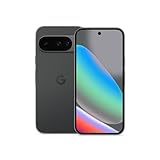
- Google Pixel 10 is the everyday phone unlike anything else; it has Google Tensor G5, Pixel’s most powerful chip, an incredible camera, and advanced AI - Gemini built in[1]
- Unlocked Android phone gives you the flexibility to change carriers and choose your own data plan[2]; it works with Google Fi, Verizon, T-Mobile, AT&T, and other major carriers
- Unlocked Android phone gives you the flexibility to change carriers and choose your own data plan[2]; it works - Google Fi, Verizon, T-Mobile, AT&T, and other major carriers
- The upgraded triple rear camera system has a new 5x telephoto lens - up to 20x Super Res Zoom for stunning detail from far away; Night Sight takes crisp, clear photos in low-light settings; and Camera Coach helps you snap your best pics[3]
- Pixel 10 is designed - scratch-resistant Corning Gorilla Glass Victus 2 and has an IP68 rating for water and dust protection[21]; plus, the Actua display - 3,000-nit peak brightness is easy on the eyes, even in direct sunlight[4]
Check the full price and exact variant
A displayed price may not include shipping, tax, membership conditions, coupons, regional surcharges, required accessories or a subscription commitment. Stock and delivery estimates may change. Before buying, confirm the model, generation, size, color, capacity, bundle and compatibility details on the final purchase screen.
Use review summaries as a shortcut, not a verdict
Open original reviews when durability, fit, warranty service, safety or compatibility matters. Look for recurring defects and long-term reports, and consider whether a review reflects the same variant you intend to buy.
Do not treat try-on as a fit guarantee
Use a size chart, fabric details and the return policy for decisions that depend on fit. An AI-generated image can look convincing while misrepresenting fabric, color or how a garment sits on a real body.
Quick wins for a faster PC:
Repair Windows errors before they cause bigger problemsFix Now →Fix the driver behind crashes, sound loss and screen glitchesFind Drivers →Consider privacy and retailer dependence
Uploading a personal photo and connecting shopping activity with payment or loyalty information raises privacy questions; shoppers should review the terms and controls that apply to the specific Google service and merchant. For retailers, more activity mediated by Google could mean less control over product presentation and checkout, fewer direct customer interactions and less access to first-party behavioral context. Those are strategic risks, not established outcomes for every merchant.
Why this matters for the future of shopping
Google’s direction points toward a shopping agent that can interpret a request, assemble options, monitor a price and help act on a decision. The practical advantage may increasingly belong to products whose attributes, variants, stock and terms are accurate enough for an agent to understand and represent correctly. That does not make the AI the authority: shoppers still need to verify consequential details, and retailers still need to deliver the product and service promised.
Quick Recap
Product prices and availability are accurate as of the date/time indicated and are subject to change. Any price and availability information displayed on Amazon at the time of purchase will apply.




