The most reliable B2B lead-generation program is a system, not a single channel: attract the right accounts with useful expertise, create high-intent interactions, nurture and qualify them, then connect marketing activity to sales and revenue. The five strategies below—problem-led content, account-based paid campaigns, educational events, email nurture, and targeted outbound with partners—are established approaches, not guaranteed formulas. Results depend on demand, positioning, execution, measurement, and sales follow-up.
A lead is not automatically an opportunity. Separate demand creation, lead capture, qualification, pipeline creation, and revenue attribution so that a large form-fill count does not disguise weak commercial results.
What makes a B2B lead-generation strategy proven?
For practical purposes, a strategy is proven when it has a repeatable mechanism, a clearly defined audience, a measurable conversion path, and a way to connect activity with qualified pipeline. A blog visit, webinar registration, referral, demo request, and sales reply represent different levels of intent and should not receive the same follow-up.
- Demand creation: making a target market aware of a problem, risk, or solution.
- Lead capture: obtaining permission and identifying information through a form, booking, registration, reply, or referral.
- Lead qualification: checking fit, use case, urgency, authority, and buying potential.
- Pipeline creation: producing a sales-accepted meeting or opportunity that can realistically progress.
- Revenue attribution: connecting marketing and sales touches to closed business using a defined attribution model.
HubSpot, Salesforce, and LinkedIn all describe combinations of content, paid distribution, webinars, email, qualification, and account targeting as core B2B approaches. Their guidance supports the methods, but no vendor source establishes a universal conversion rate, cost per lead, or “best” channel.
The Tool Desk
Outbyte Driver Updater FREEFix the driver behind crashes, sound loss and screen glitchesFind Drivers →Outbyte PC Repair FREEClear out junk files and repair common Windows errorsFree Scan →#1 Best Overall

- TURN YOUR IDEAS INTO REALITY: Unleash your creativity with this unique planning notebook, consisting of 224 pages divided into 112 Project Planner sheets. Each sheet is designed to step-by-step completion and management of your project.
- EMPOWER YOUR MANAGEMENT: This professional project organizer keeps all project-related information in one place. Stay on top of multiple projects with the convenient project tracker notebook feature, ensuring no detail is missed.
- ARCHIVE YOUR PROJECT GOALS: Stay focused on your projects with dedicated sections for objectives, tasks with deadline, essential supplies and tools notes, space for ideas and sketches illustration, and notes. Experience a simple yet powerful tool to ensure completion and accomplish more with ease.
- EFFICIENT BONUS STATIONARIES: You will receive either set of a ball pen and two cute sticky notes or a set of remind stick pads (randomly). The versatile design can be used for projects at home, work, school, or business to organize, manage a team, and to delegate tasks. This planner is a simple way to make sure you finish what you start and accomplish more.
- HANDLE SINGLE PROJECT IN HAND: Designed with tearable sheets allow you taking any single sheet for more convenient. 7x10 inch sheets are printed on 70 lb premium paper. With advanced printing technology and leather cover, our planner exudes a premium feel and long lasting.
1. Build problem-led content that captures search and buying intent
Create content around the problems, calculations, comparisons, implementation questions, compliance concerns, and risks that prospective customers already investigate. Then give each asset a next step appropriate to the reader’s stage. Salesforce lists blog posts, ebooks, webinars, whitepapers, videos, case studies, pricing pages, consultations, and trials as common formats and funnel-stage offers (Salesforce content marketing guide).
How to implement it
- Define the ideal customer profile (ICP): industry, company size, geography, technology environment, involved roles, urgent problem, trigger event, budget, and buying timeline.
- Map the journey from problem awareness through solution research, vendor comparison, internal approval, and implementation.
- Build topic clusters around pain points, how-to questions, alternatives, pricing and total cost of ownership, compliance, integrations, and customer outcomes.
- Match offers to intent: a newsletter or checklist for early research, a benchmark or case study for evaluation, and a demo, consultation, assessment, or trial for active buying.
- Record the original source, content interactions, conversion event, opportunity, and eventual revenue in the CRM.
What improves performance
- Answer a specific business problem instead of describing your company.
- Use original examples, templates, data, or substantiated customer evidence.
- Include bottom-of-funnel material; general traffic alone rarely creates predictable pipeline.
- Distribute through search, email, social, sales conversations, and partner networks.
- Refresh claims when products, regulations, or market conditions change.
Common failure modes and fit
Generic “ultimate guides,” gating every useful asset, writing for marketers when the buyer is an operator or executive, and optimizing only for traffic all reduce commercial value. Content is a strong fit for a definable audience, repeatable expertise, and a research-heavy buying cycle. It is a poor first move when there is no identifiable search demand and no distribution or sales motion to supplement organic reach. SEO usually compounds over time, but it is rarely the fastest route to immediate pipeline.
2. Use LinkedIn and account-based paid campaigns
Reach defined companies and buying groups with professional-network and account-based campaigns rather than broad awareness advertising. LinkedIn’s lead-generation products include targeted campaigns, native lead forms, and offers such as ebooks, webinars, and case studies (LinkedIn lead generation).
Build the campaign
- Create an account list containing target accounts, open opportunities, priority verticals, and carefully chosen lookalikes.
- Map the buying group: economic buyer, technical evaluator, daily user, procurement, and executive sponsor. A B2B purchase may involve several roles, not one job title.
- Write a message for one business problem or segment at a time.
- Match the offer to intent: an industry report for early research, a benchmark for evaluation, a case study for proof, and a demo or consultation for active demand.
- Use a dedicated landing page or native form, then send source, campaign, account, role, and offer data into the CRM.
- Retarget engaged accounts with proof and decision-stage content.
- Measure account engagement, sales acceptance, opportunities, and pipeline—not clicks or downloads alone.
Campaign costs are auction-dependent. Budget, audience size, competition, objective, geography, and creative affect results; there is no universal LinkedIn rate. HubSpot documents tracking Google, Facebook, and LinkedIn campaigns alongside forms, landing pages, email, and campaign reporting (HubSpot campaign tracking).
Quick wins for a faster PC:
Scan for outdated or missing drivers - takes under a minuteDriver Scan →Clear out junk files and repair common Windows errorsFree Scan →Fix the driver behind crashes, sound loss and screen glitchesFind Drivers →Trade-offs and failure modes
Paid campaigns provide faster feedback than SEO but require continuing budget. LinkedIn can target professional identity and company affiliation precisely, yet may be expensive for low-value products. Account-based marketing improves relevance but depends on accurate account data and marketing-sales coordination. Do not target job titles without understanding the committee, send every audience to a generic demo page, or treat a content download as purchase intent. Paid traffic will expose weak positioning and poor conversion infrastructure quickly.
Rank #2
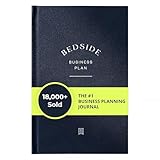
- TURN IDEAS INTO REALITY – Feeling stuck with your idea and not sure where to start? This guided journal helps you write a complete business plan so you can gain clarity and move forward with confidence as an entrepreneur.
- SIMPLE DAILY PRACTICE – 13 guided journaling sections with over 100+ business planning prompts. Make this business planner part of your routine to build momentum and work toward your business goals in just 5 minutes a day.
- BUSINESS PLANNER FOR ENTREPRENEURS – Use this guided journal to define your vision, understand your customers, evaluate competitors, plan expenses, and create a clear roadmap for launching your business.
- PERSONAL GROWTH – Designed as a personal growth workbook to help you reconnect with your purpose, prioritize well-being, and build a business plan centered around meaningful impact.
- PREMIUM ECO-FRIENDLY JOURNAL – Crafted with 100% FSC-certified recycled paper, a recycled cardboard cover, and wrapped in luxurious linen. This entrepreneur planner blends sustainability with thoughtful design.
3. Turn webinars and educational events into demand engines
A webinar, workshop, roundtable, demonstration, or virtual event exchanges useful education for first-party engagement. The event itself is only the centre; promotion, attendance behavior, follow-up, and repurposing create the pipeline. Salesforce identifies webinars and virtual events as common lead-generation formats (Salesforce lead-generation guide).
Plan the experience
- Choose a narrow, urgent topic that helps attendees reduce implementation risk, compare approaches, diagnose a costly problem, or improve a workflow.
- Use a credible subject-matter expert, customer, analyst, or partner and make the promise useful even if nobody buys.
- Promote through email, LinkedIn, partners, sales invitations, and retargeting.
- Collect only registration data needed for follow-up and record consent where required.
- Segment registrants into no-shows, brief attendees, full attendees, question askers, and people requesting follow-up.
- Send differentiated follow-up: recording and summary, slides or checklist, relevant case study, or consultation and demo.
- Repurpose the session into articles, short videos, sales enablement, email sequences, FAQ content, and social posts.
Registration is not qualification. Events create richer intent signals than a short form, but they require production, promotion, and a human follow-up process. Customer or partner speakers can add credibility while introducing scheduling, approvals, and brand-control dependencies.
4. Nurture leads with relevant email, scoring, and sales follow-up
Most B2B contacts are not ready to buy when they first identify themselves. Email and behavioral data can educate, segment, qualify, and route them instead of sending every contact the same sales message. Salesforce recommends using signals such as webinar attendance, content downloads, and high-value page visits in lead scoring (Salesforce lead-generation guide).
Set the operating model
- Define lifecycle stages: subscriber, marketing-qualified lead (MQL), sales-accepted lead (SAL), sales-qualified opportunity, and customer.
- Agree with sales on qualification criteria: ICP fit, company size, role, use case, timeline, engagement, and existing technology.
- Create segments for early-stage downloads, webinar attendees, pricing or comparison-page visitors, demo requests, and re-engaged contacts.
- Build tracks for education, proof and case studies, product evaluation, objection handling, and re-engagement.
- Set a handoff rule: the score or action that triggers sales, the response-time requirement, and the context delivered with the lead.
- Feed sales outcomes back into scoring and segmentation.
Measure quality and protect trust
Track delivery and bounce rate, click-through rate, form conversion, MQL rate, sales acceptance, meetings, opportunity rate, pipeline, revenue, time to acceptance, unsubscribes, and complaints. Do not give excessive weight to email opens, treat every download as intent, or continue messaging existing customers, open opportunities, or disqualified contacts. More fields can improve routing but reduce conversion; aggressive automation can increase activity while damaging trust and deliverability.
5. Combine targeted outbound with partners, referrals, and customer proof
Focused outbound and trusted distribution reach accounts that may never discover you through search. The standard is relevance, not volume: contact a narrow list because a credible business hypothesis or trigger makes the conversation timely.
Rank #3

- Essential to High Productivity — Take your efficiency to the next level with this work notebook organizer planner. Stay on top of projects, manage your team and make strategic decisions to grow your business with this project organizer notebook
- Juggle Multiple Tasks at Once — No need to feel overwhelmed by all your responsibilities. Break them down piece by piece in this meeting notebook for work. From the finance department to the marketing team, this project organizer planner keeps track of all the moving parts
- Assign Actionable Items — Prioritize your tasks based on their importance and urgency with this planning notebook. Record general notes, list action items and due dates. See what needs to be done today, this week, or next month and stay accountable
- Built to Take on the Go — These project manager notebooks are made of 120gsm double-sided paper with large, easy to read print. The sturdy cover withstands heavy use as you take it from the office to the gym. Know exactly where you left off with the built-in sash and get straight to business no matter where you are
- Reduce Stress with Clear Organization — Don't sweat the small stuff. Focus on high-impact actions that will move the needle. Whether you're head of a team or running your own business, this business notebook organizer provides a helpful boost to your performance and peace of mind
Run trigger-based outreach
- Select accounts that fit the ICP and remove poor-fit companies before contacting anyone.
- Identify a reason to reach out, such as new funding, hiring, expansion, a regulation change, technology adoption, a merger, or a visible operational problem.
- Build a short sequence containing an insight, evidence, useful resource, low-friction question, and permission-based close.
- Personalize the business context, not merely the recipient’s name.
- Use proof from a similar company and problem; quantify outcomes only when substantiated and approved.
Build partner and referral motions
- Referral agreements with clear ownership and incentives.
- Joint webinars or content with complementary providers.
- Integration partnerships and implementation firms.
- Industry consultants, associations, and strategic communities.
- Customer introductions and review or proof assets used with permission.
Track direct outbound, partner-sourced, customer referral, community, and event influence separately. Outbound can create opportunities where organic demand is weak, but it consumes research and sales capacity. Referrals carry trust but are difficult to forecast; partners expand reach but require agreement on audience, lead ownership, incentives, and follow-up.
Compliance and quality controls
Avoid inaccurate purchased lists, fabricated personalization, unsupported performance claims, and high-volume automated social messages. Confirm that recipients may receive the communication in the relevant geography, identify the sender accurately, provide a working opt-out, maintain appropriate privacy and retention practices, and follow platform rules. There is no reliable universal reply rate or “best” sequence length across industries.
Free tools Windows power users keep installed
One-click scans. No signup required.
How to choose the right strategy
| Strategy | Speed | Compounding effect | Budget need | Operational complexity | Best signal |
|---|---|---|---|---|---|
| Content and SEO | Slow to medium | High | Low to medium | Medium | Qualified organic opportunities |
| LinkedIn and account-based paid | Fast | Low without continued spend | Medium to high | Medium | Account engagement and pipeline |
| Webinars and events | Medium | Medium through repurposing | Medium | High | Attendance quality and meetings |
| Email nurture and scoring | Medium | Medium | Low to medium | Medium | Sales acceptance and opportunity rate |
| Outbound, partners, and referrals | Fast to medium | Medium | Medium | High | Meetings, opportunities, and referral conversion |
These are planning comparisons, not benchmarks. Choose using deal size, sales-cycle length, audience definition, search demand, available proof, budget, and team capacity.
Match strategies to common situations
- Startup with no audience: begin with a narrow outbound or partner motion for faster feedback, while building one useful content asset that supports sales.
- High-ticket consulting: combine expert content or a diagnostic webinar with referrals and highly researched outreach.
- SaaS with a defined ICP: pair problem-led content and nurture with account-based paid campaigns or targeted outbound.
- Limited search demand: prioritize account lists, partners, communities, events, and trigger-based sales outreach.
- Small team: select one compounding channel and one faster-feedback channel; do not run a full content operation, daily advertising, weekly events, complex scoring, and large-scale outbound simultaneously.
An ICP describes the type of account most likely to succeed and be valuable to your business. A buyer persona describes an individual role, its responsibilities, concerns, and influence. Use both: account fit determines who to pursue, while role context determines what to say.
Independent reader supportYour contribution helps us test, update, and keep practical guides available for everyone.A practical 90-day launch plan
Days 1–15: establish the foundation
- Define the ICP, buying roles, triggers, and disqualifiers.
- Interview salespeople and recent customers; document the five most urgent buyer problems.
- Set lifecycle stages and agree on a sales handoff service-level agreement (SLA).
- Audit CRM source, campaign, consent, and duplicate handling.
- Choose one primary offer and one CTA.
Days 16–30: build conversion infrastructure
- Create one high-intent landing page.
- Produce one proof asset, such as a case study or benchmark.
- Produce one educational asset, such as a guide, webinar, or checklist.
- Configure forms, CRM fields, consent records, notifications, and suppression rules.
- Create a baseline dashboard.
Days 31–60: launch two complementary channels
Choose one pairing: content plus email nurture; LinkedIn account targeting plus sales follow-up; webinar plus partner promotion; or trigger-based outbound plus customer proof. Launching all five at full scale makes it difficult to identify what created qualified opportunities.
Rank #4

- Size & Pages: This meeting notebook measures 7"x10" (B5 size) with 160 pages, providing ample writing space for all your notes. The clear back pocket neatly stores notes, business cards, and loose papers.
- Structured meeting record: This notebook includes sections for date, attendees, location, topic, agenda, action items, next meeting and lined notes for fully record and work efficiency.
- Premium Paper: This meeting planner uses 100gsm double-sided paper, thick and smooth for comfortable writing, with no ink or highlighter bleed-through.
- Quality & Durable: This work notebook features a waterproof hardcover and sturdy spiral binding, resistant to deformation and page detachment. Ideal for daily long-term use and business travel.
- Suitable For Various Scenarios: Ideal for team meetings, project reviews, client discussions, and daily office use. Its versatile design helps you record key points, action items, and ideas to meet all professional note-taking needs.
Days 61–90: optimize and expand selectively
- Remove low-quality audiences and offers.
- Compare qualified-opportunity rates rather than CPL alone.
- Review sales-call outcomes and rejected leads.
- Improve landing-page messaging and adjust scoring thresholds.
- Repurpose the strongest content.
- Expand only the strategy showing repeatable economics.
Measure pipeline, not just lead volume
| Funnel stage | Useful metrics |
|---|---|
| Reach | Qualified account reach, impressions, branded search, content views |
| Engagement | Engaged accounts, meaningful page visits, attendance, replies |
| Capture | Form conversion, demo requests, trial starts, registrations |
| Qualification | ICP-fit rate, MQL rate, sales acceptance rate |
| Pipeline | Meetings, opportunities, pipeline value, opportunity rate |
| Revenue | Closed-won revenue, customer-acquisition cost, payback |
| Quality control | Duplicate and invalid rates, unsubscribes, complaints, no-shows |
Use consistent definitions and include offline sales activity. Basic formulas are:
- Cost per lead: total campaign cost ÷ leads.
- Cost per qualified lead: total campaign cost ÷ qualified leads.
- Lead-to-opportunity rate: opportunities ÷ leads.
- Pipeline efficiency: sourced pipeline ÷ campaign cost.
- Customer-acquisition cost: total sales and marketing cost ÷ new customers.
- Lead velocity: change in qualified leads or opportunities over a defined period.
Use first-touch, last-touch, and multi-touch views carefully: none alone explains every purchase. Compare channels on cost per qualified opportunity, sourced or influenced pipeline, sales acceptance, time to opportunity, and revenue. A low CPL can be expensive if sales rejects most of the contacts.
Tools and operational requirements
A CRM with source and campaign fields is the foundation. Marketing automation can add forms, landing pages, email, scoring, routing, and reporting, but it cannot repair weak positioning or inaccurate data.
- HubSpot Marketing Hub: an integrated option for CRM, forms, landing pages, email, automation, scoring, and reporting. See HubSpot’s official pricing page; packaging varies by seats, marketing contacts, billing term, onboarding, and add-ons.
- Salesforce Marketing Cloud or Account Engagement: suited to larger or more complex organizations needing advanced CRM integration, account workflows, scoring, and analytics. See Salesforce pricing; edition, add-ons, implementation, support, and negotiated terms affect cost.
- LinkedIn Ads and Lead Gen Forms: useful for named accounts, industries, seniority, and professional roles; budget is auction-dependent. The LinkedIn B2B campaign guide covers campaign planning.
- Google Ads: captures existing search intent for product, comparison, pricing, and problem queries. Use auction-based budgets and judge conversions by quality; see Google Ads.
- Event, enrichment, and outbound tools: assess integrations, data ownership, consent, deliverability, security, accessibility, moderation, and total cost before purchase. Automation improves routing and scale, not relevance.
Conversion, handoff, and trust checklist
- Does every campaign have a dedicated landing page and stage-appropriate CTA?
- Is the form collecting only information needed for qualification and follow-up?
- What happens immediately after submission, registration, or reply?
- Can sales see the ad, content, event behavior, trigger, and account context?
- Are duplicate, invalid, competitor, student, vendor, and disqualified contacts filtered?
- Is there a documented SLA for response time and ownership?
- Are claims, testimonials, and case-study numbers substantiated?
- Are consent, privacy notices, retention, sender identification, and opt-out processes appropriate for the target geography?
The Bottom Line
Start with one channel that compounds—usually problem-led content or a partner asset—and one channel that provides faster feedback, such as targeted LinkedIn, a focused webinar, or trigger-based outbound. Keep the offer and audience narrow, connect every response to a CRM and sales SLA, and scale only when qualified-opportunity and pipeline economics—not raw lead volume—are repeatable.
Quick Recap
Product prices and availability are accurate as of the date/time indicated and are subject to change. Any price and availability information displayed on Amazon at the time of purchase will apply.
Recommended Free Tools




