Crashes, No Sound, or Screen Glitches?
Random freezes, missing sound and display glitches usually trace back to one bad driver. Find and replace yours safely.Free scan · under a minuteWindows Errors? Fix Them Before They Spread
Repair common Windows errors and clear accumulated junk for a smoother, more stable PC - no reinstall needed.Free scan · no reinstallAccenture did not announce a new Voltron Data deal in August 2026. On February 20, 2025, Accenture Ventures announced an investment in Voltron Data and a collaboration focused on GPU-accelerated, petabyte-scale data processing. The goal is to make large datasets faster to query and prepare for analytics, machine learning and generative-AI workloads—not to create a new AI model or solve every data problem.
The arrangement combines Accenture’s consulting, high-performance-computing expertise and enterprise reach with Voltron Data’s Theseus SQL query engine. Accenture says some workloads that previously took hours can run in minutes, but the announcement does not publish enough benchmark detail to treat that as a universal result.
What Accenture and Voltron Data actually announced
The transaction has two parts:
- Investment: Accenture Ventures invested in Voltron Data through Project Spotlight.
- Collaboration: The companies said they would combine Accenture’s industry and implementation capabilities with Voltron Data’s accelerated data-processing technology.
The announcement does not disclose the investment amount, valuation or ownership percentage. It also does not say that Accenture became Voltron Data’s exclusive channel, or that every Accenture AI engagement must use Theseus. The primary announcement is dated February 20, 2025: Accenture’s announcement.
Project Spotlight is described as a vertical accelerator that gives startups access to Accenture expertise and enterprise clients. That makes distribution, implementation and adoption an important part of the relationship, not just the software itself.
#1 Best Overall
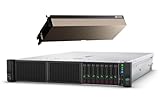
- HPE Proliant DL380 G10 8-Bay SFF Server | 2x Platinum 8164 2.0GHz 26-Core CPU (52-Cores Total)
- 64GB DDR4 RAM | 2x 1.92TB SATA III 2.5" SSD
- Smart Array S100i SR | 2x10GbE NIC
- 2x 500W PSU | Windows Server 2019 Standard Evaluation
- NVIDIA H100 Tensor Core 96GB PCIE GPU
The AI problem is underneath the model
Many enterprise AI projects slow down before model training or inference. Data is spread across systems, queries take too long, ingestion pipelines create delays, and teams repeatedly move information between analytics and AI environments. Traditional CPU infrastructure can become expensive or too slow when organizations scan and transform very large logs, telemetry streams, tables or security records.
There is also a broader readiness problem. In its May 26, 2026 AI-ready data research, Accenture reported that 72% of surveyed organizations lacked trusted data of the right quality combined with standardized governance for advanced AI. More than 80% reportedly sometimes delay, limit or alter AI initiatives because of data-related risks. Those are Accenture’s own survey findings, not independent proof that Voltron Data resolves the issue.
Faster execution can help with a processing bottleneck. It cannot by itself repair inaccurate records, define ownership, establish access controls, add missing business context or prove that a model’s output is reliable.
Rank #2
- HPE Proliant DL380 G10 8-Bay SFF Server | 2x Platinum 8164 2.0GHz 26-Core CPU (52-Cores Total)
- 1024GB DDR4 RAM | 2x 1.92TB SATA III 2.5" SSD
- Smart Array S100i SR | 2x10GbE NIC
- 2x 500W PSU | Windows Server 2019 Standard Evaluation
- NVIDIA H100 Tensor Core 96GB PCIE GPU
What Theseus is designed to do
Accenture describes Theseus as a SQL query engine for petabyte-scale data processing that can use GPUs and other hardware accelerators. It is a data-processing layer, not an AI model.
Where it fits in an AI pipeline
- Querying and filtering very large datasets.
- Transforming data before machine-learning or generative-AI workloads.
- Preparing features and analytical tables.
- Bringing analytics and AI preparation closer together on shared accelerated infrastructure.
- Running with accelerator hardware on premises or in the cloud.
The intended customers are organizations with large, recurring or latency-sensitive workloads. Petabyte-scale is a stated capability target, not evidence that every deployment operates at that size.
Why GPUs can help—and when they do not
CPUs are general-purpose processors with a smaller number of powerful cores. GPUs contain many parallel processing units and can be effective when a workload performs the same operation across large amounts of data. Scans, filters, transformations, joins and some feature-preparation steps may benefit when software, data layout and hardware are aligned.
Rank #3
- HPE Proliant DL380 G10 8-Bay SFF Server | 2x Platinum 8164 2.0GHz 26-Core CPU (52-Cores Total)
- 128GB DDR4 RAM | 2x 1.92TB SATA III 2.5" SSD
- Smart Array S100i SR | 2x10GbE NIC
- 2x 500W PSU | Windows Server 2019 Standard Evaluation
- NVIDIA H100 Tensor Core 96GB PCIE GPU
Acceleration is not automatic. Results depend on:
- Query shape, selectivity and join patterns.
- File format, storage and network throughput.
- How much data must move between CPU and GPU memory.
- GPU memory capacity and utilization.
- Concurrent users and scheduling.
- Whether the required SQL operators are supported.
A workload dominated by storage, network transfer or data cleaning may see little benefit. A small or infrequently run query may not justify GPU capacity at all.
What “hours to minutes” really means
Accenture says Theseus can reduce some processing jobs from hours to minutes, citing cybersecurity data processing as an example. The release does not specify the query, dataset size, CPU baseline, number or type of GPUs, cost per query, energy use, benchmark code or customer validation.
Do these 3 things before closing this tab:
1Repair Windows errors before they cause bigger problems2Scan for outdated or missing drivers - takes under a minute3Clear out junk files and repair common Windows errorsThe defensible interpretation is narrow: Accenture claims that certain large-scale workloads can be substantially faster, but the public announcement does not establish a general performance guarantee.
Rank #4
- HPE Proliant DL380 G10 8-Bay SFF Server | 2x Platinum 8164 2.0GHz 26-Core CPU (52-Cores Total)
- 768GB DDR4 RAM | 2x 1.92TB SATA III 2.5" SSD
- Smart Array S100i SR | 2x10GbE NIC
- 2x 500W PSU | Windows Server 2019 Standard Evaluation
- NVIDIA H100 Tensor Core 94GB PCIE GPU
Who may benefit from the collaboration
The announcement points to banks and financial-services firms, communications companies, media and technology businesses, government agencies and organizations handling security logs, machine data or large tabular datasets.
Likely fit
- Large, repeatedly queried datasets.
- High-volume logs or telemetry.
- Security analytics requiring rapid scans.
- Machine-learning feature engineering.
- Existing or planned GPU infrastructure.
- CPU-bound pipelines where lower latency has measurable business value.
- Teams able to operate accelerated infrastructure and tune performance.
Probably a poor fit
- Small datasets that already run quickly on CPUs.
- Infrequent queries that cannot amortize GPU costs.
- Highly irregular workloads with little parallelism.
- Systems constrained mainly by storage, networking or data quality.
- Organizations without GPU, data-platform or performance-engineering expertise.
- Use cases that primarily need cataloging, lineage, governance or remediation rather than faster execution.
What Accenture contributes
Accenture brings high-performance and accelerated-computing experience, industry-specific implementation knowledge, consulting and delivery capacity, and access to large enterprise clients. Project Spotlight can provide a route from a specialist technology company into enterprise architecture and managed-service engagements.
That commercial value matters because GPU modernization involves architecture, migration, operations, security and cost management. It can also introduce dependence on a consulting-led design or a particular technology stack. Buyers should evaluate that trade-off alongside technical performance.
Recommended Free Tools
Best Value
- HPE Proliant DL380 G10 8-Bay SFF Server | 2x Platinum 8164 2.0GHz 26-Core CPU (52-Cores Total)
- 1024GB DDR4 RAM | 2x 1.92TB SATA III 2.5" SSD
- Smart Array S100i SR | 2x10GbE NIC
- 2x 500W PSU | Windows Server 2019 Standard Evaluation
- NVIDIA H100 Tensor Core 80GB PCIE GPU
What has—and has not—been established publicly
| Publicly stated | Not established by the announcement |
|---|---|
| Accenture Ventures invested in Voltron Data. | Investment amount, valuation or ownership percentage. |
| Theseus is positioned as a GPU- and accelerator-enabled SQL engine for petabyte-scale processing. | Independent, reproducible benchmarks across workloads. |
| Accenture says some jobs can move from hours to minutes. | Universal speedups, lower total cost or lower power consumption. |
| The collaboration targets AI, machine learning, analytics, log and tabular-data processing. | Named customer results, ROI or broad compatibility with every SQL system. |
| On-premises and cloud use are mentioned. | Accenture exclusivity or a requirement that its customers adopt Theseus. |
How it compares with other approaches
| Technology | Natural fit | Key distinction |
|---|---|---|
| Databricks | Lakehouse, governance, analytics, machine learning and AI agents. | Broader platform and ecosystem; Theseus is positioned more narrowly around accelerated processing. |
| Snowflake | Managed cloud warehousing and governed analytics. | Cloud-managed consumption model rather than direct control of a GPU-first architecture. |
| Google BigQuery | Serverless analytical SQL in Google Cloud. | Minimizes infrastructure management; Theseus may suit buyers seeking more control or on-premises deployment. |
| NVIDIA RAPIDS | Engineering-led GPU data science and analytics on NVIDIA hardware. | Open-source libraries and tools rather than a turnkey enterprise SQL product. |
| Apache Arrow | Columnar, in-memory interoperability across analytics tools. | Open-source format and project ecosystem, not a complete managed implementation. |
| Palantir Foundry and AIP | Operational workflows, ontology and business-process AI. | Connects data to decisions and operations; Theseus focuses more narrowly on processing speed. |
Accenture’s broader strategy is an ecosystem, not a single-vendor bet. It has also announced expanded work with Databricks and an AWS AI-products capability. Its partner directory lists Voltron Data among many ecosystem relationships.
Buyer checklist before committing
- Which SQL operations are accelerated, and which fall back to CPUs?
- What file formats, storage systems and orchestration tools are supported?
- Which GPU vendors and cloud environments are supported?
- How does performance change with concurrent users?
- What happens when a workload exceeds GPU memory?
- How much data moves between CPU and GPU memory?
- Is execution compatible with existing SQL semantics?
- What are licensing, support and implementation charges?
- Can the vendor reproduce benchmarks on your own data?
- What is the total cost per query or terabyte, including cloud, transfer, staffing, power and migration?
- How are encryption, tenancy, access controls and auditability handled?
- What monitoring, profiling and capacity-planning tools are included?
- Does Accenture provide implementation, managed services or advisory work only?
- Can you run a production-like proof of concept before signing?
The bottom line
Accenture’s investment and collaboration with Voltron Data is a credible attempt to attack an important enterprise AI bottleneck: processing very large datasets quickly enough to support modern analytics and AI pipelines. The strongest supported claim is narrower than the headline suggests. Theseus may improve selected, parallelizable workloads, but the February 2025 announcement does not prove universal speedups, lower total costs or a solution to data quality, governance and context problems. Buyers should test their own workloads and compare total cost with managed platforms and open-source GPU tools before treating the deal as an enterprise-wide AI answer.
Quick Recap
Product prices and availability are accurate as of the date/time indicated and are subject to change. Any price and availability information displayed on Amazon at the time of purchase will apply.




