Satya Nadella became Microsoft CEO in 2014, not 2020. His rise followed more than two decades inside Microsoft, leadership of its Cloud and Enterprise group, and a reputation for combining technical depth with calm, collaborative management. By fiscal 2020, cloud growth, recurring software revenue, a cultural reset and Microsoft’s readiness for remote work made his appointment look strategically prescient.
Who is Satya Nadella?
Satya Nadella was born in Hyderabad, India, in 1967, according to a Fortune profile. He followed a technical and academic path, moved to the United States and built a career as an engineer and technology operator rather than as a founder, celebrity salesperson or product-showman CEO.
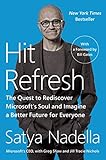




Profiles commonly describe Nadella as measured, analytical and empathetic. Those are leadership characterizations, not objective psychological measurements. Their significance is practical: he used listening, learning and customer understanding as management tools while running a very large technology company.
His long runway inside Microsoft
Nadella joined Microsoft in 1992. Over the next two decades he held roles spanning enterprise software, server products, online services and consumer businesses. Microsoft’s executive biography and its 2014 appointment announcement identify him as a senior leader in the company’s cloud transition, not the sole creator of Azure.
Free tools Windows power users keep installed
One-click scans. No signup required.
#1 Best Overall
Before becoming CEO, he led Microsoft’s Cloud and Enterprise group. That role gave him direct exposure to infrastructure, developers, enterprise customers and the economics of recurring cloud services. It also gave him experience coordinating several businesses instead of defending one flagship consumer product.
Why Microsoft’s board chose him in 2014
Steve Ballmer’s retirement triggered a high-profile succession search. Microsoft’s board named Nadella CEO on February 4, 2014. The public record cannot reveal every private board discussion, but it shows why he was a strong fit:
- Continuity without stagnation: He had deep knowledge of Microsoft’s people, customers and technology, while representing a break from the company’s Windows-centered past.
- Cloud credibility: His Cloud and Enterprise experience matched the market shift toward infrastructure and subscription services.
- Cross-company operating experience: He had worked across enterprise and consumer businesses and could connect engineering, sales and product teams.
- A different management signal: His low-key, learning-oriented style contrasted with the combative image associated with Microsoft’s earlier era.
Microsoft said his experience and vision suited the next phase of product innovation and growth. Contemporary coverage from TIME placed the appointment in the context of a company needing a new direction after Ballmer.
The strategic bet: cloud first, mobile first
Nadella pushed Microsoft toward a “cloud-first, mobile-first” strategy. The point was not to abandon Windows, but to stop treating Windows as the only gateway to Microsoft’s future. Azure infrastructure, Office 365 subscriptions, developer tools, security, data services and artificial intelligence became parts of a broader platform.
Do these 3 things before closing this tab:
1Fix the driver behind crashes, sound loss and screen glitches2Clear out junk files and repair common Windows errors3Scan for outdated or missing drivers - takes under a minuteOne early symbolic decision was making Microsoft Office available on Apple’s iPhone. Fortune’s account presents the move as evidence that Microsoft was increasingly willing to sell services across rival platforms rather than protect every old boundary. It was one decision within a much larger turnaround, not its sole cause.
This platform approach also changed Microsoft’s relationship with developers and customers. The company could earn recurring revenue from services used across devices while using its existing enterprise distribution, software portfolio and developer relationships.
Changing the culture from “know-it-all” to “learn-it-all”
Nadella promoted a contrast between a “know-it-all” culture and a “learn-it-all” culture, a phrase documented in Fortune’s profile. The intended behaviors were listening, experimentation, empathy and collaboration rather than defending internal status.
He has also cited Nonviolent Communication as an influence. In a company as large as Microsoft, culture could not be changed by slogans alone. It had to appear in incentives, management routines, product decisions and cooperation among divisions.
Quick wins for a faster PC:
Repair Windows errors before they cause bigger problemsFix Now →Fix the driver behind crashes, sound loss and screen glitchesFind Drivers →Clear out junk files and repair common Windows errorsFree Scan →The shift should not be romanticized. Microsoft remained a competitive corporation with performance pressure, internal disagreements, security obligations and difficult trade-offs. Nadella’s contribution was to make learning and cooperation a common operating vocabulary, then connect that vocabulary to a cloud-centered strategy.
How Azure and subscriptions changed Microsoft’s business
Microsoft’s fiscal year 2020 ended June 30, 2020. The company’s 2020 Annual Report reported the following GAAP results and business growth:
| Measure | Fiscal 2020 result | How to read it |
|---|---|---|
| Total revenue | $143.015 billion | Microsoft-wide fiscal-year revenue |
| Operating income | $52.959 billion | GAAP fiscal-year operating income |
| Net income | $44.281 billion | GAAP fiscal-year net income |
| Commercial-cloud revenue | $51.7 billion, up 36% | A Microsoft category broader than Azure alone |
| Azure | Revenue growth reported at 56% | Microsoft-reported growth rate; no standalone Azure revenue figure is supplied here |
| Server products and cloud services | Up 27% | Microsoft-reported fiscal-year comparison |
| Office 365 Commercial | Up 24% | Microsoft-reported fiscal-year comparison |
| Revenue up 20% | Microsoft-reported fiscal-year comparison | |
| Dynamics 365 | Up 42% | Microsoft-reported fiscal-year comparison |
Commercial-cloud revenue must not be presented as Azure revenue. It includes a broader group of cloud services, and Microsoft did not disclose a standalone Azure revenue total in the cited annual-report passage. The figures are fiscal-year results, not calendar-year 2020 results, and the growth rates are Microsoft’s own reported comparisons.
The portfolio widened beyond Windows
Nadella’s Microsoft combined internal development with acquisitions that extended its reach:
Windows Errors? Fix Them Before They Spread
Repair common Windows errors and clear accumulated junk for a smoother, more stable PC - no reinstall needed.Free scan · no reinstallCrashes, No Sound, or Screen Glitches?
Random freezes, missing sound and display glitches usually trace back to one bad driver. Find and replace yours safely.Free scan · under a minute- Minecraft: Acquired during his early tenure, it illustrated Microsoft’s willingness to maintain a major consumer platform with broad, cross-platform appeal.
- LinkedIn: Microsoft announced a $26.2 billion acquisition in 2016, strengthening its position in professional networking, recruiting, data and enterprise software. The transaction is discussed in Forbes’ Nadella profile.
- GitHub: The $7.5 billion deal announced in 2018 connected Microsoft more closely to developers and open-source software. Forbes’ interview covers the strategic rationale.
These assets linked Microsoft to consumers, professionals, developers and enterprise buyers. They did not make Nadella a one-person author of Microsoft’s success; they were pieces of a broader platform and capital-allocation strategy.
Why 2020 became the crucial stress test
The COVID-19 crisis did not create Nadella’s strategy. It accelerated demand for capabilities Microsoft had already been building: cloud infrastructure, Teams, Microsoft 365, security and digital services.
Microsoft’s annual report said organizations experienced years of digital transformation in months. It described Teams deployments in education and remote operations, including the University of Bologna’s move of 90% of courses online for 80,000 students within three days. These are Microsoft’s own examples, so they show the company’s view of its role rather than an independent market evaluation.
The pandemic therefore tested both preparation and execution. Azure and collaboration services had to scale; customers needed reliability and security; and Microsoft had to coordinate products that had previously been managed as separate businesses. Nadella’s leadership mattered through prioritization, investment and communication, while the underlying demand shock came from the crisis itself.
The Tool Desk
Outbyte PC Repair FREERepair Windows errors before they cause bigger problemsFix Now →Outbyte Driver Updater FREEFix the driver behind crashes, sound loss and screen glitchesFind Drivers →What made his leadership distinctive?
Empathy as an operating principle
For Nadella, empathy was more than a claim about personal kindness. It was a way to understand customers, employees, developers and people affected by technology, then use that understanding in product and management decisions.
Technical credibility without founder theatrics
He could speak credibly with engineers because of his technical background, while his senior operating roles gave him responsibility for execution at scale. That combination differed from both a pure finance executive and a founder-led product company.
Platform thinking
Microsoft could win by enabling customers and developers across devices and ecosystems. This reduced the pressure to make Windows the exclusive center of every product decision.
One Microsoft
Nadella emphasized cooperation across divisions. The goal was to combine Azure, Office, security, developer tools, gaming and enterprise relationships instead of letting internal units optimize only for themselves, a theme also reflected in Microsoft’s annual-report discussion of its mission and operating model.
What’s actually slowing this PC down?
Pick the symptom - the matching free tool is one click away.
Best Value
Was he really the “top tech giant boss” in 2020?
“Top” is an editorial judgment, not an official title. A fair assessment uses several tests:
- Strategic quality: Nadella identified cloud and recurring services as structural priorities before the pandemic made them unavoidable.
- Execution: Microsoft reported strong fiscal 2020 revenue, profit and cloud growth.
- Organizational change: The company adopted a more learning-oriented and collaborative management framework.
- Durability: Azure, subscriptions, developer relationships and enterprise services required sustained investment rather than one blockbuster launch.
- Crisis performance: Microsoft’s existing capabilities supported remote work and education during 2020.
- Constraints: He inherited Windows, Office, enterprise distribution, cash, talent and a large developer base.
Fortune named Nadella its 2019 Businessperson of the Year, an important external recognition but not proof that he was objectively the best CEO. The stronger conclusion is narrower: by 2020, Nadella had the most persuasive combination of strategic redirection, financial momentum, organizational change and crisis relevance among technology leaders, subject to the advantages and market conditions Microsoft already possessed.
What Nadella did not solve
- Cloud markets remained intensely competitive, with continuing pressure on price, security, reliability, data centers and developer loyalty.
- Microsoft still faced regulatory, privacy, labor and competition scrutiny.
- A strong stock price or revenue result could not prove that every product decision succeeded.
- Culture change was ongoing; a large corporation could not become uniformly harmonious through one executive’s message.
- Success depended on thousands of employees, executives, engineers, acquisitions and favorable market demand, not Nadella alone.
Later developments should not be projected backward into the 2020 story. For example, Microsoft’s acquisition of Activision Blizzard occurred in 2023, outside this period.
The bottom line on Nadella’s rise
Nadella became Microsoft CEO through a long inside career, not a sudden celebrity elevation. His cloud leadership made him a logical successor when Ballmer retired, while his learning-oriented management style offered a break from Microsoft’s combative stereotype. The appointment looked especially successful in 2020 because the strategy was already in place when the pandemic accelerated demand for cloud infrastructure and digital collaboration. His achievement was to reorient and recombine Microsoft’s existing assets—not to rebuild the company from nothing.
Quick Recap
Product prices and availability are accurate as of the date/time indicated and are subject to change. Any price and availability information displayed on Amazon at the time of purchase will apply.




