In 2021, digital onboarding moved from a convenience to a core operating requirement. COVID-19 restrictions accelerated remote account opening, while customers continued using digital channels after branches reopened. Identity verification, biometrics, liveness detection and fraud controls therefore became part of the customer experience—not back-office extras.
Remote onboarding became the default operating requirement
The European Banking Authority (EBA) wrote on December 10, 2021: “Financial Institutions have seen a growing demand for remote customer onboarding solutions.” It added that “This trend was exacerbated by restrictions on movement caused by the COVID-19 pandemic.” Banks had to let customers open accounts and complete due-diligence steps without visiting a branch.
The Federal Deposit Insurance Corporation (FDIC) similarly reported that pandemic restrictions pushed banks to improve digital account opening through online and mobile banking. The change affected more than account applications: identity checks, document collection, risk scoring, disclosures and case handling all had to work remotely.
Digital use continued after branches reopened
BAI’s 2021 consumer research found that 43% of consumers were doing all their banking digitally, 24% had increased their digital use, and 84% expected to maintain that level after in-person banking resumed. Those figures point to a lasting channel shift rather than a temporary lockdown workaround. A slow or branch-dependent onboarding process could now lose customers who expected to begin and manage a relationship online.
Recommended Free Tools
#1 Best Overall
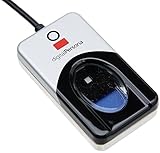
- Target Applications - Desktop PC security, Mobile PCs, Custom applications
- Indoor, home and office use
- Blue LED - soft, cool blue glow fits into any environment; doesn't compete in low light environments
- Small form factor - conserves valuable desk space
- Rugged construction - high-quality metal casing weighted to resist unintentional movement
Biometrics and liveness entered the mainstream toolkit
Goode Intelligence’s 2021 survey of 220 respondents shows how identity technology moved into ordinary onboarding design:
| Survey finding | What it indicates |
|---|---|
| 73% were using biometrics to support customer and user experience | Biometrics were being treated as a usability feature as well as a security control. |
| 64% were prioritising technology that supports remote onboarding | Remote capability had become a procurement priority. |
| 75% were using biometrics for identity verification (proofing) | Biometric matching was widely used when establishing that an applicant was the person shown on an identity document. |
| 55% were already using biometric authentication | Biometrics were also being used for subsequent access, not only initial enrollment. |
| 55% said liveness detection was “very important” for combating biometric spoofing attacks | Face matching alone was not considered sufficient; systems also needed to test whether a real person was present. |
In a typical remote flow, a customer photographs an identity document, records a selfie or short video, and the service compares the face with the document image while checking for signs of a live person. The exact checks and decision thresholds depend on the provider, jurisdiction and institution’s risk policy. Liveness detection helps address presentation attacks such as showing a photograph or replaying a recording, but it does not remove every source of identity fraud.
Rank #2

- High-Definition Fingerprint Imaging Based on Superior 3D Touch Capacitance Technology
- PASSKEY compatable. Start enjoying PASSKEY login to all available websites
- Windows Hello Certified offers seamless operation with Windows Hello and Windows Hello for Business
- Compatible with all Leading Password Management Software
- Also compatible with additional Microsoft services including Office365 and other Windows HELLO security applications
Security and compliance became visible parts of the product
Risk-sensitive KYC and AML controls
The EBA’s December 2021 consultation addressed remote customer onboarding alongside anti-money-laundering and counter-terrorist-financing obligations, data protection, tool reliability and risk-sensitive controls. The practical implication is that a fast application is not a compliant application unless the institution can explain how it verified identity, assessed risk, handled exceptions and retained evidence.
Onboarding systems therefore had to connect identity checks with customer due diligence, sanctions or watchlist screening, transaction-risk decisions and human review. A low-risk applicant might complete an automated path, while an unusual document, higher-risk geography or inconclusive match could trigger additional evidence or a case for an analyst.
What’s actually slowing this PC down?
Pick the symptom - the matching free tool is one click away.
Rank #3

- New replacement old Red Logo Digital persona URU4500, HID , USB reader. Original HID Brand
- Small form factor
- Metal Casing resists unintentional movement.
- SuperiorRed "Flash" indicates that a fingerprint image has been captured, 512 dpi / 8-bit grayscale (256 gray levels) ESD resistance
- Encrypted fingerprint data
Identity fraud remained a large operational threat
FinCEN’s analysis of calendar-year 2021 Bank Secrecy Act reports found approximately 1.6 million identity-related reports—42% of all reports filed—representing $212 billion in suspicious activity. The five leading typologies were fraud, false records, identity theft, third-party money laundering and circumvention of verification standards.
These figures are U.S. reporting data analyzed by FinCEN in 2024, not a measurement of every onboarding attempt or every financial crime. They nevertheless explain why institutions treated document authenticity, impersonation, account takeover and inconsistent customer information as product-design problems. As FinCEN Director Andrea Gacki said on January 9, 2024, “Robust customer identity processes are foundational to the security of the U.S. financial system, and critical to the effectiveness of financial institutions’ programs to combat money laundering and the financing of terrorism.”
Rank #4

- MFS110 L1 USB Fingerprint Scanner
- Support Window, Android and Lenux
- 1 Year RD Service Registration included from mantra
- USB with Type C connector available for using in Type C supporting devices
- Scratch free Sensor Surface,Auto Finger Detection
The identity-verification market expanded rapidly
Juniper Research reported $9.4 billion in business spending on digital identity verification in 2021 and forecast $16.7 billion in 2026, describing 77% growth driven by the need to onboard users digitally during the pandemic. The category covered capabilities such as remote document and selfie verification, biometric matching, liveness detection, fraud screening and onboarding orchestration.
For a financial institution, buying a verification component was only part of the decision. The more consequential questions were whether it integrated with existing customer-data and case-management systems, supported the institution’s countries and documents, produced an audit trail, and allowed policy changes without rebuilding the application.
How leading onboarding approaches compared
| Approach | Speed and friction | Assurance and coverage | Important design requirement |
|---|---|---|---|
| Document plus selfie verification | Usually a short, fully remote journey, but camera quality, glare or an unsupported document can interrupt it. | Combines document evidence with face matching and can add liveness checks. | Provide clear capture guidance and a reviewed exception path. |
| Biometric authentication after enrollment | Can reduce friction for repeat access because the customer is not re-entering all identity data. | Helps authenticate an enrolled user, but enrollment quality and account-recovery controls remain critical. | Protect recovery and account-change flows, not only login. |
| Non-biometric or assisted verification | May take longer or require more customer effort. | Provides an alternative when a customer cannot complete a biometric or document check and can support accessibility needs. | Keep the alternative equivalent in security and record why it was used. |
| Orchestrated, risk-based onboarding | Automates straightforward cases while routing uncertain cases for additional steps. | Can combine identity, fraud and KYC/AML signals under one policy. | Connect decisions, evidence and analyst actions to the customer record and case system. |
How to balance speed, fraud resistance and inclusion
- Map the complete journey. Include application, document capture, selfie or biometric checks, screening, approval, decline, manual review and account recovery.
- Set risk-based paths. Do not force every applicant through the same number of checks. Define when an automated result is enough and when additional evidence or a trained reviewer is required.
- Use liveness deliberately. Match the liveness method to the threat model and explain failures in plain language. A failed check should not become an unexplained dead end.
- Build fallbacks before launch. Offer an assisted or non-biometric route for customers with unsuitable devices, disabilities, document problems or limited digital confidence. Record the alternate evidence and decision.
- Test web and mobile channels. Check camera permissions, low-light capture, older devices, interrupted sessions, slow connections and resumed applications.
- Protect data and evidence. Define retention, access, deletion and sharing rules for identity documents, biometric data and verification decisions in line with applicable privacy requirements.
- Measure more than completion rate. Track abandonment, false declines, manual-review volume, time to decision, fraud losses, accessibility complaints and account-takeover incidents.
- Plan for operations. Give review teams clear queues, reason codes and escalation rules. A technically accurate check still creates customer harm if exceptions sit unresolved.
What the 2021 trend means now
The durable lesson from 2021 is not that every customer should be forced into a selfie check. It is that onboarding must work remotely, make proportionate identity and financial-crime decisions, and recover gracefully when automation is uncertain. Biometrics and liveness can reduce friction and spoofing risk, but they work best inside an orchestration layer that includes privacy controls, human review, accessible alternatives and reliable integration with the institution’s existing systems.
The Bottom Line
Digital onboarding in 2021 became a permanent banking expectation: the strongest programs paired fast remote journeys with risk-based KYC/AML controls, biometric and liveness checks, privacy safeguards and usable fallback paths.
Quick Recap
Product prices and availability are accurate as of the date/time indicated and are subject to change. Any price and availability information displayed on Amazon at the time of purchase will apply.




