Shipping is becoming more digitally coordinated, automated and connected to the physical movement of goods. AI and analytics can help companies plan operations and respond to disruptions; sensors and robotics bring software into warehouses and transport; and electrification and alternative fuels are part of efforts to reduce emissions. For customers, these changes may affect how orders are handled and how reliably companies respond to problems—but adoption, costs and results vary by operator.
Here is what the technologies can do, where they are being applied, and what still limits them, including the difference between an autonomous ship operating under a safety framework and a vessel simply using automation.
What is changing in shipping and logistics?
The central change is tighter coordination between digital decisions and physical operations. Logistics companies can use data to plan capacity, track shipments, simulate warehouse changes and identify exceptions. Sensors, robots and connected equipment can then help carry out or inform those decisions. The tools address different problems; no single technology transforms every part of a supply chain.
Two 2026 industry outlooks illustrate the direction without establishing how widely it has been adopted. Gartner’s June list of supply-chain technology trends includes agentic AI, systems of AI agents, intelligent simulation, physical AI and governance for AI decisions. DHL’s September Logistics Trend Radar describes AI moving from assistance toward planning, decisions and execution, while also highlighting worker augmentation and decarbonization. These are identified trends and capabilities, not proof that all operators use them or that they deliver the same results.
What’s actually slowing this PC down?
Pick the symptom - the matching free tool is one click away.
#1 Best Overall
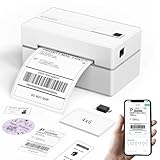
- Bluetooth Wireless Connection: KNAON Bluetooth shipping label printer enables wireless printing. For Mobile users, download the 'FlashLabel Pro' app from APP Store or Google Play for printing. Also, supports Windows and macOS, and can directly connect to the printer by downloading the 'FlashLabel Pro' App. Windows 7 or later computers can also print via Bluetooth by installing the latest advanced driver. Note: All devices CANNOT be connected directly to Bluetooth, and must be used through the 'FlashLabel Pro' app.
- USB Cable Connectivity: This printer ensures seamless USB connectivity with macOS, Windows (7 and above), ChromeOS, and Linux. KNAON printer features a built-in USB drive preloaded with drivers and tutorial videos for a fast and hassle-free setup. For ChromeOS, need to install 'FlashLabel' extension to your Google Chrome.
- Versatile DIY Labeling Options: KNAON Thermal Shipping Label Printer offers a vast selection of pre-designed templates, including 3,000+ templates, 5,000+ icons, and 100+ fonts available in the app. Designed for both professional and personal use, it supports various thermal paper sizes, ensuring effortless customization for all your labeling needs. Ideal for printing DIY shipping labels, barcode labels, thank-you labels, mailing labels, name tags, price tags, and various small thermal labels.
- Seamless Multi-Platform Compatibility: This Bluetooth shipping label printer works effortlessly with all major platforms, including Amazon, eBay, Shopify, USPS, UPS, Etsy, PayPal, Poshmark, DHL, and more, ensuring smooth and efficient label printing. (Note: Save the logistics label as a PDF file on the shipping platforms, then import it into the 'FlashLabel Pro' app for printing).
- Portable & Stylish Design: KNAON multi-function thermal label printer offers user-friendly operation in a compact design. Its perfect size (7.17 x 3.9 x 3.43 inches) makes it simple to store anywhere. With a fast printing speed of up to 180 mm/s and support for paper widths from 1.5 to 4.2 inches. The package also includes 10 test printing papers to get you started right away.
How the technologies fit together
| Technology area | What it can support | Key question for an operator |
|---|---|---|
| AI and analytics | Planning, capacity choices, decision support and shipment-exception handling | Are the data reliable, and are people accountable for consequential decisions? |
| Sensors, connectivity and visibility | Monitoring shipments or operations and making conditions or delays visible | Can information move securely and reliably between existing systems? |
| Robotics and physical AI | Applying sensing and automated action to warehouse, transport or other physical work | Is the technology safe and useful in the actual workflow, and are workers trained for it? |
| Digital twins and simulation | Comparing possible layouts, flows, equipment or operating choices before a change | Do the model’s assumptions and data reflect real operations? |
| Electrification and sustainable fuels | Changing how vehicles and other transport operations are powered | What are the energy source, route, mode and lifecycle impacts? |
The table describes possible roles, not a ranking. The technologies can overlap: a sensor may provide data to an analytics system, while a simulation helps a company decide where to use equipment or capacity.
How are AI and analytics changing logistics decisions?
AI in logistics is broader than forecasting demand. Gartner’s 2026 trend list includes agentic AI systems that may plan and act, multiagent systems that coordinate tasks, specialized language models, intelligent simulation and technology for product provenance. Gartner also describes physical AI as combining AI models with sensors, robotics and automation so systems can sense, analyze and act in settings such as warehouses and transportation. These are technology directions, not claims of universal deployment.
In practice, the value depends on what decision the system supports and whether a human can understand and oversee it. DHL’s outlook describes AI working alongside people, including through workplace assistants and remote operations. That does not settle whether a particular role will change or disappear; effects depend on the task, process redesign and how a company introduces the technology.
Examples tied to operating decisions
A 2026 McKinsey article describes visibility systems informing fleet deployment and carrier sourcing, digital twins helping teams examine warehouse changes before committing capital, and AI-enabled agents flagging shipment deviations such as delays, temperature excursions or theft risks. Such tools can help surface a problem or compare options; they do not remove the need for sound data, operational judgment and a workable response process.
Rank #2

- Bluetooth Wireless Connection: KNAON Y41BT Bluetooth shipping label printer enables wireless printing. For iOS and Android users, need to download the 'FlashLabel Pro' App from Apple Store or Google Play. Windows 7 or later computers can also print via Bluetooth by installing the latest advanced driver. Mac users with M1/M2/M3/M4 processors can connect to the printer by downloading the 'FlashLabel Pro' App from Apple Store. Note: All devices CANNOT be connected directly to Bluetooth, and must be used through the 'FlashLabel Pro' app.
- USB Cable Connectivity: This printer ensures seamless USB connectivity with macOS, Windows (7 and above), ChromeOS, and Linux. KNAON printer features a built-in USB drive preloaded with drivers and tutorial videos for a fast and hassle-free setup. For ChromeOS, need to install 'FlashLabel' extension to your Google Chrome.
- Versatile DIY Labeling Options: KNAON Thermal Shipping Label Printer offers a vast selection of pre-designed templates, including 3,000+ templates, 5,000+ icons, and 100+ fonts available in the app. Designed for both professional and personal use, it supports various thermal paper sizes, ensuring effortless customization for all your labeling needs. Ideal for printing DIY shipping labels, barcode labels, thank-you labels, mailing labels, name tags, price tags, and various small thermal labels.
- Seamless Multi-Platform Compatibility: This Bluetooth shipping label printer works effortlessly with all major platforms, including Amazon, eBay, Shopify, USPS, UPS, Etsy, PayPal, Poshmark, DHL, and more, ensuring smooth and efficient label printing. (Note: Save the logistics label as a PDF file on the shipping platforms, then import it into the 'FlashLabel Pro' app for printing).
- Portable & Stylish Design: KNAON multi-function thermal label printer offers user-friendly operation in a compact design. Its perfect size (7.2 x 3.15 x 2.65 inches) makes it simple to store anywhere. With a fast printing speed of up to 180 mm/s and supports paper widths from 1.38 to 4.41 inches. The package also includes 20 test printing papers to get you started right away.
McKinsey also reports company-specific results: one shipper’s digital-twin analysis identified an operating-expense reduction of more than 10 percent. A retailer using fulfillment simulations and end-to-end economics analysis reported fulfillment and inventory-holding cost reductions of more than 10 percent, 5 percent less air freight and roughly 20 percent higher utilization of a network node. These are individual reported examples, not average savings, independently guaranteed outcomes or a promise that another company will achieve similar results.
What could automation mean for warehouses and workers?
Warehouses are moving beyond isolated automation pilots toward more connected work between people and intelligent systems, according to the World Economic Forum’s 2026 outlook. Robotics can support movement and repetitive tasks, while physical AI aims to connect sensors, software and machinery for real-time sensing and action. Gartner says the use of polyfunctional robots will evolve over time; that is an outlook, not evidence that general-purpose robots are already common across warehouses.
Digital twins and simulation offer a different kind of automation: they let teams compare possible changes before altering a live facility. McKinsey’s example considered racks, fulfillment flows, automated guided vehicles, conveyors and interactions with labor. A model is a decision aid, not a guarantee. Its usefulness depends on whether its data and assumptions accurately represent the facility.
Why people remain part of the change
Introducing machines or AI can require workflow redesign, training, safety practices and clear accountability. DHL highlights wearables, remote operations, collaborative robotics and AI workplace assistants as ways technology may augment work, while emphasizing skills and employee experience. That outlook does not establish a universal outcome for employment. Whether a tool replaces, changes or supports a task depends on the job and the operator’s implementation.
The Tool Desk
Outbyte Driver Updater FREEScan for outdated or missing drivers - takes under a minuteDriver Scan →Outbyte PC Repair FREEClear out junk files and repair common Windows errorsFree Scan →Rank #3

- Go Wireless by Bluetooth: Download the "NELKO"app to print via Bluetooth on your Nelko Bluetooth thermal label printer for iOS and Android. Printing shipping labels has never been easier. Windows 7 or later computers can also print via Bluetooth. For Mac users with M1 or M2 CPUs, install the app and connect to the printer via Bluetooth. Note: All devices cannot be directly connected to Bluetooth and need to be used through the app
- Print via USB: For Windows (7 and later), Mac OS,Chrome OS, you can connect the desktop label printer via USB cable. Note that Mac OS only works with USB connection, you can not print via Bluetooth
- Good Helper for Cost Saving: Advanced thermal direct technology is adopted to achieve the printing speed of 150 mm/s, up to 72 sheets 4x6 labels/min. High speed brings high efficiency and helps your business grow faster! 203 DPI makes printing clearer. No ink, no toner, only thermal labels needed. Both fanfold labels and roll labels could be used. Label size: labels width ranges from 1.54" to 4.1"(40-104 mm), such as 4x6, 3x2, 3x1, 2x1 thermal labels and so on
- Strong Platform Compatibility: This bluetooth shipping label printer can work with virtually all platforms, including Amazon, Ebay, Shopify, USPS, UPS, Esty, PayPal, Poshmark,etc.(Note: Please remember to save the logistics label as a PDF on the logistics platform, then upload it to the editor APP "NELKO" for printing
- Suitable for Commercial and Home Use: Printer driver, instruction videos and problem shooting videos are provided in U-Disk for better setting. Nelko PL70E label printer is much smaller than traditional printers and only requires a small piece of space to achieve printing. Very suitable for printing shipping labels, mailing labels, price labels, barcode labels, name tags and all kinds of small category labels
Are autonomous cargo ships already in use?
Autonomy at sea is developing within a specific safety and regulatory framework. The International Maritime Organization (IMO) adopted its non-mandatory International Code of Safety for Maritime Autonomous Surface Ships (MASS Code) in May 2026; it took effect on 1 July 2026 and applies to cargo ships. Automation alone does not make a vessel a MASS: IMO says the vessel must pass the appropriate approval process and hold a valid MASS Safety Certificate.
The Code uses risk assessment and addresses safe operating limits, navigation, connectivity, remote operations, cybersecurity, fire safety, and search and rescue. The ship’s master retains overall responsibility, including when ashore. So “autonomous” does not mean that responsibility disappears or that the vessel operates outside safety oversight.
IMO’s current roadmap targets development of a mandatory code in 2028, expected adoption by 1 July 2030, and entry into force on 1 January 2032. Those dates are planned milestones, not completed regulatory changes. The non-mandatory Code is intended to inform future mandatory rules.
Maritime digitalization is broader than autonomy
IMO’s digitalization strategy work aims to connect vessels and ports, improve logistics and route optimization, and reduce greenhouse-gas emissions. In its 18 March 2025 release, IMO said the strategy was still being developed and planned for submission to the IMO Assembly at the end of 2027. The organization also identified cybersecurity and the global digital divide as challenges. The strategy should therefore be described as work in progress, not an adopted plan.
Free tools Windows power users keep installed
One-click scans. No signup required.
Rank #4

- [HIGH TECH LABEL PRINTER] Equipped with a Japanese high tech thermal print head, 203 DPI high printing quality. No ink, No toner, Clean with no mess, economical. Works with both fanfold labels and roll labels. Label size: labels width ranges from 1.57" to 4.1"
- [PRINT WIRELESSLY]The label printer support printing wirelessly. For windows 8 or later and Mac, you can print via Bluetooth. For Android& iOS, you can’t print via Bluetooth on phone, need to download the App "Jadens printer" and print on it.
- [PRINT VIA USB] USB connection works with both Windows (7 and newer) and Mac OS (10.9 and newer) devices. Please long and press the feed button to identify and calibrate label size each time you change labels.
- [WIDE USAGE] JADENS thermal label printer is widely used to print labels from various marketplaces and shipping platforms, such as Endicia, Dazzle, ShipStation, Shipping Easy, Shippo, ShipWorks, Ordoro, eBay, Amazon, Easy, and Shopify. Use JADENS thermal label maker machine to print shipping labels, warehouse labels, market labels, helping increase your productivity. Ideal for your online small business for shipping packages.
- [EASY TO SET UP & RELIABLE AFTER-SALE SERVICE] Set up in one minute. Printer driver, instruction videos and problem shooting videos are provided in U-Disk for better understanding. Offer one year warranty; customer support can be reached out to email, phone, remote control.
Can shipping technology make logistics more sustainable?
Technology can contribute to sustainability through several routes, including vehicle electrification, sustainable fuels, circularity and other forms of sustainable propulsion. DHL’s 2026 trend summary identifies decarbonization, sustainable fuels, circularity, and heavy- and light-vehicle electrification. WIPO’s 2025 transportation report groups innovation into four areas: sustainable propulsion; automation and circularity; communication and security; and human-machine interfaces. Its coverage spans land, sea, air and space, drawing on patent and scientific literature alongside business, policy, regulatory and standards information.
Those categories do not establish which fuel or technology has the lowest lifecycle emissions for a specific route or mode. An environmental comparison needs to account for factors such as energy or fuel source, route, transport mode, reuse and how emissions are measured. A technology label by itself is not enough to determine a shipment’s overall impact.
What should companies weigh before adopting these tools?
The right technology depends on the operational problem. A system designed to flag a delayed shipment does not solve the same problem as warehouse robotics or a vessel’s remote-operation system. Before implementation, companies need to consider the practical conditions that shape whether a tool is safe, useful and economical.
- Operational fit: Identify whether the need is planning and routing, shipment visibility, exception response, warehouse movement, or port and vessel operations.
- Data and integration: Check whether information is accurate and whether tools can work with existing transport, warehouse, port and inventory systems.
- Safety, cybersecurity and governance: Set human oversight, accountability and security practices; consider explainability where decisions affect operations or people.
- Workforce readiness: Plan for training, process changes, support needs and employee experience rather than treating deployment as a software installation alone.
- Economics and resilience: Weigh capital and operating costs, capacity, service reliability and disruption exposure. Treat company case studies as examples, not forecasts of your own return.
- Environmental performance: Evaluate the energy source, route, mode, lifecycle impacts, reuse and emissions measurement rather than assuming one technology is automatically cleaner.
What does this mean for customers and personal finances?
For an individual customer, the technologies discussed here operate mostly behind the scenes. They may help a logistics company plan capacity, monitor a shipment, compare warehouse options or detect an exception. The available evidence does not establish a single industry-wide adoption rate or show that these tools reliably reduce delivery prices or make every parcel arrive faster.
Quick wins for a faster PC:
Repair Windows errors before they cause bigger problemsFix Now →Fix the driver behind crashes, sound loss and screen glitchesFind Drivers →It is also useful to distinguish a company’s reported operating savings from what a customer pays. A case study about warehouse expenses or network utilization is not, by itself, evidence that a retailer will lower prices or that shipping charges will change. Delivery fees, service terms and actual performance remain matters to check with the seller or carrier for a specific order.
Quick Recap
Product prices and availability are accurate as of the date/time indicated and are subject to change. Any price and availability information displayed on Amazon at the time of purchase will apply.




