Free tools Windows power users keep installed
One-click scans. No signup required.
The Senate did not fail on the funding measure identified in current reporting. It passed a continuing resolution (CR) by 90–6 on August 8, 2026. Harvard’s Office of Federal Relations later reported that the House approved the measure 370–48 and that Congress completed action before the September 30 fiscal-year deadline. The reported CR carries federal funding through December 11, 2026, but the sources available here do not confirm the President’s signature or the current operating instructions for individual agencies.
What happened to the shutdown deadline?
The September 30 deadline was reportedly avoided through a short-term funding agreement rather than a full set of fiscal-year 2027 appropriations bills. The Associated Press described the Senate vote as unusually early for a short-term measure, occurring nearly two months before the end of the fiscal year.



A continuing resolution keeps government programs operating temporarily, generally by carrying forward existing funding levels. Harvard’s September 1 update said this CR carries forward final fiscal-year 2026 funding levels and extends funding through December 11.
How the votes unfolded
| Chamber or source | Date reported | Vote or status | What it establishes |
|---|---|---|---|
| U.S. Senate | August 8, 2026 | 90–6 | Senate passage of the December 11 CR, according to Senator Kevin Cramer’s office |
| U.S. House | Reported September 1, 2026 | 370–48 | House approval, according to Harvard’s Office of Federal Relations |
| Congressional action | Before September 30, 2026 | Reported complete | Funding deadline reportedly addressed before the fiscal-year end |
The Senate office characterized the measure as a way to remove the immediate shutdown threat while giving lawmakers more time to finish full-year appropriations. That is a senator’s assessment, not an independent guarantee about how agencies will operate.
What’s actually slowing this PC down?
Pick the symptom - the matching free tool is one click away.
#1 Best Overall
What the December 11 CR does
- Extends funding through December 11, 2026, according to the Senate office and Harvard’s update.
- Carries forward final fiscal-year 2026 funding levels, according to Harvard.
- Temporarily blocks finalization or implementation of proposed White House changes to the Uniform Guidance for Federal Financial Assistance, as described by Harvard.
- Includes an extension for surface transportation programs and adjustments involving WIC, shipbuilding and the Disaster Relief Fund, according to Senator Kevin Cramer’s office. That office summary does not establish detailed amounts or the full scope of each provision.
What remains unresolved
Presidential signature
Harvard reported that presidential signature was expected, but the collected sources do not confirm that it occurred. The CR should not be described as enacted law without an official presidential or Congress.gov record establishing its public-law status.
Agency operations and worker impacts
The available reports do not provide current agency-by-agency operating notices, continuity plans, worker-pay guidance or service schedules. Those details require separate, up-to-date notices from the relevant agencies or the Office of Management and Budget.
Fiscal-year 2027 appropriations
The CR is a stopgap, not a full-year fiscal-year 2027 budget. Harvard said final fiscal-year 2027 decisions were not expected until after the election, leaving Congress another funding deadline to resolve later.
Do not confuse the December 4 proposal with the December 11 agreement
A House Republican Appropriations Committee release dated July 17 described an earlier proposal that would have extended funding to December 4. It listed SNAP, WIC, TANF, flood insurance, wildfire suppression, disaster relief and small-business support among programs it said would be extended.
Recommended Free Tools
Rank #3

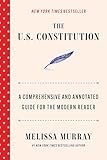
- 25 pocket sized copies of the United States Constitution
- Each book measures 3.25" X 6.5"
- Also includes the Bill of Rights, Amendments 11-27, The Declaration of Independence, and a complete index
- Proofed word-for-word against the original Constitution housed in the Archives in Washington, D.C. and identical in spelling, capitalization and punctuation.
That July proposal is separate from the December 11 CR that the September update says Congress approved. The earlier release is background on a proposed measure, not proof that those specific terms appear in the later CR.
What readers should watch next
- Check an official presidential or Congress.gov record for confirmation of signature and public-law status.
- Look for updated operating guidance from each federal agency if you need to know whether a particular service, benefit or application process is affected.
- Watch congressional appropriations activity before December 11, when lawmakers will need either full-year bills or another temporary measure.
Frequently Asked Questions
Is the federal government currently shut down?
The sources available for this report describe congressional action that reportedly averted the September 30 deadline. They do not establish current agency operations, so readers should check the relevant agency’s latest notice for service-specific information.
When does the reported continuing resolution expire?
The reported extension runs through December 11, 2026.
Did the Senate pass the funding bill?
Yes. The measure identified here passed the Senate 90–6 on August 8, 2026.
Do these 3 things before closing this tab:
1Repair Windows errors before they cause bigger problems2Scan for outdated or missing drivers - takes under a minute3Clear out junk files and repair common Windows errorsQuick Recap
Best Value
Product prices and availability are accurate as of the date/time indicated and are subject to change. Any price and availability information displayed on Amazon at the time of purchase will apply.




