Germany has identified space-based early warning against ballistic and hypersonic missiles as a future priority. But the public official material cited here does not establish that Berlin has approved, funded or begun deploying a dedicated missile-tracking satellite constellation. The evidence points to a broader push for national and European space-defense capability—not a confirmed break with U.S. systems.
What Germany has announced—and what it has not
In June 2025, the Bundeswehr described satellite-based early warning against ballistic and hypersonic missiles as an important future capability. That is evidence of a policy objective, not proof of an approved satellite procurement. The distinction matters: the cited official material does not identify a named German missile-warning satellite program, spacecraft design, budget, contractor, launch schedule or operational date. The Bundeswehr’s June 25, 2025 statement supports the ambition; it does not document a constellation order.
Several related missions are often blurred together:
- Space-based missile warning uses sensors, commonly infrared, to detect the heat and flash of a launch.
- Missile tracking follows the weapon after launch and refines its trajectory and likely impact area.
- Space surveillance monitors satellites, debris and activity in orbit.
- Satellite reconnaissance gathers intelligence about the Earth, for example through radar imaging.
- Missile defense uses systems such as Arrow 3 to attempt to intercept an incoming missile.
These functions can share data and support one another, but one does not establish the existence of the others. A reconnaissance satellite or a space-surveillance radar is not, by itself, a missile-warning satellite.
Free tools Windows power users keep installed
One-click scans. No signup required.
#1 Best Overall

- 【DF-41】This 1/144 military missile launcher model toy is based on the DF-41 missile launcher, a Chinese intercontinental ballistic missile (ICBM) known for its advanced capabilities. One of the most powerful missiles in China's arsenal, it is a road-mobile missile launcher model. The DF-41 missile launcher model made its debut during China's National Day military parade in 2019 and represents a major advancement in China's strategic nuclear deterrence. This is a great gift for military fans.
- 【Material】 The 1/144 scale missile launcher car has a carefully crafted alloy die-cast metal body, which fully demonstrates its sturdiness and texture. The missile part and tires are made of durable high-quality plastic, providing good flexibility and agility. The entire DF-41 missile launcher model takes into account both beauty and practicality in the selection of materials, and truly restores the appearance and structure of this classic 1/144 alloy die-cast metal DF-41 missile launcher model.
- 【Moveable highlights】 The missile part of this 1/144 DF-41 military die-cast missile vehicle model uses a telescopic structure to achieve a 90° rotation of the missile, simulating the state of preparation for launch and static display, making the model more flexible and changeable during display. The tires can rotate flexibly, increasing the playability of the model. All these movable highlights perfectly reproduce the functions and details of the 1/144 DF-41 military die-cast missile vehicle.
- 【Product Specifications】The 1/144 army missile launcher car model measures 6.69×1.26×1.42 inches and weighs 0.2227 lb. It is compact and lightweight, making it easy to carry and store. The exquisite craftsmanship of this model toy ensures visual impact, accurately capturing every complex feature from the flexible and stable front to the well-designed rear. This missile launcher model embodies a high level of restoration and appreciation, making it an excellent addition to any boy's collection.
- 【Worry free Purchase】We adhere to strict production requirements and control the product quality of 1/144 scale missile launcher car car models. This army vehicle metal model is equipped with a sturdy packaging box to protect your model from damage during transportation. We are proud to provide a one-year warranty for this diecast military car model kit. If you encounter any problems or have questions about your purchase, our dedicated customer support team will resolve any issues within 24 hours.
Why Berlin wants more control of warning data
Missile warning can give political and military leaders more time to assess an attack and respond. Ballistic and hypersonic threats can compress that decision window. A national sensor contribution could also give Germany greater control over some warning data and reduce the risk of relying on a single external source.
That is best understood as resilience within an alliance, not withdrawal from it. The Bundeswehr describes its Space Command as working with national, European and allied partners, including the United States. In military space, “sovereignty” generally means having control over selected sensors, data, decisions or industrial capabilities; it does not mean being technologically independent of every partner. The Bundeswehr’s Space Command overview describes both national responsibilities and international cooperation.
Germany’s existing space capabilities are not a warning constellation
Germany already has a growing military-space architecture. The Bundeswehr Space Command in Uedem coordinates military space activity. Germany’s SARah system provides radar-imaging reconnaissance of Earth; it is not described as a system for detecting missile launches. Germany also operates space-surveillance capabilities with the German Aerospace Center, including radar and optical work to monitor objects in orbit.
Rank #2
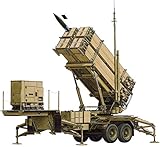
- This is a 1/35 scale unassembled model kit
- Engineered for modeling enjoyment
- Paint & glue required, not included
The Bundeswehr said in June 2026 that a first optical space telescope was expected from 2026 and a new space radar was planned for 2028. These are space-surveillance developments, not evidence of an operational orbital missile-warning network. The same official account describes cooperation through European arrangements. See the Bundeswehr’s June 10, 2026 account of five years of Space Command and its description of SARah radar reconnaissance.
Arrow 3 is a ground-based interceptor, not a satellite system
Germany’s most visible current ballistic-missile-defense effort is the Arrow Weapon System for Germany, which includes the Israeli-developed Arrow 3 interceptor. It is ground-based and intended to intercept long-range ballistic missiles at high altitude, outside the atmosphere. German official material says an initial capability was established in December 2025. In June 2026, Germany announced a southern sensor site in the Kaufbeuren area as part of a distributed Arrow architecture.
The roles fit together, but should not be conflated: satellites can detect a launch and provide warning; ground radars can track and characterize a threat; command networks fuse and distribute sensor data; and Arrow 3 attempts an interception. The Bundeswehr describes the system’s German status in its December 3, 2025 Arrow announcement and the June 30, 2026 announcement of the Bavarian sensor site.
Rank #3
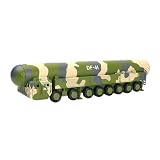
- 【Quick Assembly】 Compared with complex model kits, this missile vehicle model features quick and easy snap-fit assembly, allowing you to build a detailed replica in minutes.
- 【PP Construction】 Crafted from durable PP plastic, the model measures approximately 13.39 inches in length at 1/72 scale, replicating the unique structure of missile launchers.
- 【Decor Display】 Perfect for decorating your game room, home office, shelf, or bedroom, this realistic model adds a touch of military diorama to any setting.
- 【Fun for All Ages】 Ideal for children, friends, and men, this building toy develops patience, concentration, and imagination while serving as a unique birthday gift.
- 【Package Includes】 The set includes one scale 1/72 missile vehicle model. Please allow slight measurement errors and screen differences as noted.
How a space-based warning system would work—and its limits
- Detect: An infrared sensor looks for the intense heat plume associated with a missile launch.
- Estimate: Observations help determine where the launch occurred and the direction and early path of the object.
- Fuse: Command systems combine the space data with ground-radar and other sensor feeds.
- Distribute: Secure networks deliver alerts and tracking data to national and allied command centers and, where appropriate, missile-defense systems.
- Assess: Operators determine whether the event is a hostile missile, a space launch or another source, and how confidently its trajectory can be predicted.
Detection is not the same as a precise intercept solution. Infrared performance depends on sensor sensitivity, viewing geometry and atmospheric conditions. Hypersonic glide vehicles may maneuver after boost, making their paths harder to predict. Persistent coverage requires enough satellites, secure communications, resilient ground infrastructure and trained personnel; a small number of spacecraft may provide only intermittent coverage. Satellites and ground links also face risks including jamming, cyberattack, dazzling, debris and hostile activity in orbit.
What is known about the claimed France-Germany “JEWEL” project?
An article by Indian Defence Review claims France and Germany agreed in October 2025 to a missile-alert platform called “Joint Early Warning for a European Lookout,” or JEWEL. That claim is not independently corroborated in the German, French, EU, ESA, NATO or company documentation identified here. Treat the name and alleged agreement as unverified, not as an established program.
The Tool Desk
Outbyte PC Repair FREERepair Windows errors before they cause bigger problemsFix Now →Outbyte Driver Updater FREEFix the driver behind crashes, sound loss and screen glitchesFind Drivers →The same secondary article presents a German satellite plan as confirmed, but the official sources cited here do not supply a procurement record or comparable program details. A claim may be reported without yet being demonstrated by public primary documentation; the distinction should remain clear.
Rank #4

- Handcrafted, detailed, and painted for a lasting finish
- A true fusion of art and museum quality
- Sculpted from premium quality mahogany wood for exceptional durability using blueprints and drawings
- Ready to ship with protective foam layers to provide excellent cushioning
- The perfect gift for any aviation enthusiast, history buff or collector
What would confirm a German satellite procurement?
A policy objective becomes a verifiable acquisition program when public evidence identifies a path from requirement to funded, contracted capability. Readers can look for:
- Formal approval by the government or defense ministry and a named program or requirement.
- A parliamentary authorization or identifiable budget line, with a multi-year funding profile.
- A tender, contract or named industrial prime and subcontractors.
- Spacecraft payloads, orbit, planned number of satellites and ground-segment architecture.
- A launch provider, schedule, and milestones for testing, initial capability and full operations.
- Documented arrangements for data-sharing and interoperability with NATO, France and other partners.
Without those details, a statement of intent should not be described as an ordered constellation. Nor should broad defense-spending totals be presented as money allocated to this specific capability unless a source ties them to the program.
The trade-off: autonomy costs more than a sensor
Owning warning sensors could give Germany more direct access to data, strengthen European industry and add resilience to NATO’s integrated air and missile defense. But a useful capability takes more than satellites: it requires ground systems, communications, software, command arrangements, trained operators and ongoing replacement as spacecraft age. Development and sustainment take time and substantial resources.
Do these 3 things before closing this tab:
1Fix the driver behind crashes, sound loss and screen glitches2Repair Windows errors before they cause bigger problems3Scan for outdated or missing drivers - takes under a minuteBest Value

- This plastic model requires assembly and painting. Adhesives, tools, paints, etc., sold separately
- 1/40 scale unpainted plastic model assembly kit
- Re-release kit released from the level in 1957
- Mold Color: White, Olive Drab
- Atlantis Modelive (USA) Imported Plastic Model
There are also choices about duplication and interoperability. A national system could overlap with allied or European capabilities, while fragmented networks may make timely data-sharing harder. Classification rules can limit what partners share. Any credible European effort would need to decide which data Germany controls, what it contributes to allies and how it remains useful if a sensor, link or ground site is disrupted.
European countries already have relevant space-surveillance and reconnaissance assets, ground-based missile-defense sensors and access to allied warning information. That is different from demonstrating an operational, European-owned space-based infrared missile-warning constellation comparable to the U.S. architecture. Germany’s public record supports a move toward greater national capability and allied contribution; it does not show that Berlin has ordered the satellite constellation described in the headline.
Quick Recap
Product prices and availability are accurate as of the date/time indicated and are subject to change. Any price and availability information displayed on Amazon at the time of purchase will apply.




