Quick wins for a faster PC:
Scan for outdated or missing drivers - takes under a minuteDriver Scan →Clear out junk files and repair common Windows errorsFree Scan →Fix the driver behind crashes, sound loss and screen glitchesFind Drivers →IoT in retail connects physical products, shelves, equipment, vehicles, and store environments to digital systems so retailers can monitor conditions and act on them. For example, a temperature sensor can flag a refrigerator problem, while a connected inventory system alerts staff to a shelf gap. The value comes not from connecting devices for its own sake, but from using reliable data to improve a measurable process such as availability, fulfillment, spoilage, energy use, or customer service.
What is IoT in retail?
The Internet of Things (IoT) in retail is a system of network-connected sensors, tags, devices, machines, and software that observes physical retail activity, transmits data, and supports useful actions. The physical activity might involve a product moving through a store, a shipment changing temperature, or refrigeration equipment showing signs of failure.
A complete IoT business system links a physical object or environment to a sensor or identification method, a network, processing software, the retailer’s operating systems, and a decision or task. A sensor that records information but never sends it to a system or person who can act on it may have little commercial value.
“Real time” does not always mean instantaneous. Some devices send continuous updates; battery-powered sensors may transmit on a schedule, and inventory records may update after events are reconciled.
What’s actually slowing this PC down?
Pick the symptom - the matching free tool is one click away.
#1 Best Overall

- Build a 37-Module Sensor Lab: Add motion, distance, light, sound, temperature, touch, display and control functions to compatible UNO, MEGA, Nano, ESP-32 or STM32 projects for prototyping, classroom experiments and maker builds
- Explore Input Sensors and Motion: Experiment with GY-521 motion sensing, PIR detection, ultrasonic ranging, temperature and humidity, DS18B20, flame, Hall, touch, light, sound, tilt, tracking and obstacle-avoidance modules
- Add Displays, Timing and Control: Use the LCD1602, DS1307 real-time clock, joystick, rotary encoder, relay, buzzers, RGB LEDs and infrared modules to build clocks, alarms, counters, status displays and automated projects
- Follow Guided Projects Materials: Use digital tutorial materials, datasheets, wiring diagrams and example code for compatible UNO R3, MEGA 2560 and Nano boards, then adjust thresholds, timing and logic to create custom experiments
- Module-Only Expansion Kit: Controller board, USB cable, breadboard and jumper wires are not included; use 6.5–9 V DC only with the included power module, verify pin requirements before wiring and keep the laser emitter away from eyes
IoT and related retail technologies
| Technology | What it does | Relationship to IoT |
|---|---|---|
| IoT | Connects physical objects and environments for monitoring or control | The broader architecture |
| RFID | Identifies tagged items wirelessly | A common sensing and identification method in retail IoT |
| Computer vision | Extracts information from images or video | Can act as a connected sensor in retail workflows |
| AI and machine learning | Finds patterns, predicts outcomes, or supports automated decisions | Can interpret IoT data; it is not inherently IoT |
| POS | Records sales and payment transactions | Can exchange data with IoT systems |
| Analytics | Reports on or models data | Turns IoT data into insights |
| Smart store | Uses connected and data-driven operations | Usually combines IoT with other technologies such as AI, mobile systems, and automation |
How does retail IoT work?
A typical system follows a chain from the physical world to a business action:
- Observe: A tag, camera, scale, temperature probe, location tracker, or equipment sensor detects an item or condition.
- Connect: The device transmits data over a technology such as RFID radio, Wi-Fi, Bluetooth Low Energy, cellular, Ethernet, or LoRaWAN.
- Process: A gateway or edge device can filter or analyze data in the store; cloud services can aggregate information across locations and run reporting or machine-learning workloads.
- Integrate: The resulting events or records connect to systems such as POS, inventory management, warehouse management, order management, customer relationship management, workforce software, or building management.
- Act: A system or employee receives a replenishment task, maintenance ticket, temperature escalation, fulfillment update, or other actionable instruction.
Architectures vary: devices may connect directly to the cloud, communicate through a local gateway, process data primarily at the edge, or combine local operation with cloud synchronization. AWS’s RFID store-inventory reference architecture is one example of RFID events flowing through readers, data services, storage, analytics, and inventory workflows. It is an implementation pattern, not a requirement for every retailer.
What are the main IoT applications in retail?
Inventory visibility and stock accuracy
RFID can identify tagged items during receiving, cycle counts, movement between the stockroom and sales floor, and fulfillment. Retailers may use those reads to find misplaced merchandise, improve store inventory records, support buy-online-pick-up-in-store (BOPIS), and help associates locate products. RFID is among the more established retail IoT applications, but it does not guarantee perfect accuracy: tag placement, reader setup, materials, scanning processes, product data, and reconciliation all matter. McKinsey describes RFID benefits across inventory visibility, store operations, and customer experience in its retail RFID analysis.
Smart shelves and replenishment
Shelves can use weight sensors, RFID, cameras, proximity sensors, or combinations of these technologies to detect gaps, low quantities, misplaced products, or departures from a planogram. A connected system may create a replenishment task, update online availability, or flag a product nearing its expiration date. The sensor detects a condition; automated ordering still depends on business rules, accurate product data, and integration with replenishment systems. AWS describes smart-store applications that combine IoT, computer vision, analytics, and edge computing for inventory and store operations at its smart-store overview.
Supply-chain and cold-chain monitoring
Connected trackers and sensors can report shipment location, temperature, humidity, shock, door openings, vehicle condition, or refrigeration performance. Microsoft identifies shipment and condition monitoring, including cold-chain tracking, among its retail IoT use cases.
Rank #2

- 37 Sensors kit
- 37 Sensors Assortment Kit for Arduino MCU Education
- Touch sensor moduleHeartbeat detection module
- Infrared sensor receiver module
A temperature alert only helps if staff can respond before goods become unsellable. A retailer needs appropriate sensor placement, calibration, battery monitoring, coverage, escalation rules, and a process for isolating and inspecting affected products. Measuring air temperature is not always the same as measuring the temperature of the product itself.
Checkout and connected shopping
Checkout-related systems may combine RFID, computer vision, shelf or cart weight sensors, mobile scan-and-go, connected payments, or exit gates. The mix differs by deployment: not every checkout-free store uses the same architecture. Amazon describes Just Walk Out as using cameras, shelf sensors, sensor fusion, and AI, with RFID in some deployments in its technology overview.
Amazon’s update dated January 27, 2026, said it was closing Amazon Go and Amazon Fresh physical stores and converting various locations to Whole Foods Market stores. That business decision is a reminder that a technology’s capabilities and a retailer’s choice of store format are separate questions; it does not by itself establish whether checkout-free systems will succeed across retail. See Amazon’s store-format update.
Loss prevention and shrink
RFID exit readers, cameras, access sensors, smart cabinets, asset trackers, and inventory reconciliation can help identify exceptions or locate high-value goods. These systems can support investigations and loss-prevention workflows, but surveillance alone does not ensure theft declines. False positives, blind spots, privacy concerns, employee relations, and inaccurate inventory can all weaken results.
Electronic shelf labels and pricing
Electronic shelf labels let retailers update displayed information centrally and can help synchronize shelf prices with POS systems, coordinate promotions, and reduce manual label changes. The labels are a display and update mechanism; dynamic pricing is a separate pricing strategy that can use them. Frequent price changes may undermine customer trust, and retailers must account for price-display rules, accessibility, network availability, synchronization errors, and approval controls.
Rank #3

- Ultimate Sensor Kit for Arduino Beginners: The kit features the original Arduino Uno R4 Minima board, 30+ high-quality sensors and modules, and free video lessons co-created with educator Professor Joselito. With over 50 engaging projects (30 basic, 17 IoT, and 10 advanced fun projects), beginners aged 8+ can dive into the world of electronics and programming with ease. Certified RoHS compliant, it guarantees safety and quality for all learners, making it the perfect choice for both education and innovation
- Powered by the Arduino Uno R4 Minima: R4 Minima is a major upgrade from the Uno R3. With a 32-bit ARM Cortex-M4 processor, 256 KB Flash memory, and 48 MHz clock speed, it offers faster performance and greater memory. It also features higher-precision ADC (14-bit), a built-in DAC, CAN bus support, and a wider power input range (6-24V), making it more powerful and versatile for all users
- 30+ Sensors for Infinite Creativity: With 30+ high-quality sensors and modules, plus a battery for portable applications, this kit is ideal for IoT, environmental monitoring, and smart automation projects. It includes step-by-step tutorials, sample codes, and progressive online lessons, making learning seamless for beginners and advanced users alike. Fully compatible with other Arduino boards like Uno R3 and Nano, it offers endless customization and innovation opportunities
- Engaging Projects for Every Skill Level: Featuring 50+ projects (30 basic, 17 IoT, 10 advanced fun), this kit supports IoT platforms like Blynk and IFTTT, enabling smart automation and real-world applications. With Arduino C++ programming, step-by-step guidance, and hands-on coding exercises, it’s perfect for students, teachers, and engineers to learn, build, and innovate at any level
- Dedicated Support for Beginners: Alongside online resources and video tutorials, SunFounder provides technical support and troubleshooting forums to help beginners solve programming challenges with ease
Store facilities and energy
Connected systems can monitor HVAC, refrigeration, lighting, electricity, water, occupancy, indoor air quality, doors, or equipment vibration. Data can inform maintenance, comfort, and energy decisions. Savings depend on the store’s baseline use, equipment, climate, utility rates, controls, and whether staff act on alerts.
Customer experience and workforce operations
IoT can support indoor navigation, product finders, queue monitoring, interactive displays, connected fitting rooms, associate notifications, and location-aware services. Personalization typically requires more than IoT: it may combine app, loyalty, POS, location, consent, AI, and customer-management data. Individual identification or behavioral inference carries a greater privacy burden than monitoring anonymous inventory or equipment.
Free tools Windows power users keep installed
One-click scans. No signup required.
For store teams, connected devices can route shelf or equipment alerts, provide work instructions, monitor queues, or support robotic inventory scanning. Retailers need to consider staff training, alert overload, worker acceptance, and whether automation removes work or shifts it toward exception handling.
Returns, authentication, and circular retail
Product identities can potentially support authentication, return verification, warranty and service records, recalls, provenance, resale, refurbishment, and recycling. These capabilities are developing opportunities; their usefulness depends on tagging economics, shared standards, supplier participation, and reliable data exchange beyond one retailer.
Which retail problem should IoT address?
| Business problem | Possible IoT approach | Useful measure |
|---|---|---|
| Stockouts | RFID, shelf sensors, or computer vision | On-shelf availability |
| Excess inventory | Item tracking connected to inventory and demand systems | Inventory turns |
| Spoilage | Temperature and humidity sensors | Waste rate |
| Long queues | Queue monitoring and connected checkout | Wait time |
| High energy use | Connected HVAC, lighting, and refrigeration controls | Energy use per store |
| Shrink | RFID exits, cameras, and exception analytics | Shrink rate |
| Slow fulfillment | Item-location tracking and task integration | Pick time and order accuracy |
| Equipment downtime | Temperature, vibration, power, or equipment telemetry | Downtime and repair cost |
What benefits can IoT bring to retailers?
Operational and customer benefits
- More accurate inventory and faster cycle counts.
- Fewer stockouts and overstocks when sensing is connected to effective replenishment.
- Faster receiving, picking, and store-to-warehouse visibility.
- More accurate product availability for store shoppers and online orders.
- Potentially less spoilage, equipment downtime, manual data collection, and avoidable energy use.
- More consistent pickup, product information, and customer assistance.
Financial outcomes and how to estimate them
Potential financial effects include recovered sales, higher full-price sell-through, lower markdowns, reduced labor spent counting or searching, less waste, lower energy use, and reduced inventory carrying costs. McKinsey reports that particular RFID deployments have demonstrated benefits including more than 25% improvement in inventory accuracy, 1–3.5% higher full-price sell-through, 10–15% fewer inventory-related labor hours, and shrinkage reductions that can increase revenue by up to 1.5%. These are reported results or estimates from specific deployments, not guaranteed outcomes for another retailer; see McKinsey’s analysis.
Rank #4

- Complete Project-Based Learning Path – Build 13 progressive projects (LED blink → button control → PIR motion sensor → music playback → motorized doors/windows → SK6812 RGB lighting → fan control → LCD display → gas alarm → temperature/humidity monitor → RFID door unlock → Morse code access → WiFi control → mobile APP remote control). Each project builds on the previous one, ensuring you understand both the electronics and the programming logic behind every smart home feature.
- Master Two Industry-Standard Languages – Learn to code in both Arduino C++ and MicroPython with 13 detailed tutorials for each language. Compare how the same hardware behaves under different programming approaches – a valuable skill for any aspiring engineer. Perfect for classrooms teaching multiple coding languages or self-learners who want flexibility.
- Build a Real WiFi-Controlled Smart Home – Assemble the wooden house structure and integrate sensors to create a functioning smart home system. Control lights, fans, door servos, and RGB lighting directly from your mobile APP (iOS/Android) . Experience how IoT works in real life – from manual control to automated responses based on temperature, humidity, motion, and gas detection.
- Comprehensive Online Wiki with No Guesswork – Our detailed online tutorials (also accessible via the packaging) include wiring diagrams, full code explanations, and step-by-step assembly guides for every project. Whether you're a complete beginner or a teacher preparing lessons, the structured content eliminates confusion and helps you succeed from project 1.
- Everything You Need to Get Started – (TIPS: Batteries are NOT Included)This kit includes the ESP32 development board, expansion board, wooden house parts, all sensors and modules (DHT11, PIR motion, gas sensor, RFID, SK6812 RGB, servo motors, fan, LCD1602, etc.), and connection cables. NOTE: 6x AA batteries are required (NOT Included). The kit is unassembled – you'll build it yourself following our online tutorials, making the learning experience truly hands-on.
Build a business case from the retailer’s own baseline rather than applying an industry result as an expected return:
Annual net benefit = recovered sales + avoided waste + labor savings + energy savings + loss reduction − recurring operating costs.
Account separately for hardware, installation, tags and other consumables, connectivity, cloud or software fees, integration, maintenance, cybersecurity, training, and change-management costs. A benefit and its costs may also land in different departments, so assign ownership and budgets before a pilot.
Independent reader supportYour contribution helps us test, update, and keep practical guides available for everyone.How do retailers choose between technologies?
RFID or computer vision?
| Option | Strengths | Trade-offs |
|---|---|---|
| RFID | Item-level identity and fast bulk reads; useful for inventory, movement, authentication, and some exit detection | Requires tagging; performance depends on materials, item placement, reader and antenna design, and operating processes |
| Computer vision | Can inspect shelf appearance, gaps, planogram compliance, queues, and selected visual exceptions | Lighting, occlusion, camera angle, privacy, model maintenance, and item identification can be constraints |
One may show that an item was read without proving how it is presented on a shelf; the other may identify a visual condition without knowing an exact product identity. Retailers can combine technologies when the workflow needs both forms of evidence. AWS’s smart-store materials describe systems that bring together RFID, computer vision, shelf sensors, edge computing, and analytics.
Cloud or edge?
Cloud services suit cross-store analysis, centralized reporting, long-term data storage, and connections among enterprise systems. Edge processing suits low-latency decisions, local operation during intermittent connectivity, and reducing the transmission of high-volume video. Many multi-site systems use a hybrid approach.
The Tool Desk
Outbyte PC Repair FREEClear out junk files and repair common Windows errorsFree Scan →Outbyte Driver Updater FREEFix the driver behind crashes, sound loss and screen glitchesFind Drivers →Best Value
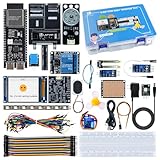
- 【High-Performance ESP32-S3 Microcontroller】 Equipped with revolutionary MCP protocol technology, the kit delivers a native AI voice control experience, perfectly adapting to various AIoT application scenarios, suitable for beginners, educators and makers.
- 【8 Versatile Hardware Modules Included】Comes with RGB LED module (full-color dimming, breathing light effect), WS2812 smart light strip (8 programmable LEDs), DHT11 sensor (real-time temperature and humidity monitoring), SG90 servo, DC fan, dual relay, raindrop and soil sensor, meeting diverse project needs.
- 【Zero-Threshold AIoT Control】Adopts innovative MCP protocol, allowing AI models to directly recognize hardware functions without complex programming. Pre-compiled firmware supports plug-and-play after burning, with an extensible architecture for secondary development.
- 【Multi-Scenario Application Coverage】Widely applicable to STEM education (learning IoT, AI interaction, embedded programming), smart home prototype verification, maker project development, and smart agriculture (soil monitoring, automatic irrigation systems).
- 【Comprehensive Learning & Technical Support】Provides an online document center with detailed quick-start guides and free professional technical support to answer questions and assist in problem-solving, helping users get started quickly.
Managed product or custom build?
A managed solution can suit a standardized use case, a short deployment timeline, or a team with limited IoT engineering capacity, provided its integrations and operating model fit. Custom development may make sense when a workflow is strategically distinctive, systems are unusual, or the retailer has the engineering capacity to manage it. In either case, assess data portability, API access, replacement options, contract terms, support, device-management compatibility, and migration costs.
Large or small retailer?
Large chains can spread complex programs across more sites, but scale also adds deployment and integration complexity. Smaller retailers may be better served by a narrow packaged application—such as temperature monitoring, connected energy controls, digital shelf labels, security, or inventory scanning—than by a full smart-store architecture. McKinsey discusses this scale gap and the role of off-the-shelf tools in its retail connectivity analysis.
What risks and failure modes should retailers plan for?
- Data quality: Missed reads, damaged tags, unrecorded movements, poor product records, duplicate events, returns, and timing differences can leave the overall inventory record wrong even when a sensor works correctly.
- Integration gaps: A technically functioning platform can fail commercially if it does not update the systems employees use or trigger a practical workflow.
- Alert fatigue: Excessive or low-value notifications lead staff to ignore important ones. Use severity levels, suppression rules, escalation paths, and named owners.
- Security exposure: Devices, gateways, wireless networks, cloud APIs, vendor access, apps, firmware, and physical equipment all require protection. Plan device inventories, authentication, encryption, least privilege, network segmentation, patching, certificate management, logging, and incident response.
- Privacy and surveillance: Cameras and connected systems may process images, movement patterns, device identifiers, loyalty identities, payment-related information, or employee activity. Use data minimization, clear notices, appropriate consent, retention limits, access controls, and privacy-impact assessments; do not assume footage is anonymous by default.
- Unclear return: Benefits may accrue to store operations while technology and integration costs sit elsewhere. Allocate both costs and outcomes, and include ongoing operations rather than hardware alone.
- Physical variation: Layouts, materials, connectivity, lighting, refrigeration, packaging, traffic, and staff procedures differ between sites. A pilot may not scale linearly.
- Checkout exceptions: Autonomous or frictionless systems still need plans for misidentification, concealed items, returns, age-restricted sales, accessibility, payment failures, disputed charges, and customer support.
- Process unchanged: Sensors do not fix weak replenishment, poor records, or unclear accountability. Redesign the workflow around who handles each exception and what decision follows.
How should a retailer implement an IoT pilot?
- Choose a costly, measurable problem. Examples include inaccurate inventory, frequent shorted pickup orders, spoilage, refrigeration failures, excessive count labor, or recurring equipment downtime. “Build an AI-powered smart store” is not a specific pilot objective.
- Record the baseline. Depending on the problem, measure inventory accuracy, stockout rate, on-shelf availability, cycle-count labor, picking time, shrink, spoilage, energy use, wait time, equipment downtime, complaints, or order cancellations and substitutions.
- Match the sensor to the problem. Item visibility may call for RFID; shelf quantity or gaps may call for weights, RFID, or vision; cold-chain monitoring calls for temperature sensing; equipment health may call for power, vibration, or temperature telemetry.
- Specify system connections and action. Decide how data will reach relevant POS, product, inventory, warehouse, order, workforce, customer, payment, or facilities systems. Define the task, record update, or decision that should result.
- Design for outages and imperfect data. Document what happens without network access, how the store continues operating, how missing or duplicate events are reconciled, how alerts are validated, how batteries and firmware are managed, and how service recovers after an outage.
- Run a controlled pilot. Use a representative location, a comparison site if practical, a defined duration, pre-agreed success thresholds, staff training, a data-quality review, a named process owner, and a rollback plan.
- Scale only when the workflow works. Check net benefit, data quality, staff adoption, maintenance effort, security, integration stability, vendor support, total cost of ownership, and the ability to reuse the platform.
For a cost estimate, request a quote based on the number of locations and items, sensor density, connectivity, data retention, integrations, and service levels. Enterprise offerings such as AWS smart-store solutions and Microsoft Azure retail IoT present platforms and solution pathways rather than a single standard retail-IoT price. Total cost varies with hardware, installation, tags, cloud usage, software, support, replacement devices, integration, security, and training.
What is the future of IoT in retail?
The near-term direction is convergence: IoT provides physical-world data; edge computing handles some local or time-sensitive work; cloud platforms aggregate information; and AI or analytics help interpret it. Retail applications then turn insights into maintenance, replenishment, fulfillment, pricing, or service decisions. AWS identifies areas including digital twins, edge computing, computer vision, RFID, energy, and workforce management in its smart-store overview.
PC Slower Than It Used to Be?
A free scan shows the junk files, broken settings and background clutter dragging Windows down - then fixes them in one click.Free scan · Windows 10 & 11Crashes, No Sound, or Screen Glitches?
Random freezes, missing sound and display glitches usually trace back to one bad driver. Find and replace yours safely.Free scan · under a minuteStores are likely to become more automated in inventory counting, shelf inspection, task prioritization, price updates, checkout, picking, and equipment maintenance. A practical direction is partially autonomous, exception-driven operations rather than employee-free stores: people remain important for judgment, service, handling, safety, compliance, and unusual cases.
Digital twins may combine sensor, spatial, video, and business data to model a store and evaluate operational changes. Product-level identity may also help with recalls, repair, resale, and recycling, where tagging economics and cross-company standards permit. Privacy-focused designs may process more data at the edge, retain less video, and separate operational sensing from personal identification.
Forecasts should be read according to what they measure. For example, McKinsey’s older estimate of $420–700 billion in potential GDP value by 2030 was a projection of potential economic value, not realized retail revenue or a current IoT market-size figure; see its connectivity analysis.
Quick Recap
Product prices and availability are accurate as of the date/time indicated and are subject to change. Any price and availability information displayed on Amazon at the time of purchase will apply.




