Do these 3 things before closing this tab:
1Clear out junk files and repair common Windows errors2Fix the driver behind crashes, sound loss and screen glitches3Repair Windows errors before they cause bigger problemsOn May 29, 2014, Verizon Ventures invested an additional $5 million in Newlans, completing the Acton, Massachusetts, semiconductor company’s $20 million Series B financing. Newlans was developing a programmable duplexer for the radio-frequency (RF) front ends of 4G LTE phones and small cells—hardware intended to make increasingly complex multiband devices smaller, less costly and faster to develop.
This was a strategic venture investment, not an announced Verizon acquisition, handset launch or network deployment. The financing announcement described a technology under development and commercialization, without naming a shipping phone or production customer.
What the $5 million financing actually was
Verizon’s money was the final portion of a two-stage Series B round. Newlans had announced an initial $15 million closing in February 2014, led by Intel Capital with participation from Paladin Capital Group and Lockheed Martin. Verizon Ventures’ later investment brought the total to $20 million.
| Financing detail | What was announced |
|---|---|
| Verizon Ventures investment | $5 million, announced May 29, 2014 |
| Total Series B | $20 million |
| Earlier closing | $15 million, announced in February 2014 |
| Lead investor in the earlier closing | Intel Capital |
| Other named participants | Paladin Capital Group and Lockheed Martin |
The primary announcement is Newlans’ May 2014 financing release. The earlier closing is detailed in the February Series B announcement.
#1 Best Overall
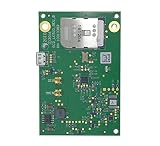
- Works with Verizon Network
- GC2 Requires FW v1.19.1 or newer
- GC2E Requires FW v1.21 or newer
- Includes 2 (two) LTE Antennas in the box with the radio
What Newlans was building
An RF front-end component
Newlans was a privately held, fabless semiconductor company working on programmable broadband analog signal processing. Its target was the RF front end—the part of a mobile device between the antenna and the transceiver that filters, routes and amplifies radio signals.
A duplexer is an RF component that helps a device transmit and receive while isolating the relevant signal paths. In a conventional handset, supporting more frequency bands generally requires more fixed-frequency filters, switches and related components. Those parts consume board space and make each regional or carrier-specific design harder to engineer.
Why “programmable” mattered
Newlans promoted a programmable duplexer rather than an architecture built entirely from inflexible, band-specific parts. The company said this approach could support multiple LTE bands, simplify future band additions and reduce the size, cost and design time of RF modules.
Rank #2

- LTE Connectivity: Seamless communication with AT&T's fast and reliable LTE network for your Honeywell LYNX Touch Systems
- Compatibility: Designed exclusively for Honeywell L5210 and L7000 panels running firmware version 9 or higher
- Future-Proof: Ensures long-term functionality of your security system by leveraging the latest LTE technology
- Easy Integration: Simply replace your existing communicator with the LTE-L57A for a quick upgrade
- Durable Design: Built to last with a robust, black casing that blends seamlessly with your system
Those were stated objectives, not disclosed commercial results. The announcement did not claim that one Newlans device would replace every filter or duplexer in a phone.
Why LTE made the problem urgent in 2014
LTE was expanding across countries and operators, but there was no single global band plan. A handset intended for several markets might need 2G, 3G and 4G support, plus numerous regional LTE bands. Each added combination increased the demands on the RF front end.
Carrier aggregation added another layer
Carrier aggregation combines separate spectrum carriers to increase data capacity. It can require a handset to operate across multiple bands or band combinations, making flexible filtering and signal routing more valuable. Newlans positioned its programmable architecture as a way to address that growing complexity, not as proof that it had solved every carrier-aggregation engineering problem.
Rank #3
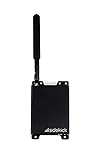
- COMPLETE DUAL PATH SOLUTION: If the Internet is out alarm signals are transmitted over LTE cellular.
- NO PROGRAMMING REQUIRED
- EASY INSTALLATION: Just plug it into the EnvisaLink 4 module (not included), mount it and walk away.
- SIM INCLUDED (North America Only – Contract Required)
Why Verizon Ventures might have invested
Verizon’s public rationale was strategic. In the financing announcement, a Verizon corporate-development executive said the company was interested in “the next generation RF technologies for mobile devices.” That interest is understandable for a carrier whose LTE service depended on capable, compatible phones.
- Device evolution: More adaptable RF hardware could help future LTE phones support additional bands.
- Common platforms: A flexible front end might make it easier for manufacturers to reuse a design across operators and regions.
- Size and cost: Fewer or more integrated fixed components could potentially reduce module footprint and manufacturing complexity.
- Technology visibility: A venture investment gave Verizon exposure to an emerging component architecture while Newlans developed it.
The release also described Verizon Ventures as offering portfolio companies access to product-development, market-planning and sales expertise, as well as Verizon networks and platforms. Nothing in the public announcement establishes that Verizon sought exclusivity, lower handset subsidies, or guaranteed access to Newlans parts.
What the investment did—and did not—establish
Use of the proceeds
Newlans said the financing would support product development and commercialization, expansion of its engineering and manufacturing teams, and work with early-adoption partners and customers.
Rank #4

- Honeywell Home LTE-21V Optional Snap-in Radio Module for VISTA21IPLTE, Verizon
What was not disclosed
- No named handset manufacturer or confirmed Verizon phone design win.
- No production contract, shipping date, production volume or revenue forecast.
- No evidence of nationwide Verizon deployment.
- No acquisition of Newlans by Verizon.
Accordingly, the May announcement should be read as a financing milestone for a promising hardware platform, not as a product launch.
Independent reader supportYour contribution helps us test, update, and keep practical guides available for everyone.Why the round was strategically notable
Operators did not have to wait for a finished consumer product to invest in enabling technology. For Verizon, a programmable RF front end addressed a bottleneck in the device ecosystem: supporting more LTE bands and combinations without allowing phones to become unmanageably large or expensive. Intel Capital’s participation also fit the period’s broader interest in semiconductor platforms that could influence future mobile architectures.
The potential benefits—component consolidation, faster designs and broader handset reuse—remained conditional on difficult semiconductor milestones. Programmability can involve trade-offs in insertion loss, linearity, noise, power consumption and reliability. Even a technically sound component must pass qualification, achieve high-volume manufacturing and win integration slots in complete module designs. The financing release supplied no performance benchmarks or customer commitments to resolve those questions.
Best Value

- 8 zones and zone doubling!
- Can add up to five 4219 - 8 zone expansion modules!
What happened to Newlans afterward?
In August 2014, In-Q-Tel announced a strategic investment and technology-development agreement with Newlans, describing applications for the company’s programmable RF technology. The announcement is available at In-Q-Tel’s library.
A later company-history profile reports that Newlans was acquired by Dutch firm Newtel Essence B.V. in 2015. That later status comes from InKnowvation’s company profile, not from Verizon’s 2014 financing release. It does not, by itself, demonstrate that Newlans’ technology reached mass-market handsets or Verizon’s network.
Bottom line for the 2014 deal
Verizon put $5 million into Newlans because the carrier saw strategic value in a programmable RF front end at a time when LTE phones had to support more bands and carrier-aggregation combinations. The investment completed a $20 million Series B and helped fund commercialization efforts. The public record confirms interest in an important hardware problem, but not a Verizon product deployment or eventual commercial success.
Quick Recap
Product prices and availability are accurate as of the date/time indicated and are subject to change. Any price and availability information displayed on Amazon at the time of purchase will apply.
Free tools Windows power users keep installed
One-click scans. No signup required.




