Free tools Windows power users keep installed
One-click scans. No signup required.
Epic Games prevailed against Google because the case showed more than a powerful app store charging a disputed commission. The jury accepted evidence that Google used contracts, payments and platform rules to protect the Play Store and Google Play Billing from rivals—and the Ninth Circuit affirmed the verdict and injunction in 2025. Android’s ability to install apps outside Play did not, by itself, establish that rival stores could compete effectively.
What Epic actually won
On December 11, 2023, a unanimous jury found that Google had monopoly power in two markets—Android app distribution and Android in-app billing—in a geographic market defined as worldwide excluding China. It found that Google willfully maintained that power, unreasonably restrained trade and unlawfully tied Play Store distribution to Google Play Billing. The Ninth Circuit affirmed the verdict on July 31, 2025. The court’s opinion describes the findings and the appeal.
That is not a ruling that every Play Store commission is illegal, nor does it mean Google must provide every service for free. Liability asks whether conduct violated antitrust law; the remedy specifies what the company must change. The commercial result—whether developers adopt other billing systems or users install rival stores—is a separate question.
Fortnite started the dispute; platform competition became the case
- Epic secretly added code to Fortnite that bypassed Google’s required payment processing.
- Google removed Fortnite from Play.
- Epic sued, arguing that Google’s distribution and billing rules were anticompetitive.
- The case widened from a dispute over one game to whether Google’s arrangements made it difficult for rival app stores and billing services to compete across Android.
At the time of the dispute, Google charged a 30% commission in relevant cases; it later introduced 15% programs in limited circumstances. The percentage mattered economically, but the verdict was about monopoly power, restraints on competition and tying—not simply whether a particular commission was too high. The Ninth Circuit’s account covers the Fortnite events and the litigation.
#1 Best Overall

- 5 GAMES INCLUDED. UNLOCK MORE WITH PLAY PASS. Playground comes with Fruit Ninja, Starri, Whac-a-Mole, Go Keeper, and Party Fowl. A separate purchase of a 3-Month ($49) or 12-Month Play Pass ($89) is required to access the full catalog of games and get new games each month, including Barbie, Teenage Mutant Ninja Turtles, How to Train Your Dragon, Peppa Pig, Care Bears, Elmo, Miraculous Ladybug, Gabby's Dollhouse, Kung Fu Panda and more.
- GET MOVING WITH ACTIVE FAMILY FUN. Nex Playground is a new kind of video game console that gets your family moving. It easily connects to your TV, transforming your living room into an active play space. Within minutes, your family will be playing Fruit Ninja, Whac-a-Mole and more. Using a built-in camera to track motion and natural body movements, anyone in the family can jump right in.
- JUST USE YOUR BODY TO PLAY. Play naturally just by moving your body. Playground uses the magic of AI to follow your movements using the built-in wide-angle camera. No controllers or clunky trackers! Up to 4 players can play at the same time, so everyone can get moving together.
- GAMES YOU'LL LOVE MOVING TO. Playground is packed with interactive motion games, turning your living room into an arcade, theme park, gym, and more. There is something for everyone. It is perfect for indoor family game night, after school activities, or a playdate with friends.
- EASY SET UP. Playground connects to your TV or projector with a simple HDMI connection and gets everyone in on the fun. It's small and sits elegantly on any console or mantle, and can easily fit in a backpack for playdates and more. From ages 5 and up—Playground is the life of every party.
Why Android’s openness did not end the antitrust question
Android permits sideloading and distribution outside Play, unlike the iPhone model described in Epic’s Apple litigation. But the ability to install an app from somewhere else is not the same as having an effective competing store. A rival may be technically available yet struggle to reach users, offer a useful catalog, secure device-maker or carrier placement, compete on billing, or attract developers and users at the same time.
Those last two groups reinforce each other: users value a store with many apps, while developers value a store with many users. This network effect can make an incumbent difficult to dislodge even if alternatives exist. The Ninth Circuit upheld the theory that Google’s conduct entrenched Play’s position through network effects. Its opinion discusses that evidence and the remedy.
Google’s defense could point to Android’s technical openness. Epic’s response, which the jury accepted, was that formal permission to distribute elsewhere did not answer whether rivals could compete at meaningful scale under the rules and commercial arrangements in place.
Rank #2

- 6.2” LCD screen
- Three play modes: TV, tabletop, and handheld
- Local co-op, online, and local wireless multiplayer
- Detachable Joy-Con controllers
- Nintendo Switch is the home of Mario & friends
The record made the difference
The case was not based on one revealing email or a single contract. The record combined direct evidence of Google’s conduct with economic evidence about how the app-store market worked. The Ninth Circuit described arrangements involving device makers and others, including Project Hug, as part of efforts to insulate Play from rivals. The opinion discusses the arrangements and network-effects evidence.
The Tool Desk
Outbyte PC Repair FREEClear out junk files and repair common Windows errorsFree Scan →Outbyte Driver Updater FREEScan for outdated or missing drivers - takes under a minuteDriver Scan →- Direct evidence: Agreements, incentive programs and internal communications concerning developers, device makers, carriers, rival stores and billing.
- Economic evidence: The role of app catalogs, user reach, switching costs and network effects in making a store a viable competitor.
- The jury’s inference: Taken together, the evidence supported Epic’s claim that the arrangements did not merely compete for business; they helped preserve Play’s position by limiting rivals’ ability to reach users and developers.
The commission was part of the business context, not a complete explanation of liability. Nor does a lower commission by itself answer whether developers can use other billing systems or whether alternative stores can obtain the reach needed to compete.
Why the Apple case did not dictate the Google result
Epic lost most of its claims in its separate case against Apple, which was decided primarily by a judge. The Google case went to a jury, which accepted separate Android app-distribution and Android in-app-billing markets. The two cases involved different records and market analyses; the Apple judgment did not mechanically decide how the Google markets should be defined.
Rank #3
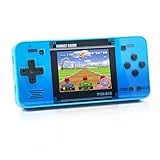
- Kids Friendly Design: This P30S handheld game console is specially designed for kids. It has a stylish arcade - like appearance. The body fits a child's hand, and the game settings also cater to kids psychology, thus being very attractive.
- Excellent Gaming Experience: Equipped with a 3.0 - inch high - definition screen and excellent speaker sound, it provides an excellent visual and auditory experience for video games. This handheld game console is small and lightweight, convenient for kids to use and carry. Its ergonomic design ensures a comfortable grip, allowing children to fully enjoy the games.
- Rich Collection of Classic Games: This retro handheld game console contains 220 interesting kids video games, including various types such as entertainment, sports, and adventure games, just like those found in many retro game consoles. While playing these games, kids can cultivate skills such as hand - eye coordination, thinking, and problem - solving.
- Convenient Rechargeable and Long - lasting Battery: The video game console is equipped with an 860mAh lithium - ion battery. It ensures that kids can play games without interruption, because there is no need for frequent battery replacement, which is very suitable for playing portable games outdoors. It is a great addition to the world of handheld games for children and can bring more fun to them.
- Absolutely Surprising Gift: Our handheld game toy is a surprising gift for kids, teenagers, and even adults. It is the best gift for birthdays, Christmas, Halloween, and Thanksgiving. Customer satisfaction is our top priority. Our customer support team will serve you wholeheartedly.
The Ninth Circuit rejected Google’s argument that the Apple result prevented Epic from defining the markets differently in the Google case. The appellate opinion addresses that argument. The practical lesson is not that one platform was “open” and the other “closed,” but that the evidence and competitive conditions in each case mattered.
The jury mattered, but it was not a procedural fluke
A jury’s acceptance of Epic’s factual theory was decisive to the verdict. That does not mean the jury substituted for evidence. Google challenged the trial process, including the use of a jury and the instructions on antitrust analysis. The Ninth Circuit rejected those procedural challenges, including arguments about a single-brand aftermarket instruction and the Rule of Reason instructions. The opinion reviews them.
Google’s chat-retention practices were a separate controversy that angered Judge James Donato and raised evidence-preservation concerns. But the jury was not told that Google had destroyed case-specific evidence, so the verdict should not be described as punishment for deleted chats. The surviving agreements, communications and economic evidence supplied the central basis for Epic’s case.
Rank #4

- Controllers are original OEM (not 3rd party)
- Tested and works well. Nice condition
What the injunction required
The district court entered a permanent injunction on October 7, 2024. It targeted the conduct found unlawful while allowing room for reasonable security measures and fees based on actual costs. The Ninth Circuit affirmed it along with the verdict. Major provisions included:
- Limits on Google offering benefits to developers, distributors, device makers or carriers in exchange for favoring Play.
- Permission for developers to tell users about alternative billing, prices and ways to obtain apps outside Play.
- Access for third-party Android app stores to the Play catalog, subject to the injunction’s terms.
- Permission for third-party app stores to distribute through Google Play.
- An end to requiring Google Play Billing for every app distributed through Play.
- Allowance for reasonable security measures and reasonable fees tied to actual costs.
The catalog and distribution provisions were intended to help rivals reach people already accustomed to using Play, addressing the scale and network-effect barriers established in the record. They do not guarantee that a rival store will attract users or developers. The Ninth Circuit opinion describes the injunction and its rationale.
What happened after the verdict
| Date | Development | What it means |
|---|---|---|
| October 7, 2024 | The district court entered the permanent injunction. | Google had to address specified distribution, billing and incentive practices. |
| July 31, 2025 | The Ninth Circuit affirmed the verdict and injunction. | The appeals court rejected Google’s principal challenges to the findings and remedy. Opinion. |
| September 12, 2025 | The Ninth Circuit denied Google’s stay request and adjusted compliance timing for key catalog-access and app-store-distribution provisions to ten months after issuance of the mandate. | The ruling addressed whether implementation would be paused and when those provisions had to be met. Order. |
| October 6, 2025 | The Supreme Court denied Google’s partial-stay application. | This was a stay decision, not necessarily a final merits ruling on every possible Supreme Court petition. Docket. |
| July 22, 2026 | Google says key U.S. Play programs took effect. | Google’s documentation says Play began providing app listings to third-party U.S. Android stores unless developers opted out; U.S. stores could sign up for Catalog Access; and the Third-party App Store on Play Program took effect. Google’s developer update. |
Google’s update also says developers using alternative billing or external content links will need to report transactions and pay applicable service fees beginning October 1, 2026. The injunction has therefore changed platform rules, but Google continues to define implementation through program enrollment, catalog processes, security requirements and fees.
What’s actually slowing this PC down?
Pick the symptom - the matching free tool is one click away.
What Epic’s victory does—and does not—mean
The ruling required changes to specific practices in the U.S. implementation of Play. The jury’s geographic market was worldwide excluding China, but that finding does not make every remedy or practical consequence identical across countries, Android versions or developer programs.
- It does mean that Google cannot treat sideloading as a complete answer to the competitive concerns proved in this case.
- It does not guarantee that rival stores will win users, gain developer participation or avoid friction and costs.
- It does not eliminate all fees or establish that every alternative-billing arrangement is cost-free.
- It does not make security rules inherently unlawful. Their legitimacy depends on whether they are reasonable and applied consistently rather than used as an unnecessary barrier.
- It does not instantly change user behavior. Legal access and actual adoption are different outcomes.
Google may have believed continued litigation was preferable to a broad concession, since a settlement could have constrained its control over billing and distribution or affected other disputes. That is strategic analysis, not an established account of the company’s motives. The documented basis for the result is clearer: the jury found the challenged conduct unlawful, and the Ninth Circuit upheld both that verdict and the remedy.
Quick Recap
Product prices and availability are accurate as of the date/time indicated and are subject to change. Any price and availability information displayed on Amazon at the time of purchase will apply.




