Financial technology can make saving easier by turning a plan into a recurring transfer, flagging a bill before it is due, or showing where money is going. It cannot make an unaffordable budget work or guarantee investment gains. A useful system starts with cash flow, assigns money to clear goals, and uses only the tools that make those habits easier.
This guide is for U.S. readers. Deposit insurance, tax rules, and financial regulation vary by country. App prices below were observed on August 18, 2026, and may change.
1. Set a specific goal before choosing an app
Choose what the money is for, when you expect to need it, and what counts as a valid reason to spend it. Separating goals helps prevent a car-repair fund from becoming indistinguishable from vacation money.
- Immediate safety: a starter emergency reserve, insurance deductibles, essential bills, and unexpected repairs or medical costs.
- Short-term planned spending: annual premiums, travel, holidays, tuition, a car replacement, or home repairs.
- Long-term goals: retirement, education, a home purchase, or financial independence.
For each goal, record the target, current balance, deadline, contribution schedule, account, and intended use. FDIC guidance recommends setting a goal and timeframe, then breaking the target into manageable regular contributions (FDIC saving guidance).
Recommended Free Tools
#1 Best Overall

- 【ACHIEVE YOUR FINANCIAL GOALS】This budget financial planner provides a simple and efficient money management instruments that allows you to plan and track your income, expenses and savings in one convenient place. Take control of your money on a daily, monthly and yearly basis with the budget planner, enabling you to manage your personal finance and make decisions to achieve financial goals.
- 【TRACK SAVINGS, DEBT & BILLS PAYMENTS】Keeping track of savings, debt, and bill payments can help you understand your income and expenses, giving you a clearer picture of your financial situation. In addition, you can identify spending habits and appropriately reduce unnecessary spending.
- 【WELL-DESIGNED】The monthly budget planner is undated and covers 16 months. Every month features a calendar, a budget plan, and 4 pages expense tracker. At the end of the month, review your performance and consider how to improve. Additional sections include 4 savings, 6 debt trackers and more, making it simple to stay on top of your finances.
- 【EASY TO USE】The financial planner notebook cover is made by premium Faux Leather/ Fabric, High quality and durability. A5 size (5.7'' × 8'') is perfect for on-the-go. 100gsm paper has no bleed through. It also comes with an elastic pen loop and pocket. In addition, 2 bookmarks is useful to find any page you need easily.
- 【PERFECT GIFT】A Budget Planner makes for an incredibly thoughtful and practical gift, as it helps individual keep track of their finances, set savings goals, and manage their spending more effectively. Whether for a friend, family member, or colleague, this essential tool fosters financial literacy and encourages responsible budgeting habits.
Required contribution per pay period = (target amount − current balance) ÷ pay periods remaining. For example, if a goal is $1,200 away and there are 24 biweekly pay periods until the deadline, the required contribution is $50 per pay period. Treat the result as a planning estimate: interest, fees, changing deadlines, and withdrawals can alter the amount needed. With irregular income, set a modest minimum and add a percentage of unusually strong months.
2. Stabilize cash flow, then automate a sustainable amount
Before scheduling transfers, compare take-home pay with essential bills, minimum debt payments, and the dates those payments clear. Leave a checking buffer for timing differences and bills that vary. A savings rule is not affordable if it routinely causes overdrafts, late payments, or new credit-card debt.
Start with an amount that would still be manageable in a lean month. If cash flow permits, schedule it soon after payday or arrange a direct-deposit split so some pay goes straight to savings. FDIC recommends automatic transfers and notes that $20 saved every other week adds up to $520 in a year before interest (FDIC guidance on automatic savings; FDIC guidance on starting small).
For scale, assuming 26 biweekly pay periods, $25 per period is $650 a year, $50 is $1,300, and $100 is $2,600, all before interest. These are examples, not recommended amounts or guaranteed outcomes. Increase a transfer after a raise, debt payoff, tax refund, or lasting bill reduction rather than starting with an amount that strains the budget.
What’s actually slowing this PC down?
Pick the symptom - the matching free tool is one click away.
If a transfer lands before a paycheck or a bill clears, pause or reduce it, rebuild the checking buffer, and restart at a smaller amount. If the institution permits, changing a due date may also help align cash flow. Check balances and transfer dates during the first month.
Rank #2

- Effective Budget Plan Book – Take control of your finances with the SUNEE budget account book. This all-in-one budget planner allows you to plan and track your income, expenses, savings, and financial goals. Its intuitive layout and easy-to-use sections help you stay organized and make smart decisions to reach financial success. Our financial planner also included a comprehensive guidebook with valuable tips and instructions to help you get the most out of your budgeting planner.
- Full-Page Calendars – Each month’s full-page calendar provides plenty of space to track paydays, bills due dates, appointments, and important events. No more cramped boxes or tight writing areas, you can easily plan and organize your schedule at a glance.
- Colorful Pages Layout and Tabs – This vibrant budget planner features a user-friendly design for easy navigation and organization. Each month includes dedicated budget pages to set financial goals, track income, and plan expenses. Additional sections like debt trackers, savings goals, and bill payment trackers make managing your finances a breeze. The colorful backgrounds on each page offer clear, instant visibility.
- Bonus 4 Stickers and Convenient Design – This monthly budget planner is built for convenience and durability. Water-resistant cover protects against spills, while the elastic band keeps everything secure, and the dual-sided pocket offers extra storage. Plus, we’ve included 4 adorable sticker sheets to personalize your planner and make budgeting more enjoyable. Experience a budget planner that combines practicality with lasting quality.
- UNDATED DESIGN & 1 YEAR USE - Undated finance books start with 1 page-financial goals, 1 page-Mind Map, 1 page-Financial Strategy, 1 page-Tactics, 2 pages-Important Dates, 4 pages-Bill Tracker, 4 pages-Saving Tracker, 8 pages-Debt Tracker, followed by 12 Months(10 pages per month, 1 unique color for each month). 2 pages-Christmas Budgeting, 2 pages-Yearly Summary, 2 pages-Check Register and 12 pages-Notes(dotted). It is UNDATED, so you could start at any time, suitable for 1 year use.
3. Choose an automation rule that fits your income
Fixed payday transfers
A scheduled dollar amount works well for predictable income and regular goals. It is easy to measure against a target and adjust when circumstances change.
Direct-deposit splits
Sending part of each paycheck to a designated savings account can make saving consistent without relying on a later decision. Confirm the employer’s payroll timing and account details, and keep enough in checking for bills.
Percentage-based transfers
For freelancers, commission workers, and seasonal earners, saving a percentage of deposits can adapt to income swings. Set a minimum and a ceiling, and calculate from money actually received rather than your best-month estimate.
Quick wins for a faster PC:
Clear out junk files and repair common Windows errorsFree Scan →Scan for outdated or missing drivers - takes under a minuteDriver Scan →Repair Windows errors before they cause bigger problemsFix Now →Round-ups and behavioral triggers
Round-ups transfer small amounts based on purchases; a behavioral rule might save after a chosen personal event. Either can be a supplement if it helps maintain engagement, but neither guarantees that a deadline-based goal will be funded.
In a December 2022 analysis using proprietary Qapital data, the CFPB found that 81% of observed savings goals used spending-contingent rules such as round-ups and 41% used guaranteed rules such as payday savings; categories could overlap. The CFPB associated recurring or guaranteed rules with larger savings increases and a greater likelihood of reaching milestones than spending-triggered rules (CFPB analysis of savings-app strategies). That evidence supports making a dependable contribution the core plan, not assuming every saver will get the same result.
Rank #3

- TAKE CONTROL OF YOUR MONEY & ACHIEVE YOUR FINANCIAL GOALS - Are you looking for the best monthly budget planner to keep your finances organized? Clever Fox Budget Book will help you keep your money organized, spend well and start saving.
- FIND THE BEST WAY TO ACHIEVE YOUR FINANCIAL GOALS - This budget organizer is not just a tool; it's a framework for achieving your financial goals. The finance planner helps you develop a strategy and break your ambitious goals into manageable monthly tasks.
- EASILY CONTROL YOUR SPENDING, DEBTS & SAVINGS - This money planner is undated and covers 12 months. Every month features a calendar, a budget plan, and an expense tracker. The budgeting planner also includes 8 savings and 12 debt trackers.
- USER GUIDE & BUDGETING STICKERS - Measuring 5.8 by 8.3 inches, this bill planner features a vegan leather hardcover, thick 120gsm paper, pen loop, elastic band, 3 bookmarks, pocket for receipts, budgeting stickers, and a user guide.
- 60-DAY GUARANTEE - We will exchange or refund your Budget Planner Organizer if you aren’t satisfied with your budgeting workbook for any reason. Reach out to us via message to refund your financial planner.
4. Keep money in an account that fits its time horizon
Emergency money: prioritize access
Keep essential emergency savings accessible, preferably in a federally insured deposit account at an institution whose insurance coverage you have verified. FDIC guidance distinguishes insured deposits from investments such as stocks, bonds, and mutual funds, which are not FDIC-insured and can fluctuate in value (FDIC guidance on savings and investing).
Fidelity cites three to six months of essential expenses as a general emergency-fund guideline, not a universal requirement (Fidelity savings guidance). A smaller starter reserve may be a practical first milestone; the appropriate target depends on income stability, household needs, insurance, and available support.
Planned spending: balance return and access
For money needed on a known schedule, options can include insured savings accounts or money-market deposit accounts. A certificate of deposit may suit a goal whose date matches its maturity, but check early-withdrawal penalties and access restrictions first. Do not lock up money you may need for an emergency.
Long-term goals: understand investment risk
Diversified investments may suit retirement and other distant goals, but values rise and fall and losses are possible. Do not label a brokerage balance an emergency fund or assume an investment will be worth a particular amount when needed. Apps can hold savings, provide investment advice, or execute securities transactions; Investor.gov recommends checking the registration status of brokers and investment advisers rather than assuming an app has the same role or protections as a bank (Investor.gov guide to savings and investing apps).
5. Use alerts and spending controls to catch financial leakage
A dashboard is useful only if it prompts an action. Pick a small set of alerts and limits tied to a real risk:
Rank #4
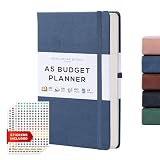
- WHAT'S INSIDE: Our leather budget planner book features 248 pages/124 sheets of 120gsm paper, resistant to ink bleed and ghosting. Includes sections for financial goals, savings tracker, money tracker, and debt tracker. Packaged in a beautiful gift box
- Crafted for Excellence: Our planner, an ultimate budget book and financial planner, boasts durability with secure closure, bookmark ribbon, and lay-flat binding. The deep back pocket adds extra space for your essentials.
- Sophisticated British Design: Immerse in the elegance of our British-designed finance book. Bound in vegan leather, each Beechmore Book undergoes color accuracy testing in our London studio.
- Premium Gift Option: Elevate your gifting with our Beechmore Book. Packaged in our signature box, it's an ideal gift for colleagues, teachers, friends or family members.
- Luxurious Paper Quality: Our budget journal features 248 pages/124 sheets of 120gsm paper, resistant to ink bleed and ghosting. The 5.8 x 8.3 inch size is perfect for all your financial planning needs.
- Low-balance alerts can provide warning before bills clear.
- Large-purchase and transaction alerts can help spot unfamiliar activity or interrupt impulse spending.
- Category limits can make overspending visible while there is still time to adjust.
- A 24-hour pause for nonessential purchases can create space to reconsider.
- Turning off one-click shopping or saving fewer payment details can add friction where impulse buying is a problem.
Review annual costs as well as monthly ones: a recurring $10 charge costs $120 over 12 months. Compare recurring insurance, phone, internet, and energy costs when a switch is practical, but weigh coverage, service, cancellation fees, and time—not just the advertised price.
Do these 3 things before closing this tab:
1Clear out junk files and repair common Windows errors2Fix the driver behind crashes, sound loss and screen glitches3Repair Windows errors before they cause bigger problems6. Review subscriptions and recurring bills on a schedule
Once a quarter, scan bank and card statements for subscriptions, free trials nearing conversion, duplicate services, and bills that changed. Set a calendar reminder before a trial ends. Confirm a cancellation directly with the provider and keep its confirmation; finding a recurring charge does not guarantee that a third-party service can cancel it successfully.
Rocket Money describes features for subscription discovery, recurring-bill tracking, savings automation, and bill-lowering assistance (Rocket Money). It may suit someone with many recurring charges, but may add little for a person with few subscriptions or someone who does not want to share account data. Review the current service terms, permissions, and costs before connecting accounts; the reviewed official homepage did not establish one universal paid price.
7. Choose a budgeting tool by the behavior you need
Budgeting apps, bank apps, subscription services, savings tools, brokerages, and credit-monitoring services do different jobs. Tracking spending does not ensure that a budget will be followed; a savings tool cannot make an automated amount affordable; a credit-monitoring service does not prevent identity theft or guarantee loan approval; and AI-generated explanations are not necessarily accurate, current, or fiduciary advice.
| Tool type | Main job | What it does not guarantee |
|---|---|---|
| Budgeting app | Plans and tracks spending | That a user will follow the plan |
| Savings automation | Moves money by schedule or rule | That the amount is affordable |
| Subscription tracker | Finds recurring charges | That every cancellation succeeds |
| Bank app | Transfers, alerts, and account management | The highest available interest rate |
| Investment app | Buys or manages securities | A positive return |
| Credit-monitoring app | Tracks credit data or scores | Identity-theft prevention or lending approval |
| AI financial assistant | Explains patterns and possible options | Accurate, personalized fiduciary advice |
Before paying, compare annual cost with the behavior or money benefit you realistically expect. Check bank and card connectivity, manual-entry options, household sharing, goal and debt tracking, exports, account deletion, customer support, and privacy and data-sharing practices. If links fail, ask whether the app supports file imports or manual entry. A spreadsheet, recurring bank transfer, or the bank’s own alerts may be enough.
Best Value

- 【ACHIEVE YOUR FINANCIAL GOALS】This budget financial planner provides a simple and efficient money management instruments that allows you to plan and track your income, expenses and savings in one convenient place. Take control of your money on a daily, monthly and yearly basis with the budget planner, enabling you to manage your personal finance and make decisions to achieve financial goals.
- 【TRACK SAVINGS, DEBT & BILLS PAYMENTS】Keeping track of savings, debt, and bill payments can help you understand your income and expenses, giving you a clearer picture of your financial situation. In addition, you can identify spending habits and appropriately reduce unnecessary spending.
- 【WELL-DESIGNED】The monthly budget planner is undated and covers 16 months. Every month features a calendar, a budget plan, and 4 pages expense tracker. At the end of the month, review your performance and consider how to improve. Additional sections include 4 savings, 6 debt trackers and more, making it simple to stay on top of your finances.
- 【EASY TO USE】The financial planner notebook cover is made by premium Faux Leather/ Fabric, High quality and durability. A5 size (5.7'' × 8'') is perfect for on-the-go. 100gsm paper has no bleed through. It also comes with an elastic pen loop and pocket. In addition, 2 bookmarks is useful to find any page you need easily.
- 【PERFECT GIFT】A Budget Planner makes for an incredibly thoughtful and practical gift, as it helps individual keep track of their finances, set savings goals, and manage their spending more effectively. Whether for a friend, family member, or colleague, this essential tool fosters financial literacy and encourages responsible budgeting habits.
Examples by use case
- Hands-on, debt-payoff-focused budgeting: YNAB may fit someone willing to assign money to categories and maintain a proactive budget. Its official pricing page showed $109 annually or $14.99 monthly and a 34-day direct trial as observed August 18, 2026 (YNAB pricing). It may be poor value if passive tracking is all you need; pricing and trial terms can change.
- Shared household budgeting and net-worth visibility: Monarch may fit households wanting account aggregation, goals, and collaboration. Its official pricing page showed Core at $99.99 annually and Plus at $199.99 annually, with a seven-day trial, as observed August 18, 2026 (Monarch pricing). Monarch says it is ad-free, subscription-funded, and does not sell users’ financial data; that is the company’s statement, not independent verification (Monarch pricing and policy information).
- Subscription-heavy spending: Rocket Money may be relevant when recurring charges are the main opportunity; compare the service with a direct statement review before paying.
- Investment and net-worth tracking: Empower offers account and investment tools, but someone seeking a strict envelope budget may prefer another method (Empower tools). Review current disclosures before considering its cash product; terms, eligibility, yield, and applicable insurance should be confirmed directly (Empower Personal Cash).
- Low-complexity finances: Start with a bank or credit-union app, spreadsheet, calendar, or a government financial education resource such as MyMoney.gov’s savings and investing tools.
8. Use technology to make expensive debt easier to pay down
List each debt’s balance, interest rate, minimum payment, and due date. Use reminders or autopay for minimums if cash flow is dependable, then direct extra money to one target debt. Keep a buffer so automatic payments do not create overdrafts.
- Avalanche: Pay minimums on all debts and put extra money toward the highest interest rate. This usually minimizes interest mathematically.
- Snowball: Pay minimums on all debts and target the smallest balance first. Clearing an account sooner can provide a motivating milestone, though it may cost more interest than the avalanche method.
A calculator can compare payoff timelines and the effect of extra payments, but use your actual rates and verify the lender’s payment-allocation rules. Fidelity’s financial-basics guidance includes paying off high-interest debt, such as credit-card debt and private student loans, among core financial priorities (Fidelity financial basics). If high-interest debt is growing, compare the certain cost of that interest with the uncertain return and risk of investing extra cash.
9. Add tax-advantaged accounts when the foundation is stable
Workplace retirement plans, traditional and Roth IRAs, health savings accounts for eligible individuals, and 529 education accounts can support longer-term goals. Their eligibility rules, contribution limits, withdrawal rules, and tax treatment differ. Fidelity describes these as examples of tax-advantaged accounts and discusses recurring contributions (Fidelity guidance on saving more).
Where an employer offers a retirement match, learn the plan’s rules and vesting terms. Automating contributions can reduce missed opportunities, but do not substitute an account with withdrawal restrictions for accessible emergency cash. Keep beneficiary designations and contribution settings current, and retain tax documents.
Windows Errors? Fix Them Before They Spread
Repair common Windows errors and clear accumulated junk for a smoother, more stable PC - no reinstall needed.Free scan · no reinstallOutdated Drivers Are Slowing You Down
One free scan finds every outdated or missing driver and matches the right update for your exact hardware.Free scan · exact hardware matchFor the 2026 filing season, the IRS advises taxpayers to track income from gig work, online sales, payment apps, and digital assets; whether and how income must be reported depends on the activity and applicable tax rules (IRS 2026 filing-season guidance). Do not rely on an app’s categories as tax advice. Keep original records and consult a qualified tax professional for unusual or high-value transactions.
10. Secure accounts and understand the cost of linking them
Account aggregation can reduce manual entry, categorize transactions, show cash flow across institutions, and help track net worth. It can also bring connectivity failures, stale or duplicated transactions, incorrect categories, reauthorization problems, and exposure of sensitive information. Responsibility can be difficult to determine when information is wrong or a connection provider is involved.
A budgeting app may not be a bank, and it may use a separate data-connectivity provider. Do not assume the app itself holds insured deposits or offers the same protections as the institution holding the money. The FTC describes convenience alongside consumer-protection concerns in financial technology (FTC financial technology). Marketing phrases such as “bank-level security” do not mean risk is eliminated.
Before and during account linking
- Start with one account and confirm the app’s purpose justifies sharing its data.
- Read the privacy, retention, and deletion policies. Check what data is collected, who receives it, and how to revoke access.
- Confirm whether credentials are entered at your financial institution or handled through a third-party connection service; do not enter credentials into an unofficial app or link.
- Keep direct login access to the underlying bank or brokerage, test whether you can export your records, and revoke connections you no longer use.
Protect your login and transactions
- Use a unique password stored in a password manager.
- Turn on multi-factor authentication; prefer passkeys or an authenticator method where offered.
- Enable login, transfer, and low-balance alerts, and keep operating systems and financial apps updated.
- Review statements, connected institutions, third-party permissions, and credit reports regularly.
- Do not trust a text, email, or caller solely because they use a familiar brand. Never give remote device access to someone claiming to be bank support.
- Keep a backup way to access emergency money if an app account is locked.
If an app stops syncing
- Check whether the institution requires reauthorization and whether its own account is accessible.
- Reconnect only through the app’s official process. If the problem persists, use manual entry or file import.
- Export historical data before deleting the app, and contact the app and financial institution separately if you need help.
If credentials may have been exposed
- Change the password at the financial institution and change any reused passwords on other services.
- Revoke third-party access and enable multi-factor authentication.
- Review recent transfers and beneficiary details, then contact the bank’s fraud department using its official number.
- If identity information was exposed, consider a credit freeze.
Match the tool to the problem
| If your main problem is… | Start with… | Avoid… |
|---|---|---|
| Forgetting to save | A modest payday transfer | A transfer that leaves no checking buffer |
| Overspending | Category limits and transaction alerts | Tracking without changing a spending habit |
| Too many subscriptions | A recurring-charge review | Assuming every cancellation is automatic |
| High debt interest | A payoff calculator, a target method, and reliable minimum-payment reminders | Ignoring costly debt while taking investment risk with extra cash |
| Household coordination | A shared budgeting system if it will be maintained | Paying for overlapping apps |
| Irregular income | A percentage-based transfer with a floor and ceiling | Fixed transfers based on your best month |
| Investment confusion | Checking broker or adviser registration and understanding the service | Assuming an app is a fiduciary or that registration guarantees performance |
Put the system in place over 30 days
- Day 1: List take-home income, fixed bills, debts, due dates, and current savings.
- Day 2: Choose one goal and calculate the contribution required for its deadline.
- Day 3: Designate an appropriate account and verify its access, fees, and applicable insurance.
- Day 4: Schedule a modest transfer that leaves a checking buffer.
- Week 2: Review subscriptions and recurring bills; cancel directly with providers where appropriate.
- Week 3: Turn on useful security and transaction alerts and review connected-account permissions.
- Week 4: Check whether transfers cleared safely and whether the budget still covered bills.
- Day 30: Keep, reduce, or increase the transfer based on actual cash flow—not aspiration.
- Day 90: Reassess the goal, account fit, app cost, and whether the tool is changing behavior.
If a paid app adds less value than its annual cost, stop paying and use a simpler method. If an aggregator fails, manual entry or file import can preserve the plan; if an app locks you out, direct access to the underlying institution and an alternate route to emergency funds matter more than a perfect dashboard.
The Tool Desk
Outbyte Driver Updater FREEFix the driver behind crashes, sound loss and screen glitchesFind Drivers →Outbyte PC Repair FREERepair Windows errors before they cause bigger problemsFix Now →Quick Recap
Product prices and availability are accurate as of the date/time indicated and are subject to change. Any price and availability information displayed on Amazon at the time of purchase will apply.




