What’s actually slowing this PC down?
Pick the symptom - the matching free tool is one click away.
GPS tracking is essential when a fintech’s financial risk depends on the location, use, or recoverability of mobile physical assets. It gives lenders and asset managers a more current view of collateral than periodic inspections or borrower reports alone. It is not essential for every fintech, and it cannot replace sound underwriting, valid liens, accurate servicing, insurance checks, or lawful recovery procedures.
What GPS tracking means in asset management
A GPS/GNSS receiver calculates a device’s position from satellite signals. Those signals are one-way: a commercial tracker needs separate communications hardware—such as cellular or satellite connectivity—to transmit its location, or it must store the information for later retrieval. Update frequency and availability depend on device configuration, power, network coverage, and surroundings. GPS.gov explains GPS and location privacy.
GPS tracking is not the same as telematics. Telematics combines location with other information, which may include mileage, ignition, engine diagnostics, operating hours, battery status, or driver identification. Samsara describes its telematics platform as combining GPS tracking, vehicle diagnostics, and wireless connectivity. Asset-tracking devices also differ: a powered truck, an unpowered trailer, and a container need not use the same hardware or reporting schedule.
Why location data can matter financially
The business case is a chain: location data can improve visibility, better visibility can reduce uncertainty, and reduced uncertainty can improve decisions or lower operating costs. A map by itself creates little value; the data matter when they change a financial or servicing action.
#1 Best Overall

- LONG-BATTERY VEHICLE TRACKING – Built for cars, trailers, fleets, equipment, boats, and motorcycles, Tracki’s trailer GPS tracker uses a 10,000mAh battery for 2 to 7 months active at 1–5 minute updates or up to 12 months in sleep mode.
- SUBSCRIPTION-POWERED SERVICE – The Tracki GPS tracker connects through 4G LTE Cat1 with built-in global SIM, giving app access, real-time location updates, alerts, and support after activation; Subscription Required, Cancel Anytime.
- FLEET-WIDE CONTROL – A practical fleet GPS tracker for work vehicles, with subscription-powered 15-second to 1-minute updates plus speed, geofence, movement, idle time, impact, and battery alerts through SMS, email, and app notifications.
- TRAILER & ASSET COVERAGE – A GPS tracker for trailer, car, truck, RV, boat, or equipment use, with 185+ country coverage, GPS accuracy of 5 to 10 meters outdoors, and Wi-Fi fallback indoors when GPS signals are harder to reach.
- SECURE TWO-WHEEL MONITORING – Use this motorcycle tracker for authorized bikes and powersport assets, with a built-in strong magnet, included screw mount, and weatherproof design for flexible vehicle placement.
- Collateral visibility: Check whether a mobile asset is where it is expected to be and identify unusual movement.
- Fraud investigation: Flag inconsistencies between reported use, declared location, asset records, and observed movement. A location anomaly is a lead to investigate, not proof of fraud.
- Recovery logistics: Give an authorized recovery team a more recent location, subject to signal quality, device operation, and legal authority.
- Inspection efficiency: Use location or movement history to prioritize site visits. A signal does not prove the asset’s identity, ownership, condition, or value, so physical checks still have a role.
- Utilization and residual value: When paired with appropriate sensors, usage data can inform maintenance, renewal, replacement, or residual-value decisions.
- Insurance and claims: Location and event histories may support documentation or theft recovery, but do not guarantee a premium discount.
In May 2026, equipment financier DLL described lender adoption of telematics as early-stage while identifying collateral visibility, inspection reduction, and risk management as potential applications. That points to growing interest, not universal lender deployment. Equipment Finance News on DLL’s telematics strategy.
Where tracking fits in a fintech’s operating model
Location data is most useful when connected to the systems that establish the financial and legal context for an asset. A map that sits apart from those systems can add another dashboard without improving control.
- Origination and collateral records: Associate each device with a verified asset identifier, borrower, contract, and lien record.
- Servicing and collections: Use account status and reconciled payments to determine whether a location alert calls for follow-up. GPS cannot establish that an account is in default.
- Risk and fraud workflows: Route unusual movement, repeated offline periods, or tampering signals for review, and preserve the event history.
- Maintenance and insurance: Where relevant, connect usage, condition, and location data to maintenance schedules and claims documentation.
- Recovery management: Provide current, timestamped location information to authorized staff only after account and legal checks are complete.
- Portfolio reporting: Track device reporting rates, stale-location rates, downtime, utilization, inspection frequency, and recovery outcomes.
Which assets benefit most
Tracking is most compelling for assets that move, carry material financial exposure, face theft or unauthorized relocation, or are costly to inspect. Device choice and useful data differ by asset class.
| Asset class | Why tracking may help | Useful data |
|---|---|---|
| Passenger vehicles | Collateral location and recovery logistics | Location, ignition, mileage, tamper events |
| Commercial trucks | Location, utilization, maintenance, and recovery | GPS, diagnostics, mileage, driver ID where appropriate |
| Construction equipment | Theft exposure, job-site presence, and operating time | Location, geofence events, engine hours |
| Trailers and containers | Location and dwell time when equipment is unpowered | Battery-powered location, door or temperature sensors where relevant |
| Agricultural machinery | Seasonal movement, operating time, and deployment | Location, engine hours, geofence events |
| Medical or other high-value equipment | Chain of custody and location inside facilities | GPS where available; Bluetooth or environmental sensors may suit indoor settings better |
GPS may be unreliable indoors, underground, in steel structures, or in dense urban areas. For those settings, Bluetooth, Wi-Fi, cellular positioning, fixed-site sensors, or a hybrid design may be more suitable. Unpowered assets also require a plan for battery life, reporting intervals, and replacement.
Free tools Windows power users keep installed
One-click scans. No signup required.
What GPS cannot establish
- Ownership or lien rights: A location signal does not prove who owns an asset or whether a lender holds a valid security interest.
- Default or repossession authority: GPS does not determine whether a payment was made, an extension was approved, or a recovery is legally permitted.
- Condition or value: A location pin does not show whether equipment works or what it is worth.
- Fraud by itself: A device may be removed, disconnected, misassigned, or affected by poor signal. An anomaly needs verification.
- Insurance coverage or savings: Any insurance effect depends on the insurer, policy, asset, and use of the data.
- Guaranteed recovery: A tracker can improve the information available to a recovery team, but cannot guarantee a signal, access, or recovery.
GPS is one layer in a control stack alongside asset identity, title and lien records, payment reconciliation, insurance verification, inspections, and human review.
Rank #2
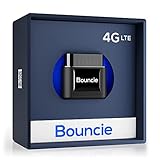
- Real-Time GPS Tracker Device for Vehicles — Ideal for personal use or fleet management, this car GPS tracker provides up-to-the-minute location updates. Our car tracking device also provides unlimited trip history, including a detailed route history
- Driving Insights — Our OBD tracker for cars monitors speed, acceleration, hard braking, idle time, and more. This versatile family and fleet GPS tracker for cars also helps improve road safety by sending alerts in response to unsafe driving practices
- Vehicle Health — Unlike other vehicle tracking devices, our car tracker device continuously monitors diagnostic engine data, alerting you to potential maintenance issues, so you can avoid downtime and keep fleet and family vehicles in peak condition
- Geo-Fencing & Accident Detection — Set up geo-fences to receive notifications when your vehicle enters or exits designated areas; Equipped with advanced sensors and software, this vehicle tracker device instantly detects impacts and sends SMS alerts
- Easy To Install & Low Monthly Subscription — Our OBD GPS tracker for vehicles plugs directly into OBD2 ports and works on most vehicles 1996 and newer; $9.65 monthly subscription required - no hidden activation or return fees - cancel anytime
Design alerts around financial consequences
More alerts do not necessarily mean better control. A poorly drawn geofence, GPS drift, an authorized transfer, maintenance, or a network outage can all produce events that look suspicious. Prioritize alerts by exposure and route them to a defined review process.
- Critical: A tamper event or unexpected movement of high-value collateral outside an approved area.
- High: A prolonged loss of reporting, cross-border movement, or unexpected activity that conflicts with account or asset records.
- Medium: Low battery, unusual inactivity, or a maintenance threshold.
- Informational: Routine pings and periodic utilization summaries.
Display the timestamp and age of the last location, not just a pin on a map. For each material alert, record who reviewed it, what other records were checked, and why a particular action was taken. Avoid adverse action based solely on an unverified location signal.
Protect borrowers and prevent wrongful recovery
Tracking can make it easier to locate an asset; that makes accurate servicing and procedural safeguards more important. The CFPB reported that U.S. auto-loan balances exceeded $1.64 trillion through the third quarter of 2024 and that auto-finance accounts exceeded 100 million. Its January 2025 report also describes how repossession can disrupt a consumer’s transportation and leave them liable for remaining balances and fees. CFPB report on repossession in auto finance.
The CFPB has also documented supervisory problems involving repossessions after timely payments, approved extensions, payment arrangements, or modifications. A location system cannot correct a missed payment posting or a canceled repossession order. CFPB Supervisory Highlights, October 2024.
Before any recovery based in part on location data, confirm account status, payment reconciliation, approved extensions, asset identity, lien rights, required notices, and applicable law. Recovery staff must follow relevant repossession rules, including restrictions on breach of the peace. GPS should help with location and logistics, not decide legal entitlement or trigger an automatic repossession.
Rank #3

- Premium GPS Tracker — The LandAirSea 54 GPS tracker provides accurate global location, real-time alerts, and geofencing. Easily attaches to vehicles, ATVs, golf carts, or other critical assets.
- Track Movements in Real-Time — Track and map (with Google Maps) in real-time on web-based software or our SilverCloud App. Location updates as fast as every 3 seconds with historical playback for up to 1 year.
- Powerful & Discreet — The motion-activated GPS tracker will sleep when not in motion for extended periods, preserving the battery life. The ultra-compact design and internal magnet create the ultimate discreet tracker.
- Lifetime Warranty — This GPS tracker is built to last. LandAirSea, a USA-based company and pioneer in GPS tracking offers a unconditional lifetime warranty that covers any manufacturing defects in the device encountered during normal use.
- Subscription Required — Affordable subscription plans are required for each device. Fees start as low as $9.95 a month for annual plans and $19.95 for monthly plans. No contracts, cancel anytime for a hassle-free experience.
Privacy, cybersecurity, and governance
Vehicle and asset-location histories can reveal where people work, live, travel, or receive services. Explain tracking in applicable contracts and notices, obtain any required consent, limit collection to the stated purpose, and define retention and access rules. Employee monitoring and personal use of company vehicles may require additional safeguards. GPS.gov notes that tracking can raise privacy-rights questions. GPS.gov on GPS legislation and privacy.
Because a compromised platform could reveal the locations of valuable assets or recovery targets, require encryption in transit and at rest, role-based access, multifactor authentication, restricted API permissions, audit logs, vendor security review, and an incident-response plan. Set rules for data export, deletion, retention, and vendor access, including what happens when a contract ends. FINRA’s fintech resources identify technology and cybersecurity risks as areas for financial-firm compliance programs. FINRA FinTech resources.
Choose the right technology and vendor category
A collateral tracker, fleet-telematics platform, and enterprise asset-management system solve overlapping but different problems. Select against the workflow and asset type rather than assuming every product is interchangeable.
| Category | Best suited to | Trade-off |
|---|---|---|
| Collateral-specific GPS | Lenders that primarily need vehicle location, monitoring, and recovery workflows | May not provide broad fleet diagnostics or industrial-asset features |
| Fleet telematics | Operators needing GPS plus diagnostics, driver, maintenance, or dispatch data | Can be more than a lender needs for location-only collateral monitoring |
| Powered-asset tracking | Vehicles or equipment with a dependable power source | Features and installation vary by asset and device |
| Unpowered-asset tracking | Trailers, containers, or equipment without continuous power | Battery life, reporting frequency, and coverage are central constraints |
| Hybrid or indoor tracking | Assets moving between outdoor and indoor locations | May require multiple technologies, gateways, and integrations |
Examples illustrate the category differences, not an endorsement. Advantage GPS markets automotive collateral monitoring for lenders and dealers. Samsara offers broader fleet telematics, while its asset-tracking products address equipment use cases. Its asset-monitoring PDF listed an AG24 gateway MSRP of $249; subscription, installation, and deployment costs may be separate. Samsara asset-monitoring overview.
Verizon Connect Reveal describes vehicle and non-powered-asset tracking as part of a wider fleet offering. Geotab’s rate-plan documentation lists features but not a universal retail price; it also identifies the Regulatory plan as legacy rather than currently available. Azuga’s public pricing page showed BasicFleet at $25 per vehicle per month and SafeFleet at $30 per vehicle per month when reviewed in August 2026; these are fleet-management plan prices, not a dedicated lender-collateral rate. Check current availability and total costs directly with vendors.
Rank #4

- Accurate, Discreet, Real-Time GPS Tracker with POWERFUL Twin Magnet Case.
- Requires a monthly subscription.
- Battery Life up to 2 months reporting at the default 1 minute update setting.
- Set up custom INSTANT ALERTS – text and/or email.
- Customizable position updates up to every 10 seconds.
Compare total cost rather than hardware price alone: installation, connectivity, software, API access, integrations, training, support, replacements, data export, and contract exit terms all matter. Samsara advises buyers to check which integrations, APIs, onboarding, and installation costs are included. Samsara’s GPS fleet-tracking page.
Do these 3 things before closing this tab:
1Fix the driver behind crashes, sound loss and screen glitches2Clear out junk files and repair common Windows errors3Scan for outdated or missing drivers - takes under a minuteImplement tracking in stages
- Define the financial problem. Identify the decision to improve—such as inspection priority, recovery logistics, theft response, or utilization measurement. If location will not change a decision, tracking may not be worth the cost.
- Segment the portfolio. Rank assets by mobility, exposure, replacement value, theft risk, power source, and inspection cost. Start where expected value is material relative to total tracking cost.
- Specify device and data needs. Set requirements for update cadence, coverage, battery life, tamper detection, offline buffering, location history, and any engine-hour or environmental sensors.
- Connect records. Match each device to a verified asset identifier and link location events to servicing, payment, lien, insurance, maintenance, and recovery records where appropriate.
- Set alert rules and authority. Define severity, review owners, escalation steps, evidence retention, and actions that must never be automated.
- Run a controlled pilot. Measure reporting success, stale locations, false positives, installation failures, staff workload, and integration reliability across relevant asset types and locations.
- Evaluate financial outcomes. Compare tracked and untracked cohorts or pre- and post-deployment results, accounting for changes in underwriting, portfolio mix, and market conditions before attributing any improvement to GPS.
- Scale only with governance. Confirm privacy notices, security controls, vendor terms, data portability, staff training, and recovery checks before expanding coverage.
Decide whether tracking belongs in your portfolio
Tracking is a stronger fit when assets are mobile, material to the exposure, vulnerable to theft or unauthorized movement, costly to inspect, or capable of generating usage data that changes financial decisions. It is a weaker fit for low-value assets that rarely move, assets outside reliable network coverage, or organizations without the servicing accuracy and governance needed to act responsibly on the data.
Use a screening estimate rather than a promised return:
Annual tracking value = expected loss reduction + inspection savings + recovery savings + utilization or maintenance benefit − hardware − installation − connectivity − software − integration − support
Treat the result as a hypothesis to test. A pilot should establish whether the data are reliable, whether staff can act on useful alerts, and whether the measured benefits justify the full cost.
Quick Recap
Product prices and availability are accurate as of the date/time indicated and are subject to change. Any price and availability information displayed on Amazon at the time of purchase will apply.




