Quick wins for a faster PC:
Scan for outdated or missing drivers - takes under a minuteDriver Scan →Clear out junk files and repair common Windows errorsFree Scan →Qualcomm did not buy Intel’s chip-design business. In September 2024, Reuters reported that Qualcomm was exploring selected Intel design assets, with the client-PC operation a particular interest; a later report said Qualcomm had also approached Intel about a possible company-wide acquisition. The discussions were early, unconfirmed and subject to major financial, regulatory and integration obstacles.
What Qualcomm was reportedly considering
The headline covered more than one possible transaction. Reuters’ September 6, 2024 report said Qualcomm was examining portions of Intel’s design business, based on two people familiar with the matter. The client-PC design operation was reportedly especially attractive, although other design units were also being considered. Read the Reuters report.
A September 21 Reuters report carried by Inc. described a separate, broader possibility: Qualcomm had approached Intel to explore acquiring the entire company. That report characterized the discussions as early and uncertain, and said Qualcomm chief executive Cristiano Amon was involved according to a source familiar with the matter.
| Possible scope | What it could include | What the reporting established |
|---|---|---|
| Selected design assets | PC engineering teams, intellectual property and related platform expertise | Qualcomm reportedly explored this option |
| Intel’s client-PC design operation | Processor, chipset, firmware, validation, power-management and reference-platform work | Reportedly a particular area of interest |
| Whole-company acquisition | Intel’s products, manufacturing, foundry operations and corporate obligations | Discussed as an early-stage possibility, not a completed offer |
These possibilities should not be conflated. Buying design assets would not give Qualcomm Intel’s factories, process technology or foundry customers. Conversely, a full takeover would involve those assets along with substantially greater cost, regulatory exposure and operational risk.
Recommended Free Tools
#1 Best Overall

- Next‑Gen Platform Support: Compatible with Intel 800 Series Chipset‑based motherboards with LGA1851 Socket enabling PCIe 5.0/4.0 and high‑speed DDR5 memory (up to 7200 MT/s).
- High‑Performance Core Configuration: Features up to 24 cores (8 P‑cores + 16 E‑cores) for demanding gaming and creator
- Ultra‑Fast Boost Clocks: Reaches up to 5.5 GHz max turbo frequency for top‑tier responsiveness and performance
- Built for Enthusiasts: Unlocked for performance tuning when paired with Intel Z‑series chipsets, making it ideal for overclockers and power users.
- Robust Power & Thermal Design: Engineered with 125W base power and 250W max turbo power to sustain high‑intensity
Why Intel’s PC expertise could appeal to Qualcomm
Speeding up the Windows PC push
Qualcomm’s Snapdragon X platform was seeking a durable position in Windows laptops as an Arm-based alternative to Intel- and AMD-powered systems. Intel’s client organization has decades of experience with PC processors, chipsets, platform validation, power management and reference designs. Acquiring an established team could shorten Qualcomm’s route to broader OEM adoption compared with building every capability internally.
Adding systems knowledge, not just CPU designs
The potential value would extend beyond processor blueprints. A PC platform must coordinate CPU, graphics, memory, connectivity, firmware, thermals, drivers and validation. Intel’s relationships with computer manufacturers and its knowledge of enterprise manageability could also be strategically useful, although those relationships would not automatically transfer to a new owner.
Supporting diversification and on-device AI
Qualcomm has long sought growth beyond smartphones in areas such as PCs, automotive and edge devices. A stronger PC design capability could support that diversification. It could also help Qualcomm assemble competitive AI-PC platforms, where low-power inference, graphics, memory bandwidth, software tools and sustained thermal performance matter alongside an NPU’s advertised specifications.
Rank #2

- Game Without Compromise. Play harder and work smarter with Intel Core 14th Gen processors
- 20 cores (8 P-cores plus 12 E-cores) and 28 threads. Integrated Intel UHD Graphics 770 included
- Up to 5.6 GHz with Turbo Boost Max Technology 3.0 gives you smooth game play, high frame rates, and rapid responsiveness
- Compatible with Intel 600-series (with potential BIOS update) or 700-series chipset-based motherboards
- DDR4 and DDR5 platform support cuts your load times and gives you the space to run the most demanding games
Those are strategic inferences, not publicly confirmed Qualcomm motives. The directly reported fact is that Qualcomm explored Intel design assets and was particularly interested in the client-PC unit.
Why Intel might consider selling valuable design assets
Intel was under significant financial and strategic pressure in 2024, reviewing its portfolio and seeking better cash generation while funding an expensive manufacturing and foundry expansion. An asset sale could raise capital, simplify the company or focus resources on higher-priority operations.
The trade-off would be severe. Client processors are central to Intel’s identity as an integrated computing company. Selling the PC design organization could provide near-term relief while weakening the product franchise Intel needed for a long-term recovery. The available reporting indicates exploratory conversations, not a formally marketed sale of Intel’s entire design business.
Rank #3

- Get ultra-efficient with Intel Core Ultra desktop processors that improve both performance and efficiency so your PC can run cooler, quieter, and quicker.
- Core and Threads 24 cores (8 P-cores plus 16 E-cores) and 24 threads. Integrated Intel Graphics included
- Performance Hybrid Architecture Integrates two core microarchitectures, prioritizing and distributing workloads to optimize performance
- Performance Unlocked Up to 5.7 GHz unlocked. 40MB Cache
- Compatibility Compatible with Intel 800 series chipset-based motherboards
How a transaction could change the PC market
Potential competitive benefits
- More credible Arm competition to Intel and AMD in Windows PCs.
- Faster development of thin, long-battery-life and always-connected laptops.
- More pressure on PC makers to support both Arm and x86 platforms.
- Greater emphasis on complete AI-capable systems rather than CPU specifications alone.
Practical drawbacks
- Intel’s x86-centered engineering culture would have to work inside Qualcomm’s Arm-based product strategy.
- Duplicated teams, incompatible processes and employee departures could erase part of the acquired value.
- OEM relationships, developer support and software compatibility would still need to be won.
- A large deal could distract both companies during difficult product and manufacturing transitions.
- Removing an independent supplier could reduce competition rather than increase it, depending on the assets transferred.
Arm-based Windows systems also face compatibility questions. Native applications, emulation performance, driver availability, enterprise management and developer adoption can matter as much as battery life or benchmark scores. Intel expertise could shorten Qualcomm’s learning curve, but it would not eliminate those risks.
What it could mean for Arm, x86 and AI computing
Qualcomm’s architecture foundation is Arm, while Intel’s traditional PC franchise is x86. A deal therefore would not be a routine change of ownership; it could alter how the two architectures compete in client computing.
Do these 3 things before closing this tab:
1Clear out junk files and repair common Windows errors2Fix the driver behind crashes, sound loss and screen glitches3Repair Windows errors before they cause bigger problemsAI PCs make the comparison more complex. Useful local AI requires coordinated CPU, GPU and NPU resources, fast memory, efficient thermals, operating-system support and developer frameworks. Qualcomm’s mobile experience may support low-power inference, while Intel contributes deep PC-system knowledge. Combining those strengths could be helpful, but no source establishes that a transaction would produce superior AI performance or make Qualcomm dominant.
Rank #4
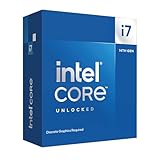
- Game Without Compromise. Play harder and work smarter with Intel Core 14th Gen processors
- 20 cores (8 P-cores plus 12 E-cores) and 28 threads. Discrete graphics required
- Up to 5.6 GHz with Turbo Boost Max Technology 3.0 gives you smooth game play, high frame rates, and rapid responsiveness
- Compatible with Intel 600-series (with potential BIOS update) or 700-series chipset-based motherboards
- DDR4 and DDR5 platform support cuts your load times and gives you the space to run the most demanding games
The obstacles to a deal
Financing and integration
A company-wide acquisition would be exceptionally expensive and would combine two large, complex organizations. Qualcomm would need to justify the price against uncertain PC revenue, preserve key engineers and integrate product road maps without slowing execution. A partial purchase would reduce the burden but introduce separation costs, intellectual-property licensing questions and possible customer-consent requirements.
Regulation and national-security concerns
Intel’s domestic manufacturing footprint, advanced-process plans, government relationships and defense relevance would attract scrutiny in the United States and potentially other jurisdictions. Antitrust review, export controls, supply-chain policy and the treatment of strategic semiconductor technology could all affect a transaction. The Reuters coverage described substantial hurdles; it did not document a formal rejection or a completed regulatory review. The September 21 report should therefore be read as an account of early discussions, not government action.
Manufacturing dependence
Buying Intel design teams would not make Qualcomm a manufacturer. Qualcomm would still rely on external foundries for production, with its own exposure to capacity, process-node timing, packaging and supply-chain economics. A design acquisition could improve products while leaving those manufacturing constraints unchanged.
Free tools Windows power users keep installed
One-click scans. No signup required.
Best Value

- Game without compromise. Play harder and work smarter with Intel Core 14th Gen processors
- 24 cores (8 P-cores plus 16 E-cores) and 32 threads. Integrated Intel UHD Graphics 770 included
- Leading max clock speed of up to 6.0 GHz gives you smoother game play, higher frame rates, and rapid responsiveness
- Compatible with Intel 600-series (with potential BIOS update) or 700-series chipset-based motherboards
- DDR4 and DDR5 platform support cuts your load times and gives you the space to run the most demanding games
Customer confidence
PC manufacturers would have to decide whether a combined company offered a stable road map, reliable support and competitive pricing. An acquisition that created uncertainty around product generations or software support could cause OEMs to delay commitments rather than expand them.
What the reported deal would not solve
- It would not automatically repair Intel’s manufacturing economics or process-road-map execution.
- It would not transfer every OEM relationship, developer commitment or software compatibility advantage.
- It would not guarantee better AI-PC performance without effective software and system integration.
- It would not remove Qualcomm’s reliance on external manufacturing.
- It would not prove that Intel’s broader turnaround strategy had succeeded.
What happened afterward
The available evidence does not establish that Qualcomm completed an acquisition of Intel, Intel’s PC design operation or another Intel design unit. Axios reported on September 22, 2024 that Qualcomm had not publicly made an official offer at that point.
A later confirmed Intel transaction involved a different buyer and a different asset. Intel’s filing says Silver Lake completed the acquisition of a 51% stake in Altera for approximately $3.3 billion on September 12, 2025. That transaction is documented in Intel’s SEC Form 8-K and was unrelated to Qualcomm.
How to interpret the headline
Qualcomm’s reported interest made strategic sense because it could have accelerated the company’s PC ambitions with engineering talent, platform knowledge and OEM experience. But the same transaction could have imposed high integration costs, regulatory scrutiny and customer uncertainty, while leaving manufacturing and software challenges unresolved.
The lasting significance was therefore not a completed takeover. It was a signal that the PC industry’s competitive center was broadening: Arm-versus-x86 positioning, battery life, local AI capability, software compatibility and manufacturing strategy were becoming one connected business problem.
Quick Recap
Product prices and availability are accurate as of the date/time indicated and are subject to change. Any price and availability information displayed on Amazon at the time of purchase will apply.




