The Tool Desk
Outbyte Driver Updater FREEScan for outdated or missing drivers - takes under a minuteDriver Scan →Outbyte PC Repair FREEClear out junk files and repair common Windows errorsFree Scan →The aerospace and defense industry entered 2025 with strong demand but limited ability to deliver. The decisive shift was from platform development and post-pandemic recovery toward production capacity, stockpile depth, software-defined capabilities, resilient supply chains and sustainment. Defense buyers prioritized munitions, missile defense, space, cyber and autonomy, while commercial aviation confronted aircraft, engine, component and labor bottlenecks.
For investors, suppliers and policymakers, a budget announcement was only the beginning. The meaningful questions were whether funding became a contract, whether a prototype survived testing, whether factories could scale and whether a system could be supported for decades.
The central shift: from platforms to production and resilience
In 2025, demand was not the industry’s main constraint. The harder problem was converting demand into delivered aircraft, weapons, satellites, software and maintenance capacity. That made production rates, qualified suppliers, skilled labor, upgradeability and recurring support as strategically important as the design of a new platform.
The change affected both sides of the sector. Defense programs sought affordable mass and replenishable inventories alongside exquisite systems. Commercial airlines wanted more aircraft, but deliveries were limited by engines, components, certification and supplier capacity. Across both markets, software, data and aftermarket services became more valuable because equipment remains in service for years.
#1 Best Overall

- ICONIC NASA ARTEMIS I ROCKET MODEL KIT - Recreate the historic Artemis I mission with this highly detailed 1:144 scale Space Launch System (SLS)—a must-have for space enthusiasts, collectors, and model builders.
- AUTHENTIC MULTI-STAGE DETAILING - Features twin solid rocket boosters, detailed core stage with external hydrogen lines, separate stage assembly, and four RS‑25 engines for a realistic, true-to-life build.
- IMPRESSIVE 28" DISPLAY CENTERPIECE - Standing nearly 28 inches tall, this model delivers a striking vertical display that commands attention in any room, office, or collection.
- SKILL LEVEL 4 – ADVANCED BUILD EXPERIENCE - Designed for experienced hobbyists ages 12+ seeking a challenging, rewarding project with intricate parts and detailed assembly.
- READY FOR CUSTOM PAINT FINISH - Molded in light gray plastic so you can paint and detail to your exact preferences for a museum-quality appearance. (Paint & glue required, not included.)
Defense spending favored readiness, munitions and enabling technology
The U.S. Department of Defense requested $849.8 billion for fiscal 2025. That is a presidential request, not proof that every proposed dollar was appropriated or spent. The request signaled where the department wanted to direct demand:
| FY2025 request category | Requested amount | What it signaled |
|---|---|---|
| Research, development, test and evaluation | $143.2 billion | Next-generation systems, software and experimentation |
| Procurement | $167.5 billion | Equipment purchases and production |
| Space capabilities | $33.7 billion | Resilient architectures and command and control |
| Missile defense | $28.4 billion | Detection, interception and layered defense |
| Cyberspace activities | $14.5 billion | Cyber operations, security and related research |
| Science and technology | $17.2 billion | Research and technology maturation |
| Artificial intelligence | $1.8 billion | AI capabilities and supporting infrastructure |
| Long-range fires | $9.8 billion | Stand-off strike and associated systems |
| Combined Joint All-Domain Command and Control | $1.4 billion | Networking across services and domains |
| Rapid Defense Experimentation Reserve | $450 million | Faster experimentation and transition |
These figures should be read as priorities, not as a single undifferentiated “defense boom.” Near-term readiness spending supports ammunition, maintenance and logistics; modernization funds nuclear forces, long-range strike, missile defense, space and next-generation aircraft; technology funds AI, sensing, networking and autonomy; and industrial-base initiatives target microelectronics, batteries, casting, forging and workforce capacity. The Defense Department’s FY2025 release provides the request detail.
The Congressional Budget Office projected that the FY2025–2029 defense plan would drive particularly rapid cost growth in aircraft and missiles and munitions. In its analysis, annual aircraft acquisition costs for the Air Force and Space Force rise from approximately $90 billion in 2025 to $96 billion in 2029. That is a projection, not an audited outcome; see the CBO report.
Munitions, missile defense and affordable mass moved to the center
Stockpile depth and production rate became as important as the performance of an individual weapon. Buyers were balancing expensive, highly capable systems with larger numbers of lower-cost or attritable weapons that can be replenished after use.
Free tools Windows power users keep installed
One-click scans. No signup required.
The FY2025 request’s $28.4 billion for missile defense and $9.8 billion for long-range fires illustrate that emphasis. The industrial challenge extends beyond final assembly to solid-rocket motors, propulsion, seekers, energetics, test ranges, electronics and qualified second-tier suppliers. Deloitte’s analysis says U.S. Department of Defense procurement and research spending in missiles and munitions increased 340% from fiscal 2015 to fiscal 2024, reaching $30.6 billion in fiscal 2024; those are the categories and methodology in its 2025 outlook.
Rank #2

- HOBBY MODEL KIT – Unassembled model packed in an envelope with easy to follow instructions. Ideal for ages 14 and up
- NO GLUE OR SOLDER NEEDED – Parts can be easily clipped from the metal sheets. Tweezers are the recommended tool for bending and twisting the connection tabs
- F-117 NIGHTHAWK – 2 Sheet Model with a moderate difficulty level. Assembled Size: 4.92 L x 3.35 W x 2.36 H inches
- FROM STEEL SHEETS TO 3D – Pop out the pieces and connect using tabs and holes. Includes illustrated instructions
- HIGHLY DETAILED ETCHED MODEL – Display your 3D model once completed - collect and build them all
Hypersonic programs and counter-hypersonic defenses added urgency, but testing, sensing and interception remain distinct from full operational deployment. Counter-drone systems likewise require a complete architecture of detection, identification, electronic warfare, kinetic effectors and command software. A missile order does not by itself solve the sensor, network or replenishment problem.
AI and autonomy moved from demonstrations toward operational testing
“AI in aerospace and defense” describes several different markets:
- Decision support: data fusion, target recognition, mission planning, logistics and cyber defense.
- Autonomous platforms: uncrewed aircraft, maritime and ground systems, attritable aircraft and collaborative combat aircraft.
- Industrial applications: automated inspection, generative design, digital twins, predictive maintenance, quality control and production planning.
The Defense Department’s request included $1.8 billion for AI, and its Replicator initiative aimed to accelerate scalable autonomous capabilities. The FY2025 budget remarks describe that direction.
Operational adoption still depends on reliability, explainability, cybersecurity, rules of engagement, human control and integration with existing command networks. A navigation system operating autonomously under normal conditions is not the same as a system making a lethal decision. Programs must also address incomplete or biased training data, adversarial deception, spoofing, communications loss, GPS denial, model drift, software updates and responsibility when a system fails.
For a supplier or investor, a successful demonstration is not the same as a fielded product. Integration with networks, data access, testing under jamming, production scalability, sustainment cost and acquisition rules determine whether a prototype reaches service.
Rank #3

- Watch It Launch Before Your Eyes: This 3D puzzle isn't just a static model. Touch the sensor button to trigger a full vertical launch sequence: the track slowly lifts the shuttle into launch position, three-axis mechanical arms rotate 90° into closed position, and the rocket ignites with real flame effects. A mesmerizing, fully automated space launch you build yourself
- Gift for Space Lovers & Sci-Fi Fans: Perfect for anyone obsessed with space exploration, aerospace history, science fiction, collctors or mechanical puzzles. Makes an unforgettable birthday, Christmas, Father’s Day or graduation gift for teens and adults
- A Rewarding Build: The control tower flashes yellow 6 times to count down to ignition, then the rocket base bursts to life with vibrant orange and blue LED flames that mimic a real shuttle launch. 446 precision-cut wooden pieces come together over approximately 8 hours of focused, screen-free assembly. The finished model stands an impressive 9.8" × 7.72" × 10.71"
- Retro Sci-Fi Architecture: Faithfully recreated 1:420 scale space shuttle, paired with a rugged industrial launch tower featuring seven distinct levels for command and testing. it's a statement piece for any desk, shelf, office or space-themed room
- Step-by-step Manual: The warm tower lights glow through every window, creating an atmospheric display that looks incredible day or night. Powered by a standard Type-C connection (cable not included) ROKR provides replacement parts for manufacturing defects
Space became defense infrastructure, not just a satellite market
Space was increasingly treated as an operating domain and an infrastructure layer supporting communications, sensing, navigation, missile warning and data processing. The FY2025 request included $33.7 billion for space capabilities, resilient architectures and enhanced command and control.
Growth opportunities extended across resilient satellite communications, missile-warning and tracking constellations, commercial remote sensing, space-domain awareness, protected communications, distributed architectures, launch, ground stations and analytics. A commercial provider can support a defense mission without being a traditional defense contractor.
- Government-owned systems are designed, funded and operated by public agencies.
- Commercially owned systems purchased as services let agencies buy imagery, communications or analytics without owning every satellite.
- Dual-use systems are built to serve civil and national-security customers.
Every model faces jamming, cyberattack, directed energy, kinetic threats and loss of ground connectivity. The NASA Aeronautics and Space Report of the President provides a federal overview of civil-space activity, while defense budgets show the national-security emphasis.
Supply-chain resilience became a security requirement
Resilience means more than finding raw materials. A program can fail because a qualified casting house, machine tool, specialty alloy, battery cell, rocket motor, semiconductor or lower-tier software supplier is unavailable. Long qualification cycles make replacing a single-source vendor especially difficult.
The FY2025 request linked industrial-base modernization with microelectronics, casting and forging, batteries and energy storage. Companies and governments also focused on rare earths and other critical minerals, titanium, aluminum, nickel, energetics, export controls, allied sourcing, inventory, traceability, counterfeit-part prevention and supplier cybersecurity.
Rank #4
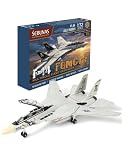
- Experience the legendary F-14 Tomcat through a highly detailed model designed for aviation collectors and hobby enthusiasts. The finished model becomes a striking desktop or showcase centerpiece.
- This 3D puzzle is designed for beginner-level assembly enthusiasts, offering an immersive hands-on building experience that helps cultivate patience, concentration, and mechanical problem-solving skills.
- This product is manufactured using high-quality, environmentally friendly plastic and employs an ultra-fine etching process to ensure durability, structural precision, and realistic aircraft details.
- Encourages understanding of aircraft engineering concepts while improving hand-eye coordination and spatial thinking through engaging mechanical assembly.
- Ideal gift for childs, engineers, collectors, model builders, and puzzle lovers for birthdays, Children’s Day, Christmas, or special hobby occasions.
“Domestic” does not automatically mean resilient: a domestic factory may still rely on foreign minerals, imported machine tools, overseas electronics or one specialized sub-tier vendor. Decision-makers should examine qualified supplier count, surge capacity, financial health, certification lead time and cyber maturity rather than geography alone.
What’s actually slowing this PC down?
Pick the symptom - the matching free tool is one click away.
Commercial aviation faced a delivery bottleneck
Airline demand for aircraft and aftermarket support remained strong, but supply constraints limited deliveries. Engine availability, components, labor, certification and production-quality issues could keep aircraft orders from becoming near-term revenue or fleet capacity.
Maintenance, repair and overhaul (MRO) became especially valuable because aircraft remain in service for decades and airlines need support even when new-aircraft deliveries slip. Digital health monitoring can reduce unscheduled downtime, while repair capacity gains value when engines or components are scarce. Deloitte’s industry outlook identifies aftermarket services, digital technology, workforce and supply-chain visibility as core themes.
Its midyear analysis modeled possible disruption effects of 12%–18% cost increases, 30%–40% higher working-capital requirements, 3%–5% lower production efficiency and 40%–60% higher emergency repair costs. Those are scenario figures from Deloitte, not universal industry averages; see the midyear update.
Independent reader supportYour contribution helps us test, update, and keep practical guides available for everyone.Workforce shortages limited the speed of growth
The constraint was not only a shortage of aerospace engineers. Companies needed software and AI specialists, cybersecurity staff, avionics technicians, machinists, welders, tool-and-die specialists, quality inspectors, maintenance technicians and managers who can integrate complex systems.
Best Value

- 3D-Printed TR900 Replica: Precision 3D-printed Aero Engine Model of the iconic TR900 Turbofan.This highly accurate 9.3-inch replica showcases complex internal mechanics,offering a true-to-life visual of turbofan engineering for enthusiasts and collectors
- DIY Toyan Engine Kit: A rewarding DIY project for adult or teen 14+ hobbyists. This Engine building Kit provides hands-on assembly,deepening understanding of mechanical science.The completed model serves as a striking desktop display
- Transparent Educational Design: Features a clear casing that reveals the operational blade structure and dual-flow system. An insightful mechanical science educational gift, perfect for visualizing and learning fundamental aerospace principles
- Functional Science Gift: More than a model,it's an engaging educational tool.Ideal for students and aviation fans to interactively explore aerospace engine mechanics, making it a memorable gift for learning and discovery(Battery not included)
- Premium Desktop Art: A sophisticated 23cm collectible art piece. Its exquisite design makes it a perfect desktop decoration and a conversation-starting gift for adult hobbyists,combining aesthetic appeal with engineering intrigue
Retirements can remove tacit manufacturing knowledge just as new digital tools require different skills. Security-clearance delays, geographic concentration, long apprenticeships and competition from commercial technology further narrow the labor pool. Deloitte identifies workforce shortages as a persistent constraint and reports that companies are combining digital tools with recruiting and training.
Advanced air mobility progressed, but did not become mass transportation
Electric vertical-takeoff-and-landing aircraft, hybrid-electric designs, regional air mobility and cargo or medical missions continued moving through certification, operational testing and infrastructure planning. The unresolved issues were substantial:
- Aircraft and pilot certification
- Vertiports, charging and maintenance networks
- Battery range, weather and payload limits
- Noise and community acceptance
- Operator requirements and route economics
- Production scale and sustainable business models
Deloitte describes progress toward operations through scaling, certification and market acceptance. That is an institutional and technological advance, not evidence of widespread commercial air-taxi deployment in 2025.
Sustainability competed with more immediate priorities
Sustainable aviation fuel, fuel efficiency, lightweight materials, electrification, hybrid propulsion, carbon reporting, sustainable manufacturing and space-debris mitigation remained active issues. KPMG’s 2025 aerospace-and-defense research describes sustainability as ongoing while highlighting supply-chain sovereignty and talent as more immediate executive concerns.
The practical trade-off was among emissions reduction, energy security, cost, aircraft performance, defense readiness and the availability of sustainable fuels and materials. Sustainability was neither solved nor abandoned; it competed for capital and management attention with production and security requirements.
What these trends mean for companies and investors
| Group | Potential opportunity | Primary pressure |
|---|---|---|
| Prime defense contractors | Modernization, integration and long-term sustainment | Testing, affordability, schedule and fixed-price execution risk |
| Missile and munitions suppliers | Stockpile replenishment, production expansion and multiyear procurement | Propulsion, energetics, tooling and qualified-labor capacity |
| Space companies | Resilient communications, sensing, launch and data services | Jamming, cyber threats, capital intensity and government concentration |
| AI and autonomy vendors | Decision support, uncrewed systems and industrial software | Trust, interoperability, data rights, cybersecurity and responsible-use rules |
| MRO and component providers | Recurring repair, parts and fleet-health contracts | Technician shortages and constrained components |
| Small and lower-tier suppliers | New defense and commercial programs | Working capital, certification, cyber compliance and customer concentration |
| Commercial-aircraft manufacturers and airlines | Large backlogs and aftermarket demand | Delivery delays, engine availability and production quality |
Investors should distinguish a request from an appropriation, a contract from a prototype, low-rate initial production from full-rate production, and a delivery backlog from near-term revenue. They should also examine sustainment, software updates, obsolescence management and supplier health because lifecycle economics often outlast the initial sale.
Quick Recap
What is likely to persist beyond 2025?
- More investment in defense production capacity, munitions and resilient supply chains.
- Greater use of uncrewed systems, AI-enabled software and distributed sensing, subject to testing and human-control requirements.
- Persistent spending on space resilience, commercial services and ground infrastructure.
- Strong aftermarket demand for aircraft, engines, components and mission systems.
- Continued workforce pressure across engineering, manufacturing, maintenance and cybersecurity.
- More commercial technology entering defense acquisition, with greater scrutiny of data, interoperability and security.
- A sustainability agenda shaped by energy availability, cost and readiness rather than treated as a stand-alone priority.
Product prices and availability are accurate as of the date/time indicated and are subject to change. Any price and availability information displayed on Amazon at the time of purchase will apply.




