Quick wins for a faster PC:
Fix the driver behind crashes, sound loss and screen glitchesFind Drivers →Repair Windows errors before they cause bigger problemsFix Now →Scan for outdated or missing drivers - takes under a minuteDriver Scan →The U.S. government did not impose a permanent blanket ban on Nvidia’s H20 chip. On April 9, 2025, it required licenses for H20 exports to China, Hong Kong, Macau and certain other destinations, with the requirement set to remain in place indefinitely. The government later granted licenses for some H20 shipments to selected China-based customers, but that was not an unrestricted reopening of Nvidia’s China market.
What the U.S. required in April 2025
The U.S. told Nvidia on April 9, 2025, that exports of its H20 integrated circuits would require an export license. The requirement covered shipments to mainland China, Hong Kong, Macau and destinations in Country Group D:5.
| # | Preview | Product | Price | |
|---|---|---|---|---|
| 1 |

|
NVIDIA Tesla L4 24GB PCIe Graphics ACELLERATOR HH/HL 75W GPU 900-2G193-0000-000 | $3,950.00 | Buy on Amazon |
| 2 |

|
NVIDIA Quadro RTX 6000 | $1,499.96 | Buy on Amazon |
| 3 |

|
EVGA GeForce RTX 3090 FTW3 Ultra Gaming, 24GB GDDR6X, 10496 CUDA Cores, 1800MHz Boost Clock, 3x... | $1,899.99 | Buy on Amazon |
| 4 |
|
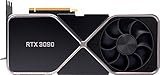
nVidia GeForce RTX 3090 Founders Edition Graphics Card | $2,195.00 | Buy on Amazon |
| 5 |

|
Nvidia GeForce RTX 3090 Ti Founders Edition | $2,449.99 | Buy on Amazon |
It also reached beyond the H20 product name. Nvidia said the policy covered other circuits that met the H20’s specified memory-bandwidth, interconnect-bandwidth or combined-bandwidth levels. Companies headquartered in covered destinations, or ultimately owned by a parent headquartered there, could also fall within the restriction.
The government cited the risk that the products could be used in, or diverted to, a supercomputer in China. Nvidia was told on April 14 that the requirement would apply for the indefinite future. Nvidia’s filing describes the original notification and its scope.
#1 Best Overall
- 24GB Video Memory
- Fourth Generation Tensor Cores
- HALF HEIGHT BRACKET ONLY
Why Nvidia developed the H20
The H20 was Nvidia’s China-focused AI accelerator, designed after earlier U.S. export controls restricted shipments of the company’s most capable data-center chips. Rather than being an ordinary consumer graphics card, it was part of Nvidia’s effort to create products that fit within the technical limits of the existing rules while preserving a market in China.
That strategy exposed a central weakness in performance-based export controls: a product designed to comply with one set of thresholds can later be captured by a new policy. The Congressional Research Service describes the H20 as the latest in a series of Nvidia chips modified in response to U.S. restrictions. Its chronology provides additional background on the China-chip controls.
The H20 should not be described simply as an H100 sold under another name. The relevant issue was its regulated performance characteristics and the government’s later licensing decision, not an unsupported claim of architectural equivalence.
Was the H20 banned?
Not in the precise legal sense of a blanket ban. A license requirement means a covered export cannot proceed lawfully without government approval. In practical terms, the April 2025 action halted unlicensed H20 shipments and created a major commercial barrier. But it left open the possibility that particular transactions could receive licenses.
Rank #2
- CUDA Cores: 4608 / NVIDIA Tensor Cores: 576 / NVIDIA RT Cores: 72
- GPU Memory: 24 GB GDDR6 with ECC / Bandwidth: 624 GB/Sec
- System Interface: PCI Express 3.0 x16
- Four DisplayPort 1.4 Connectors
- 3D Stereo Support with Stereo Connector
That distinction became important later. Nvidia said the U.S. government granted licenses beginning in August 2025 that permitted certain H20 products to be shipped to certain China-based customers. Those approvals were transaction-specific: they did not authorize every H20, every Chinese buyer or every shipment.
The most accurate summary is that the H20 faced an indefinite U.S. licensing requirement, followed by a limited licensing path—not a simple permanent prohibition and not a general return to unrestricted sales.
The financial impact on Nvidia
The restriction immediately affected inventory, purchase commitments and expected demand.
- Initial estimate: Nvidia said in April 2025 that it expected charges of up to approximately $5.5 billion related to H20 inventory, purchase commitments and related reserves for its fiscal first quarter.
- Later reported charge: Nvidia subsequently reported a $4.5 billion charge associated with excess H20 inventory and purchase obligations as demand declined after the licensing requirement.
- Sales before the restriction: Nvidia reported $4.6 billion in H20 sales in the first quarter of fiscal 2026, before the new requirement took effect.
The $5.5 billion and $4.5 billion figures are not necessarily contradictory. The first was an initial expected maximum; the second was the later charge Nvidia reported. The April filing contains the initial estimate, while the later filing reports the recognized charge. Nvidia’s pre-restriction sales figure appears in its fiscal 2026 first-quarter report.
Crashes, No Sound, or Screen Glitches?
Random freezes, missing sound and display glitches usually trace back to one bad driver. Find and replace yours safely.Free scan · under a minutePC Slower Than It Used to Be?
A free scan shows the junk files, broken settings and background clutter dragging Windows down - then fixes them in one click.Free scan · Windows 10 & 11Inventory built for the China market can have limited alternative use if it does not match the performance, software or regulatory requirements of products sold elsewhere. Nvidia cited diminished demand and excess inventory as part of the financial consequences.
Timeline: from restriction to limited approvals
- April 9, 2025: The U.S. informed Nvidia that H20 exports to China, Hong Kong, Macau and D:5 destinations required licenses.
- April 14, 2025: Nvidia was told the requirement would remain in effect indefinitely.
- April 2025: Nvidia warned of up to approximately $5.5 billion in H20-related charges.
- July 2025: The Congressional Research Service chronology records the Bureau of Industry and Security granting an export license for H20 sales in China.
- August 2025: Nvidia said licenses allowed certain H20 products to be shipped to certain China-based customers.
- August 2025: Officials reportedly expected the U.S. government to receive 15% or more of revenue from certain licensed China chip sales. Nvidia said no regulation had codified that requirement.
- January 15, 2026: The Bureau of Industry and Security changed the review framework for certain more advanced chips, including H200-class products, from a presumption of denial to case-by-case review under specified conditions.
What the reported 15% revenue expectation means
Reports and government-related disclosures described an expectation that the U.S. government would receive at least 15% of revenue from certain licensed China chip sales. Nvidia’s filing said that expectation had not been codified in a regulation.
It is therefore inaccurate to state flatly that “the U.S. takes 15% of Nvidia’s sales.” The figure should be presented as an expectation communicated by officials in connection with certain licensed transactions, not as a generally applicable statutory rule established by the cited filing.
U.S. approval did not guarantee Chinese market access
A U.S. export license is only one side of the transaction. Chinese authorities and customers operate under a separate regulatory and commercial system. The Congressional Research Service records that China’s Cybersecurity Administration raised security concerns about the H20 after the U.S. licensing developments.
What’s actually slowing this PC down?
Pick the symptom - the matching free tool is one click away.
Rank #4
- Chipset: NVIDIA GeForce RTX 3090
- Video Memory: 24GB GDDR6X
- Memory Interface: 384-bit
- Output: DisplayPort x 3 (v1.4a) / HDMI 2.1 x 1
- Nvidia India 3 Year *
That meant a licensed shipment could still face customer hesitation, Chinese government scrutiny or commercial limits. Nvidia later said it was effectively unable to compete in China’s data-center computing market because a product needed approval from both the U.S. and Chinese governments.
That statement is narrower than saying Nvidia had left China entirely. Nvidia indicated that uncontrolled gaming and workstation GPUs could still be shipped, while its data-center computing business faced the more serious constraint.
Independent reader supportYour contribution helps us test, update, and keep practical guides available for everyone.How the January 2026 rule fits in
The January 15, 2026 BIS rule should not be treated as a repeal of the H20 licensing requirement. It addressed certain advanced-computing commodities, including the Nvidia H200 and comparable products, and changed their review policy for exports to China and Macau from a presumption of denial to case-by-case review when specified conditions were satisfied.
Among the conditions were:
- sufficient supply for U.S. customers;
- no diversion of foundry capacity needed for U.S. demand;
- a requirement that aggregate China and Macau shipments not exceed 50% of shipments to U.S. end users for the product;
- customer compliance and screening procedures;
- qualified third-party testing in the United States before export, with representative-batch testing potentially permitted; and
- restrictions involving remote users and parent companies in specified jurisdictions.
The rule also specified technical criteria, including a TPP below 21,000 and total DRAM bandwidth below 6,500 GB/s for certain policy treatment. Those details concern the later H200-class framework; they do not establish that H20 exports were automatically freed from the April 2025 requirement. BIS’s announcement and the Federal Register rule set out the later policy.
Free tools Windows power users keep installed
One-click scans. No signup required.
Best Value
- 900-1G136-2505-000
Why the H20 episode matters
The episode illustrates why semiconductor export compliance cannot be reduced to checking a product’s name or a single performance threshold. U.S. controls can combine product specifications with destination rules, end-user and end-use restrictions, ownership tests, entity-list designations and licensing presumptions.
Earlier controls affected products including Nvidia’s A100, A800, H100, H800, L4, L40, L40S, RTX 4090 and B200 when they met applicable thresholds. The H20 showed that even a product created for an existing regulatory boundary could later become subject to a new licensing policy.
For companies, the practical risks include stranded inventory, uncertain customer commitments and the possibility that U.S. approval will not translate into sales. For investors, the key point is that China exposure depends not only on Nvidia’s product roadmap but also on two governments’ changing approval decisions.
The Bottom Line
Bottom line: The U.S. imposed an indefinite export-license requirement on Nvidia’s H20 in April 2025. Later licenses allowed some products to reach some China-based customers, but they did not restore unrestricted access. Nvidia reported a $4.5 billion H20-related charge after initially estimating up to approximately $5.5 billion, and the company’s data-center business in China remained materially constrained by both U.S. controls and Chinese market scrutiny.
Quick Recap
Product prices and availability are accurate as of the date/time indicated and are subject to change. Any price and availability information displayed on Amazon at the time of purchase will apply.




