
On October 14, 1884, George Eastman received U.S. Patent No. 306,594 for a sensitive flexible photographic film designed to make positives and negatives without the rigid glass plates then used by photographers. The Rochester inventor’s patent was an early legal and technical step toward roll film, portable cameras and, eventually, motion-picture photography.
What Eastman patented on October 14
U.S. Patent No. 306,594 was issued to George Eastman of Rochester, New York, and assigned to the Eastman Dry Plate Company. Its subject was not a finished consumer camera or a complete roll-film system. It covered a marketable photographic film: a flexible support carrying a sensitized gelatin layer.
As an Amazon Associate I earn from qualifying purchases.
Eastman described the purpose in the patent’s own words: “My invention relates to an improvement in photographic films having for their object the productionfor the market of sensitized films, which are capable of being used in making positives and negatives in place of the sheets of glass coated with emulsion, now known in the trade as dry-plates.” The original transcription preserves the unusual “productionfor” spacing.
Why replacing glass mattered
Dry plates produced high-quality images, but each plate was a rigid sheet of glass. Photographers had to carry bulky, fragile plates and protect them from breakage while handling them in the camera and darkroom. A flexible support could be lighter, easier to store and less vulnerable to shattering.
#1 Best Overall

- Capture Spontaneous Moments in Rich, Warm Color: Kodak Gold 200 is famed for its vibrant, sunny hues and forgiving nature, ensuring your everyday snaps turn out beautifully, even if your lighting or settings aren’t perfect
- The Perfect Film for Beginners & Enthusiasts: With high exposure tolerance and reliable 200 ISO, this 35 mm film roll delivers stunning results in both daylight and indoor settings without hassle, making it the ideal choice to learn with or simply enjoy
- Shoot More, Spend Less: This practical 3-roll bundle means you’re always prepared. Keep your camera loaded and never miss a shot, whether you’re documenting a full vacation or just want a single Kodak film in your bag for months of spontaneous captures
- Bring Your Memories to Life: Experience the classic, warm color reproduction and fine grain that make Kodak Gold 200 35mm film a favorite. It excels at rendering lush greens, bright yellows, and skin tones, giving your photos a timeless, joyful feel
- Versatile for Every Camera and Occasion: From point-and-shoots to professional SLRs, this camera film ensures versatility across portraits, travel, and daily life, making it the one film you can always rely on for stunning clarity and dependable results
The patent therefore addressed both a materials problem and a workflow problem. The sensitized gelatin layer supplied the light-sensitive image-forming surface; the flexible support allowed that surface to be handled as film rather than as an individual glass sheet. The same basic arrangement could be used for positives and negatives.
| Medium | Support | Typical image use in the documented comparison | Practical implication |
|---|---|---|---|
| Glass dry plate | Rigid glass sheet | Positive or negative | Stable but heavy and breakable |
| Eastman’s 1884 patented film | Flexible support with sensitized gelatin | Positive or negative | Designed as a lighter substitute for glass plates |
| Later transparent roll film | Transparent flexible base | Sequential exposures on a roll | Enabled more portable and continuous capture |
Patent milestone versus commercial roll film
The 1884 patent should not be confused with the first commercial transparent roll film. Kodak’s official milestones place Eastman’s first commercial transparent roll film in 1889, five years after the patent was issued. The patent marks protection for the flexible-film concept; the later product milestone marks commercial availability of a transparent roll medium.
Rank #2
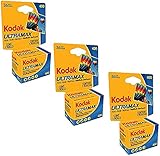
- 3 pack Kodak Ultra Max 400 Color print film 36 exp. 35mm DX 400 135-36 (108 pics)
- Country of Origin:China
- Package weight:4.0 lb
- Package dimensions:4.32"L x 9.65"W x 19.05"H
From experimental supports to a usable product
History recorded by the George Eastman Museum describes a progression from paper-backed emulsion experiments toward lighter, more flexible photographic supports. That development is important because flexibility alone did not make a modern roll-film product: the support also had to carry a dependable light-sensitive coating and work within practical photographic processing.
Why the 1889 date is significant
A patent can establish an invention’s legal scope without showing that a mass-market product is already available. Kodak’s 1889 chronology identifies the commercial transparent roll film as the point at which the medium became a product photographers could obtain and use, rather than solely a patented technical approach.
Rank #3

- AUTHENTIC KODAK ULTRAMAX 400 – 3 rolls of genuine Kodak Ultramax 400 color negative film, 36 exposures per roll for a total of 108 photos. Trusted ISO 400 film delivers vivid, true-to-life colors with fine grain and excellent sharpness in any lighting.
- VERSATILE 400-SPEED FILM – Performs beautifully in bright daylight, overcast skies, mixed light, indoor with flash, and low-light action shots. The go-to all-purpose 35mm film for travel, weddings, portraits, street photography and everyday memories.
- WORKS WITH ANY 35MM CAMERA – DX-coded 135-36 format compatible with all 35mm film cameras including Kodak Ektar H35, Kodak M35, Kodak M38, Canon AE-1, Nikon FM2, Olympus OM-1, Pentax K1000 and point-and-shoot 35mm cameras. Standard C-41 process.
- BUNDLED WITH THE TUDAK STORE MICROFIBER CLOTH – Bundle includes 1 premium Tudak microfiber cleaning cloth — ultra-soft, lint-free, streak-free and reusable. Safe for camera lenses, viewfinders, filters, eyeglasses, phone screens and laptop displays.
- PERFECT FOR FILM SHOOTERS & GIFTS – Whether you're an experienced analog photographer or just picked up your first film camera, this 3-pack is a reliable starter kit and a great gift for film photography enthusiasts, students and hobbyists.
How flexible film helped lead to motion pictures
Kodak’s chronology says the availability of flexible film made possible the development of Thomas Edison’s motion-picture camera in 1891. Motion-picture cameras require a long succession of frames to move through the camera, so a flexible strip is fundamentally better suited to that task than separate glass plates.
Eastman’s 1884 invention was not itself a motion-picture camera and did not complete the later motion-picture system. Its importance was enabling: a lighter, continuous film medium provided the physical basis on which later camera mechanisms could operate. The 1891 connection belongs to the subsequent development timeline, not to the 1884 patent’s immediate product description.
Rank #4

- KODAK ULTRAMAX 400 FILM ISO 400 color negative film delivers vibrant colors, fine grain, and sharp detail in a wide range of lighting conditions—ideal for everyday photography, travel, portraits, and outdoor shooting.
- 3 Rolls — 72 Total Exposures Includes three Kodak Ultramax 400 35mm film rolls with 24 exposures per roll, giving you 72 total photos for extended shooting sessions.
- Compatible With Most 35mm Cameras Works with point-and-shoot cameras, reusable film cameras, vintage SLR cameras, and other 35mm film cameras using standard 135 film.
- Daylight-Balanced C-41 Film Designed for daylight use but also performs well in mixed and low-light environments with natural color reproduction and consistent results.
- Includes Sturdy Tiger Film Storage Case Comes with a durable black film storage case to help protect and organize your film rolls during travel or storage.
What the patent changed—and what it did not
- It changed the support format: the claimed film used a flexible support instead of a rigid glass sheet.
- It preserved photographic function: the sensitized gelatin layer was intended to record images for positive and negative production.
- It began a longer commercialization process: the first commercial transparent roll film followed in 1889.
- It did not by itself create motion pictures: the later 1891 camera development depended on the availability of flexible film and additional engineering.
A concise timeline
- October 14, 1884: George Eastman receives U.S. Patent No. 306,594 for flexible sensitized photographic film and assigns it to the Eastman Dry Plate Company.
- 1889: Kodak’s official milestones date the first commercial transparent roll film to this year.
- 1891: Kodak’s film chronology links flexible film’s availability to the development of Thomas Edison’s motion-picture camera.
Why October 14, 1884 remains a useful date
The date captures a transition in photographic technology: from individual glass plates toward flexible media that could be carried, processed and eventually advanced in sequence. Eastman’s patent was an early step rather than the endpoint. Its lasting significance lies in defining a practical alternative to glass and helping establish the material path that later made roll photography and motion pictures possible.
The Tool Desk
Outbyte PC Repair FREERepair Windows errors before they cause bigger problemsFix Now →Outbyte Driver Updater FREEScan for outdated or missing drivers - takes under a minuteDriver Scan →Quick Recap
Best Value

- Premium Quality Film: Experience vivid colors and exceptional detail with Kodak Gold 200 35mm film. Each roll provides 36 exposures, perfect for capturing every memorable moment in stunning clarity. Ideal for both outdoor and indoor settings, Kodak film delivers consistently reliable performance.
- 2. Versatile Use: Suited for all 35mm film cameras, this film is perfect for a range of photographic applications, from spontaneous snapshots to detailed portraits. Its 200 ISO rating ensures excellent performance across various lighting conditions.
- 3. Enhanced Color Reproduction: Kodak Gold 200 film offers enhanced color reproduction, fine grain, and high sharpness. This film is particularly good at capturing vibrant yellows, greens, and reds, making it a favorite for film photography enthusiasts who value rich and warm hues.
- Bulk Pack Value: Get more and spend less with this multi-pack bundle. It includes Thirty rolls of Kodak Gold 200 35mm film, ensuring you have enough supply for all your photographic needs, paired with a high-quality Balveli microfiber cloth for keeping your camera lens clean.
- Ready for Any Occasion: Whether it’s a sunny day at the beach or an indoor celebration, Kodak Gold 200 is ready to go. Its versatility and ease of use make it an excellent choice for both novice photographers and seasoned professionals alike.
Product prices and availability are accurate as of the date/time indicated and are subject to change. Any price and availability information displayed on Amazon at the time of purchase will apply.




