
Do these 3 things before closing this tab:
1Repair Windows errors before they cause bigger problems2Scan for outdated or missing drivers - takes under a minute3Clear out junk files and repair common Windows errorsGoogle and Meta were reportedly discussing a multibillion-dollar artificial-intelligence chip arrangement—but the public evidence supports a potential deal, not a confirmed billion-dollar contract. The reported structure would have Meta rent Google Cloud TPU capacity in 2026, then potentially deploy Google-designed TPUs in Meta data centers from 2027.
The distinction matters for investors and industry watchers. The discussions were reported by The Information on November 24, 2025, citing a person involved in the talks. Neither that report nor the official Google announcements reviewed here establishes that Meta signed the arrangement, that the rental occurred, or that the proposed purchase has a final value.


As an Amazon Associate I earn from qualifying purchases.
What was reportedly under discussion?
According to The Information, Meta was considering a two-stage relationship with Google:
The Tool Desk
Outbyte PC Repair FREEClear out junk files and repair common Windows errorsFree Scan →Outbyte Driver Updater FREEFix the driver behind crashes, sound loss and screen glitchesFind Drivers →- Cloud access in 2026: Meta could rent Google TPU capacity through Google Cloud rather than immediately owning the hardware.
- Potential deployment from 2027: Meta could purchase or otherwise obtain Google-designed TPUs for use in Meta-operated data centers.
- Reported scale: The discussions were described as worth billions of dollars, but no definitive public contract value, chip count or guaranteed spending commitment was disclosed.
A secondary report summarized the same proposed rental-in-2026 and purchase-in-2027 structure. That is not the same as an official announcement. Negotiations can be delayed, reduced, replaced by another supplier or abandoned altogether.
#1 Best Overall
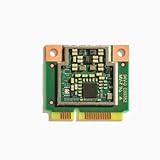
- 64-bit version of Debian 10 or Ubuntu 16.04 (or newer)
- x86-64 or ARMv8 system architecture
- 64-bit version of Windows 10
- x86-64 system architecture
There is also uncertainty about what “purchase” would mean. It could refer to chips, complete accelerator servers, integrated racks, capacity supplied through an infrastructure partner, or a longer-term hardware-and-support arrangement. Public reporting does not establish that Meta would simply buy standalone retail-style chips.
Why rent first and buy later?
The proposed sequence would be a logical way for Meta to test a new accelerator platform before making a large infrastructure commitment.
What cloud rental would provide
- Access to TPU capacity without immediate capital spending on hardware.
- A way to test Meta’s models, compilers and serving systems on Google’s platform.
- More flexibility while Meta evaluates performance, availability and cost.
- Less responsibility initially for facility integration, maintenance, cooling and power management.
- Potentially faster access than building a dedicated TPU environment from scratch.
Cloud access would not make every TPU-related cost disappear. Meta would still need engineering resources, networking, storage, data transfer and software adaptation. It would also depend on Google’s available capacity, regions, pricing and support terms.
Why ownership might follow
If Meta found that TPUs performed well on large, predictable workloads, owning or directly deploying the hardware could offer more control over scheduling and utilization. A dedicated installation may also reduce exposure to cloud capacity constraints or future price changes and allow tighter integration with Meta’s networking, storage and data-center systems.
The trade-off is operational complexity. Direct deployment requires procurement, power, cooling, networking, software integration, reliability engineering and eventual hardware refreshes. Buying accelerators alone does not provide the same package as renting a complete Google Cloud environment.
Rank #2

- 2x PCIe Gen2 x1 interface (one per Edge TPU)
- M.2 - 2230 - D3 - E KEY
- 2x Google Edge TPU ML accelerator
- 8 TOPS total peak performance (int8)
- 2 TOPS per watt
What are Google TPUs?
TPU stands for Tensor Processing Unit. It is Google’s custom accelerator family for machine-learning workloads. Google uses TPUs for its own systems and offers them to customers through Google Cloud.
Google announced its eighth-generation lineup on April 22, 2026:
- TPU 8t: designed for large-scale training.
- TPU 8i: designed for inference and lower-latency model serving.
Google says TPU 8i delivers 80% better performance per dollar than the previous generation. That is a Google claim, not independent benchmark evidence, and “performance per dollar” should not be confused with raw speed or an across-the-board cost advantage over Nvidia GPUs.
The newer training-and-inference split could be relevant to Meta’s varied workloads, including recommendation systems, generative-AI training and high-volume model serving. That is an analytical possibility, not a disclosed explanation from Meta.
Why might Meta want another accelerator?
Meta operates at a scale where accelerator availability, utilization and power efficiency can materially affect infrastructure spending. Its interest in Google hardware would most plausibly represent portfolio diversification, not an abandonment of Nvidia.
Potential motivations include:
- Supply diversification: another source of AI compute could reduce dependence on one major accelerator supplier.
- Negotiating leverage: a credible alternative could strengthen Meta’s position in discussions with Nvidia and AMD.
- Workload economics: specialized hardware can be attractive when a company has large, stable workloads and can justify optimization.
- Earlier evaluation: cloud rental would let Meta test TPUs before committing to a major on-premises deployment.
- Capacity expansion: additional platforms could help Meta meet rapidly growing AI infrastructure requirements.
Meta would need to evaluate more than chip specifications. Important criteria would include training throughput, inference latency, memory capacity and bandwidth, scale-out networking, reliability, power requirements, software compatibility and the ability to operate TPUs alongside Nvidia, AMD and Meta-designed silicon.
Recommended Free Tools
TPUs are not drop-in replacements for Nvidia GPUs
Nvidia’s advantage extends beyond the accelerator itself. Its CUDA software ecosystem, developer familiarity, installed base, networking products and broad support across frameworks and enterprise tools make Nvidia hardware comparatively portable for many customers.
Google’s advantage is vertical integration: it controls the TPU design, compiler, cloud service and much of the surrounding infrastructure. That can be powerful for large, tightly integrated workloads, but moving software from a CUDA-oriented environment can require meaningful engineering effort.
For Meta, the likely question would not be “TPUs or Nvidia everywhere?” It would be which workloads deliver the best combination of performance, cost, availability and operational simplicity on each platform. Large and predictable workloads are the most plausible candidates for specialized accelerators. Heterogeneous or rapidly changing workloads may continue to favor Nvidia’s broader ecosystem.
What would the deal mean for Google?
A completed Meta deployment would be a significant validation of Google’s effort to commercialize its internally developed AI silicon beyond Google’s own systems. A major external customer installing TPUs in its own facilities would be a stronger signal than ordinary cloud usage because it would suggest that a large technology company was willing to integrate Google’s hardware into its own operations.
Potential benefits for Google would include:
- A larger market for TPU hardware, software and support.
- Stronger positioning for Google Cloud against AWS and Microsoft Azure.
- Additional evidence that custom accelerators can compete for selected workloads.
- Greater customer confidence in Google’s long-term TPU roadmap.
Google is investing heavily in AI infrastructure more broadly. It projected 2026 capital expenditure of $180 billion to $190 billion and said slightly more than half of its 2026 machine-learning compute investment was expected to support Google Cloud and its customers. Those figures provide context for the scale of Google’s infrastructure push, but they do not confirm a Meta contract.
What would it mean for Meta?
For Meta, a TPU relationship could add a new accelerator platform and give its engineers a structured way to evaluate Google’s latest hardware. It could also help Meta address supply constraints and improve its leverage with existing suppliers.
The costs would include porting and optimizing software, training teams, validating reliability and supporting another infrastructure stack. Meta would also need to assess data governance, geographic placement, failure recovery and the risks of relying on Google’s hardware roadmap and software releases.
Even a substantial TPU deployment would not prove that Meta had stopped buying Nvidia hardware. More likely, it would demonstrate that Meta was assembling a mixed accelerator portfolio.
Pricing does not prove a billion-dollar contract
Google publishes TPU prices by generation, region and commitment model on its TPU pricing page. Examples listed in the research include:
- Ironwood: $12 per chip-hour on demand in us-central1.
- Trillium/TPU v6e: $2.70 per chip-hour on demand in listed U.S. regions.
- Committed use: pricing can be lower than on-demand, with discounts varying by product and region.
These public prices cannot be multiplied into a reliable estimate of a private enterprise deal without knowing the number of chips, utilization, rental duration, TPU generation, networking, storage, support, discounts and whether construction or financing is included.
Google also notes that billing can be shown in VM-hours rather than chip-hours, and a TPU virtual machine may contain multiple chips. Availability varies by region and AI zone; some zones require project access or enablement. Reservations may be available through self-service or Google Cloud sales depending on the product and arrangement, according to Google’s reservation documentation.
Google’s 2026 TPU expansion is related—but separate
Google’s later infrastructure announcements make the reported talks more commercially plausible, but they do not confirm them.
Windows Errors? Fix Them Before They Spread
Repair common Windows errors and clear accumulated junk for a smoother, more stable PC - no reinstall needed.Free scan · no reinstallCrashes, No Sound, or Screen Glitches?
Random freezes, missing sound and display glitches usually trace back to one bad driver. Find and replace yours safely.Free scan · under a minuteIn May 2026, Google and Blackstone announced a separate TPU-cloud joint venture. Google said Blackstone would make an initial $5 billion equity commitment and that the venture expected to bring 500 megawatts of TPU capacity online in 2027. That announcement shows Google is expanding TPU capacity beyond its traditional cloud-only model. It does not establish that Meta was the customer, that Meta would receive the same infrastructure, or that the reported negotiation was completed.
Confirmed facts versus reported possibilities
| Confirmed or publicly disclosed | Reported but unconfirmed |
|---|---|
| Google offers TPUs through Google Cloud. | Meta may rent TPU capacity from Google in 2026. |
| Google announced TPU 8t and TPU 8i in April 2026. | Meta may deploy purchased Google TPUs from 2027. |
| Google and Blackstone announced a separate TPU-cloud venture. | The exact deal value, chip volume and commercial structure. |
| Google publishes regional TPU list prices and reservation information. | Whether the reported arrangement was signed, delayed, reduced or canceled. |
What investors should watch next
- An official announcement: a Google, Meta or regulatory disclosure would be stronger evidence than repeated media reports.
- Capacity and product details: the TPU generation, number of chips, regions and delivery schedule would determine the deal’s practical significance.
- Commercial structure: investors should distinguish cloud reservations, managed capacity, hardware sales and infrastructure financing.
- Software results: the key question is whether Meta can achieve competitive performance and utilization on its actual workloads.
- Supplier mix: continued Nvidia, AMD and Meta accelerator spending would indicate diversification rather than replacement.
- Google Cloud economics: revenue growth and margins would matter more than a headline contract value alone.
Bottom line
Meta’s reported interest would be strategically important even if it never becomes a completed purchase. It would represent a serious validation test for Google’s attempt to turn custom AI silicon into a broader commercial platform.
But the current evidence does not support saying that Meta signed a billion-dollar Google TPU deal or switched away from Nvidia. The defensible conclusion is narrower: Meta was reportedly considering Google Cloud TPU access in 2026 and possible direct TPU deployment from 2027. If completed, the arrangement could pressure Nvidia, strengthen Google Cloud and encourage more buyers to diversify their accelerator portfolios—but it would not by itself replace Nvidia’s software and infrastructure advantages.
Quick Recap
Product prices and availability are accurate as of the date/time indicated and are subject to change. Any price and availability information displayed on Amazon at the time of purchase will apply.
Free tools Windows power users keep installed
One-click scans. No signup required.




