
Crashes, No Sound, or Screen Glitches?
Random freezes, missing sound and display glitches usually trace back to one bad driver. Find and replace yours safely.Free scan · under a minutePC Slower Than It Used to Be?
A free scan shows the junk files, broken settings and background clutter dragging Windows down - then fixes them in one click.Free scan · Windows 10 & 11Some links on this page are affiliate links: if you buy through them we may earn a commission, at no extra cost to you.
As of August 9, 2026, Harley-Davidson is in a serious turnaround—not an imminent financial collapse. Its core motorcycle business, HDMC, suffered a sharp multi-year decline: worldwide retail sales fell 12.4% in 2025, revenue dropped 13.2%, and the segment moved from a $277.8 million operating profit in 2024 to a $28.7 million operating loss in 2025. However, the company entered the second half of 2026 with improving North American retail sales, lower dealer inventory, stronger second-quarter HDMC revenue and raised full-year guidance.
The important qualification is that this is early stabilization, not a completed recovery. First-half HDMC operating income was still down 49% year over year, consolidated free cash flow was negative $104 million, HDFS earnings were falling after a major financing transaction, and LiveWire remained loss-making. Harley-Davidson’s new Back to the Bricks strategy now has to prove that lower-priced motorcycles, healthier dealers and better cost control can restore profitable volume without sacrificing the premium brand.
As an Amazon Associate I earn from qualifying purchases.
Harley-Davidson’s second-quarter 2026 presentation and 2025 annual report provide the financial basis for that assessment.
The short answer: Harley is under pressure, but it is not going out of business
Headlines describing Harley-Davidson as a dying company miss the distinction between a troubled motorcycle operation and the financial condition of the consolidated company. HDMC—the motorcycle manufacturing and branded-products segment—has a real volume and profitability problem. HDFS, the financing arm, remains strategically important but is now smaller and more capital-light after selling a large portion of its loan portfolio. LiveWire is a small electric-vehicle subsidiary with significant losses, but it is not the main reason the core business deteriorated.
Popular on Amazon

- DESIGN FEATURES - The CE 2 Level black cloth padding on the back side is designed to prevent cracking, so the product is more durable and you don't have to worry about the black cloth padding affecting the normal breathability, you just need to make sure that it fits with your jacket
- UNIQUE DESIGN FOR ALL SEASONS- One side of the ce level 2 back armor has multiple ventilation holes for use in the summer or in high temperatures, allowing it to breathe and wick away perspiration. The other side has an extra layer of black cushioning to keep you warm in the winter for all-season riding
- COMPREHENSIVE PROTECTION - Our CE2 Level back protector is larger in size and a little thicker than other shops in the market, back protection is all around. The size is size L. Please note that can size L be tucked into a jacket? If this size is big for you, then our size M may fit you better
- CE LEVEL SAFETY CERTIFICATION - Our motorcycle armor pad are CE certified to meet international safety standards, ensuring a high level of protective performance. The set includes full level 2 CE marking 1 back pad, 2 elbow pads and 2 shoulder pads, providing professional level protection and overall enhanced protection
- HIGH PERFORMANCE MATERIALS - The motorcycle jacket armor pad is made of PU memory foam with excellent abrasion resistance and tear resistance, ergonomic structure, CE grade armor protective gear will become hard and effectively disperse the force of impact when it is hit to ensure comprehensive protection of the body in all kinds of active environments
Harley had approximately $1.896 billion in consolidated cash and equivalents at June 30, 2026, according to its second-quarter presentation. That cash position, together with the HDFS transaction, gives the company financial room to execute a turnaround. It does not guarantee success, and cash held by the consolidated company does not mean HDMC, HDFS and LiveWire have identical liquidity or funding arrangements.
The most accurate description is therefore: Harley-Davidson is a financially viable company attempting to repair a weakened motorcycle business. The next major test is whether the modest improvement in 2026 retail sales can become sustained, profitable growth in 2027 and beyond.
First, separate Harley-Davidson’s three businesses
Consolidated results can be misleading because Harley-Davidson operates three materially different businesses:
| Segment | What it does | Why it matters now |
|---|---|---|
| HDMC | Designs, manufactures and sells Harley-Davidson motorcycles, parts, accessories, apparel and licensing. | This is the core motorcycle business and the main source of the strategic problem. |
| HDFS | Provides motorcycle financing, servicing, insurance and related financial products. | Still supports dealers and customers, but its 2025 restructuring reduced the loan assets and recurring earnings it keeps on its balance sheet. |
| LiveWire | Develops and sells electric motorcycles, electric balance bikes and related products. | Strategically important for Harley’s electric future, but small and still loss-making. |
This distinction explains why Harley’s consolidated earnings did not tell the whole story in 2025. HDFS generated $490.4 million of operating income, nearly twice its 2024 result, while HDMC recorded a $28.7 million operating loss. Much of the HDFS improvement came from the sale of receivables, reserve releases and transaction-related income—not from a sudden recovery in motorcycle demand. The figures are reported in the 2025 annual report.
What happened in 2025?
2025 was the clearest break point for Harley’s core motorcycle business. The company reduced production and shipments as it tried to bring dealer supply closer to retail demand. That helped reduce inventory, but the lower volume also hurt factory utilization and profitability.
| Measure | 2025 result | Change or context |
|---|---|---|
| Worldwide motorcycle retail sales | 132,535 units | Down 12.4% from 151,229 in 2024 |
| U.S. retail sales | 82,698 units | Down 12.9% |
| North American retail sales | 89,132 units | Down 12.6% |
| EMEA retail sales | 21,454 units | Down 10.9% |
| Asia-Pacific retail sales | 18,975 units | Down 14.6% |
| Latin American retail sales | 2,974 units | Up 2.2%, the only major region to increase |
| Wholesale motorcycle shipments | 124,477 units | Down 16.4% |
| HDMC revenue | $3.578 billion | Down 13.2% |
| HDMC operating income | $(28.7) million | Down from $277.8 million in 2024 |
| HDMC operating margin | Negative 0.8% | Down from 6.7% in 2024 |
| Consolidated net income | $338.7 million | Down from $455.4 million |
| Consolidated diluted EPS | $2.78 | Down from $3.44 |
Parts and accessories revenue fell 5.8%, while apparel revenue fell 9.1%. Those declines matter because Harley earns additional revenue from the motorcycles already on the road. Fewer new motorcycles can eventually mean fewer future parts, service, accessories, apparel and finance opportunities.
What’s actually slowing this PC down?
Pick the symptom - the matching free tool is one click away.
Harley attributed the deterioration to high interest rates, weak consumer sentiment, reduced discretionary spending, softer international conditions and a difficult comparison with the redesigned Touring motorcycles launched in 2024. Lower production also created unfavorable manufacturing leverage: fixed factory costs were spread across fewer motorcycles, increasing the cost per unit. Those explanations appear in the company’s 2025 filing.
Why motorcycle sales weakened
1. Harley sells expensive discretionary products
Motorcycles are generally discretionary purchases, and many are financed. When interest rates rise, the monthly payment for a premium motorcycle rises as well. Even customers who remain interested in riding may delay a purchase, choose a used motorcycle or select a lower-priced competitor.
Harley’s own disclosures identified high interest rates, economic uncertainty and depressed consumer sentiment as major factors in 2025. The company is particularly exposed because its brand is associated with premium-priced, heavyweight motorcycles. That makes affordability, financing terms and trade-in values important parts of the purchase decision.
The challenge is broader than marketing. Harley must contend with lower-priced Japanese, European, Chinese and Indian motorcycles, as well as potential customers seeking lighter, cheaper and more versatile products. The company has also expressed concern about attracting newer riders, but its filings do not provide a clean current age-by-age sales series. It is more accurate to describe the issue as a product-accessibility and customer-replacement challenge than to claim a precisely measured demographic collapse.
2. The product mix is concentrated in large motorcycles
Harley’s 2025 wholesale mix shows where the company has historically depended on volume:
| Category | 2025 wholesale units | Year-over-year change |
|---|---|---|
| Grand American Touring, including Trikes | 69,252 | Down 19.2% |
| Cruiser | 41,172 | Down 11.0% |
| Sport and Lightweight | 9,638 | Down 21.9% |
| Adventure Touring | 4,415 | Down 2.6% |
The concentration is not automatically a weakness: Harley has credibility and a strong identity in touring and cruiser motorcycles. But a portfolio dominated by expensive, heavyweight models can make it difficult to bring in first-time riders or customers whose budgets and riding preferences have changed.
A successful replacement product must be lighter and more accessible while preserving enough margin and customization potential to support Harley’s premium positioning and dealer network. It also needs to create a path from a buyer’s first motorcycle to a larger Harley later.
3. Dealer inventory and factory utilization pulled in opposite directions
There are two different sales numbers to understand:
Also popular on Amazon
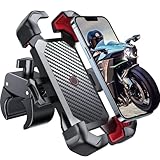
- 1 Click, Auto Lock- 2026 latest motorcycle phone mount features with a upgraded auto lock button. 4 arms will auto lock your phone with a click, and unlock by pressing both side. Real one hand operation. Thanks to the solid structured inner mechanism, the lock button won't get stuck (tested to stand with10,000+ times press)
- Hold Your Phone Like A Vise- Both the clamp and mount are cushioned for protection of the phone and handlebar. Has a high-speed lock switch, you can double lock your phone when you ride at bumpy road. No worry your phone will vibrate loose when you hit 100mps
- Solid Reinforced Ball-Joint- The bicycle phone mount is equipped with a upgraded robust ball part, which is made of military-grade A+ material with high tenacity, effectively solve the problem of snapping off. Good choice for long-term use
- 360° Adjustable- Thanks to the universal ball design, the bike cell phone holder is all-round adjustable, you can pivot the phone enough to any angle. A silicone pad is also filled into the thread, which can secure the angle from loosing up while you're riding
- Wide Compatibility- The bike phone holder is compatible with handlebar from 0.7” to 1.34”, you can use it on your ATV, scooter, stroller, peloton, etc. Cellphone from 4.7” to 7”, thickness (with case)≤0.71”, support iPhone,Samsung, LG, Google Pixel,Motorola,One Plus, etc. (Note: for Galaxy Z Fold 5, 6, 7 are only compatible when folded and without case.)
- Retail sales are motorcycles purchased by customers from dealers.
- Wholesale shipments are motorcycles Harley ships to dealers.
They do not have to move together. If dealers have too many motorcycles, Harley can cut wholesale shipments while retail sales continue. That is what inventory discipline is intended to accomplish. It may reduce discounting and improve dealer cash flow, even though it lowers Harley’s near-term factory output.
Worldwide dealer inventory ended 2025 at approximately 40,000 motorcycles, about 17% below the prior year. The reduction was financially healthier than forcing dealers to absorb excess supply, but it also meant lower factory utilization, higher fixed costs per motorcycle and fewer units available to generate future parts, accessories, service and financing revenue.
This is why a shipment increase is not automatically good news. Harley needs wholesale shipments to follow genuine retail demand, not rebuild an inventory glut. Conversely, shipment cuts can be healthy temporarily but damaging if they continue because the company cannot sell enough motorcycles.
4. Tariffs added a significant cost burden
Harley reported approximately $67 million in new or increased tariff costs during 2025. As of May 1, 2026, it estimated that 2026 tariff costs could be approximately $75 million to $90 million. The company has cited sourcing changes, pricing, inventory timing, government engagement and other mitigation efforts.
The Tool Desk
Outbyte PC Repair FREERepair Windows errors before they cause bigger problemsFix Now →Outbyte Driver Updater FREEScan for outdated or missing drivers - takes under a minuteDriver Scan →Tariffs can hurt Harley through:
- higher costs for imported motorcycles, components and materials;
- supplier price increases and higher logistics costs;
- higher retail prices that reduce affordability;
- lower margins if Harley absorbs the costs; and
- weaker competitiveness if foreign markets impose tariffs on U.S.-branded motorcycles.
Tariffs are a real problem, but they do not explain the entire sales decline. Harley’s own filings also point to interest rates, consumer sentiment, product-cycle comparisons, international weakness and inventory management. In addition, second-quarter 2026 gross profit benefited from a tariff recovery that may not recur, so investors should not treat that improvement as a permanent margin gain.
What improved in the second quarter of 2026?
The first half of 2026 provided evidence that Harley’s inventory and retail reset was beginning to work. North American retail sales increased for a third consecutive quarter, and global dealer inventory remained well below the prior-year level.
| Measure | Q2 2026 result | Change |
|---|---|---|
| Worldwide retail sales | 42,467 units | Up 1% |
| North American retail sales | 29,751 units | Up 3% |
| First-half worldwide retail sales | 75,974 units | Up 4% |
| Global dealer inventory | — | Down 17% from the end of Q2 2025 |
| HDMC wholesale shipments | 39,209 units | Up 9% |
| HDMC revenue | $1.104 billion | Up 6% |
| HDMC operating income | $72 million | Up 18% |
| HDMC adjusted EBITDA margin | 10.4% | Up from 9.3% |
| Consolidated revenue | $1.230 billion | Down 6%, mainly because of HDFS |
| Consolidated net income | $80 million | Down 26% |
| Diluted EPS | $0.75 | Down 15% |
| HDFS operating income | $22 million | Down 69% |
| LiveWire revenue | $9.1 million | Up 52%, but still loss-making |
| LiveWire operating loss | $(17.9) million | Loss continued |
The improvement is more meaningful in HDMC retail and inventory than in the consolidated income statement. Second-quarter HDMC revenue and operating income increased, but first-half HDMC operating income was still only $91 million versus $178 million a year earlier. First-half adjusted EBITDA was $189 million versus $249 million.
In other words, Q2 showed that Harley can stabilize sales and improve the motorcycle segment’s quarterly performance. It did not show that the company has restored its former level of profitability or solved its long-term demand problem.
Quick wins for a faster PC:
Fix the driver behind crashes, sound loss and screen glitchesFind Drivers →Clear out junk files and repair common Windows errorsFree Scan →Harley’s 2026 guidance
After releasing its second-quarter results on July 23, 2026, Harley raised several full-year outlook ranges:
| 2026 measure | Management guidance |
|---|---|
| HDMC global retail sales | 133,500–138,500 units |
| HDMC global wholesale shipments | 133,500–138,500 units |
| HDMC operating income | $10 million–$50 million |
| HDFS operating income | $55 million–$70 million |
| LiveWire operating loss | $70 million–$80 million |
| Harley-Davidson capital investment | $175 million–$200 million |
The retail, wholesale, HDMC and HDFS ranges were raised from the prior outlook. The LiveWire loss range was unchanged. These are management forecasts, not guarantees. The low end of the HDMC range also represents only modest operating profitability after a loss in 2025.
The Q2 earnings release contains the official guidance.
Why HDFS makes Harley’s earnings harder to read
In July 2025, Harley announced a partnership with KKR and PIMCO that fundamentally changed the economics of its financing arm. The transaction:
Do these 3 things before closing this tab:
1Repair Windows errors before they cause bigger problems2Fix the driver behind crashes, sound loss and screen glitches3Clear out junk files and repair common Windows errors- sold more than $5 billion of existing retail loan receivables;
- sold a combined 9.8% equity interest in HDFS;
- committed HDFS to sell approximately two-thirds of future retail loan originations for at least five years;
- unlocked approximately $1.25 billion of cash; and
- supported debt reduction and shareholder returns.
In plain English, Harley moved HDFS toward a capital-light model. Instead of keeping the full value of as many motorcycle loans on its own balance sheet, HDFS can originate loans, sell much of the receivable exposure and continue earning servicing and related income. That reduces the capital required and limits some credit and balance-sheet risk, but it also means HDFS keeps less interest income than it would from holding the entire portfolio.
The transaction also released credit-loss reserves and generated transaction-related income in 2025. Those gains were real accounting and economic benefits, but they were not likely to repeat at the same scale. In Q2 2026, HDFS revenue fell 55% and operating income fell 69%, primarily because the retail loan portfolio was smaller after the asset sale.
Also popular on Amazon

- PREMIUM QUALITY 2.50/2.75-10" DIRT BIKE REPLACEMENT INNER TUBES - These 2-pack heavy-duty replacement inner tubes for dirt bikes with a 14-inch(OD) tires 10-inch rim and 2.5 inches to 2.75 inches tire widths. These universal-fit inner tubes work best for motorbikes with 49cc, 50cc, and 70cc engine displacements.
- HIGHLY COMPATIBLE INNER TUBE REPLACEMENT FOR DIFFERENT DIRT BIKE BRANDS AND MODELS - A tire is only as good as its inner tube. With this 2-pack set of dirt bike inner tubes, you'll be prepared for any flats that may come your way whether it be on your front or rear tire. These inner tubes fit stock tires of Honda CRF50 and XR50, Suzuki DRZ70 and JR 50, Yamaha PW50 and TTR50, Coolster QG-210 and QG-213A, Razor MX650 and X500, and Baja Dirt Runner 49.
- HEAVY DUTY INNER TUBES - In extreme sports, there's no assurance of safety but this does not mean that you'll need to constantly worry about an impending disaster. These inner tubes will provide you with the peace of mind you deserve. Made with 2mm thick and shock-absorbent butyl rubber, these inner tubes prevent explosive punctures with their self-sealing properties.
- MAXIMUM IMPACT ABSORPTION - Experience exceptional riding performance with these thick, shock-absorbent butyl inner tubes. The higher impact-dampening effect ensures that bumps and dips won't be much of an issue whether you are riding on or off the road.
- US-BASED CUSTOMER SUPPORT TEAM - AR-PRO is a brand you can count on. We create durable and dependable products that will make your life easier! Unsatisfied with our products for some reason? You can contact us directly through our US-based customer support team.
HDFS is therefore not simply getting worse. It is a smaller, less capital-intensive business with lower near-term recurring earnings. Future performance depends on rebuilding the retained loan portfolio, maintaining credit quality and increasing servicing and related income. Harley’s medium-term target is HDFS operating income of $125 million to $150 million in or around 2029, compared with 2026 guidance of $55 million to $70 million.
Investors should not use HDFS’s unusually strong 2025 profit as a normal baseline, and they should not interpret its lower 2026 income as proof that motorcycle financing has become irrelevant. It remains important to dealers and customers, but its accounting profile has changed.
Recommended Free Tools
More detail is available in Harley’s announcement of the KKR and PIMCO partnership.
LiveWire: a strategic option with continuing losses
LiveWire is strategically important because Harley wants a position in electric motorcycles, but it is too small to explain the core motorcycle decline. Its financial burden is nevertheless significant relative to its revenue.
LiveWire reported $25.7 million of revenue, a $75.0 million operating loss and 653 shipped electric motorcycles in 2025. In the first half of 2026, its operating loss was $35.6 million. Q2 revenue increased 52% to $9.1 million, but the segment still lost $17.9 million, and full-year guidance continued to call for a $70 million to $80 million operating loss.
The challenges include slow adoption of premium electric motorcycles, limited charging infrastructure, weaker incentives, high development and marketing costs and the difficulty of achieving scale in a relatively small market. Harley’s 2026 filing also says it does not plan to make additional LiveWire investments beyond the amount already outstanding under its term loan. LiveWire’s ability to raise outside capital and control costs is therefore an important risk.
Reported LiveWire unit figures should also be read carefully. The segment can include electric motorcycles and STACYC electric balance bikes, so every reported unit should not automatically be treated as a full-size LiveWire motorcycle.
What is Back to the Bricks?
Harley announced Back to the Bricks on May 5, 2026. The strategy is a deliberate return to the company’s strongest products, customers and dealer relationships after years of broader experimentation.
Its five broad pillars are:
- Use the Harley brand, revenue channels and dealer network more effectively.
- Improve dealer profitability.
- Regain share in categories where Harley believes it has credibility and a right to win.
- Cut costs and improve free cash flow and EBITDA margins.
- Execute more consistently through a strengthened management team.
Lower-entry motorcycles and a broader product funnel
The strategy presentation identifies several product actions:
- a Harley-Davidson Sprint priced below $10,000;
- the planned return of an air-cooled Sportster positioned around the $10,000 price point;
- customizable blank-canvas motorcycles;
- approximately 20 new models and trim lines over three years; and
- parts and accessories launched alongside new motorcycles.
These products are intended to make Harley easier to enter without abandoning the company’s brand identity. Using existing platforms and investments rather than launching an entirely new powertrain or platform program could reduce development risk and capital requirements.
Free tools Windows power users keep installed
One-click scans. No signup required.
There are two important qualifications. First, the formal Harley strategy materials say the Sprint will be below $10,000. Reuters quoted CEO Artie Starrs describing it as approximately a $6,000 motorcycle, but $6,000 is not a confirmed U.S. MSRP in the formal materials, and Harley has not announced a launch date in the cited sources. Second, the planned air-cooled Sportster should not be confused with the existing liquid-cooled Sportster S and Nightster family.
The commercial challenge is to make these motorcycles affordable enough to attract new customers while preserving enough gross margin for Harley and its dealers. A low-priced model that requires heavy discounting or has weak parts and accessories potential would not solve the underlying problem.
Dealer profitability is central to the strategy
Harley’s dealers are not simply retail outlets. They provide inventory, sales, financing support, service, parts, accessories, apparel and customer community. Their financial health affects the entire Harley ecosystem.
Harley says it plans to enable dealers to double profitability in 2026 and double it again by 2029. That is an ambitious management target, not a result already demonstrated in reported financial statements. It will depend on inventory turns, pricing discipline, service revenue, parts and accessories sales, financing availability and the ability to sell new models without excessive incentives.
Do these 3 things before closing this tab:
1Scan for outdated or missing drivers - takes under a minute2Repair Windows errors before they cause bigger problems3Fix the driver behind crashes, sound loss and screen glitchesAlso popular on Amazon
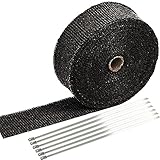
- Package includes one 2 inch X 50 feet Heat Wrap with (pack of 6) 12" Stainless Steel (304) Locking Zip Ties.
- The exhaust heat wrap tape can withstand 1400F direct/2000F radiant heat.
- High resistance to abrasions, oil spills, temperatures and vibration breakdown
- The thermal heat wrap can reduce heat under hood up to 50%
- Universal fitment for cars and motorcycles performance parts
A healthier dealer network can also help Harley improve customer retention and future sales. But if the company reduces shipments too aggressively, dealers may lack inventory and lose sales. If it ships too many motorcycles, dealers may be forced into discounts. The right balance is controlled inventory with genuine retail demand.
Cost and financial targets
Harley’s stated medium-term HDMC targets include:
- more than $350 million of HDMC EBITDA in 2027;
- mid-single-digit compound annual growth in HDMC retail units;
- HDMC gross margin of 25% to 30%;
- mid-single-digit growth in parts and accessories and apparel/licensing;
- operating expenses below 20% of HDMC sales; and
- HDMC EBITDA margin of 10% to 12%.
These are management targets, not current GAAP earnings guidance. In particular, $350 million-plus is an HDMC EBITDA target, not consolidated net income. EBITDA also excludes certain expenses, so it should not be confused with cash flow or profit available to shareholders.
The strategy is more credible if margin improvement comes from higher retail volume, better mix, parts and accessories growth and improved factory utilization. It is less durable if the company reaches its targets mainly through cutting investment, reducing shipments or relying on one-time recoveries.
Outdated Drivers Are Slowing You Down
One free scan finds every outdated or missing driver and matches the right update for your exact hardware.Free scan · exact hardware matchWindows Errors? Fix Them Before They Spread
Repair common Windows errors and clear accumulated junk for a smoother, more stable PC - no reinstall needed.Free scan · no reinstallManagement has changed direction
Artie Starrs became Harley-Davidson’s president and CEO on October 1, 2025, replacing Jochen Zeitz. Zeitz remained chairman through the transition and then became a senior adviser for a limited period. Starrs joined Harley from Topgolf and previously held leadership positions at Pizza Hut.
The leadership change matters because the current plan is not merely a product refresh. It represents a shift in emphasis toward:
- the core Harley brand and strongest motorcycle categories;
- dealer economics and the Milwaukee connection;
- more accessible products;
- cost control and free cash flow; and
- more focused marketing under the RIDE brand platform.
Harley also announced changes in commercial, marketing, technology and operations leadership. A new CEO can change priorities quickly, but the company has had only a limited period to execute this plan as of August 2026. The early Q2 improvement is encouraging, but it cannot yet establish that the new management team has fixed the structural issues.
See Harley’s announcements on Starrs’s appointment, leadership changes and the RIDE brand platform.
What’s actually slowing this PC down?
Pick the symptom - the matching free tool is one click away.
Does the 2024 culture-war controversy explain the sales decline?
In August 2024, Harley-Davidson said it would review sponsorships and affiliations, stop participating in the Human Rights Campaign workplace-equality ranking, eliminate supplier-diversity spending goals and focus company activities on growing motorcycling and supporting riders, first responders, military members and veterans.
The reversal became part of Harley’s public identity and exposed tension between its traditional customer base and efforts to broaden the brand. The company’s risk disclosures also recognize that activist campaigns, boycotts and other brand-damaging behavior can affect the business.
However, the available financial evidence does not establish that the controversy caused the 2025 sales collapse. Harley’s own explanations emphasized interest rates, economic uncertainty, consumer sentiment, model-cycle comparisons, inventory and tariffs. It is reasonable to discuss the controversy as a brand-management risk, but not to assign it a precise share of the sales decline without independent evidence.
The Associated Press reported on the 2024 policy changes, while Harley’s annual report provides the company’s financial explanation and risk disclosures.
How credible is the turnaround?
Why it could work
- Inventory is healthier. Lower dealer inventory reduces the need for discounting and gives dealers a better chance to sell motorcycles at sustainable prices.
- North American retail sales have improved. Three consecutive quarters of growth, including a 3% increase in Q2, are more useful than a single positive month.
- The brand still has distinctive strengths. Harley retains credibility in touring and cruiser categories, a large installed base and a dealer network that can support service, parts and accessories.
- Existing platforms may limit capital risk. New models based on existing investments could reach the market more cheaply and quickly than an entirely new architecture.
- Parts and accessories provide operating leverage. New motorcycles can create recurring revenue opportunities beyond the original sale if Harley improves the installed base.
- HDFS has reduced balance-sheet intensity. The financing transaction provides capital and reduces the amount of receivables Harley must retain.
Why it could fail
- Lower prices may not be enough. New riders may still prefer lighter, more versatile motorcycles from competitors.
- Entry models could dilute margins. Harley must avoid replacing high-margin motorcycles with products that sell only through incentives.
- New products could cannibalize existing sales. The strategy succeeds only if the new models expand the customer funnel rather than merely shift customers between Harley models.
- Financing remains important. High interest rates or tighter credit could continue to make premium motorcycles difficult to afford.
- Tariffs and costs could erase the gains. A $75 million to $90 million tariff estimate is material for a segment whose 2026 operating-income guidance is only $10 million to $50 million.
- Dealer execution is uncertain. Doubling dealer profitability is a target, not an outcome already shown in the financial statements.
- LiveWire still needs to control its losses. Continued funding needs could compete with HDMC investment.
- HDFS has credit risk. Rebuilding the retained loan portfolio could increase earnings, but it could also expose HDFS to higher credit losses if customers struggle.
Three possible outlooks
Bull case
North American demand continues to grow, dealer inventory remains controlled and the Sprint and returning Sportster attract new customers without heavy discounting. Existing platforms keep development costs manageable, parts and accessories return to growth, tariffs are mitigated and HDMC reaches or exceeds its 2027 EBITDA target. In this scenario, 2026 is the beginning of a durable recovery rather than merely a favorable comparison.
Base case
2026 is primarily a stabilization year. Retail sales improve modestly, but margins remain below historical levels and Harley reaches only the low or middle end of its HDMC guidance. HDFS earnings remain below the transaction-inflated 2025 level, while LiveWire continues to lose money. The decisive evidence arrives in 2027, when new products and dealer initiatives must generate profitable growth.
Also popular on Amazon

- ODIs proprietary medium compound material provides comfort without sacrificing durability
Bear case
The lower-priced motorcycles fail to attract enough new riders, or they sell at margins too low to support the company. Dealer inventory begins rising, discounting returns and tariffs or supplier costs absorb the HDMC margin improvement. Harley’s traditional customer base ages faster than the company can replace it, LiveWire requires additional capital and credit losses rise as HDFS rebuilds its retained loan book.
What to watch next
Readers should judge the turnaround using operating indicators rather than slogans or one strong quarter:
| Indicator | Evidence of a healthier recovery | Warning sign |
|---|---|---|
| Retail sales | Growth sustained for several quarters, especially in North America. | A single positive quarter followed by renewed declines. |
| Retail versus wholesale | Shipments rise broadly in line with customer sell-through. | Shipments rise much faster than retail sales, suggesting inventory rebuilding. |
| Dealer inventory | Inventory stays controlled without excessive incentives. | Inventory rises and dealers begin discounting heavily. |
| HDMC gross margin | Movement toward the 25%–30% medium-term target. | Margin gains rely mainly on one-time tariff recoveries or cuts. |
| HDMC income and EBITDA | Improvement comes with higher volume, better mix and stronger factory utilization. | Profit rises while volume and investment continue to shrink. |
| Parts and accessories | Revenue returns to sustained growth alongside the motorcycle installed base. | New motorcycle sales do not generate follow-on spending. |
| Dealer profitability | Actual dealer results improve, not just management targets. | Dealer closures, cash-flow pressure or rising incentive demands. |
| Sprint and Sportster | Strong sell-through and new-customer acquisition at healthy margins. | Weak demand, heavy discounts or substantial cannibalization. |
| Tariff costs | Costs stay within or below the $75 million–$90 million 2026 estimate. | Costs exceed the estimate or force price increases that weaken demand. |
| HDFS | Retained receivables and servicing income grow while credit losses remain controlled. | Income stays low or credit losses rise sharply. |
| LiveWire | Losses narrow without substantial additional Harley funding. | Losses remain near guidance or outside capital becomes difficult to obtain. |
Market share should be interpreted carefully. Harley can gain share in a shrinking market and still sell fewer motorcycles. Share gains are useful evidence of competitive improvement, but they do not by themselves prove that the business is profitable or financially healthy.
What this means for riders, dealers and investors
For riders
Harley’s strategy could eventually produce more affordable and approachable motorcycles, but the Sprint and planned air-cooled Sportster should be treated as future strategy items until pricing, specifications and availability are formally announced. Existing buyers may benefit if better inventory discipline reduces discount-driven disruption and if a larger installed base supports stronger parts and service availability.
For dealers
The central issue is not simply how many motorcycles Harley ships. It is whether dealers can sell them at healthy margins while generating profitable service, parts, accessories, apparel and financing revenue. Controlled inventory is positive, but insufficient inventory or weak new-model demand would create a different problem.
For investors
HDMC is the main operating test. Consolidated net income can be distorted by HDFS transactions, reserve releases and LiveWire losses. Investors should track HDMC retail units, operating margin, free cash flow, dealer health and recurring HDFS income separately rather than relying on a single consolidated earnings number.
Bottom line
Harley-Davidson has bought itself time and created a plausible path to recovery, but it has not yet demonstrated that it can restore durable, profitable motorcycle volume. The 2025 results showed a genuine core-business crisis: sales fell sharply, HDMC lost money and factory leverage deteriorated. Q2 2026 showed real but early progress through stronger North American retail sales, lower inventory and improved HDMC quarterly results.
The crucial test is whether Back to the Bricks turns that stabilization into sustained growth. The Sprint, planned air-cooled Sportster, dealer-profitability program, cost reductions and parts-and-accessories push all address important weaknesses—but they also carry execution and margin risks. By 2027, the evidence should be clearer: successful sell-through, healthy dealers, improving HDMC margins and lower dependence on one-time financial benefits would indicate that Harley is recovering. Without those signals, the 2026 improvement may prove to be only a temporary reset.
Frequently Asked Questions
Is Harley-Davidson going out of business?
No evidence in the reported results indicates an imminent collapse. Harley had approximately $1.896 billion in consolidated cash and equivalents at June 30, 2026, but its core motorcycle segment remains under significant pressure. Financial room to execute a turnaround is not the same as proof that the turnaround will succeed.
What does Back to the Bricks mean for Harley-Davidson?
It is Harley’s May 2026 strategy to refocus on core products and markets, improve dealer profitability, introduce more accessible motorcycles, grow parts and accessories, reduce costs and improve free cash flow and HDMC EBITDA.
Will Harley-Davidson’s Sprint cost $6,000?
The formal Harley strategy materials describe the Sprint as priced below $10,000. Reuters reported CEO Artie Starrs describing it as approximately a $6,000 motorcycle, but $6,000 is not a confirmed U.S. MSRP in the cited company materials, and no launch date was provided there.
Is LiveWire causing Harley-Davidson’s financial problems?
LiveWire is loss-making and has funding and scale risks, but it is small relative to HDMC. The main problem is the decline in volume and profitability of Harley’s core combustion-motorcycle business.
Did the 2024 DEI controversy cause Harley’s sales decline?
The controversy created brand-management and boycott risk, but the available evidence does not establish that it caused the 2025 sales decline. Harley’s reported explanations emphasized interest rates, consumer sentiment, discretionary spending, model comparisons, inventory and tariffs.
The Bottom Line
Bottom line: Harley-Davidson is not facing an imminent collapse, but its motorcycle business is still in a difficult operating reset. Q2 2026 brought credible signs of stabilization—not a completed recovery. The decisive proof will be sustained retail growth, controlled dealer inventory, improving HDMC margins, healthier dealers and successful lower-entry products during 2027.
Quick wins for a faster PC:
Scan for outdated or missing drivers - takes under a minuteDriver Scan →Repair Windows errors before they cause bigger problemsFix Now →Fix the driver behind crashes, sound loss and screen glitchesFind Drivers →



