
Different retirement goals do not require one partner to surrender. Start by describing the life each of you wants, then separate shared priorities from genuine conflicts, verify your household numbers, and compare several written scenarios. A plan can include different retirement dates, part-time work, or staged changes if the income, spending and relationship effects are acceptable to both of you.
Begin with two separate pictures of retirement
Do not open with “How much do we need?” or “Who gets to retire first?” Those questions turn a planning problem into a contest before either person has explained what retirement means to them. Have each partner write a short description independently, then discuss the answers.



As an Amazon Associate I earn from qualifying purchases.
Prompts that reveal the real goals
- What would you like to do in the first two years after leaving full-time work?
- Which parts of your current work provide meaning, structure, social contact or health insurance?
- Would you prefer to stop completely, reduce hours, change careers or work seasonally?
- Where do you want to live, and how much travel, family support or community involvement do you expect?
- Which hobbies and daily routines would create regular spending?
- What are you most afraid of losing: income, independence, time together, health coverage, status or flexibility?
- What obligations might continue, such as helping children, caring for parents or supporting a relative?
Discuss lifestyle and money values before building detailed projections. This sequence is practical conversation guidance, not a clinically validated couples intervention.
What’s actually slowing this PC down?
Pick the symptom - the matching free tool is one click away.
Sort shared priorities from real tradeoffs
Write both sets of answers where you can see them. Mark an overlap when both partners want the same outcome; mark a compatible difference when each preference can coexist; and mark a tradeoff when one choice limits the other.
#1 Best Overall

- Retire from work, not life: A guided retirement journal for building a life full of purpose. You have decades of experience, wisdom, and passion alive inside you, just waiting for somewhere to go.
- Meaningful retirement gift for woman and men: The journal says "I can't wait to see what you do next." Thoughtful retirement gift ideas for mom, dad, boss, teacher or coworkers, not another gag gift.
- For any stage of retirement: Whether your last day is months away or years behind you, it's never too late to plan a next chapter that goes beyond the bucket list.
- Discover who you are after work: Who are you when "What do you do?" isn't answered by a job title? Explore how your identity, relationships, needs, and sense of purpose evolve in retirement.
- Plan it, then live it: 50+ guided prompts help you decide how to enjoy retirement, including a 30-day retirement planner to turn it into real steps. Easy to start, even if you've never journaled.
| Situation | What may be shared | Question that requires a decision |
|---|---|---|
| One partner wants to travel; the other wants to stay near family | Time together and family connection | Could travel be shorter, seasonal or planned around family events? |
| One wants to stop work at 60; the other wants to work to 67 | Financial security or a predictable routine | Would phased work, separate dates or a bridge from savings make the arrangement fair? |
| One prefers a larger home; the other wants lower expenses | A safe, comfortable place to live | Which housing cost, location and maintenance burden fit the income plan? |
| One values generous family support; the other prioritizes portfolio resilience | Helping relatives without endangering the household | What annual amount and stopping rule protect essential retirement spending? |
Do not silently make the earlier or later preferred date the default. Agreement is meaningful only when both people can explain the costs they are accepting and the benefits they expect.
Build one verified household fact base
Before choosing a date, collect the same information for both partners. Use statements and official estimates rather than memory, and label figures as current, projected or uncertain.
- Work and timing: current pay, expected raises, eligibility for reduced hours, employer health coverage and the earliest realistic exit date.
- Income sources: pensions, annuities, rental income, business income and the portion that is guaranteed versus dependent on markets or continued work.
- Accounts: balances, contribution rates, ownership, withdrawal restrictions and any employer match.
- Debt: balances, interest rates, required payments and the date each obligation is expected to end.
- Housing: mortgage or rent, taxes, insurance, maintenance, a possible move, and whether a sale would change cash flow.
- Spending: essential monthly costs, discretionary spending, irregular bills, travel, gifts and expected health-related costs.
- Coverage and benefits: health insurance before and after leaving work, long-term-care considerations and survivor provisions in pensions.
- Public benefits: each partner’s Social Security estimate and the claiming ages being considered.
The Consumer Financial Protection Bureau (CFPB) identifies Social Security, pensions, debt, housing and choosing an adviser as important retirement-planning topics. Its financial well-being framework looks beyond a savings balance to day-to-day control, resilience when a shock occurs, progress toward goals and freedom to make choices.
Quick wins for a faster PC:
Clear out junk files and repair common Windows errorsFree Scan →Fix the driver behind crashes, sound loss and screen glitchesFind Drivers →Compare the choices on the same five axes
Put competing ideas into a side-by-side worksheet. A common set of axes prevents the conversation from focusing only on the emotionally strongest issue, such as a preferred retirement birthday.
Rank #2
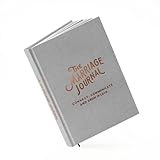
- 6 WEEKLY QUESTIONS FOR HUSBAND AND WIFE TO BUILD INTIMACY. Answer six thoughtful prompts each week in this marriage workbook journal for couples to spark meaningful communication, deepen emotional connection, and nurture a healthy relationship.
- FAITH-BASED MARRIAGE DEVOTIONAL FOR COUPLES CONNECTION. Each week of this married couples' devotional book opens with a short devotional to inspire spiritual growth, spark heartfelt dialogue, and nurture your faith-filled relationship.
- PLAN AHEAD WITH A SHARED CALENDAR. This Christian marriage journal for couples includes a simple calendar page to align schedules, reduce tension, and stay connected. Ideal couples workbook for Sunday check-ins or morning coffee conversations.
- ONE JOURNAL, TWO VOICES, TAKE TURNS WRITING. This is a shared couples journal back and forth to fill out together. Take turns writing week to week, reflect on each other’s entries, and build a rhythm of connection that strengthens your relationship.
- ONE YEAR OF GROWTH AND MEANING. Document 52 weeks of marriage journey in a keepsake. Created by Jeremy and Audrey Roloff of Beating50Percent. A sentimental couple gift for him & her, newlyweds, anniversaries, weddings, or Christian married couples.
| Axis | Questions to answer for each scenario |
|---|---|
| Retirement date and work flexibility | Who works, for how many hours, until when, and can either person change course without a penalty? |
| Income reliability and timing | Which dollars are guaranteed, when do they begin, and how much must come from investments or continued work? |
| Spending and lifestyle | What is essential, what is optional, and how does spending change during travel years, later life or a health event? |
| Housing, debt and location | What home and debt payments remain, and does a move reduce or add risk? |
| Flexibility | What happens if health, employment, family needs or markets change, and which choices can be reversed? |
CFPB has described retirement decisions as complex, high-stakes and often difficult to reverse. Treat an irreversible choice differently from a trial change, such as reducing hours for six months before leaving permanently.
Model different retirement dates without treating them as failure
If one partner retires earlier
Calculate the bridge years separately: the early retiree’s income, health coverage, taxes, spending and withdrawals before the other partner stops working. Decide how household labor, social time and discretionary spending will work when schedules differ. A written agreement can specify how shared bills are paid and how much individual spending each person controls.
If one partner continues working
Clarify whether the continuing job is full-time, part-time, seasonal or simply available if needed. Continued earnings may support savings or insurance, but they can also create unequal free time. Schedule activities that do not depend on the working partner’s vacation calendar and revisit the arrangement at set dates.
Outdated Drivers Are Slowing You Down
One free scan finds every outdated or missing driver and matches the right update for your exact hardware.Free scan · exact hardware matchWindows Errors? Fix Them Before They Spread
Repair common Windows errors and clear accumulated junk for a smoother, more stable PC - no reinstall needed.Free scan · no reinstallIf both partners want a transition
Consider a phased plan: reduce hours, test a lower-cost location, take a sabbatical if available, or set a review after one year. State the condition that would trigger a return to more work, such as a spending gap or loss of coverage. A phased arrangement is an option, not a universally optimal solution.
Handle Social Security as two individual decisions
In the United States, a retirement benefit’s monthly amount depends on the age at which the person claims it. Each partner should review their own earnings record, estimate and possible claiming ages, then examine how the choices interact with household income and survivor needs. There is no single claiming age that is right for every couple.
Use current information from the Social Security Administration and verify rules before acting; eligibility details and benefit policies can change. Include the effect of delaying or starting benefits on the years when withdrawals or employment income must cover expenses. Do not treat an online estimate as a complete retirement plan, and do not assume that the higher earner’s decision alone determines the household’s best outcome.
Make housing and debt part of the retirement conversation
A home can provide stability, but its mortgage, taxes, insurance, repairs and accessibility costs may conflict with a lower-spending retirement. Compare staying, downsizing, renting, moving nearer to family and relocating to a lower-cost area. Record transaction costs, moving effort, tax effects and the possibility that a preferred location could reduce social or medical support.
The Tool Desk
Outbyte Driver Updater FREEScan for outdated or missing drivers - takes under a minuteDriver Scan →Outbyte PC Repair FREEClear out junk files and repair common Windows errorsFree Scan →List every debt payment in each scenario. A plan that works only if a balance is refinanced, a property sells quickly or a partner works indefinitely is not yet a confirmed plan. Decide which debts must be cleared before a retirement date and which can be carried safely under conservative income assumptions.
Turn preferences into three written scenarios
The Department of Labor’s Savings Fitness guide provides interactive worksheets that can help organize goals and assumptions. Use an official worksheet or your own clear spreadsheet; the important feature is that both partners can see the same inputs.
- Preferred plan: record the dates, work pattern, housing choice, spending and income sources each partner would choose if the key assumptions hold.
- Cautious plan: lower uncertain income, allow for higher essential costs, delay a discretionary move or retain more work, and show how the household responds.
- Review triggers: list the information that would cause a change, such as a pension quote, health-insurance cost, debt payoff, market loss, job change or family obligation.
For every scenario, write the assumptions, who owns each task, unresolved questions and the next review date. A scenario is a decision aid, not a prediction or a guarantee.
Independent reader supportYour contribution helps us test, update, and keep practical guides available for everyone.Decide what can wait and what needs help now
Some choices can be tested or postponed; others may affect benefits, taxes, insurance or a large asset and deserve timely, qualified advice. Consider individual guidance when you cannot reconcile income and spending, do not understand a pension or survivor option, face a major housing decision, or disagree about a high-stakes irreversible step.
Free tools Windows power users keep installed
One-click scans. No signup required.
If you hire an adviser, ask how they are paid, what services are included, what conflicts they manage, and whether they are qualified for the issues you need addressed. CFPB offers information on retirement topics and on questions consumers can ask when identifying a financial adviser. Neither CFPB nor the Department of Labor endorses a particular adviser through these educational materials.
Persistent conflict may also justify a couples counselor who understands money conversations. No particular counseling method has been established as the universally best approach for retirement disagreements.
Use a meeting process that keeps the plan fair
- Meeting one: exchange the two retirement descriptions without correcting numbers or judging priorities.
- Meeting two: mark overlaps, compatible differences and genuine tradeoffs; choose the questions that require evidence.
- Meeting three: assemble statements, benefit estimates, debt and housing figures, and identify missing information.
- Meeting four: compare the preferred and cautious scenarios using the five axes; note who bears each sacrifice.
- Meeting five: agree on a provisional plan, review triggers, personal spending boundaries and the next date to revisit it.
Keep the tone factual and reversible where possible. Neither person has to approve a retirement date before the evidence and the lived consequences are visible.
Common mistakes to avoid
- Choosing a savings target before defining the life the money must support.
- Assuming the partner with the stronger preference should automatically decide the date.
- Counting market-dependent withdrawals as guaranteed income.
- Ignoring health coverage between leaving work and eligibility for later coverage.
- Using a historical statistic as if it were a current forecast. In a 2017 CFPB executive summary, 39% of consumers said they had tried to calculate how much savings they need for retirement, and more than half said they worried about running out of money. Those figures describe that report’s historical sample and are not current prevalence estimates.
- Making a difficult-to-reverse benefit, housing or investment decision without checking current rules and qualified advice.
What agreement can look like
A successful outcome is not necessarily the same retirement date. It may be a shared minimum standard of living, different work schedules, a trial transition, protected individual spending and a documented process for changing course. The measure is whether both partners understand the tradeoffs, can meet essential obligations and retain meaningful choices if circumstances change.
Do these 3 things before closing this tab:
1Repair Windows errors before they cause bigger problems2Scan for outdated or missing drivers - takes under a minute3Clear out junk files and repair common Windows errorsQuick Recap
Product prices and availability are accurate as of the date/time indicated and are subject to change. Any price and availability information displayed on Amazon at the time of purchase will apply.




