
The Tool Desk
Outbyte PC Repair FREERepair Windows errors before they cause bigger problemsFix Now →Outbyte Driver Updater FREEScan for outdated or missing drivers - takes under a minuteDriver Scan →In the United States, plan on closing costs of roughly 2% to 5% of the purchase price, in addition to your down payment. The Consumer Financial Protection Bureau (CFPB) describes this as a starting estimate, not a guaranteed quote; your loan type, lender, property, location and contract can move the actual amount substantially. For a $350,000 home, that range equals about $7,000 to $17,500 before adding the down payment. Your Loan Estimate, local tax and insurance figures, and final Closing Disclosure are the documents that turn the range into a transaction-specific number.
What closing costs cover
Closing costs are the upfront charges for obtaining the mortgage and transferring ownership. The CFPB calls them “closing costs” or “settlement costs” and distinguishes them from the down payment. They can include lender charges, third-party settlement services, government fees, prepaid interest, insurance and tax payments, and money deposited into an escrow account. A down payment reduces the amount you borrow; closing costs pay for the transaction and for setting up certain future bills.
As an Amazon Associate I earn from qualifying purchases.
The CFPB’s current budgeting guidance says closing costs typically range from 2% to 5% of the purchase price, excluding the down payment (CFPB, modified February 18, 2026). Use the range to decide whether you have enough liquidity to make an offer, then replace it with your own disclosures. It is not a rule that every buyer, state or loan will follow.
The main categories to put in your budget
| Category | What may appear on your estimate | What to check |
|---|---|---|
| Lender charges | Application, origination, underwriting, processing, verification, administrative and rate-lock fees can be itemized under different names. | Compare the combined lender charges for the same loan type, rather than assuming two lenders use identical labels (CFPB). |
| Discount points | An optional upfront charge intended to reduce the interest rate. | Compare the cash paid for points with the rate reduction and the total cost over the period you expect to keep the loan (CFPB). |
| Third-party services | Appraisal, title search, lender’s title insurance and closing-agent or settlement services. | Use the Loan Estimate to see which provider the lender selected and which services you may shop for. Ask whether a provider you choose meets the lender’s requirements (CFPB; CFPB). |
| Government charges | Recording fees and transaction-related taxes set by state, county or city authorities. | Amounts and the buyer-versus-seller allocation depend on local law and the purchase contract (CFPB). |
| Prepaid interest | Interest from the closing date through the end of that month. | The number of days between closing and month-end changes the amount, so a date change can alter cash needed. |
| Homeowner’s insurance and property taxes | Insurance premiums and tax amounts due at or before closing. | The CFPB says the first six to 12 months of homeowner’s insurance premiums are usually paid at or before closing. Tax and insurance figures come from the government and insurer, not the lender’s preference (CFPB). |
| Initial escrow deposit | Money placed in the mortgage escrow account for future property-tax and insurance bills. | Confirm which bills are escrowed and how many months are being collected. Homeowners association dues are often paid outside escrow (CFPB). |
| Other purchase expenses | A home inspection and an owner’s title insurance policy may be prudent purchase costs even when they are not required to obtain the mortgage. | Include them in the cash plan if you intend to buy them, rather than assuming the 2%–5% estimate automatically covers every optional service (CFPB). |
| Loan-program charges | FHA, VA or USDA upfront mortgage-insurance premiums or funding fees, when applicable. | Ask the lender to identify the program-specific amount on the Loan Estimate; eligibility and the charge depend on the program and your file (CFPB). |
Some of these are one-time transaction charges; others are the first payment of a recurring obligation. Mortgage insurance, property taxes, homeowner’s insurance and HOA dues can continue after closing and must fit your monthly budget. Depending on the loan arrangement, taxes and insurance may be paid through escrow or directly by you (CFPB; CFPB).
#1 Best Overall

- EFFECTIVELY MANAGE YOUR MONEY - Our budget planner helps you take control of your finances by providing sections for financial goals, savings, debts, daily expenses, monthly budget, monthly budget review. This finance planner is a good finance book and will help you manage your money effectively.
- PREMIUM QUALITY - Our budget planner is made with high-quality 100gsm paper that reduces ink leakage, fraying, and shade issues. The sturdy and flexible cover,, helps protect the pages. The metal lay-flat twin-wire binding ensures durability and longevity.
- ORGANIZED MONTHLY GOALS & BUDGETS - Our 12-month budget planner helps you set monthly goals, budgets, reviews, and develop good monetary habits, strategies, and action plans. Write down monthly financial goals, put reminders of bills and payments on the calendar, plan your monthly budget in each category, track daily expenses, and review the monthly budget at the end of the month.
- FLEXIBLE USAGE - Our undated finance planner allows you to start at any time and place, making it convenient to use. It has a perfect size of 8.6x5.9 inches and fits in every bag, so it's always at hand.
- CREATE FINANCIAL FREEDOM - Our budget planner is your chance to develop monthly habits, monetary strategies, and action plans to start your journey to long-term financial freedom. It allows you to track monetary flow and review each area for improvements. With this 1-Years budget book, you can take the first step towards financial freedom.
Closing costs versus cash to close
Cash to close is the amount you must bring or wire at settlement after the down payment and closing costs are combined and then adjusted for money already paid, credits and prorations. It is therefore not interchangeable with either “closing costs” or “down payment.” The final calculation appears on the Closing Disclosure (CFPB).
A simplified planning equation is:
Cash to close = down payment + closing costs + prepaid items and escrow deposits − deposits already paid − eligible credits ± contract adjustments.
Rank #2
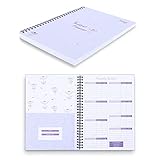
- Customize & Get Budgeted - With blank free of pre-filled categories and months budgeting pages, Soligt undated budget planner gives you complete control of your finances on a daily monthly and annual basis and enable you to manage your personal finance, cash money payment, and budgeting effective without any restrictions.
- Keep you on Track & Organized - The budget book journal provides 12 cute pockets for effortless bill, receipt, envelopes storage, along with a spacious layout perfect for recording and tracking incomes, expenses, savings, debt payoff, bills calendar and paying with ease.
- Achieve Financial Goals - This bill organizer provides a simple yet comprehensive budgeting system that is perfect for home household or small business beginners and encourages celebrating successes while identifying opportunities for improvement, both visually appealing and user-friendly.
- Your perfect companion - The Spiral bound budgeting notebook is the perfect small size, measuring at 9.25 x 6.81" and featuring a durable hardcover and 100 gsm paper. Lightweight and portable, It is easy to take with you wherever you go and built to last throughout the year.
- Bonus Month Tabs - The paycheck Budget Planner Financial Organizer boasts colored sticker labels to aid in simple navigation through your budget pages, ensuring added convenience and ease of use to help locate important information quickly and efficiently.
For example, a $350,000 purchase with a $70,000 down payment and estimated closing costs of $7,000 to $17,500 would require $77,000 to $87,500 before accounting for an earnest-money deposit, seller credit, lender credit, prorated taxes or other adjustments. The arithmetic illustrates the budgeting method; it is not a quote for any particular property.
What’s actually slowing this PC down?
Pick the symptom - the matching free tool is one click away.
Why the amount changes from one purchase to another
Location and contract customs
Recording charges, transfer or transaction taxes, title practices and the customary allocation of individual fees differ by state and locality. A contract may assign a charge to the seller in one market and to the buyer in another. Confirm the allocation in the signed contract and ask the settlement agent about local practice rather than relying on a national rule (CFPB).
Rank #3

- Helps you budget and track personal spending
- Offers weekly and monthly tracking in a ledger-style format
- Includes yearly summary
Loan type, down payment and lender
Different loan programs have different insurance or funding charges. Lenders also price origination, underwriting and rate-lock work differently. A lower advertised rate may require points, while a loan with no points may carry a higher rate. Compare offers built for the same loan type and similar assumptions.
Property and closing date
The appraisal, title work and inspection respond to the specific property. The closing date affects the number of days of prepaid interest and the amount of tax or insurance collected at closing. Local tax bills and the insurer’s premium determine the actual prepaids and escrow deposit.
Rank #4

- Comprehensive Income & Expense Planner: This 108-page financial planner helps you take complete control of your money. It includes dedicated sections for tracking every source of income and every expense, no matter how small. Whether you need to monitor daily spending, plan a monthly budget, or prepare for tax season, this planner gives you a clear, organized system.
- Clear Layout & Easy to Write: Each page features a clean, well-organized design with clearly labeled columns for income sources, expense categories, revenues, profits, and other relevant information. The organized sections simplify tracking and help you stay consistent with your bookkeeping routine.
- Enough Writing Space: This planner offers generous writing space for each entry, so you can record detailed descriptions, multiple transactions, or notes about upcoming bills. Each page gives you room to be thorough, perfect for tracking everything from grocery receipts to monthly rent, freelance income to utility bills.
- Portable and Convenient: This compact book measures 9.5” x 6.7” with a sturdy spiral binding, which is easy to carry in your bag, backpack, or keep on your desk. This portable planner makes it easy to stay on top of your money anytime, anywhere. Perfect for use at home, in the office, or on the go.
- Wide Usages: It is suitable for personal budgeting, family household expenses, small business bookkeeping, freelance income tracking, or even rental property management. It's also great for college students learning to manage money, couples saving for a big purchase, or anyone working toward debt freedom or savings goals
How to turn the percentage into a reliable cash target
- Make a rough allowance. Multiply the purchase price by 0.02 and 0.05 to create an initial closing-cost range, keeping the down payment separate. Treat the result as a planning envelope, not a savings target that guarantees you can close (CFPB).
- Request Loan Estimates from multiple lenders. Ask for the same loan type, term, down-payment assumption and rate-lock conditions so the totals are comparable. Review origination charges, lender-selected services, services you are allowed to shop for, points, interest rate, prepaids, escrow assumptions and estimated cash to close (CFPB).
- Shop the services marked as shoppable. The Loan Estimate and the lender’s provider list identify services you may obtain yourself. Request written quotes, then confirm that your chosen provider is acceptable to the lender before ordering the work. CFPB-reported research says shopping could save as much as $500 on title services; the agency page does not identify the underlying study year, so regard that figure as a possible saving, not a guaranteed current discount (CFPB).
- Replace generic tax and insurance assumptions. Obtain a property-tax estimate from the relevant local authority and an insurance quote for the actual home. These figures drive both the prepaids and the initial escrow deposit and are not set by the lender (CFPB).
- Reserve cash beyond the settlement statement. Subtract moving costs, immediate repairs, furnishings, other savings goals and an emergency reserve from the money you can safely commit. The CFPB describes a typical emergency cushion as three to six months of expenses (CFPB).
- Reconcile the final documents. Compare the Closing Disclosure with the latest Loan Estimate. Ask the lender to explain material changes and verify the seller credit, lender credit, prepaid items, escrow amount and final cash-to-close figure before sending funds (CFPB).
How to compare two mortgage offers
| Comparison point | Question to ask | Why it matters |
|---|---|---|
| Origination charges | What is the total of application, underwriting, processing, verification, administrative and rate-lock fees? | Different labels can hide a different total lender cost. |
| Points and rate | How much cash buys the quoted rate, and how does that change total interest? | Points trade upfront cash for a lower rate; the better choice depends on how long you keep the loan. |
| Lender-selected services | Which providers are required, and what are their charges? | You generally cannot reduce a service chosen by the lender simply by obtaining another quote. |
| Shoppable services | Which title or settlement services may I select, and what provider requirements apply? | Shopping can reduce costs, but an unapproved provider can delay closing. |
| Prepaids and escrow | How many months of taxes and insurance are assumed, and which bills are included? | Different assumptions change cash to close without changing the loan’s principal. |
| Credits | Is the credit from the seller or lender, and what condition or trade-off comes with it? | A credit can lower cash due while affecting the price, interest rate or loan balance. |
| Total cash and monthly cost | What is the estimated cash to close and the ongoing payment, including mortgage insurance, taxes, insurance and HOA dues where applicable? | The smallest upfront number is not necessarily the least expensive loan overall. |
Compare only like-for-like estimates. A quote with a lower cash requirement may use a higher interest rate, a larger loan balance or different escrow assumptions. Evaluate upfront cash, monthly affordability and total borrowing cost together (CFPB; CFPB).
Free tools Windows power users keep installed
One-click scans. No signup required.
Credits: who pays and what you give up
Seller credits
A seller may agree to credit certain allowable closing costs under the purchase contract. The credit changes the transaction’s cash flows and may be reflected in the negotiated price or other contract terms. It is not an automatic entitlement; the amount and permitted uses depend on the contract, loan rules and local practice. Have the lender and settlement agent confirm that the credit can be applied to the specific charges.
Best Value

- Customize & Get Budgeted - With blank free of pre-filled categories and months budgeting pages, Soligt undated budget planner gives you complete control of your finances on a daily monthly and annual basis and enable you to manage your personal finance, cash money payment, and budgeting effective without any restrictions.
- Keep you on Track & Organized - The budget book journal provides 12 cute pockets for effortless bill, receipt, envelopes storage, along with a spacious layout perfect for recording and tracking incomes, expenses, savings, debt payoff, bills calendar and paying with ease.
- Achieve Financial Goals - This bill organizer provides a simple yet comprehensive budgeting system that is perfect for home household or small business beginners and encourages celebrating successes while identifying opportunities for improvement, both visually appealing and user-friendly.
- Your perfect companion - The Spiral bound budgeting notebook is the perfect small size, measuring at 9.25 x 6.81" and featuring a durable hardcover and 100 gsm paper. Lightweight and portable, It is easy to take with you wherever you go and built to last throughout the year.
- Bonus Month Tabs - The paycheck Budget Planner Financial Organizer boasts colored sticker labels to aid in simple navigation through your budget pages, ensuring added convenience and ease of use to help locate important information quickly and efficiently.
Lender credits
A lender credit generally reduces the cash you need at closing in exchange for a higher interest rate, a higher loan balance or both. Treat it as a financing trade-off, not free money. Ask for the payment and total-interest effect over the period you expect to own the home (CFPB; CFPB).
Costs that are not finished on closing day
Settlement funds do not replace a post-closing budget. Moving, repairs, furnishings and other savings goals can arrive immediately after you receive the keys. Keep an emergency reserve—often three to six months of expenses—rather than committing every available dollar to the down payment and settlement statement (CFPB).
Also model the recurring payment after any initial escrow calculation. Property taxes, homeowner’s insurance, mortgage insurance and HOA dues can continue monthly or periodically. HOA dues are often outside mortgage escrow, so include them separately when they apply (CFPB).
Crashes, No Sound, or Screen Glitches?
Random freezes, missing sound and display glitches usually trace back to one bad driver. Find and replace yours safely.Free scan · under a minuteWindows Errors? Fix Them Before They Spread
Repair common Windows errors and clear accumulated junk for a smoother, more stable PC - no reinstall needed.Free scan · no reinstallFinal pre-closing checks
- Match the property address, loan amount, interest rate, points and term on the Closing Disclosure to the latest agreed terms.
- Verify every seller or lender credit and confirm that no credit has been counted twice.
- Check prepaid interest, the insurance premium, property-tax amount and the number of escrow months.
- Confirm which title, settlement, appraisal, inspection and government charges are included and who is responsible for each.
- Recalculate cash to close after subtracting your earnest-money or other deposits and adding any contract prorations.
- Ask the lender or settlement agent to explain any significant change before transferring funds, and retain the final disclosure for your records (CFPB).
A practical budgeting rule
Start with 2%–5% of the price for closing costs, keep the down payment in a separate line, and then build upward from your own Loan Estimate. Add local taxes, insurance, escrow, inspections, title choices, program-specific charges and the contract’s fee allocation. Finally, protect the cash needed for moving, early ownership and a three-to-six-month emergency cushion. That process gives you a defensible cash-to-close target without treating a national percentage as a promise.
Quick Recap
Product prices and availability are accurate as of the date/time indicated and are subject to change. Any price and availability information displayed on Amazon at the time of purchase will apply.




