The Lenovo IdeaPad Slim 3x is the best overall budget laptop for most U.S. shoppers in 2026—provided the applications and accessories you need work properly on Windows on Arm. It combines 16GB of memory, a 512GB SSD, a large 15.3-inch touchscreen, and more than 16 hours of independently tested web-browsing battery life at a sub-$500 target price.
There is no single definition of cheap. For this guide, cheap means roughly under $500, while budget includes laptops up to about $800. The five recommendations cover different needs: traditional Windows compatibility, web-first ChromeOS computing, macOS, long battery life, and a more premium display. Not every laptop below is normally under $500; the HP OmniBook 5 14 is included only as a sale recommendation, and the MacBook Neo’s current checkout price needs careful verification.
Price and availability note: This guide is for new retail laptops sold in the United States, with a price snapshot of August 9, 2026. Retail prices, configurations, education discounts, memberships, and promotions change frequently. Always verify the exact processor, memory, storage, display, and price before paying.
Quick comparison
| Laptop | Best for | Key configuration | Display | Battery evidence | Price guidance | Main drawback |
|---|---|---|---|---|---|---|
| Lenovo IdeaPad Slim 3x | Best overall budget Windows laptop | Snapdragon X X1-26-100, 16GB RAM, 512GB SSD | 15.3-inch 1920×1200 IPS touchscreen, 300 nits | 16 hours 29 minutes in Tom’s Guide Wi-Fi browsing test at 150 nits | Best value when under $500 | Windows on Arm compatibility limitations; 720p webcam |
| Acer Aspire Go 15 | Basic Windows work at the lowest sensible price | Tested: Core i3-N305, 8GB RAM, 128GB storage; prefer 256GB or 512GB | 15.6-inch 1920×1080 display | 10 hours 15 minutes in the same Tom’s Guide test | About $299 for the tested configuration; prices vary by SKU | Cheap versions can have restrictive storage and weak multitasking performance |
| Acer Chromebook Plus 515 | Web apps, school portals, and low-maintenance computing | Core i5-1235U, 8GB RAM, 256GB storage | 15.6-inch 1920×1080 IPS display | 8 hours 16 minutes in the same Tom’s Guide test | Under $500, depending on configuration and sale | ChromeOS cannot replace Windows or macOS desktop software |
| Apple MacBook Neo | The least expensive Mac | A18 Pro, 8GB unified memory, 256GB or 512GB storage | 13-inch 2408×1506 display, rated at 500 nits | Apple claims up to 11 hours of wireless web use or 16 hours of video streaming | Verify checkout; Apple pages have shown $599 and $699 configurations | 8GB memory, limited ports, no keyboard backlighting |
| HP OmniBook 5 14 | OLED and a premium feel at a sale price | Snapdragon X, 16GB onboard RAM, preferably 512GB SSD | 14-inch 1920×1200 OLED, 300 nits | Official battery capacity is 59Wh; no directly comparable test figure cited here | Excellent at $500–$650; acceptable at $650–$750; poor near $1,249.99 MSRP | Snapdragon compatibility and unusually large price swings |
Battery figures in the table are not interchangeable with manufacturer claims. The Tom’s Guide results use a continuous Wi-Fi web-browsing test at 150 nits, while Apple’s figures use separate video-streaming and wireless-web methodologies.
The Tool Desk
Outbyte PC Repair FREERepair Windows errors before they cause bigger problemsFix Now →Outbyte Driver Updater FREEScan for outdated or missing drivers - takes under a minuteDriver Scan →How to choose a cheap laptop without buying a false bargain
Use three prices, not one
A manufacturer’s list price, a typical street price, and a sensible buy price can be very different. This matters particularly for the HP OmniBook 5 14, which has a premium specification but is difficult to justify at its official list price, and for the MacBook Neo, whose public Apple pages have not presented a consistent price in the available listing.
- List price or MSRP: the manufacturer’s stated price, which may not reflect normal retail pricing.
- Typical street price: the price seen regularly from major retailers.
- Buy price: the price at which the laptop’s combination of hardware, software, and compromises makes financial sense.
Before comparing two laptops, compare the configurations—not just the product names. The Acer Aspire Go 15, Chromebook Plus 515, and MacBook Neo each represent families or multiple configurations that can differ in processor, memory, storage, screen, webcam, and price.
Choose the operating system before comparing processors
- Windows: the safest choice for traditional desktop software, Microsoft Office desktop features, Windows-only school or business applications, specialist peripherals, and broad accessory compatibility.
- ChromeOS: the better fit when most work happens in a browser, Google Workspace, email, streaming services, and web-based school portals. It is simple to administer and receives automatic updates, but it is not just a cheaper Windows laptop.
- macOS: the right choice for shoppers who prefer Apple’s operating system, already use an iPhone or iCloud, or value the MacBook Neo’s build quality and display more than maximum memory and storage.
Windows on Arm is a separate compatibility decision within Windows. Microsoft says Windows 11 on Arm can run many unmodified x86 and x64 applications through emulation, but native Arm applications generally provide the best performance and battery life. Kernel-mode drivers must be compiled for Arm64; they cannot be emulated. That makes the Snapdragon-based Lenovo and HP less suitable for some VPN clients, scanners, printers, engineering tools, hypervisors, older enterprise software, hardware utilities, and games with kernel-level anti-cheat. See Microsoft’s Windows on Arm overview and compatibility FAQ before buying.
#1 Best Overall

- Unlock Seamless Multitasking & AI: Powered by the efficient Snapdragon X Plus processor with 8 cores (up to 3.4GHz) and a dedicated 45 TOPS NPU for fast AI, plus 16GB LPDDR5x-8448MHz RAM and up to 2TB SSD for smooth performance and quick storage
- Immersive WUXGA Display with Eye Comfort: Get elevated visuals with a 15.3" LCD display featuring WUXGA resolution. Vivid colors, deep blacks, and sharp contrast bring everything to life. The 16:10 screen adds more space, while TÜV certification keeps your eyes comfortable all day
- All-Day Battery Life & Rapid Recharging: Engineered for mobility, this laptop is powered by a robust up to 60Wh battery and an AI-optimized Snapdragon processor for maximum efficiency, delivering reliable all-day battery life. When you need power fast, Rapid Charge technology provides approximately 2 hours of use from just a 15-minute charge, ensuring you're ready to go quickly
- Slim, Sturdy and Ready: Built tough with a premium-grade metal chassis and MIL-STD 810H military-grade durability, it handles bumps, travel, and unexpected moments. Dependable performance meets lasting style, ready to take on whatever life throws your way
- Premium Features & Inclusions: Equipped with a versatile port selection: 2x USB-A (USB 5Gbps , USB 3.2 Gen 1), 1x USB-C (USB 3.2 Gen 1 with USB PD 3.0 and DP 1.2), 1x HDMI 1.4, 1x Headphone , microphone combo jack (3.5mm), 1x SD card reader, 1x Power connector. Bundled with lifetime microsoft office 2021 and access to a dedicated support team—offering exceptional value and ready-to-use productivity right out of the box
1. Lenovo IdeaPad Slim 3x — best overall budget laptop
Best for: students, office users, and families who want long battery life, 16GB of memory, and a large screen for under $500.
Quick wins for a faster PC:
Scan for outdated or missing drivers - takes under a minuteDriver Scan →Repair Windows errors before they cause bigger problemsFix Now →Fix the driver behind crashes, sound loss and screen glitchesFind Drivers →Recommended configuration: the U.S. model listed by Lenovo with a Snapdragon X X1-26-100 processor, 16GB of soldered LPDDR5X memory, a 512GB PCIe 4.0 SSD, a 15.3-inch 1920×1200 IPS touchscreen, Windows 11 Home on Arm, and Wi-Fi 7. Verify that the retailer is selling the same configuration; the IdeaPad Slim 3x name should not be treated as a guarantee of identical hardware.
Price: target this model when the exact 16GB/512GB configuration is below $500. The value proposition weakens if a retailer substitutes a lower-memory or lower-storage version.
Why it stands out
The IdeaPad Slim 3x has the strongest combination of capacity and battery life in this group. In Tom’s Guide’s comparable testing, it lasted 16 hours and 29 minutes while browsing over Wi-Fi at 150 nits. It also recorded Geekbench 6 scores of 2,124 single-core and 10,505 multi-core, ahead of the other sub-$500 laptops in that comparison. Those results make it well suited to writing, research, office documents, streaming, web applications, video calls, and large browser sessions.
The 16GB of memory is particularly important in a market where many inexpensive laptops still ship with 8GB. Lenovo lists the memory as soldered, so it is not a future upgrade. The product family does list an expandable second SSD slot, which gives the machine more storage flexibility than its fixed memory suggests. Confirm the exact service documentation and retailer SKU before assuming an additional drive is included or easy to install.
What it cannot do well
The display is functional rather than premium: Lenovo lists 300-nit brightness and 45% NTSC color coverage. The 720p webcam is also weak beside the 1080p cameras appearing on some newer budget models. The laptop is not intended for demanding gaming or professional GPU-heavy creative work.
The larger issue is software compatibility. Many everyday applications work on Windows on Arm, but emulation is not a promise that every application, driver, game, virtual machine, or hardware utility will work correctly. Check the software publisher’s support page for Arm64 support or confirmed compatibility if you depend on specialized applications.
For missing or outdated Windows hardware drivers, Outbyte Driver Updater is an optional tool to consider, while you should still check the hardware maker’s Arm64 compatibility guidance.
Who should skip it: buyers who need legacy Windows drivers, virtualization or hypervisor tools, anti-cheat-dependent games, specialized academic software, or absolute compatibility certainty.
Free tools Windows power users keep installed
One-click scans. No signup required.
Alternative: choose the Acer Aspire Go 15 with an Intel or AMD processor if traditional Windows compatibility matters more than battery life and memory capacity.
See Lenovo’s U.S. product page and the Lenovo PSREF specifications for the listed hardware.
2. Acer Aspire Go 15 — best cheap Windows laptop
Best for: basic schoolwork, email, web research, Microsoft Office, streaming, and video calls when the buyer wants a conventional Intel- or AMD-based Windows laptop at the lowest reasonable cost.
Recommended configuration: at least 8GB of RAM and a 256GB SSD, preferably 512GB. The tested Tom’s Guide model used an Intel Core i3-N305, 8GB of RAM, 128GB of storage, and a 15.6-inch 1920×1080 display. An Intel Core i3-N305 or better—or a modern Ryzen 5 configuration—is a more sensible target than the weakest version in the family.
Why it stands out
The Aspire Go 15 is the straightforward choice for someone who does not want to think about Windows on Arm or ChromeOS application limits. The tested configuration cost about $299 and lasted 10 hours and 15 minutes in Tom’s Guide’s Wi-Fi browsing test. That is enough for ordinary documents, browser tabs, online classes, and streaming, although heavier multitasking will expose the limits of an inexpensive processor and 8GB of memory.
Acer’s specifications for one newer Intel configuration list a 53Wh battery, an advertised maximum run time of 11.5 hours, and a weight of approximately 3.97 pounds. The manufacturer’s maximum is not directly comparable with Tom’s Guide’s measured result, and different Aspire Go 15 configurations may weigh or perform differently.
The configuration trap
Aspire Go 15 is a family name, not a complete specification. Acer sells versions with different processors, memory, displays, and storage. The cheapest model may include only 128GB, which becomes restrictive after Windows, updates, applications, and personal files use space. Acer also lists a Ryzen 7, 32GB RAM, and 1TB configuration at $709.99, but that listing is marked out of stock—another reason not to infer one price from the product name.
Prefer a 1920×1080 screen, Windows 11 Home, an SSD rather than slower flash storage, and at least 256GB of capacity. The display may still be dim and narrow-gamut, and the 720p webcam is poor for frequent video meetings.
What’s actually slowing this PC down?
Pick the symptom - the matching free tool is one click away.
Who should skip it: users who regularly keep dozens of demanding applications open, edit large media files, store a large photo or game library, or want a thin and premium-feeling laptop.
Alternative: the Lenovo IdeaPad Slim 3x offers substantially more memory and much longer tested battery life if its Arm compatibility works for you. The Acer Chromebook Plus 515 is simpler and often better suited to browser-first work.
Check the exact retailer configuration against Acer’s Aspire Go specifications before ordering.
Rank #2

- THE SMARTER CHOICE FOR MOBILITY – Get projects done on a device with the most capable AI platform available with the expansive 15" WUXGA 16:10 display that brings all-day battery life, and a durable metal chassis.
- ELEVATED VISUAL DISPLAY – The 15.3" 16:10 display brings elevated visuals and more screen space for work and play. Vivid colors, deep blacks, and sharp contrast make every detail shine, whether you’re streaming, gaming, or creating.
- YOUR PC, YOUR PRIVACY –The physical webcam shutter lets you stay in control of who’s watching and a fingerprint reader offers faster, safer logins. Plus, the Enhanced Security Suite adds extra protection to keep your data private and your PC secure.
- PREMIUM DURABILITY – The IdeaPad Slim 3x is built with a premium-grade metal chassis that offers supreme durability from military-grade MIL-STD 810H tests. It delivers strong, dependable performance with a premium design. Ready for whatever, wherever.
- BUILT FOR AI – Powered by a 45 TOPS NPU, this AI-driven Copilot+ PC crushes multitasking, smooths video calls, and lasts all day.
3. Acer Chromebook Plus 515 — best Chromebook value
Best for: buyers who primarily use Google Docs, Gmail, browser-based applications, streaming services, and web-based school systems, and who want a simple laptop with less maintenance than Windows.
Recommended Free Tools
Recommended configuration: the tested model with an Intel Core i5-1235U, 8GB of RAM, 256GB of storage, and a 15.6-inch 1920×1080 IPS display. The Chromebook Plus standard is designed around at least an Intel Core i3 12th-generation-class processor or equivalent, 8GB of RAM, 128GB of storage, a Full HD display, and a 1080p webcam. Those minimums are more useful than buying the cheapest non-Plus Chromebook.
Why it stands out
ChromeOS is fast to set up, straightforward for families and schools to administer, and well suited to cloud-centered workflows. The Plus 515 provides a larger screen, stronger performance, better camera hardware, and more useful productivity features than the most basic Chromebooks. Tom’s Guide measured 8 hours and 16 minutes in its comparable Wi-Fi browsing test.
Chromebook storage can be smaller than Windows storage because many users keep files in cloud services, but that is not automatically an advantage. If you work offline, download media, or use Android or Linux applications, 128GB can become limiting. Confirm how your school or employer handles offline files and account access.
ChromeOS limitations
A Chromebook is not a substitute for a Windows or Mac laptop when you need full desktop Adobe applications, complete desktop Microsoft Office features, engineering software, certain programming environments, or Windows-only utilities. Web versions of common services may be entirely adequate, but check the applications you actually use rather than assuming an equivalent exists.
PC Slower Than It Used to Be?
A free scan shows the junk files, broken settings and background clutter dragging Windows down - then fixes them in one click.Free scan · Windows 10 & 11Crashes, No Sound, or Screen Glitches?
Random freezes, missing sound and display glitches usually trace back to one bad driver. Find and replace yours safely.Free scan · under a minuteGoogle says Chromebooks can receive automatic updates for up to 10 years, but the exact support period depends on the individual model and its Auto Update Expiration date. Before buying, look up the precise model number using Google’s Chromebook update schedule. Do not assume that every Chromebook with a similar name has the same support horizon.
Who should skip it: anyone who needs traditional Windows or macOS desktop software, extensive offline storage, or a general-purpose operating system with broad driver compatibility.
Newer alternative: consider the Acer Chromebook Plus 516 if the exact configuration is below about $500. Acer lists a 16-inch 1920×1200 16:10 display, optional touchscreen, up to an Intel Core 7 processor, USB-C, USB-A, HDMI, and optional Wi-Fi 7. Specifications vary by SKU, so verify the listing at Acer’s Chromebook Plus 516 page.
4. Apple MacBook Neo — best cheap Mac
Best for: students, office users, and iPhone owners who want macOS, a more polished physical design, and a better display, keyboard, trackpad, camera, and speaker experience than most inexpensive Windows laptops.
Recommended configuration: the base 256GB model is adequate for writing, browsing, office work, streaming, and light photo editing. The 512GB version costs more and adds Touch ID. Neither version solves the central memory trade-off: Apple lists only 8GB of unified memory.
Why it stands out
Apple lists an A18 Pro chip with a six-core CPU and five-core GPU, a 13-inch 2408×1506 display rated at 500 nits, a 1080p camera, Wi-Fi 6E, Bluetooth 6, and a weight of 2.7 pounds. Apple claims up to 16 hours of video streaming or 11 hours of wireless web use. Those are manufacturer claims using Apple’s stated methods, not directly comparable to the continuous web-browsing results above.
The MacBook Neo’s physical quality is its strongest argument. It is a better choice than a cheap Windows laptop for shoppers who value the Apple ecosystem and everyday refinement, even when another laptop offers more RAM or storage for the money. Apple’s own launch comparisons and performance claims should be read as Apple’s claims based on specific hardware and comparison methods; independent workloads can differ.
The price and memory caveats
The price needs special attention. At the time of this guide’s price snapshot, Apple’s Mac landing page said the MacBook Neo started at $699, while a separate Apple buy page exposed a 256GB configuration at $599 and a 512GB Touch ID configuration at $699. A June 25, 2026 report said Apple had raised the entry-level model from $599 to $699, while recent coverage also described lower education or promotional pricing. The pages do not agree, so verify the exact configuration and live checkout total rather than treating $599 as the ordinary current MSRP. See Apple’s Mac store, the MacBook Neo buy page, and the reported price change.
Eight gigabytes of unified memory is a meaningful limitation in 2026. It can be sufficient for normal everyday use, but large browser sessions, heavier multitasking, virtual machines, and more demanding creative workloads may run into the limit sooner than a 16GB Windows configuration. Memory is shared by the CPU and GPU, and it cannot be upgraded later.
The two USB-C ports also have different capabilities: one supports USB 3 speeds and display output, while the other is limited to USB 2. There is no keyboard backlighting. These are easy compromises to overlook when focusing on the display and chassis.
Who should skip it: buyers who need Windows-only applications, gaming, sustained professional creative workloads, upgradeable memory, multiple built-in ports, or the most capacity per dollar.
Alternative: choose the Lenovo IdeaPad Slim 3x for longer tested battery life and 16GB of memory, or the Acer Aspire Go 15 for lower-cost traditional Windows compatibility.
Do these 3 things before closing this tab:
1Repair Windows errors before they cause bigger problems2Fix the driver behind crashes, sound loss and screen glitches3Clear out junk files and repair common Windows errorsSee Apple’s technical specifications for the current hardware and port details.
5. HP OmniBook 5 14 — best premium-feeling Windows bargain, but only on sale
Best for: shoppers who want a lighter Windows laptop with an OLED screen and 16GB of memory, and who are willing to wait for a substantial discount.
Rank #3
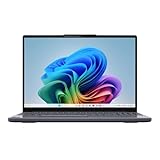
- POWERFUL PROCESSOR: Snapdragon X 8-Core processor delivers exceptional performance for multitasking, productivity, and entertainment needs
- MEMORY & STORAGE: 16GB LPDDR5x-8448 RAM for smooth multitasking, paired with a spacious 1TB SSD for quick boot times and file access
- DISPLAY: 15.3-inch screen provides immersive viewing experience with crisp visuals powered by Qualcomm Adreno Graphics
- DESIGN: Sleek Luna Grey finish in a modern, slim form factor perfect for both professional and personal use
- INTEGRATED FEATURES: Built-in Copilot+ functionality enhances productivity with AI-powered assistance and smart computing capabilities
Recommended configuration: Snapdragon X X1-26-100, 16GB of onboard memory, 512GB SSD, 14-inch 1920×1200 OLED display, and 1080p IR webcam. HP lists 256GB and 512GB SSD options, so confirm the drive capacity before buying.
When it is a good deal
WIRED recommends the 14-inch OmniBook 5 as a budget laptop when discounted. The attractive configuration weighs about 2.84 pounds and combines the Snapdragon processor, 16GB of RAM, 512GB storage, an OLED display, and a 1080p webcam. HP’s official specifications list a 59Wh battery, USB-C, USB-A, Wi-Fi 6E, and the 14-inch 1920×1200 OLED panel.
Free tools Windows power users keep installed
One-click scans. No signup required.
- $500–$650: excellent deal if the exact listing includes 16GB RAM and the desired SSD capacity.
- $650–$750: acceptable if the OLED display, light weight, and premium feel matter to you.
- Near $1,000: generally poor budget value; compare it with better-equipped mainstream or premium laptops.
- $1,249.99 MSRP: do not call it a budget purchase. HP’s live store has shown that MSRP for one configuration.
The large gap between sale pricing and MSRP is the reason this laptop earns a place as a conditional recommendation rather than a permanent value winner. Set a price alert or compare retailer promotions instead of buying solely because a listing displays a large percentage discount.
Tradeoffs
The Snapdragon platform has the same Windows on Arm compatibility considerations as the Lenovo IdeaPad Slim 3x. The 300-nit OLED panel can look vivid because of its contrast and color, but it may not be bright enough for comfortable outdoor work. The touchpad has also been criticized as sticky or inexpensive-feeling, and the memory is onboard rather than user-upgradeable.
Who should skip it: buyers who need guaranteed compatibility with specialist Windows software, buyers shopping near the official MSRP, or anyone who prefers a matte, exceptionally bright screen for outdoor use.
Alternative: buy the Lenovo IdeaPad Slim 3x when value and battery life matter most. At the same sale price, the HP’s OLED and lighter chassis are the reasons to choose it—not superior universal compatibility.
Recommended Free Tools
Check the HP store configuration and WIRED’s discount guidance before buying.
Battery and performance evidence
Tom’s Guide provides directly comparable results for the sub-$500 models in this guide. They are useful for relative comparison, not universal promises. Browser choice, display brightness, wireless conditions, workload, battery health, and exact configuration all affect the result.
| Model | Battery test | Geekbench 6 single-core | Geekbench 6 multi-core |
|---|---|---|---|
| Lenovo IdeaPad Slim 3x | 16:29 | 2,124 | 10,505 |
| Lenovo Chromebook Duet 3 | 10:30 | Not recorded | 1,732 |
| Acer Aspire Go 15 | 10:15 | 1,309 | 5,218 |
| Acer Chromebook Plus 515 | 8:16 | 1,767 | 5,378 |
| Asus Chromebook CX15 | 7:26 | 467 | 778 |
All battery results came from the same guide’s Wi-Fi web-browsing comparisons at 150 nits. Read the full Tom’s Guide testing and comparison for its methodology. Do not compare Apple’s 11-hour wireless-web claim or 16-hour video-streaming claim directly with these numbers.
Which one should you buy?
- Longest tested battery life under $500: Lenovo IdeaPad Slim 3x, if your software works on Windows on Arm.
- Traditional Windows compatibility for the least money: Acer Aspire Go 15 with an Intel or AMD processor, preferably 256GB or more storage.
- Mostly browser applications: Acer Chromebook Plus 515.
- Cheapest Mac: Apple MacBook Neo, after verifying the live price and accepting 8GB of memory.
- OLED and a more premium feel: HP OmniBook 5 14, but only at roughly $500–$750 and preferably with 512GB storage.
- Detachable 2-in-1: Lenovo Chromebook Duet 3, if the small screen and uncomfortable sustained-typing experience are acceptable.
- Lowest possible new-laptop price: Asus Chromebook CX15 for browsing, email, streaming, and light schoolwork.
- Repairability: Framework Laptop 12, with the understanding that its headline price excludes important components.
- Modern gaming: none of the five main picks. Raise the budget and use a separate gaming-laptop guide.
If you need a strict under-$500 list
The MacBook Neo and HP OmniBook 5 14 should not be included in a list that promises every product costs less than $500. Replace them with these two alternatives:
Lenovo Chromebook Duet 3 — best cheap 2-in-1
The Duet 3 has an 11-inch 2000×1200 IPS touchscreen, a Snapdragon 7c Gen 2 processor, up to 8GB of RAM, and up to 128GB of storage. It weighs approximately 1.2 pounds as a tablet or 2.1 pounds with the included keyboard cover. Tom’s Guide measured 10 hours and 30 minutes of battery life. It is exceptionally portable and useful for reading, browsing, travel, and casual schoolwork, but its detachable keyboard is not comfortable for sustained typing. It also lacks a headphone jack and has weak cameras. See the Tom’s Guide comparison for the tested configuration.
Asus Chromebook CX15 — best laptop around $300
The tested CX15 used an Intel Celeron N4500, 8GB of RAM, 128GB of storage, and a 15.6-inch 1920×1080 display. Tom’s Guide reported pricing around $269–$300 and measured 7 hours and 26 minutes of battery life. It is suitable for browsing, email, streaming, and light schoolwork, but its low-end processor makes it a poor choice for demanding multitasking, creative applications, gaming, or a large local file collection.
Memory, storage, screen, and port rules
Memory
Consider 8GB the absolute minimum for basic use and prefer 16GB for Windows multitasking, programming, large browser sessions, light creative work, and longer useful life. Do not assume that 8GB of Mac unified memory is equivalent to 16GB in every Windows workload. Also check whether memory is soldered. The Lenovo IdeaPad Slim 3x and HP OmniBook 5 configurations use onboard memory; future upgrades are not available.
Storage
Avoid 64GB or 128GB Windows laptops unless the purchase is a very cheap temporary device and you understand the compromise. Windows, updates, applications, and personal files can consume that capacity quickly. A 256GB SSD is a practical minimum, while 512GB is preferable for photos, school files, offline media, and games. Chromebook buyers can sometimes choose less because of cloud storage, but should account for offline work and downloaded files. The MacBook Neo’s 256GB base capacity is usable for light work but easy to outgrow.
Display
Look for at least 1920×1080 or 1920×1200, but do not stop at resolution. Brightness, contrast, color coverage, and the screen finish affect everyday comfort. A 16:10 display such as 1920×1200 shows more vertical content for documents and websites than a 16:9 display of a similar diagonal size. OLED provides stronger contrast and richer color, but it can be glossy and may not be bright enough for outdoor use.
Battery
Manufacturer battery figures are usually presented as up-to claims. Prefer independent results when the test conditions are stated, and compare only tests using similar workloads and brightness. A web-browsing result, a video-streaming result, and a light-office result measure different things.
Ports and webcam
For a general-purpose laptop, look for USB-C charging and display support, at least one USB-A port, HDMI if you regularly connect to classroom or office displays, and a 1080p webcam for frequent calls. A headphone jack is useful for school, shared spaces, and wired headsets. Verify every port on the exact SKU. The MacBook Neo is especially constrained: its two USB-C ports have different USB speeds, and external-display support is tied to the faster port.
Independent reader supportYour contribution helps us test, update, and keep practical guides available for everyone.Important edge cases
You need specialized Windows software
Do not choose a Snapdragon model simply because its battery-life figures look excellent. Before buying the Lenovo or HP, confirm support for older VPN clients, specialized printer or scanner drivers, engineering and laboratory software, virtual machines and hypervisors, anti-cheat-dependent games, older accounting or enterprise applications, and hardware-control utilities. Windows can emulate many x86 and x64 applications, but it cannot emulate a missing kernel-level driver.
The Tool Desk
Outbyte PC Repair FREEClear out junk files and repair common Windows errorsFree Scan →Outbyte Driver Updater FREEScan for outdated or missing drivers - takes under a minuteDriver Scan →You want to play games
None of the five main recommendations should be marketed as a gaming laptop. Their integrated graphics can handle casual, older, or cloud gaming, but they are not designed for demanding modern games. If gaming is essential, increase the budget and consider a machine with a dedicated GPU. WIRED lists the Acer Nitro V 16 with an RTX 5050 as a budget gaming option, while noting that its 135-watt adapter can allow battery drain during demanding games and that its display has weak color accuracy. That is a different buying category, not an upgrade to the five laptops above.
You want the lowest possible price
A reputable refurbished business laptop may offer a stronger keyboard, more ports, better durability, and greater repairability than a new consumer laptop costing under $300. Keep refurbished products separate from this new-retail ranking because the warranty, battery condition, and cosmetic grade vary.
Rank #4

- AI POWERED PERFORMANCE: Experience the future with a dedicated 45 TOPS Neural Processing Unit, making this Copilot+ PC incredibly smart and efficient for smooth multitasking, enhanced video calls, and intelligent assistance that keeps you productive all day long.
- ALL DAY BATTERY LIFE: Stay unplugged and powered through your entire workday or study session. The robust 60 watt-hour battery combined with the efficient Snapdragon X processor delivers exceptional battery life, and Rapid Boost charging gets you back to full power quickly when you need it.
- PREMIUM DURABLE DESIGN: Built to last with a sleek metal chassis that has passed rigorous military-grade durability tests. This laptop is ready to handle the bumps and knocks of everyday travel, offering reliable performance in a stylish Luna Grey finish.
- EXPANSIVE TOUCH DISPLAY: Enjoy more screen real estate for work and entertainment on the vibrant 15.3 inch WUXGA touchscreen. The 16:10 aspect ratio provides extra vertical space, while sharp visuals and vivid colors make everything from spreadsheets to streaming look fantastic.
- ENHANCED PRIVACY AND SECURITY: Take control of your privacy with a physical webcam shutter and log in securely and instantly with the integrated fingerprint reader. The Enhanced Security Suite adds an extra layer of protection to keep your personal data safe.
Buy only from a refurbisher with a meaningful return window. Check battery health, warranty length, exact CPU generation, SSD storage, at least 8GB of RAM, Windows 11 compatibility, and seller-verifiable condition. Avoid units with BIOS passwords, damaged hinges, swollen batteries, or unclear ownership and service history.
You want a repairable laptop
The Framework Laptop 12 is a notable alternative. Its DIY Edition starts at $549, but that headline price does not include RAM or storage. Framework says it supports up to 48GB of DDR5 memory and 2TB of NVMe storage, with modular and replaceable components. Its ready-to-use cost is therefore higher than $549. It is a good choice when repairability and future upgrades matter more than the best out-of-box battery life, display, or raw value. See Framework’s Laptop 12 announcement and its pre-order details.
Buying checklist
Before you place the order, verify all of the following on the product page or manufacturer specification sheet:
- Exact processor model, not just the family name.
- RAM capacity and whether it is soldered or upgradeable.
- SSD versus eMMC or UFS storage.
- Storage capacity after accounting for your offline files.
- Screen resolution, brightness, color coverage, aspect ratio, and whether it is glossy or matte.
- Webcam resolution and whether it includes an IR sensor.
- Whether USB-C supports charging and external displays.
- USB-A, HDMI, headphone-jack, and other port availability.
- Operating-system compatibility with your school, work, creative, or gaming software.
- For Chromebooks, the exact Auto Update Expiration date.
- Return policy, warranty length, and seller reputation.
- Whether the advertised price requires a sale, education account, retailer membership, coupon, or refurbished purchase.
The PCWorld buying guidance and WIRED’s broader budget coverage are useful additional comparisons, but the decisive details remain the exact configuration and the operating system you can actually use.
Frequently Asked Questions
Is $300 enough for a good laptop in 2026?
Yes, but the result will usually be a basic Windows laptop such as an Acer Aspire Go 15 or an entry-level Chromebook such as the Asus Chromebook CX15. At this price, expect compromises in processor performance, webcam quality, display brightness, and storage. Try to get at least 8GB of RAM and a 256GB SSD for Windows; 128GB may be acceptable on a Chromebook if you primarily use cloud storage.
Is a Chromebook better than a cheap Windows laptop?
It depends on your applications. ChromeOS is often better for browser-based schoolwork, Google Workspace, email, streaming, simple administration, and automatic updates. Windows is better when you need desktop Microsoft Office features, Windows-only programs, specialist peripherals, or traditional file-management workflows. A Chromebook is not simply a cheaper Windows laptop.
Do these 3 things before closing this tab:
1Scan for outdated or missing drivers - takes under a minute2Repair Windows errors before they cause bigger problems3Fix the driver behind crashes, sound loss and screen glitchesAre Snapdragon Windows laptops safe to buy?
They can be excellent for everyday work and battery life, but buyers must verify compatibility first. Windows 11 on Arm can emulate many x86 and x64 applications, while kernel-level drivers must be compiled for Arm64. Older VPN clients, specialized hardware drivers, hypervisors, engineering software, enterprise tools, and some games are higher-risk categories. Microsoft’s Windows on Arm FAQ explains the limitation.
Is 8GB of RAM enough in 2026?
It is enough for basic browsing, documents, streaming, and light schoolwork, but 16GB is preferable for Windows multitasking, programming, large browser sessions, light creative work, and a longer useful life. The MacBook Neo’s 8GB of unified memory is also not upgradeable, so heavy multitaskers should think carefully before buying it.
Is the MacBook Neo worth $699?
It can be worth $699 if you want macOS, Apple ecosystem integration, a polished chassis, a 500-nit display, and a 1080p camera. It is not the best value for maximum RAM, storage, gaming, ports, or heavy professional workloads. Apple’s available pages have shown inconsistent $599 and $699 configurations, so verify the exact model and live checkout price before deciding.
How long will a Chromebook receive updates?
Google says Chromebooks can receive automatic updates for up to 10 years, but support is model-specific. Look up the exact model’s Auto Update Expiration date using Google’s Chromebook update schedule before purchase.
Quick wins for a faster PC:
Fix the driver behind crashes, sound loss and screen glitchesFind Drivers →Repair Windows errors before they cause bigger problemsFix Now →Scan for outdated or missing drivers - takes under a minuteDriver Scan →Can cheap laptops run Microsoft Office, Zoom, or Teams?
Windows laptops can run the traditional desktop versions when the hardware and software support them. Chromebooks are generally best with browser-based versions and web applications, so verify whether your school or employer requires a desktop feature. The laptops can handle ordinary video calls, but webcam quality varies: the 720p cameras on the Lenovo IdeaPad Slim 3x and Acer Aspire Go 15 are weaker than the 1080p cameras on the Chromebook Plus 515, MacBook Neo, and HP OmniBook 5 configurations described here.
Can any of these laptops run modern games?
None of the five main picks is a proper modern gaming laptop. Integrated graphics are suitable for casual, older, or cloud gaming, not demanding new titles. For serious gaming, raise the budget and look for a dedicated GPU, while accepting tradeoffs in weight, battery life, display quality, and power consumption.
Should I buy a refurbished laptop instead?
A refurbished business laptop can offer better durability, keyboard quality, ports, and repairability than a new sub-$300 consumer laptop. Buy from a reputable seller with a return window, check battery health and warranty coverage, confirm the CPU generation and Windows 11 compatibility, and require at least 8GB of RAM and an SSD. Do not accept unclear BIOS locks, swollen batteries, damaged hinges, or unverifiable condition.
Is 128GB of storage enough?
It may be sufficient for a cloud-centered Chromebook, but it is restrictive for a Windows laptop after the operating system, updates, applications, and files are installed. Choose 256GB at minimum and preferably 512GB if you store photos, school files, games, or offline media. The MacBook Neo’s 256GB base model is usable for light work but can be outgrown quickly.
Windows Errors? Fix Them Before They Spread
Repair common Windows errors and clear accumulated junk for a smoother, more stable PC - no reinstall needed.Free scan · no reinstallCrashes, No Sound, or Screen Glitches?
Random freezes, missing sound and display glitches usually trace back to one bad driver. Find and replace yours safely.Free scan · under a minuteWhich budget laptops have upgradeable memory or storage?
Memory is commonly soldered in this price range. The Lenovo IdeaPad Slim 3x and HP OmniBook 5 configurations use onboard memory, although Lenovo lists an expandable second SSD slot on the IdeaPad product family. The Framework Laptop 12 is the standout repairable option, supporting modular components, up to 48GB of DDR5 memory, and up to 2TB of NVMe storage, but its DIY starting price excludes RAM and storage.
The Bottom Line
For most buyers, choose the Lenovo IdeaPad Slim 3x if your essential software works on Windows on Arm. Choose the Acer Aspire Go 15 when ordinary Intel or AMD Windows compatibility and the lowest price matter more. Choose the Acer Chromebook Plus 515 for browser-first computing, the MacBook Neo for the least expensive macOS experience, and the HP OmniBook 5 14 only when its OLED-equipped configuration falls into the roughly $500–$750 sale range.
The most expensive mistake is not paying slightly too much—it is buying a laptop with the wrong operating system, too little storage, insufficient memory, or a temporary discount that disappears before the product’s compromises become apparent.
Quick Recap
Product prices and availability are accurate as of the date/time indicated and are subject to change. Any price and availability information displayed on Amazon at the time of purchase will apply.




